
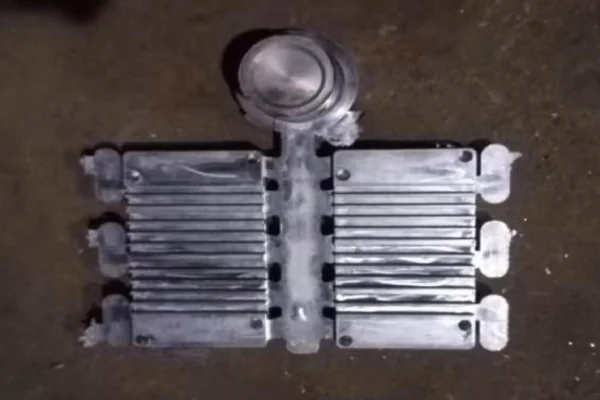
In the field of copper alloy applications, die casting is becoming the core process for the mass production of complex, precision components. However, the die casting process for copper and brass is far from comparable to standard die casting—its pouring temperature of nearly 1,000 degrees Celsius poses severe challenges to die steel life, thermal stress control, and metal erosion. Brass and copper die casting require a delicate balance between material properties—such as electrical and thermal conductivity and corrosion resistance—and process feasibility, while also addressing engineering challenges such as porosity and mold cracking. Drawing on practical experience, this article systematically analyzes the complete decision-making process for copper alloy die casting—from process advantages and key failure modes to the selection of mainstream die casting material grades—to help engineers and procurement decision-makers clarify key technical points and identify the optimal solution that balances quality and cost early in the project.
Why Choose Die Casting for Copper and Brass Parts? die casting process
Its unique combination of advantages makes it the preferred technology among numerous casting processes for the high-volume production of high-quality copper alloy (such as brass) parts. Its core value lies in its ability to efficiently, precisely, and consistently transform high-performance metals into complex components.
High-precision molding capability for complex geometric shapes
Die casting offers an unparalleled ability to produce parts with complex geometries with high precision. Molten copper alloy is injected under high pressure into precision steel molds, perfectly filling even the finest cavities and producing parts with complex internal structures, fine threads, or thin-walled features in a single casting operation. This eliminates the need for secondary machining in many copper and copper alloy castings, providing designers with tremendous design freedom.
Excellent Surface Finish and Dimensional Stability
The die casting process directly results in excellent surface finish and superior dimensional stability. Once parts are removed from the mold, their surfaces are typically very smooth, reducing the cost of subsequent polishing or finishing. At the same time, each cycle is performed under highly consistent conditions, ensuring strict dimensional uniformity of copper alloy castings in mass production—a critical factor for applications requiring assembly interchangeability.
High Production Efficiency and Repeatability
High-pressure die casting achieves extremely high production efficiency and repeatability. Compared to sand casting, which has longer cycle times, the production cycle for die casting is only a few minutes or even seconds, making it ideal for large-scale production of thousands or even millions of parts per year. This highly automated process minimizes human variables, ensuring long-term, consistent quality in copper and copper alloy castings.
Comparative Advantages Over Sand Casting and Forging
The following table provides a visual comparison of die casting, sand casting, and forging as processes for forming copper alloy components:
Feature | Die Casting | Sand Casting | Forging |
Production Volume | Ideal for high-volume mass production. | Suitable for one-off or low-volume runs. | Suitable for low to medium volumes. |
Geometric Complexity | Exceptionally High. Intricate shapes, thin walls, and fine details are achievable. | Moderate. Complexity is limited by the mold. | Very Low. Simple, solid shapes are typical; hollow forms are difficult. |
Dimensional Accuracy & Tolerances | Excellent. Offers tight, consistent tolerances and high repeatability. | Low. Relatively wide tolerances and less consistency. | Good. Consistent for simple forms, but limited by process. |
Surface Finish | Superior. Smooth, near-net-shape finish that minimizes post-machining. | Rough. Significant secondary finishing is typically required. | Fair. Surface quality is adequate but often requires machining. |
Key Advantage | High precision, complexity, production speed, and superior surface finish in high volumes. | Low initial tooling cost and high design flexibility for large parts. | Provides the highest mechanical strength and structural integrity. |
Primary Limitation | High initial die (tooling) cost. Not suitable for very large parts. | Lower precision, poorer surface finish, and slower production rate. | Severe shape limitations; complex or hollow designs are not feasible. |
Typical Application | Complex brass die casting components (fixtures, hardware), copper die casting electrical parts, precision gears. | Large pump housings, valve bodies, engine blocks, and artistic sculptures. | High-stress structural components like connecting rods, tools, and heavy-duty fittings. |
Copper and Brass Die Casting: Key Engineering Challenges
Although the successful production of copper and brass die castings offers significant advantages, this process also presents some engineering challenges. Unlike aluminum or zinc, copper alloys impose specific requirements on the process and molds, necessitating specialized solutions. Understanding these challenges is crucial for assessing the feasibility and cost of a die-casting project, as well as for selecting a qualified manufacturing partner.
The Extreme Challenge of High Melting Points to the Service Life of Die Steel
Copper alloys have very high melting points, typically exceeding 900°C, which means die-casting molds must be able to withstand severe and repeated thermal cycling. Extreme high temperatures accelerate thermal fatigue, a phenomenon that even high-quality hot-work steels (such as H13 steel) cannot avoid, often leading to defects such as thermal cracks. These defects shorten the service life of expensive die-casting molds and affect the surface quality of parts during long-term production.
Severe Erosion and Welding Tendencies of Molten Metal on Molds
Molten die-cast material is highly corrosive. Under high-speed, high-pressure injection conditions, it can physically erode or chemically dissolve localized areas of the die steel, particularly at sharp edges and in thin-walled sections. Furthermore, copper alloys are highly prone to soldering (or welding) to the steel surface. This metal adhesion leads to defects in die-cast parts, forces frequent production shutdowns, and causes progressive damage to the mold cavities, thereby affecting the dimensional accuracy of the final copper and brass castings.
Risk of Mold Cracking Due to Thermal Stress Concentration
The steep temperature difference between the superheated molten copper and brass and the cooler die-cast mold generates concentrated thermal stresses. These stresses are amplified in complex die-cast mold designs that feature variations in wall thickness or sharp angles. If mold thermal management and cooling control during the die-casting process are not properly optimized, these stresses can easily lead to catastrophic mold cracking, resulting in costly unplanned downtime and mold repairs.
Porosity Control and Densification Requirements
The primary objective is to produce fully dense, pressure-sealed components. The inherent characteristics of the die casting process—rapid filling and solidification—can lead to gas entrapment or the formation of shrinkage porosity. Such porosity is unacceptable for copper die casting applications that require high electrical conductivity or mechanical integrity. Mitigating this issue requires precise control of the entire process: melt quality, mold lubrication, and venting design, and often necessitates the use of specialized high-pressure or vacuum-assisted die casting techniques to ensure optimal metal density and part performance.
Looking for a reliable China metal foundry?
- We can help you optimize product design and save costs.
- We can help you with high quality high volume cast parts.
- We can deliver on time and get more sales market opportunities.
- You will benefit from Supro MFG metal casting service.
Copper and brass grades used in die casting
A successful die-casting project for copper alloys begins with the right material selection. There is no single “best” alloy that works for all applications; the key lies in balancing the performance requirements, cost objectives, and regulatory requirements of the end application.
The following is a comparison of the key alloy properties and suitability for copper and brass die casting:
Alloy Grades and Common Names | Key Features and Benefits | Typical Use Cases |
Brass C85700 (Alloy 380) | It offers excellent castability, good strength, corrosion resistance, and high airtightness. It is one of the most commonly used brass die-castings. | Complex thin-walled parts such as commercial bathroom hardware, valve bodies, pump housings, and industrial hardware. |
Naval Brass C46400 | Adding approximately 1% tin provides excellent resistance to dezincification and corrosion in a seawater environment. | Marine components, propellers, underwater hardware, and other critical components for use in marine environments. |
Aluminum Bronze C95400 | Extremely high strength, excellent wear resistance, and outstanding corrosion resistance (suitable for acidic or sulfur-containing environments); difficult to cast | Heavy-duty bearings, gears, valve seats, hydraulic components, and other parts subject to high stress and wear. |
Leaded Red Brass C83600 (Ounce Metal) | It offers excellent casting and machining properties, as well as a smooth surface finish. Note: Its lead content restricts its use in drinking water applications in many regions. | Traditional decorative bathroom fixtures, faucet bodies, and valve components (subject to regulatory restrictions). |
Beryllium Copper (Alloy 25C) | It is not typically used as a die-cast material, but due to its excellent thermal conductivity, high-temperature strength, and resistance to thermal fatigue, it is often used as a material for inserts in high-end die-cast molds. | Key inserts in die-casting molds, used to manage high thermal loads and improve production efficiency and mold life. |
When should you choose copper and brass die casting?
Selecting the most suitable manufacturing process for your components is crucial. Copper and brass die casting is a specialized high-pressure molding technology particularly well-suited for producing metal parts with complex geometries and high performance requirements. When your design requirements align closely with the unique properties of copper alloys and the capabilities of the die casting process, it becomes the preferred solution.
Copper die casting fully leverages copper’s excellent electrical and thermal conductivity, making it indispensable for applications with stringent performance requirements. Typical applications include:
(1) Electrical components: such as electrical connectors, switchgear components, and electromagnetic shielding enclosures that require efficient current transmission and heat dissipation.
(2) Thermal management components: such as heat sink bases.
Brass die casting, on the other hand, is often specified for the following fields due to its good corrosion resistance, mechanical strength, and inherent antimicrobial properties:
(1) Plumbing systems: such as bathroom fixtures and valve bodies.
(2) Marine engineering: such as marine hardware.
The decision to use copper alloy die casting should be based on a comprehensive consideration of material properties and manufacturing requirements. You should prioritize this process when your project meets one or more of the following conditions:
(1) High electrical or thermal conductivity requirements for electrical or thermal management applications.
(2) Superior corrosion resistance for use in harsh environments.
(3) Complex, thin-walled geometries that cannot be economically formed using other processes.
(4) High-volume production requiring consistent quality and tight tolerances.
(5) Specific surface finish requirements, such as a smooth as-cast surface to meet aesthetic or functional needs.
The die casting process itself is key to achieving these applications. It reliably produces thin-walled, near-net-shape parts with high dimensional accuracy and excellent surface quality, thereby reducing the need for costly secondary machining. If your application involves components such as heat exchanger parts, electrical contact holders, decorative hardware, or precision industrial parts, copper and brass die casting offers an excellent balance between performance, design freedom, and production efficiency.
Factors to Consider When Selecting Copper and Brass Die Casting
When determining the appropriate copper and brass grades for a die-casting project, the following factors should be considered:
(1) Mechanical Properties
First, identify the types of loads the component will be subjected to during operation. You need to evaluate the target alloy’s tensile strength, hardness, and elongation. For example, brass die-castings (such as C85700) typically offer a good balance of strength and ductility, making them suitable for valves and fittings.
For components subjected to high wear or impact, aluminum bronze C95400 is a better choice due to its extremely high strength and wear resistance. Ensure that the performance data of the selected die-cast material (based on ASTM or SAE standards) fully meets your design safety factors.
(2) Corrosion Resistance
The alloy’s corrosion resistance must be compatible with its operating medium (e.g., fresh water, seawater, chemicals). For general environments and drinking water applications, standard die-cast brass is sufficient. In seawater or highly corrosive industrial environments, alloys with special resistance to dezincification corrosion—such as naval brass C46400—must be selected. An incorrect choice will result in premature component failure.
(3) Thermal and Electrical Conductivity
This is one of the core functional requirements for selecting copper die-casting materials. Pure copper and high-copper alloys offer near-optimal electrical and thermal conductivity. If your components are electrical connectors, circuit breaker elements, or heat sink bases, high electrical and thermal conductivity are typically the primary criteria, and die-cast materials with high copper content should be prioritized.
(4) Compatibility with the Die-Casting Process
Not all copper alloys are equally suitable for high-pressure die casting. You must ensure the alloy’s manufacturability: fluidity, susceptibility to hot tearing, and shrinkage rate. Brass die-casting alloys such as C85700 are widely used due to their excellent casting performance. In contrast, die casting certain high-strength bronzes is more challenging and requires more precise process control.
(5) Total Cost and Commercial Feasibility
Cost assessments for copper and brass die casting must go beyond the unit price of the material to encompass the total cost of ownership. This includes: material costs, mold amortization, production efficiency, scrap rates, and post-processing requirements. Although the raw material costs for certain high-performance copper alloy die castings are higher, their longer service life, reduced maintenance, or higher operational efficiency may result in better overall economic benefits. At the same time, it is essential to confirm that the selected alloy has a stable supply and complies with relevant environmental regulations (such as lead-free requirements).
The optimal choice is the best balance between all of the above factors and your specific application requirements, production volume, and regulatory requirements. We recommend collaborating with an engineering team like Supro MFG, which has extensive experience in copper and brass die casting, to conduct DFM and material selection reviews.
Contact Supro MFG
The key to successfully implementing a copper and brass die-casting project lies in a comprehensive evaluation of process suitability, material properties, and engineering challenges. This process offers a highly efficient and precise solution for the high-volume production of complex copper alloy castings.
The final decision should be based on a balanced analysis of mechanical properties, corrosion resistance, electrical and thermal conductivity requirements, process compatibility, and total cost. We recommend conducting DFM and material selection reviews with a die-casting factory that has specialized experience to ensure the project’s success from material selection through mass production.
Please contact Supro MFG to obtain a customized solution for your die-casting project.What is the best material for copper and brass die casting?