
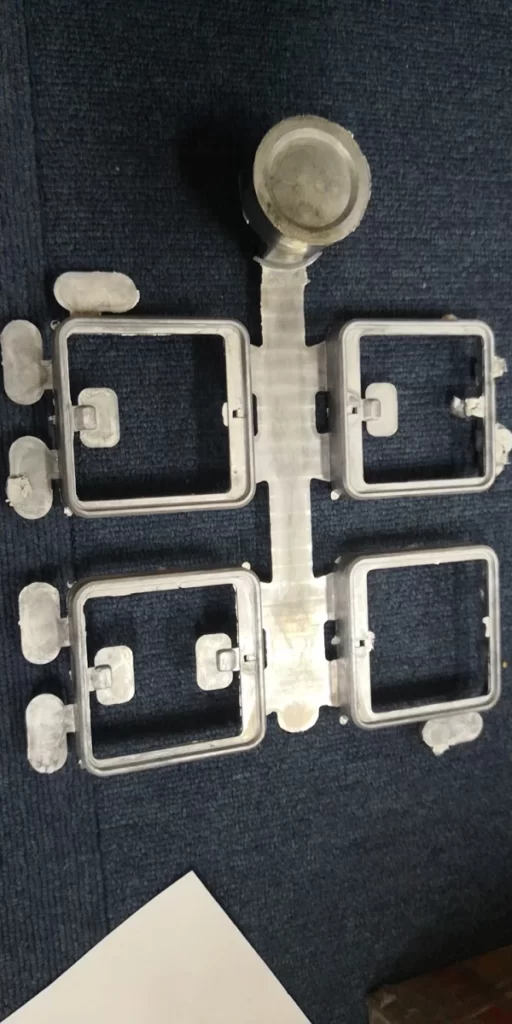
The efficiency of a die casting mold determines production costs, part quality, and long-term return on investment. However, many manufacturers focus solely on the initial price when purchasing, neglecting the total cost of ownership, which ultimately leads to higher overall costs and increased scrap rates.
Low-cost die casting molds often come with hidden costs. In contrast, a well-designed die casting mold—featuring proper gate design, thermal balance, and robust, durable mold components—can maintain consistent quality over hundreds of thousands of cycles. Understanding how to specify, maintain, and derive value from molds is key to staying competitive.
This guide, written by the engineering team at Supro MFG—a die casting mold manufacturer serving clients worldwide—focuses on five key areas: the definition of die casting molds, the design process, design for manufacturability, mold maintenance, and maximizing return on investment (ROI). The practical approaches outlined in this article can help you reduce unit costs, minimize production risks, and achieve measurable returns on your mold investment.
What is die casting mold?
A die casting mold (also known as a die cast tool) is a complete set of components precision-machined and assembled from hardened steel, used to achieve precise shaping of molten metal under high-pressure conditions. A complete die casting mold system integrates key forming and flow components such as cavities, cores, runner systems, vent channels, and cooling channels, along with an ejection system comprising ejector pins and ejector plates, as well as specialized forming components such as slides and core-pulling mechanisms, to comprehensively ensure casting quality and production stability.
Supro MFG specializes in customized die casting mold making services. Based on the specific technical requirements, production volume, and complexity of a client’s project, we precisely tailor process solutions to create high-quality die casting molds of various sizes and structural complexities. Leveraging our professional mold design and manufacturing capabilities, Supro helps our clients optimize production processes, reduce scrap rates and maintenance costs, maximize project cost-effectiveness, and fully leverage the core advantages of customized solutions.
The die casting mold design process
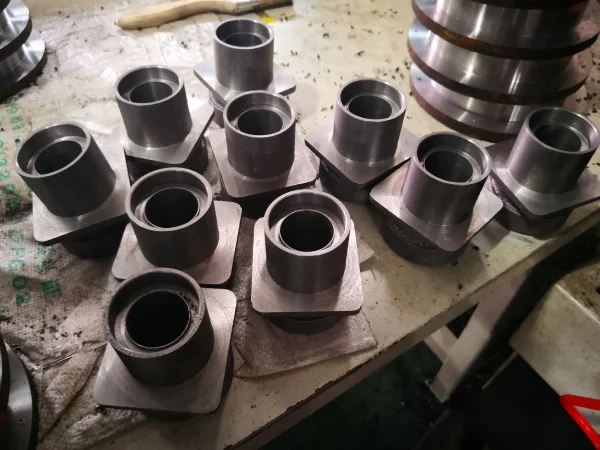
Die casting mold design is a systematic engineering process that determines the quality of castings, production efficiency, and mold service life. Supro MFG adheres to a standardized design process, exercising rigorous control at every stage—from preliminary design analysis and core system planning to mechanical structure design—to comprehensively ensure stable molding, reliable precision, and a long service life for the molds.
Pre-Design Analysis — DMF Analysis and Melt Flow Simulation
Pre-design analysis is the foundation for stable mass production of die-cast molds. By leveraging two key methods—DFM review and melt flow simulation—it is possible to prevent mold defects at the source and reduce the costs of subsequent mold modifications. Failure to conduct pre-design analysis for die-cast molds in the early stages can easily lead to issues such as uneven wall thickness, insufficient draft angles, and improper rib placement during mold manufacturing, which in turn can cause defects such as porosity, cold shuts, and stress concentration.
For pre-design analysis of die-casting tools, Supro MFG employs the following strategy: First, we conduct a comprehensive DFM review to optimize product structural details and eliminate potential molding risks; then, using specialized melt flow simulation software, we accurately simulate the melt filling, entrapped gas, and solidification processes to virtually optimize the layout of gates, runners, and vents, ensuring complete and uniform filling of the cavities. By replacing trial-and-error based on experience with digital validation, Supro MFG ensures stable production of die-cast molds with high yield rates.
Core System Design — Control of Pouring, Cooling, and Thermal Balance
The gating system and cooling temperature control system are the core elements of die casting mold design; they determine the final casting quality, production stability, and mold service life. An improper pouring layout can lead to turbulent flow and excessive turbulence, making it difficult to expel the oxide impurities trapped within the metal. Furthermore, haphazardly arranged cooling channels can cause an imbalance in cooling rates between thick-walled and thin-walled areas, resulting in casting deformation, internal stress, and shrinkage porosity. Localized overheating of the die-casting tool can also exacerbate thermal fatigue, significantly shortening its service life.
Proper design of the die-casting tool’s straight runner, runner system, and internal gate—with gate flow velocity controlled at 30–60 meters per second—combined with overflow channels to intercept oxidized impurities, is essential. Strategic placement of cooling channels based on the product’s structure ensures synchronized and uniform heat dissipation across both thick and thin sections, thereby suppressing deformation and shrinkage porosity defects. Precise control of the die-casting mold’s overall thermal balance eliminates local hot spots, reduces thermal fatigue wear, and extends the mold’s service life by more than three times.
Structural and Mechanical Design — Ejection, Slider Mechanisms, and Material Selection
Mechanical structure design, motion mechanism coordination, and the selection of die casting steel directly determine the quality of casting ejection, the forming accuracy of complex structures, and the long-term stability of the die. During the die casting mold design process, improper arrangement of ejector pins can cause deformation of the casting during ejection. Errors in the timing and clearance fit between sliders and core-pulling mechanisms can easily lead to interference, reducing the mold’s reliability and service life. Inappropriate selection of mold materials and heat treatment can result in insufficient hardness, toughness, and thermal fatigue resistance; furthermore, failure to allow for shrinkage allowance during the die casting mold making stage can cause finished product dimensions to exceed tolerances.
Proper planning of ejector pin placement and ejector plate structure ensures smooth part ejection. Integrating high-precision sliders and core-pull mechanisms to precisely control motion sequencing and clearances enables the one-time molding of complex lateral features—this is the core advantage of high-quality die-casting molds. H13 hot-work tool steel, subjected to quenching and multiple tempering cycles, is selected to enhance the overall performance of die-casting tooling. During design, a shrinkage allowance of approximately 1.2% is factored in for aluminum alloy; critical dimensions are locked in and verified via CMM inspection to ensure that mass-produced castings consistently meet tolerance requirements throughout the entire process.
Designing die casting molds for optimal manufacturability
A well-designed die-casting mold can directly reduce production defects and extend the mold’s service life. When engineers prioritize manufacturability from the early stages of design, they can ensure a stable supply of castings with consistent quality while minimizing production downtime caused by malfunctions. The following are two key design considerations in die-casting mold design that can enhance production efficiency.
Wall Thickness Uniformity and Adequate Draft Angle
Maintaining uniform wall thickness throughout the casting effectively prevents problems such as porosity, warping, and localized premature cooling.
A die-casting tool designed with appropriate draft angles (typically 1° to 3° on one side) ensures smooth part ejection, prevents surface scratches and deformation, and reduces wear on both the ejector pins and the cavity surfaces.
For die-casting mold manufacturers, these fundamental design parameters are key to distinguishing between molds capable of stable mass production and those that experience frequent quality issues over the long term.
Gate Strategy Layout and Simplified Slider Design
In die casting mold design, the gate location and runner layout determine how molten metal fills the cavity. Placing the gate to promote unidirectional flow and incorporating overflow gates in the end-of-fill zone minimizes bubbles and cold shuts. When chamfers or side openings cannot be avoided, a balance must be struck between integrating sliders and ejector pins and maintaining structural simplicity.
Each additional slider increases the complexity of the die-casting tool and introduces potential failure points. Whenever possible, redesigning parts to eliminate unnecessary chamfers results in a more robust mold with lower maintenance requirements. The most cost-effective approach to die-casting mold making is to use the simplest possible mold structure to achieve the required part geometry.
Die casting mold care and maintenance
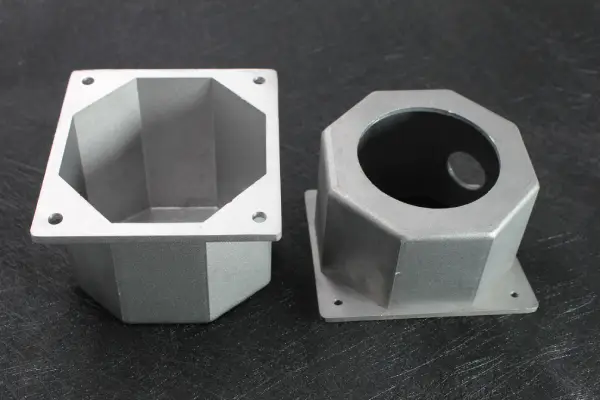
Regular maintenance of die-casting molds directly affects part consistency, production uptime, and mold service life. Even the most robust tooling will experience accelerated wear, thermal fatigue, and unexpected downtime without a rigorous maintenance schedule. The following are two key aspects of mold maintenance in high-volume production environments.
Regular Cleaning and Preventive Inspections
After thousands of cycles, die casting molds accumulate various residues, including mold lubricants, fine metal particles, and oxide deposits. These residues can alter heat transfer, block vent channels, and increase the risk of weld lines.
Regular cleaning of the mold with a safe cleaning agent can remove these contaminants without damaging the cavity surface. In addition, during each cleaning cycle, inspectors must examine the die casting mold’s critical components (such as ejector pins, core slides, and parting lines) to check for signs of cracks, galling, or dimensional drift.
Preventive inspections can identify issues before minor wear progresses to mold failure. Compared to poorly maintained molds, a well-maintained die casting tooling system consistently delivers higher output and reduces unplanned downtime.
Cooling Channel Maintenance and Surface Repair
Cooling channels inside die-casting molds are prone to scale buildup, corrosion, and blockages due to the chemical composition of the circulating water. Obstructed cooling channels can lead to localized hot spots, extended cycle times, and uneven solidification of parts. Regular descaling and flow rate testing of each cooling circuit help maintain the original thermal balance established during the die-casting mold design phase.
In addition to cooling, the cavity surfaces also require attention. After tens of thousands of castings, it is inevitable that the mold will develop microcracks, thermal cracks, and minor erosion. Early surface repair measures, such as localized polishing or, in some cases, nitriding, can restore surface integrity without the need for a complete rebuild of the die-casting tool.
Performing these maintenance measures at scheduled intervals can extend the service life of die-casting molds by 30% to 50% and maximize the return on the original mold investment.
Looking for a reliable China metal foundry?
- We can help you optimize product design and save costs.
- We can help you with high quality high volume cast parts.
- We can deliver on time and get more sales market opportunities.
- You will benefit from Supro MFG metal casting service.
Getting the most ROI from a die casting mold
When selecting a die-casting partner, manufacturers often expect to achieve the maximum return on investment at every stage of production, including the die-casting mold. While choosing low-cost die-casting tools can reduce upfront costs, it often leads to high maintenance costs and high scrap rates down the line. Investing in a high-quality die-casting mold, on the other hand, extends its service life, reduces scrap rates, and yields a higher return on investment.
Beware of the “False Economy” of Low-Cost Die-Casting Molds
While the initial purchase price of a low-grade die-casting tool may seem attractive, its total cost of ownership is almost always higher than that of a precision-manufactured alternative. Its components typically wear out faster, develop thermal cracks earlier, and require frequent repairs, leading to production downtime, increased labor costs, reduced output, and the production of non-conforming parts.
A properly manufactured die-casting tool—featuring the correct steel grade, adequate cooling channels, and a robust slider mechanism—can reliably operate for hundreds of thousands of cycles. The additional upfront investment made with a high-quality die-casting mold manufacturer is typically recouped within the first year of mass production, resulting in lower unit costs and higher equipment utilization rates.
Maximizing Value Through Early-Stage Design Collaboration
Manufacturers can also take proactive measures to enhance the value of their molds. In die-casting mold design, establishing adequate draft angles—particularly on non-critical features—helps ensure smoother part ejection and reduces ejector pin wear. Where functionality permits, relaxing tolerances and lowering precision requirements can reduce manufacturing complexity and inspection costs.
Most importantly, collaborating with die-casting mold manufacturers early in the product development phase can help avoid costly redesigns. At Supro MFG, our engineering team works closely with customers to refine part geometry before the mold is officially machined, simultaneously optimizing gate placement, cooling layout, and slider mechanism configuration to ensure that each casting is unique and meets customer requirements. Through this in-depth collaborative planning in the early stages, we ensure that custom die-casting molds maximize return on investment throughout their entire lifecycle.
Contact our engineers today to begin optimizing your mold strategy.
Contact Supro Mfg
Full lifecycle management of die-casting molds—from scientific design and manufacturability optimization to regular maintenance—directly determines production costs and part quality. Be wary of the hidden costs associated with low-cost molds; collaborating with professional manufacturers early on is the key to extending mold life, reducing scrap rates, and maximizing your return on investment. Supro MFG is committed to providing you with high-return, customized mold solutions.
 English
 Français
 Deutsch
 Italiano
 日本語
日本語 한국어
한국어 Polski
 Português de Angola
 Русский
 Español de Argentina