
copper casting services
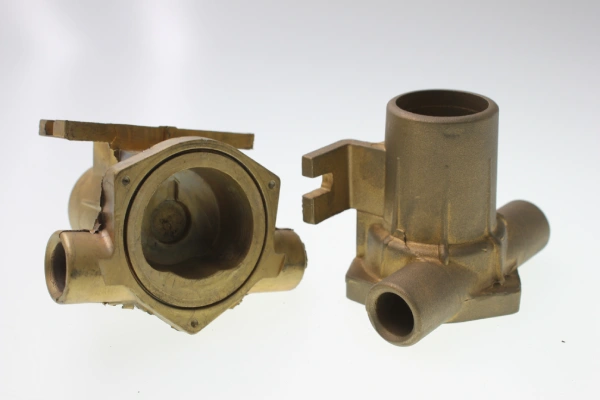
Copper alloy casting is the most popular in the electronics
Copper casting is a versatile product that is derived from the fact that copper and copper alloys are easy to cast and maintain good physical and mechanical properties, easy to process, weld, polish, electroplate and other processing methods, and are widely used in electrical and electronic, power, and fasteners.
Our copper casting Services
Aluminum alloy castings are made by injecting molten aluminum alloys into different molds, and after cooling and forming, the aluminum alloy casting parts required for the final design are obtained.
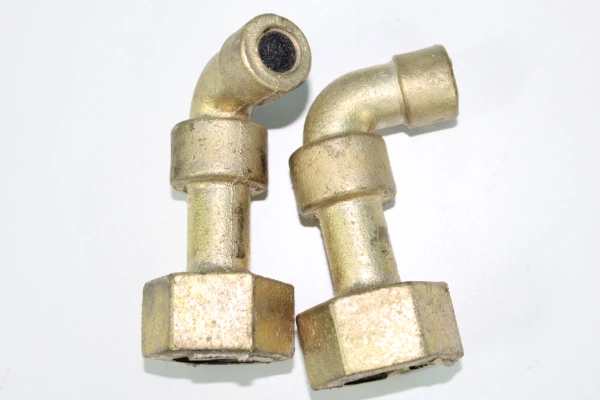
copper sand casting
Die casting is very similar to permanent mold casting, but instead of gravity, die casting relies on the pressure of the die casting equipment to inject the metal solution into the mold, including: low pressure die casting and high pressure die casting, which allows the material to more fully fill all the details inside the mold. Die casting is very friendly to create castings with complex structures and thin-walled structures, and is widely used in automotive engine housings, electronic equipment brackets, Led lighting accessories, radiator housings, etc.
Supro MFG has advanced die casting manufacturing equipment to meet the needs of low pressure die casting and high pressure die casting products, we provide the most cost-effective on-demand die casting manufacturing solutions for buyers from all walks of life around the world, and through x-ray, composition analysis, Non-destructive testing, mechanical testing, salt spray testing, etc., to ensure on-time delivery of high-quality die-casting parts.
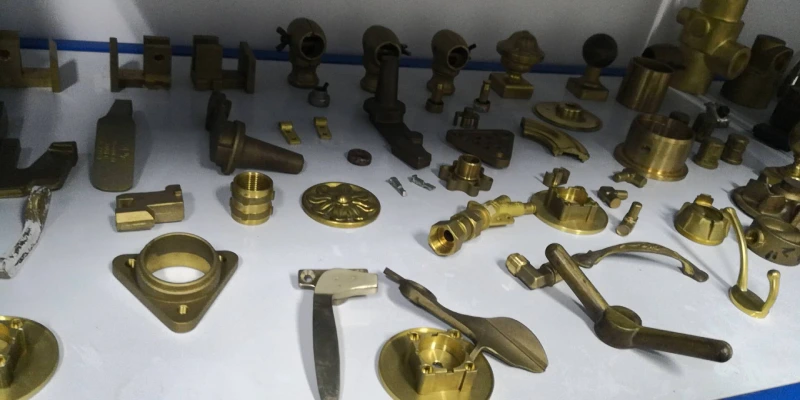
copper investment casting
relying on resin sand or green sand to form a cavity with the shape of the final product under the action of aluminum or steel molds, inject molten metal into the sand mold, and cool to form. Aluminum alloy sand casting is economical, but usually requires secondary machining to achieve close dimensional tolerances, and is also very effective for creating large aluminum alloy cast parts or parts with fine detail, suitable for large-scale casting projects.
At Supro casting foundry, we control the casting process and the element composition of the aluminum alloy reasonably to avoid most of the defect problems, enhance the mechanical properties, improve the casting efficiency, and make the aluminum alloy castings more competitive.
Advantages: high efficiency, low cost, economical, complex structure can be realized, suitable for a wide range of materials
Disadvantages: There are many sand holes and pores, and the surface is rough. It is impossible to build fine details.
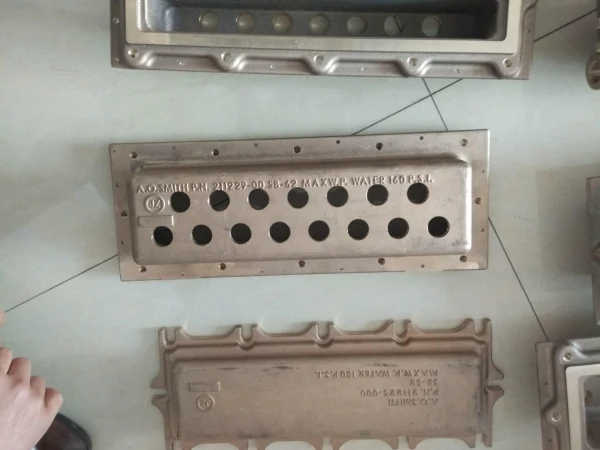
copper Permanent casting
Creates steel molds and other metal molds or cores. The molten aluminum alloy is cooled and formed inside the mold. This is a reusable metal mold. More often, the aluminum alloy is injected by gravity to fill the mold cavity. Inside. The mold is then separated after cooling and the finished part is ejected or removed.
Supro MFG uses this rapid prototyping casting process to achieve a more consistent microscopic metal structure, increase the density of aluminum alloy castings, and significantly enhance the mechanical properties of the product. It is generally used in industries with high weighing capacity, wear resistance, and corrosion resistance. in demand.
Advantages: Higher product density Fast build time Low product cost High surface finish Finer detailing possible
Disadvantages: High mold cost Does not support design changes Not suitable for large castings Long mold manufacturing cycle
A wide range of copper alloy casting options.
Copper alloys are available in many different alloy types, including brass, bronze and beryllium copper. We have established a strict casting process monitoring system to prevent material contamination and quality risks to ensure high quality copper cast parts to meet your project needs.
- Brass Castings As the most popular copper-based casting, brass is a versatile material with a wide range of uses. Also known as red brass or yellow brass, this copper-based alloy is commonly used in the plumbing, door hardware and potable water industries. Brass castings have a unique finishing quality and are often polished to a beautiful finish.
- Bronze castings This copper-based alloy is commonly used in small components such as bearings and has a wide range of commercial and industrial applications. While all bronze castings have similar properties, this alloy can be altered by the introduction of lead, aluminum and tin.
- Beryllium copper castings This advanced and rather exotic copper alloy has a high strength composition as well as high thermal and electrical conductivity. This material is perfect for anyone who needs complex and high-precision shapes with a refined appearance matched only by durability and wear resistance characteristics.
Copper casting is best suited for investment casting, sand casting and centrifugal permanent mold casting. The project volume, corrosion resistance requirements, regulations and specifications, and dimensional requirements of the cast part determine how we should choose the most logical form of casting. We are motivated to provide efficient, high quality and economical manufacturer quotations for every copper casting project.
Positive elimination of copper alloy casting defects.
- Porosity: This defect occurs when bubbles form in the metal as it cools. This defect can be prevented by melting the copper in a vacuum or by keeping the melting temperature as low as possible.
- Shrinkage: As the metal hardens, shrinkage naturally occurs. However, defects can occur when the metal shrinks unevenly. This usually occurs when the casting is not heated uniformly or when there are hot or cold spots on the mold. This can be prevented by ensuring that the mold and metal are kept uniformly heated and cooled evenly until the metal solidifies.
- Mold Defects: These defects occur as a result of problems with the mold. They can occur if the metal does not fill the mold properly, or if the metal is not fused together. Defects can also occur if there are cracks or other problems with the mold itself. Often, this can be fixed by making sure the mold is stable and that the metal is poured into the mold evenly.
- Metallurgical defects: These defects are cracks due to uneven heating, or metal that is much harder than other defects due to uneven cooling. Keeping the mold at a uniform temperature can eliminate these defects.
Looking for a reliable copper casting foundry?
- We can help you optimize product design and save costs.
- We can help you with high quality high volume cast parts.
- We can deliver on time and get more sales market opportunities.
- You will benefit from Supro MFG metal casting service.
The attractiveness of cast copper alloy parts stems from top-notch casting technology.
Cast copper is a versatile material with a wide range of alloys. The metal is used in sanitary equipment, ship propellers, power plant water impellers, and bushings and bearing sleeves because it is easy to cast, has a long history of successful use, is available from a variety of sources, can achieve a range of physical and mechanical properties, and is easy to machine, braze, braze, polish, or plating.
1. Almost all copper alloys retain their mechanical properties at low temperatures.
Typical mechanical properties of copper include good corrosion resistance, impact toughness, excellent thermal and electrical conductivity, and the ability to inhibit the growth of marine organisms.
2, All copper alloys can be produced by sand casting.
Other casting methods that favor copper alloys include centrifugal, continuous, permanent mold, fusion mold and die casting. The choice of alloy and casting method determines the mechanical and physical properties, cross-sectional dimensions, wall thicknesses and surface finishes that can be achieved.
3. Copper alloys containing lead still have a variety of industrial applications.
Although lead-containing alloys are no longer used in drinking water applications, they can still be used in other situations where low friction and wear rates are required. For example, high-lead tin bronze is cast into sleeve bearings, which have lower wear rates than steel.
4. As a class, cast copper-based alloys are easy to machining.
(especially when compared to stainless steel and titanium, their main competitors in corrosion resistance).
Lead-containing copper-based alloys are the easiest to machine. These alloys are easy to cut and form small chips, while generating little heat. They are followed by machinable medium to high strength alloys with a second phase in their microstructure, such as lead-free yellow brass, manganese bronze and silicon brass and bronze. These alloys form short, brittle, tightly curled chips that tend to break into manageable pieces. Although the surface finish of these alloys is excellent, cutting speeds are reduced and tool wear is increased.
The most difficult copper-based alloys to machine are single-phase alloys such as highly conductive copper, chrome copper, beryllium copper, aluminum bronze and copper-nickel. Their general tendency during machining is to form long, fine chips that can be disruptive in high-speed machining operations. In addition, pure copper and high nickel alloys tend to weld to the tool face, thus affecting the surface finish.
5. Post-casting treatment can further enhance the attractiveness of cast copper parts.
Secondary steps such as polishing, plating, soldering, brazing and welding can be performed on cast copper alloys to improve surface finish and high tolerance control.
When repairing small defects in copper castings, both tungsten gas shield welding and gas metal shield arc welding can produce X-ray quality welds. Shielded metal arc welding can also be used, but this method is more difficult to control. Oxyacetylene welding is mainly used for joining thin profiles. Electron beam welding produces high quality, precise welds in both oxygen-free and deoxidized copper.
In general, alloys containing large amounts of lead cannot be brazed because the lead remains liquid after the weld has solidified and cracks form in the high stress field. All cast copper alloys can be brazed and soldered to steel, stainless steel and nickel-based alloys on their own. Even copper alloys containing lead can be brazed, but conditions must be controlled.
Copper-phosphorus alloys, silver-based brazing alloys and copper-zinc alloys are most commonly used as filler metals. Gold-based alloys are used for electrical applications and tin-based solders are used for household plumbing.
The heat of brazing may cause some loss of strength in heat-treated copper alloys, but special techniques have been developed to solve this problem. If necessary, the entire brazed casting can be heat treated to produce a uniform organization. The corrosion resistance of copper-based alloys is not affected by brazing unless there are special circumstances.
6. Cast copper is available in a variety of alloys, making it a suitable candidate for many applications, depending on the design load and environmental corrosiveness.
Red brass
- 833 Electrical contact parts
- 836 Valves, fittings, flanges and pump castings
- 838 Low pressure valves and fittings
Semi-red brass
- 844 Hardware and decorative castings
- 848 Pipe fittings and hardware
Manganese bronze
- 862 Marine castings, bushings and gears
- 863 Heavy-duty gears, bushings and slippers
- 865 Pipe plugs, arms and gears
Tin bronze
- 903 Bearings, bushings, rings and gears
- 905 Bearings, bushings, rings and valves
- 907 Gears, bearings and bushings
Leaded bronze
- 922 Medium pressure hydraulic and steam to 550° F. Marine and decorative castings, valves, and pressure parts
- 923 High pressure steam castings
- 926 Bearings, bushings, rings and gears
- 927 Bearings, bushings and fittings
High lead tin bronze
- 932 General purpose bearings and bushings
- 934 Bearings and bushings
- 935 Bearings and bushings, small
- 937 High-speed, high-pressure bearings and bushings; sulfite fluid resistant
- 938 General service bearings; acid resistant
- 943 Light-duty, high-speed bearings
Aluminum bronze
- 952 Acid-resistant pumps, bearings, gears and valves
- 953 Gears; cams; stripping nuts; slippers; high-temperature applications; and mining machinery parts, nuts, gears, and slippers
- 954 Spur gears, nuts, pumps, and landing gear parts
- 955 Tank gun recoil mechanisms and landing gear parts
- 958 Propeller hubs, blades, and other parts.
Silicon bronze
- 878 Brush holders, brackets, clamps, and lever arms
7. The design of cast copper alloys requires careful planning of thick and thin sections.
Using both should be avoided, but when both are required, the thicker section should always be blended or tapered to the thinner section. For copper-based alloys with a wide freezing range, such as red brass and tin bronze, and for alloys with a medium freezing range, such as yellow brass, the design of thick to thin sections becomes a greater problem. These alloys account for the highest level of casting production and will not solidify directionally. While proper risers help solve this problem, it does not have the same effect as directional solidification.
To offset the solidification problems of broad freezing point copper alloys, metal foundries use cold iron and chromite and zircon sand cores to promote proper solidification. Cooling these parts may be more effective than using a riser, although each of these tools will increase the cost of the finished casting.
8. L, T, and X cross-sections should be avoided whenever possible.
When T-sections cannot be avoided, adverse effects can be minimized by providing a larger radius at the corner and making the arms unequal in thickness. In addition, “dents” (small indentations at the top of T-shaped intersections) help reduce the severity of hot spots. x-intersections have a particularly detrimental effect on copper castings. However, they can almost always be avoided, for example, by converting the X-intersection into two offset T-parts.
9. high yield, low processing costs,
low requirements for surface coatings such as paint, and costs comparable to other metals.
 English
 Français
 Deutsch
 Italiano
 日本語
日本語 한국어
한국어 Polski
 Português de Angola
 Русский
 Español de Argentina