
OEM INDUSTRIAL FLOW-CONTROL COMPONENTS
Valve Casting Manufacturer for Custom Valve Bodies & Components
Valve casting projects for pressure-containing and flow-control components require more than a foundry that can pour metal. Buyers need a manufacturing partner that can review the drawing, select an appropriate casting route, protect sealing and machining features, control material identity, and document the finished part. Supro MFG supports custom valve casting programs from engineering review and tooling through casting, CNC machining, inspection, and export preparation.
Drawing Review
Geometry, cores and machining stock
Inspection Plan
Material, dimensions and NDT scope
Casting + CNC
One coordinated production route
OEM Supply
Project-based quotation and records
25+ Years
Public company history on chinametalfoundry.com
Casting + Machining
Plan the raw casting around finished features
Inspection Records
Documentation agreed before production
No Generic Promises
Scope, tolerances and timing follow the drawing
CUSTOM OEM SUPPORT
Custom Valve Casting Support for OEM Programs
Every valve casting begins with a specific service condition. Pressure class, temperature, media, corrosion exposure, wall transitions, flange geometry, machining stock, and inspection requirements all affect the manufacturing plan. A valve body that performs well in clean water service may need a different alloy, process, and inspection route when it is used for chemicals, steam, marine equipment, or abrasive slurry.
Our role is to turn the customer drawing and technical specification into a controlled production route. Before tooling, the engineering review focuses on features that influence casting soundness and downstream machining: heavy sections, isolated hot spots, abrupt changes in wall thickness, cored passages, datum strategy, sealing faces, bolt patterns, and areas that may require nondestructive examination. This review helps reduce avoidable rework without changing the functional intent of the design.
Supro MFG works with valve manufacturers, equipment builders, distributors, and industrial purchasing teams that source cast valve bodies and related components to customer drawings. The scope can include raw castings, semi-machined parts, or machined castings prepared for the customer’s own assembly and pressure-test process.
PURCHASING RISK
What Buyers Need to Control in a Valve Casting Program
Pressure-boundary components need a clear manufacturing and inspection plan before tooling.
A valve casting is often part of the pressure boundary, so small manufacturing decisions can have a large effect on machining yield, assembly, and field reliability. The most common sourcing risks are not limited to visible surface defects. They also include internal shrinkage near thick junctions, inconsistent chemistry, core movement in internal passages, excessive machining allowance, distortion after heat treatment, and incomplete inspection records.
For that reason, the quotation stage should establish the part standard, alloy grade, critical dimensions, machining scope, required heat treatment, acceptance criteria, test documentation, and annual demand. When these inputs are missing, the supplier may quote a process that is technically possible but commercially inefficient. A clear RFQ allows the valve casting foundry to compare investment casting, sand casting, and secondary machining routes before tooling is released.
1. Internal soundness
Review heavy junctions, feeding and NDT zones.
2. Core position
Protect internal passages and machining stock.
3. Material identity
Define grade, heat treatment and records.
4. Machining yield
Plan datums, allowance and clamping before production.
MATERIAL SELECTION
Material Options for Industrial Valve Castings
Alloy selection follows pressure, temperature, media and the governing purchase specification.
Carbon & Alloy Steel
Commonly considered for industrial pressure, strength and temperature requirements.
Stainless Steel
Selected where corrosion resistance, cleanability or chemical compatibility matters.
Ductile Iron
A practical balance of strength, castability and cost for selected water and industrial service.
Bronze & Copper Alloys
Reviewed for marine, corrosion, wear or bearing-related applications.
Material selection must be based on the valve specification and service environment, not on a generic list of “available metals.” Common buyer specifications for industrial valve castings may reference carbon steel, stainless steel, low-temperature steel, alloy steel, ductile iron, or copper-base alloys. The final grade should be confirmed against pressure, temperature, corrosion, impact, weldability, heat-treatment, and regulatory requirements.
Carbon steel valve casting specifications are often selected for general industrial, oil and gas, power, and process applications where strength and pressure capability are required. Stainless steel valve casting is commonly considered when corrosion resistance, cleanability, or chemical compatibility is more important. Ductile iron valve casting can be suitable for waterworks and industrial systems where strength, castability, and cost need to be balanced. Bronze valve casting and other copper-base alloys may be considered for marine, seawater, bearing, or corrosion-related service, subject to the exact alloy and project specification.
Common international material designations used by valve buyers include ASTM A216 grades such as WCB or WCC for carbon-steel castings, ASTM A351 grades such as CF8, CF8M, CF3, or CF3M for corrosion-resistant castings, ASTM A352 grades for low-temperature service, and ASTM A536 grades for ductile iron. These examples are provided as specification references only. Supro confirms the actual grade, equivalent designation, heat treatment, and testing scope during quotation and does not substitute one alloy for another without written approval.
Quality Control
Quality Control and Inspection Reports
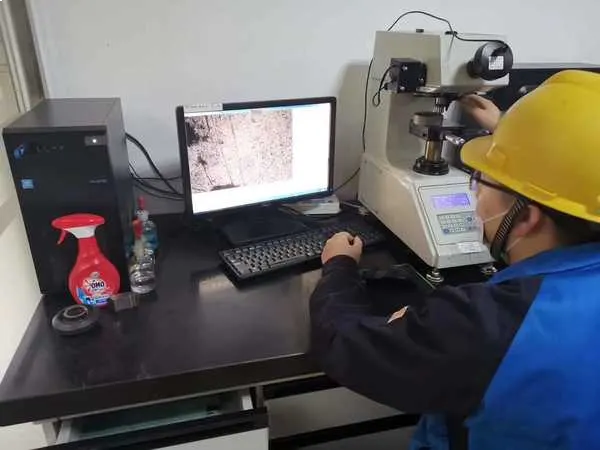
Buyers need stable material composition, reliable dimensions and repeatable batches. Supro MFG controls cast iron projects through material verification, melt control, mold preparation, pouring control, cleaning, machining inspection and final shipment review. Depending on project requirements, inspection can include CMM dimensional inspection, spectrometer chemical analysis, mechanical property testing, destructive testing when required, non-destructive testing and final packing review.
Investment Casting
For compact, complex parts that benefit from closer as-cast detail.
- Complex external detail
- Closer near-net profile
- Precision valve components
- Machining still required on critical faces
Sand Casting
For larger bodies, heavier sections and flexible core arrangements.
- Larger component envelopes
- Flexible internal cores
- Lower-to-medium project quantities
- Pattern, feeding and machining planned together
No single casting method is correct for every valve component. The process should be selected from the part geometry, alloy, size, tolerance strategy, surface requirement, tooling budget, and expected quantity.
Investment casting valve parts are generally considered when the component is relatively compact, contains complex detail, and benefits from a closer as-cast profile. It can reduce machining on external geometry and produce repeatable features that are difficult to obtain with a conventional split pattern. Investment casting is not automatically the lowest-cost route for a large, heavy valve body, and critical bores, sealing faces, threads, and flange features still require machining.
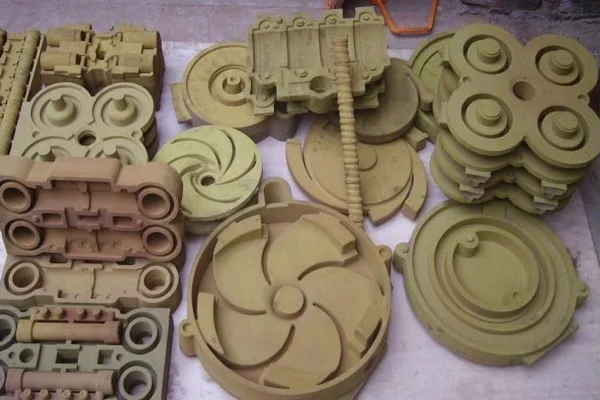
Sand casting valve body projects are often more practical for larger components, heavier sections, lower-to-medium quantities, or designs that need flexible core arrangements. The process can accommodate many ferrous and non-ferrous alloys, but the tooling, parting line, draft, core support, feeding, and machining allowance need to be planned around the final inspection requirements.
Where suitable, rapid prototypes or additive-manufactured patterns can be used to verify form, assembly, or casting feasibility before full production tooling. The recommended route is documented in the quotation so the buyer understands what is included in tooling, sample validation, production, machining, and inspection.
ENGINEERING BEFORE TOOLING
Engineering Review Before Tooling
The strongest opportunity to improve a valve casting is before the mold or pattern is approved. Supro reviews the customer’s 2D drawing, 3D model, material specification, machining drawing, and inspection notes together rather than treating them as separate files.
The review checks wall-thickness transitions, isolated masses, ribs and bosses, core access, draft where required, radii, feeding direction, datum transfer, machining stock, clamping areas, and the relationship between as-cast and finished dimensions. Critical-to-quality features should be identified on the drawing, especially sealing faces, stem or shaft bores, flange alignment, bolt circles, threaded ports, and interfaces that affect assembly.
The purpose of this review is not to redesign the valve without permission. Recommended changes are returned as questions or marked-up suggestions for customer approval. The final manufacturing drawing, inspection plan, and revision level should be controlled before tooling begins.
SECONDARY OPERATIONS
CNC Machining for Valve Bodies and Flow-Control Parts
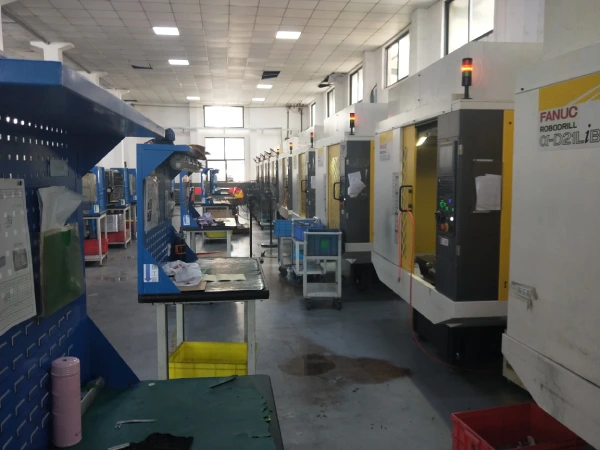
Many valve castings require more machining than a typical structural casting. Flange faces, seat pockets, stem bores, guide diameters, gasket surfaces, threaded connections, bolt patterns, and actuator interfaces often need controlled datums and repeatable fixturing.
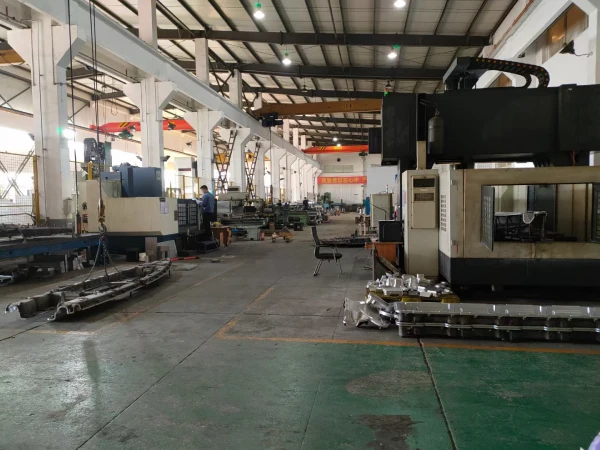
Supro can combine casting and CNC machining within one manufacturing plan so the as-cast allowance, workholding surfaces, and inspection sequence are considered from the start. Depending on the drawing, the scope may include turning, milling, drilling, boring, tapping, reaming, and inspection of machined features. The machining route is reviewed against distortion risk and datum accessibility; a casting that is easy to pour can still be expensive to machine if the locating strategy is not considered early.
For sealing or pressure-related surfaces, the drawing should state the finished dimension, flatness or runout requirement, surface-finish requirement, and any protected area. These values are quoted only after drawing review rather than being advertised as one universal tolerance for every valve casting.
QUALITY & DOCUMENTATION
Inspection and Documentation for Valve Castings
Define the control plan and report package before production starts.
Inspection should follow the function of the component and the customer’s acceptance standard. A practical control plan may include incoming material verification, melt chemistry checks, visual inspection, dimensional inspection, CMM measurement for selected machined features, mechanical-property testing, hardness testing, and nondestructive examination when specified.
Material traceability normally links the heat or melt identification to the production and inspection records. The documentation package can be defined at quotation stage and may include a material certificate, dimensional report, mechanical-test report, hardness results, heat-treatment record, NDT report, first-article inspection, or photographs of marking and packaging. The exact format and third-party witness requirements must be agreed before production.
Standards such as ASME B16.34 cover construction requirements for many industrial valves, including materials, nondestructive examination, testing, and marking. ISO 5208 addresses pressure testing of metallic valves. These standards are useful references for understanding the buyer’s end requirements, but a casting supplier and a finished-valve manufacturer do not always have the same scope. Unless assembly and pressure testing are specifically included, Supro’s quotation covers the cast or machined component; final shell and seat leakage tests remain with the valve manufacturer or the party defined in the purchase specification.
| Control | Typical evidence | RFQ question |
|---|---|---|
| Material identity | Heat or melt traceability, chemistry results or material certificate | Which material standard and certificate format are required? |
| Dimensions | First article inspection, dimensional report and CMM results for selected features | Which dimensions are critical to quality? |
| Mechanical properties | Tensile, impact or hardness test results when specified in the purchase requirements | What test frequency and acceptance standard should apply? |
| NDT | PT, MT, UT or RT reports when the method and acceptance criteria are agreed | Which zones, method, inspection level and acceptance criteria are required? |
| Final valve testing | Shell and seat tests performed by the contractually defined responsible party | Is assembly or component pressure testing included in the project scope? |
CONTROLLED OEM WORKFLOW
From Drawing Review to Production
01
RFQ Review
Drawings, models, alloy, quantity and inspection scope.
02
Technical Clarification
Process, tooling, cores, heat treatment and open questions.
03
Quotation
Tooling, samples, production, machining, inspection and packing.
04
Tooling & Samples
Validate the approved drawing and sample inspection plan.
05
Production Control
Maintain melt, molding, machining and inspection records.
06
Final Inspection
Verify parts, reports, marking and transport protection.
A controlled OEM valve casting project normally moves through the following stages:
- RFQ review: drawing, 3D model, material, quantity, machining scope, inspection requirements, and destination are checked.
- Technical clarification: the engineering team identifies open questions about process, tooling, cores, heat treatment, machining, and documentation.
- Quotation and manufacturing plan: the proposal separates tooling, samples, production parts, machining, finishing, inspection, and logistics.
- Tooling and sample validation: patterns, dies, or wax tooling are prepared and sample parts are inspected against the approved drawing.
- Production control: melt, molding, pouring, cleaning, heat treatment, machining, and inspection records are maintained according to the agreed plan.
- Final inspection and packing: parts are verified, protected against transport damage and corrosion as required, and packed for the agreed shipping method.
No production timing, minimum order quantity, or universal tolerance is stated on this page because those values depend on the selected process, alloy, tooling, part size, inspection scope, and order quantity.
WHY SUPRO MFG
Why Source Valve Castings from Supro MFG
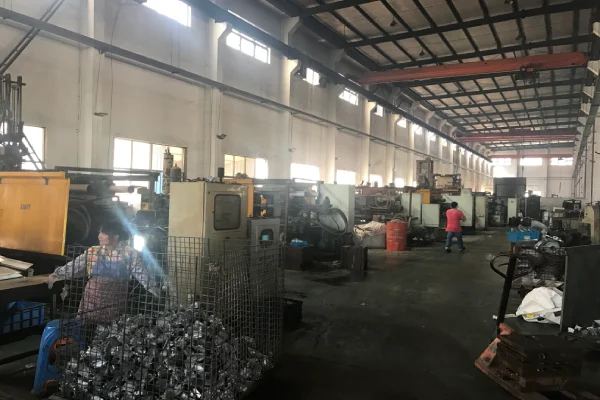
Supro Metal Casting Foundry is China leading metal casting parts manufacturer, founded in 1997, with continuous upgrading of casting technology and replacement of advanced casting equipment, we have become an industry-leading casting enterprise, covering an area of 8,800 square meters, with three castings The workshop, a precision cnc machining and surface coating workshop, has 120 technical employees, 18 quality engineers, and 17 core company management. Provide stable metal casting parts supply projects for 3800+ purchasing companies from China and the world.
We specialize in metal castings with various complex structures, and use our rich knowledge of casting materials and casting experience to deliver high-quality metal casting parts to customers on time through professional casting techniques.
Whether rapid casting prototype or high volume casting, we can provide strong casting capabilities, including: product design and optimization, mold design and manufacturing, metal casting process, quality control, precision CNC machining, material and physical property testing, surface coating , as well as one-stop metal casting services such as packaging and transportation.
PREPARE A USEFUL RFQ
What to Send for a Valve Casting Quotation
To receive a useful technical review, send the latest 2D drawing and 3D model together with the material specification, annual and batch quantities, required casting process if already fixed, machining scope, heat treatment, surface protection, inspection standard, documentation package, and delivery destination. For pressure-containing parts, also identify the valve type, pressure class or design pressure, operating temperature, service media, and any customer or project specification that affects material or NDT.
Accepted engineering formats can include PDF, DWG, DXF, STEP or STP, IGES, and other common neutral 3D formats. When only a sample is available, include photographs, measured dimensions, application details, and the expected quantity so the reverse-engineering scope can be evaluated separately.
Send your drawing and technical specification through the contact page to start a manufacturability review and receive a quotation based on the actual project rather than a generic price per kilogram.
Send these project inputs
- 2D drawing + 3D model and revision
- Material standard and heat treatment
- Batch and annual quantity
- Machining, finish and protected surfaces
- Inspection, NDT and documentation package
- Pressure class, media and operating temperature
PURCHASING QUESTIONS
Valve Casting FAQ
Answers are written around project scope and engineering review rather than generic promises.
What information should I send for a valve casting quote?
Send the 2D drawing or 3D model, material grade, estimated order quantity, target weight, machining scope, critical dimensions, inspection requirements, surface treatment and any applicable customer or valve standards. Pressure-containing zones and sealing-related features should be clearly identified.
How do I choose between investment casting and sand casting for valve parts?
Investment casting is commonly considered for smaller or more intricate valve components that require detailed geometry and reduced machining allowance. Sand casting is often more suitable for larger valve bodies, heavier wall sections and low-to-medium production volumes. The final process should be selected after reviewing alloy, geometry, quantity, pressure boundary and machining requirements.
Which materials can be reviewed for valve castings?
Material options may include stainless steel, carbon steel, alloy steel, cast iron and copper-based alloys, depending on corrosion resistance, operating temperature, pressure, wear conditions and cost targets. The required grade and governing standard should be confirmed during drawing review.
Can you help review porosity and leakage risks before production?
Engineering review can examine wall-thickness transitions, isolated heavy sections, feeding paths, machining stock and pressure-containing zones. Inspection and acceptance requirements should be defined during the RFQ stage rather than assumed after tooling has started.
Can CNC machining be supplied after casting?
CNC machining can be reviewed for flange faces, bores, stem holes, sealing-related surfaces, bolt patterns and other functional features. The drawing should identify datums, tolerances, surface-finish requirements and critical-to-quality dimensions.
What inspection documents can be discussed for valve components?
Depending on the project, documentation may include material certificates, chemistry results, dimensional reports, CMM records, hardness or mechanical test results and agreed NDT reports. The required format, frequency and acceptance criteria should be written into the purchase specification.
Who is responsible for shell and seat pressure testing?
Shell and seat tests are generally finished-valve tests and should be assigned to the responsible party in the contract. A casting supplier should not imply that raw or machined castings automatically meet every finished-valve requirement unless the testing scope has been specifically agreed.
Which drawing file formats can be sent for review?
Common formats include PDF, DWG and DXF for 2D drawings, together with STEP, STP and IGES for 3D models. Include the correct revision status and clearly mark customer-controlled dimensions or confidential information.
How are quality issues handled after delivery?
A useful quality claim should identify the part number, heat or batch reference, defect location, affected quantity, photographs, dimensional or test evidence and the requested containment action. Traceability and corrective-action expectations should be agreed before serial production.
START WITH THE DRAWING
Request a Valve Casting Review
Send your controlled drawing, 3D model, material specification, quantity, machining scope, and inspection requirements. Supro MFG will review the manufacturing route and clarify open technical questions before preparing a project-based quotation.