
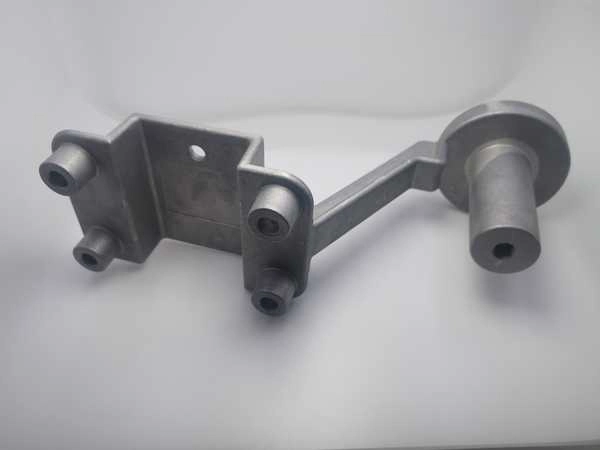
Aluminum investment casting is a critical process for manufacturing complex, lightweight components in aerospace, automotive, and high-performance industrial sectors. Among aluminum alloys, A356 stands out as the material of choice for this process due to its exceptional comprehensive properties. Selecting the right material is merely the starting point. The core challenge facing engineers and procurement decision-makers lies in ensuring that every A356 aluminum casting precisely achieves the design intent and meets the long-term service requirements under extreme conditions.
Transforming the material potential of A356 into consistent product performance is achieved through a systematic engineering approach encompassing metallurgical control, precision casting, and post-processing. Therefore, a thorough understanding and strict control of the quality assurance process and surface treatment techniques for A356 investment casting are indispensable steps to ensure part integrity, enhance durability, and ultimately achieve successful application.
This article will outline the complete technical pathway for ensuring the exceptional performance of A356 investment castings. It systematically explains how process control safeguards design integrity and analyzes how various surface treatment processes specifically enhance the durability and functionality of castings. The aim is to provide practical knowledge and standard references directly applicable to evaluating investment casting suppliers and conducting process audits.
Material Properties and Key Characteristics of A356 Aluminum Investment Casting
A356 aluminum alloy is the preferred choice for demanding applications because it combines outstanding casting properties, balanced mechanical strength, exceptional environmental resistance, and inherent lightweight advantages. These characteristics ensure that A356 aluminum castings deliver reliable, durable, and efficient solutions when confronting complex designs, severe loads, and harsh operating conditions.
Preferred Material for Aluminum Investment Casting Alloys
Among numerous investment casting aluminum alloys, A356 stands out as the material of choice for producing high-quality, complex near-net-shape components due to its balanced and exceptional overall properties. Its core advantage lies in outstanding casting fluidity, enabling precise reproduction of intricate mold details and offering unparalleled design freedom for aluminum investment casting processes.
Following standard T6 heat treatment, A356 aluminum castings exhibit an outstanding combination of mechanical properties, including high specific strength, good elongation, and fatigue resistance. Simultaneously, the high silicon content imparts exceptional corrosion resistance to the castings, enabling them to withstand harsh environments effectively. These characteristics, combined with significant weight reduction advantages, establish A356 as the preferred casting material for aerospace aluminum investment castings, automotive components, and critical parts in high-performance industrial applications.
Four Key Characteristics of A356 Aluminum Investment Casting
The exceptional performance of A356 aluminum investment casting stems from four interrelated key characteristics: First, outstanding corrosion resistance enables castings to withstand harsh environments over extended periods, making them an excellent choice for maritime and aerospace .
Secondly, through standard T6 heat treatment, A356 aluminum castings achieve high and stable mechanical strength with excellent toughness, meeting the stringent demands of high-load components. Superior resistance to thermal cracking ensures that castings maintain their internal structure integrity during the intricate investment casting process, minimizing defects.
Ultimately, superior surface integrity translates to fewer initial defects, yielding higher fatigue strength and long-term service reliability for aluminum investment castings. These four defining characteristics collectively form the irreplaceable foundation of A356 aluminum castings' value in demanding applications.
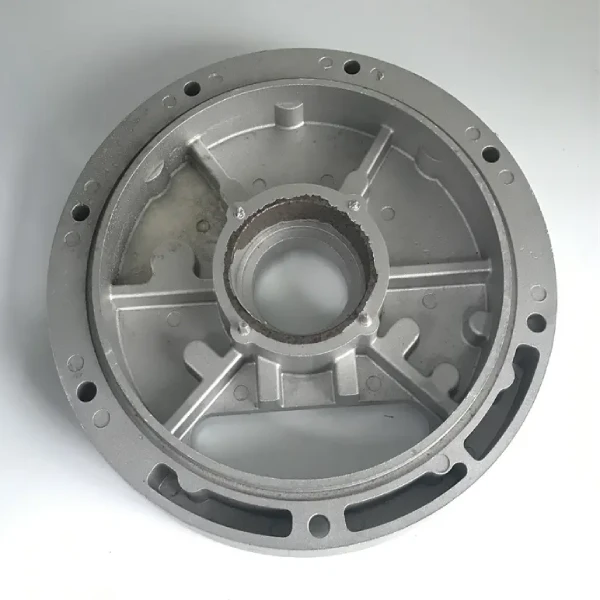
Ensuring Design Integrity for A356 Investment Castings
To achieve the complete transformation of A356 investment casting from design drawings into high-performance components, every step—from metallurgical quality control to precision process execution—must be rigorously managed. Through stringent melt treatment, process monitoring, and scientific performance validation, each aluminum investment casting can precisely meet the mechanical and durability requirements specified in the design. This ensures reliable performance for demanding applications in aerospace, automotive, and other critical sectors.
Guaranteeing Mechanical Property Achievement
Ensuring A356 castings meet the required mechanical properties begins with core control of metallurgical quality. During aluminum investment casting, Rotary Degassing strictly controls melt hydrogen content below 0.10 ml/100g Al, minimizing the formation of brittle pores.
Simultaneously, adding Sr for modification treatment optimizes the microstructure of A356 investment castings, directly increasing material elongation by approximately 50% while enhancing tensile strength. This forms the foundation for the exceptional toughness and strength achieved in A356 investment castings.
Impact of Process Deviations on Part Quality and Surface Finish
Process deviations directly cause defects, severely compromising design integrity. Internal defects such as micro-shrinkage and oxide inclusions are primary performance limiting factors. Stable process parameters and an optimized gating system are critical for producing defect-free aluminum investment casting parts.
The final surface quality forms the foundation for successful subsequent finishing and long-term corrosion resistance. A well-controlled casting surface ensures uniform adhesion of chemical conversion coatings, providing enduring protection for A356 aluminum castings in demanding environments.
Looking for a reliable China metal foundry?
- We can help you optimize product design and save costs.
- We can help you with high quality high volume cast parts.
- We can deliver on time and get more sales market opportunities.
- You will benefit from Supro MFG metal casting service.
Quality Control Measures for Aluminum Investment Castings
Ensuring quality control in the aluminum investment casting process is not only prudent but absolutely critical. Implementing rigorous quality control measures throughout every stage—from raw material certification to final inspection—guarantees that each A356 aluminum casting meets the most stringent industry standards for internal integrity, mechanical properties, and material compliance. Here are the secrets top foundries use to eliminate defects and maintain precision.
Providing Non-Destructive Testing Services for A356 Castings
During the aluminum investment casting process, foundries employ multiple NDT services to ensure A356 alloy parts pass vibration testing without cracking:
(1)Radiography: X-rays can detect potential defects in A356 aluminum castings (such as voids and inclusions) early on, preventing them from evolving into problems.
(2)Ultrasonics: Sound wave reflections reveal internal flaws like cracks or delamination.
(3)Liquid penetrant: Excels at exposing surface damage invisible to the naked eye in aluminum castings.
(4)Eddy current testing: Detects subsurface damage by sensing changes in electrical conductivity.
These methods guarantee your investment castings are pure and reliable—no guesswork, only solid components.
Resolving Porosity Defects in Aluminum Castings
Porosity issues can be a real killer for aluminum investment casting, but they can be resolved with the right measures. Here's how metal foundries handle it:
Porosity Type | Root Cause | Mitigation Method | Resulting Benefit |
Gas Porosity | Entrapped air during pouring | Controlled melt handling | Reduced internal bubbles |
Shrinkage Porosity | Poor feeding system design | Optimized riser placement | Better solidification control |
Micro-Porosity | Rapid cooling | Thermal gradient control | Improved density |
Surface Porosity | Mold gas entrapment | Vacuum-assisted casting | Cleaner surfaces |
Additional processes such as vacuum impregnation and strict process control, along with post-casting techniques like isostatic pressing, provide aluminum castings with true sealing assurance.
Importance of Material Performance Certification Compliance
In the certification process for aluminum investment casting components, maintaining quality requires comprehensive documentation. Each batch of investment-cast aluminum assemblies must undergo thorough material certification to ensure full traceability, guaranteeing that every part meets specifications for mechanical strength, chemical composition, and heat treatment history.
Verification data for parameters like tensile strength and elongation is not mere paperwork—it's your peace of mind. Especially when using high-performance alloys like A356, compliance with investment casting industry standards means fewer unexpected risks in subsequent processes.
Implementing Quality Assurance with High-Resolution Inspection Instruments
In the field of aluminum investment casting, modern quality inspection has fully entered the era of high-precision digitalization. Today, everything relies on cutting-edge technology; the days of relying solely on visual inspection are long gone.
(1)Industrial CT scanning provides three-dimensional internal imaging of A356 aluminum casting components, revealing even the most deeply concealed micro-voids.
(2)Optical measurement technology enables micron-level dimensional inspection.
(3)Surface analysis tools precisely locate textural anomalies that may compromise coating adhesion or fatigue life.
As Deloitte's 2024 Advanced Manufacturing Outlook states: “Precision-driven industries increasingly rely on digital inspection to eliminate rework and boost output.” Supro MFG's foundry capabilities excel precisely here—by integrating cutting-edge systems into every stage of aluminum investment casting quality assurance through tools like automated X-ray imaging and ultra-precise dimensional scanners.
When precision matters most? These devices capture every detail of your next aluminum investment casting operation with pinpoint accuracy—never missing a flaw.
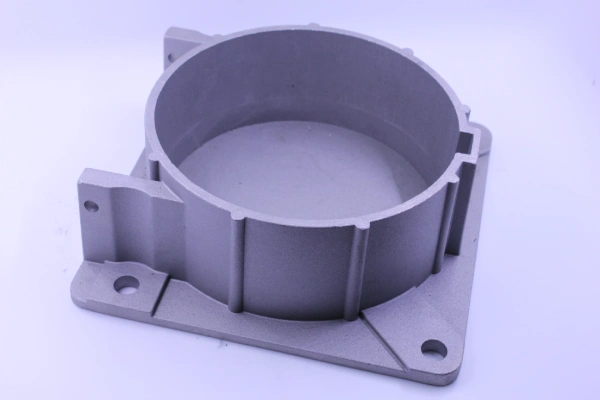
Surface Treatment Processes for A356 Aluminum Investment Castings
Surface treatment is far more than just the final finishing touch for A356 aluminum castings; it is the critical step that transforms the material’s potential into exceptional performance and long-term reliability, directly determining the casting’s ultimate properties and appearance. Let’s explore the optimal methods for protecting and polishing these components.
Surface Treatment and Finishing Solutions for Enhanced Durability
(1)Anodizing creates a thick oxide layer on the surface of aluminum alloy for casting, enhancing both aesthetic appeal and corrosion resistance.
(2)Chemical conversion coatings such as chromate provide protection for A356 investment castings without altering part dimensions.
(3)Thermal spraying processes form wear-resistant coatings—particularly suitable for high-friction components in A356 investment castings.
When A356 aluminum castings face harsh environments, a combined treatment approach is recommended. For instance, anodizing followed by powder coating creates a dual protective layer. Nickel-free plating serves as another reliable option—it forms a uniform thickness even on complex aluminum casting geometries while enhancing wear resistance and electrical conductivity. Certain industries also employ laser or induction surface hardening techniques to reinforce critical areas.
Supro MFG's factory technology ensures all surface treatment processes are customized to your alloy formulation and application requirements, particularly when processing A356 aluminum castings. Below is a guide to selecting surface treatment solutions for aluminum investment casting parts:
Treatment Type | Durability Boost | Thickness Range (µm) | Common Applications |
Anodizing | High | 5–25 | Aerospace, Automotive |
Chemical Conversion | Moderate | <5 | Electronics, Marine |
Electroless Nickel | Very High | 10–50 | Industrial Tools, Robotics |
Thermal Spraying | Extreme | 50–250 | Heavy Machinery, Valves |
Achieving Premium Surface Finish Standards for Aluminum Castings
Achieving top-tier surface finishing for aluminum castings requires more than just polishing—it demands meticulous attention to detail:
Ensuring strict dimensional accuracy begins at the mold design stage of investment casting. Employ post-casting treatments such as shot peening or CNC trimming. Conduct visual inspections on every aluminum casting part to detect cracks, pits, and other visible defects. Implement non-destructive testing (NDT) when necessary—particularly critical for aerospace and automotive applications.
Continuously monitor surface roughness (measured in Ra micrometers); smoother surfaces reduce friction and enhance coating adhesion. Be vigilant for common surface defects such as porosity or cold shuts—if left unaddressed, they will compromise both functionality and aesthetics.
High-quality surface treatment for A356 aluminum investment castings must meet the stringent industry benchmarks of ISO 8062—encompassing the entire process from visual grading to mechanical integrity testing. Supro MFG's quality assurance process ensures every aluminum investment casting meets standards before arriving at your unloading area.
Conclusion
In summary, the success of A356 investment casting hinges on a systematic engineering closed-loop process: rigorous metallurgical and process controls ensure design integrity, while comprehensive quality control measures—such as advanced non-destructive testing (NDT)—eliminate defects. Finally, customized surface treatment processes, like anodizing for aerospace aluminum investment castings, impart long-term durability.
Selecting partners with deep expertise and comprehensive quality systems is key to achieving optimal performance and reliability in A356 castings. By choosing an ISO-certified aluminum investment casting foundry like Supro MFG, you gain end-to-end technical assurance—from material engineering to final inspection.
Please feel free to contact us to obtain customized technical solutions and quotations for your next A356 aluminum castings project.
FAQs about Aluminum Investment Casting
What inspection and certification processes ensure consistent quality of aluminum castings in mass production?
Quality stems from data-driven iterative practice—not from guesswork. The following core measures are implemented in key quality control processes:
Quality Layer | Function | Related Equipment / Standards |
Non-destructive testing services offered | Identify internal flaws & porosity defects early | X-ray & ultrasonic tools |
Material property certification compliance | Confirms heat treatment & microstructure integrity | Aerospace-grade standards |
Dimensional verification protocols | Enforces fit accuracy for Industrial machinery parts fabrication contracts | High-resolution inspection instruments |
Results: Consistent excellence from prototyping to production-grade manufacturing.
Can surface treatment enhance the durability of A356 components for defense industry parts exported?
Yes—proper surface treatments can impart armor-like toughness to A356 investment castings:
(1)Surface treatments like anodizing form dense oxide layers that resist corrosion from salt, fuel, or desert dust abrasion.
(2)Powder coatings resist corrosion in field conditions where seals fail.
Combined, these surface treatments significantly extend the service life of A356 aluminum castings beyond untreated metal surfaces—even under the thermal cycling conditions common in defense industry procurement projects.
How to Achieve Premium Surface Finish Standards for A356 Aluminum Castings?
Key Points:
(1)Quality begins at the mold stage
(2)Post-casting cleaning is critical
(3)Final inspection compensates for mechanical testing blind spots
A356 aluminum castings: Superior surface finishing isn't just about shine—it's the visual embodiment of intelligent engineering.
What Common Production Issues Should Buyers Note When Procuring High-Volume Aluminum Investment Castings?
Defects may be hidden beneath the smooth surface of aluminum investment castings; understanding these defects can prevent costly returns:
(1)Porosity or bubbles originate from defects in the gate design of automated wax injection equipment.
(2)Contamination occurs during the sintering cycle in the furnace when foreign particles penetrate the fragile ceramic shell.
(3)Shrinkage defects cause deformation in thick-walled areas—increasing the risk of dimensional inaccuracies in castings after machining.
Each defect reveals specific process deviations—yet rigorous process control ensures these potential issues are identified and eliminated at an early stage, thereby guaranteeing the final delivery quality of aerospace-grade aluminum castings.
What Industry Quality Certifications Does a Professional Aluminum Investment Casting Foundry Hold? How Does This Ensure A356 Aluminum Investment Casting Projects?
As a leading Chinese manufacturer of custom metal castings, Supro MFG holds ISO 9001:2015 and IATF 16949 quality management system certifications:
(1)For critical A356 aluminum investment casting projects, we adhere to stringent internal control standards and meet the specific requirements of the automotive industry for metal casting.
(2)Robust quality certifications and standardized production processes fundamentally ensure the quality and compliance of your aluminum investment casting products from design to delivery.
 English
 Français
 Deutsch
 Italiano
 日本語
日本語 한국어
한국어 Polski
 Português de Angola
 Русский
 Español de Argentina