
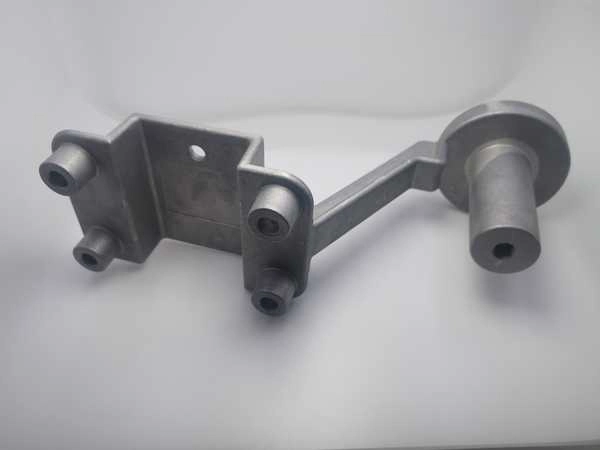
Aluminum investment casting is a key process for manufacturing high-precision, lightweight structural components. When designing electric vehicle powertrains, high-performance robot joints, or lightweight drone suspension systems, engineers often face a dual challenge: ensuring exceptional mechanical performance while meeting stringent cost targets.
This guide provides an in-depth analysis of the metallurgical properties of A356 and AlSi10Mg, along with a clear engineering decision-making flowchart to help you optimize the technical and economic benefits of your project.
Introduction to Aluminum Investment Casting Alloys
Aluminum investment casting is a process used to manufacture high-precision, lightweight structural components. Selecting the right material during the early stages of structural design will determine the entire lifecycle of the aluminum casting. Modern design engineers often find it difficult to select the ideal alloy when balancing cost, mechanical properties, and manufacturability. The following section will explore how two leading alloys meet the demands of modern global manufacturing.
The Evolution of A356 vs AlSi10Mg in Modern Engineering
Selecting the ideal reference material for aluminum investment castings requires a deep understanding of metallurgical traditions. For decades, the global foundry industry has viewed the debate between A356 and AlSi10Mg as a contest for the authoritative benchmark for high-integrity components.
A356 has long served as the foundational standard for aluminum investment castings and is highly regarded for its reliable balance of silicon and magnesium.
However, the rapid development of additive manufacturing and the surge in demand for complex geometries have driven the adoption of AlSi10Mg in traditional aluminum investment casting processes. Initially popular in the 3D printing sector due to its near-eutectic composition, its excellent fluidity is now being leveraged by traditional foundries to achieve more complex aluminum casting designs.
Supro MFG’s investment casting shop has adapted to this shift by optimizing the pouring temperatures for both alloys. Ultimately, while A356 remains the time-tested traditional choice, AlSi10Mg represents a modern evolution tailored for complex, thin-walled geometries.
Structural Component Requirements for Aerospace and EV Applications
Aerospace systems and electric vehicle (EV) platforms are subject to stringent mechanical performance standards, which complicate the manufacturing process. These high-tech sectors require high-quality investment-cast aluminum parts that can withstand immense dynamic stresses while minimizing the vehicle’s overall weight.
To achieve optimal weight reduction, design engineers typically evaluate aluminum investment casting grades for structural components as replacements for bulky steel parts or multi-piece assemblies. The primary engineering challenge in aluminum investment casting lies in ensuring high structural rigidity and the castability of thin-walled sections while avoiding internal porosity defects. Traditional manufacturing processes often struggle with these thin-walled sections, forcing structural engineers to collaborate with advanced aluminum investment casting companies early in the development phase.
Supro MFG has addressed this challenge by employing advanced mold flow simulation technology, ensuring that all selected alloys comply with the IATF 16949 automotive quality standard. Consequently, validating structural requirements based on the specific properties of the investment-cast aluminum alloy ensures that the final components offer certified safety and reliability in the field.
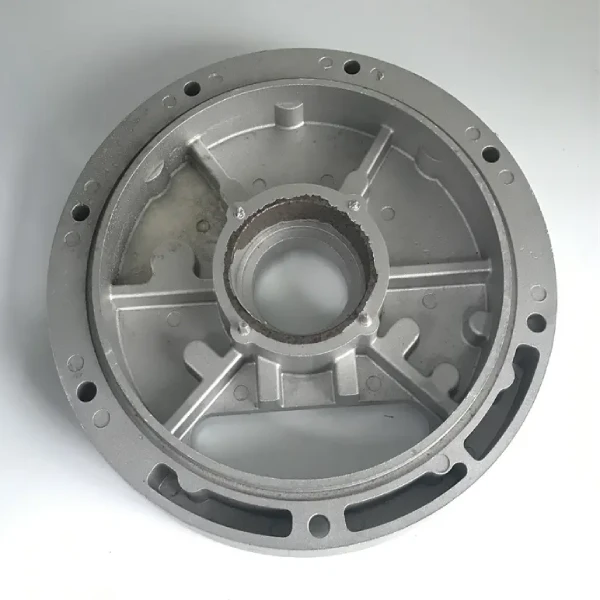
Chemical Compositions in Aluminum Investment Casting
The chemical composition of aluminum investment casting is fundamental to determining the feasibility of metal casting and the final structural integrity of the casting. The precise ratio of alloying elements determines how efficiently the molten metal fills complex mold cavities. The following section provides a detailed analysis of the differences in the metallurgical behavior of the elements that influence these two key factors.
How Silicon and Magnesium Dictate Fluidity and Feedability
The precise balance between silicon and magnesium determines the fillability and base strength of investment-cast aluminum parts:
- Silicon alters the behavior of molten metal: A 7% silicon content in A356 provides good fluidity, while a 10% silicon content in AlSi10Mg is close to the eutectic level, thereby maximizing fill efficiency.
- The magnesium content in both alloys is typically maintained between 0.25% and 0.45%; the Mg₂Si precipitates it forms are a key component essential for subsequent precipitation hardening.
In the aluminum investment casting process, a higher silicon content significantly reduces volumetric shrinkage and eliminates gate defects in cross-sections smaller than 2 millimeters. However, an increase in silicon content alters the solidification path, shifting the focus from simple feed control to managing a wider solidification zone.
Supro MFG engineers monitor these elemental ratios via spark spectrometric analysis before each pour to ensure that the chemical composition of the aluminum investment castings meets specifications. In summary, when evaluating AlSi10Mg versus A356 castings, a balance must be struck between the superior filling fluidity provided by 10% silicon and the inherent strengthening potential of a purer, lower-silicon matrix.
Metallurgical Variance of A356 vs AlSi10Mg Alloys
To ensure the structural reliability of investment-cast aluminum parts, trace alloying elements and iron impurities must be strictly controlled. In A356 investment-casting material, if the iron content exceeds 0.20%, a brittle, acicular β-phase (Al₅FeSi) intermetallic compound forms, thereby reducing impact toughness. Conversely, the AlSi10Mg grade naturally permits a slightly higher iron content (up to 0.55%), although this presents different microstructural control challenges during solidification.
Advanced aluminum investment casting companies utilize specific trace elements—such as strontium (Sr) modifiers or titanium (Ti) grain refiners—to modify these microstructural phases. Without proper modification, high-silicon phases form coarse, flaky structures rather than a fine, fibrous network, leading to premature structural failure under heavy loads.
Supro MFG employs rotary degassing and ceramic foam filtration processes to remove oxides before aluminum castings are formed. Ultimately, maintaining high metallurgical purity ensures that the selected aluminum investment casting material fully realizes its true theoretical performance potential.
To help design engineers visually understand the differences in these key element contents, the chemical composition limits specified in ASTM/EN standards are summarized below:
Alloy Grade | Standard Reference | Si (%) | Mg (%) | Fe (%) | Ti (%) | Al (%) | Metallurgical Purpose |
A356 | ASTM B108 / UNS A03560 | 6.5 – 7.5 | 0.25 – 0.45 | ≤ 0.20 | ≤ 0.20 | Balance | Lower silicon provides superior ductility and toughness, while magnesium forms the Mg2Si hardening phase. |
AlSi10Mg | EN 1706 AC-43000 | 9.0 – 11.0 | 0.20 – 0.45 | ≤ 0.55 | ≤ 0.15 | Balance | Near-eutectic silicon delivers exceptional fluidity for thin walls, though it tolerates slightly higher iron boundaries. |
Mechanical Properties of Aluminum Investment Casting Parts
Evaluating the properties of investment-cast aluminum alloys through destructive load testing allows for the prediction of how parts will perform in actual use. Design engineers must verify the balance between strength metrics and the elongation limit under structural loads. This section presents a side-by-side performance analysis of these two mainstream materials.
Comparing Yield Strength and Tensile Strength Metrics
Mechanical strength criteria are used to determine the load that an aluminum investment casting part can withstand before permanent deformation occurs. When comparing A356 and AlSi10Mg, structural engineers will find a significant difference in their yield strengths. In the as-cast (F) or standard manufactured condition, the initial yield strength of AlSi10Mg (130–150 MPa) is higher than that of standard as-cast substitute materials.
This strength advantage stems from the finer-grained matrix formed during the rapid cooling phase of the aluminum investment casting process. When both materials undergo full heat treatment, AlSi10Mg-T6 still maintains a higher ultimate yield strength, peaking at approximately 240–270 MPa.
Supro MFG verifies these structural mechanical properties by conducting destructive tensile tests on production batches of each aluminum alloy casting. If your application requires high initial flexural strength, AlSi10Mg offers superior yield characteristics compared to traditional materials.
Elongation and Ductility Limits Under Structural Stress
For structural components in aluminum investment casting, selecting cast aluminum grades with high ductility allows them to absorb energy when subjected to sudden impacts. In this regard, A356 performs particularly well because its low silicon content makes the α-aluminum matrix more ductile.
Under heavy loads, A356 can achieve an elongation of 3.5% to 6.0%, which allows stress to be distributed more evenly, thereby preventing rapid crack propagation. In contrast, the high-silicon crystal structure in AlSi10Mg limits its elongation to between 1.0% and 2.5%, making aluminum investment castings more prone to brittle fracture. Experienced aluminum investment casting companies typically recommend A356 for cyclic fatigue and high-impact applications, such as electric vehicle suspension control arms.
To ensure these safety limits are met, Supro MFG conducts rigorous non-destructive X-ray inspections to check for internal porosity. Striking a balance between tensile strength and actual elongation limits ensures that your aluminum investment casting projects achieve an appropriate safety margin.
To facilitate a direct comparison of these mechanical limits, the official ASTM and EN test specifications are summarized below:
Mechanical Metric | A356-T6 (Standard Condition) | AlSi10Mg (As-Cast) | AlSi10Mg-T6 (Heat Treated) | Engineering Insights |
Tensile Strength (Rm) | 290 – 320 MPa | 220 – 250 MPa | 300 – 340 MPa | Peak ultimate strengths are comparable after T6 treatment, though AlSi10Mg-T6 achieves a slightly higher threshold. |
Yield Strength (Rp0.2) | 220 – 240 MPa | 130 – 150 MPa | 240 – 270 MPa | AlSi10Mg-T6 yields higher, meaning the component tolerates greater stress before experiencing permanent deformation. |
Elongation (A5) | 3.5% – 6.0% | 2.0% – 4.0% | 1.0% – 2.5% | A356-T6 holds a clear advantage. Choose A356 for high-impact or cyclic fatigue loads; AlSi10Mg exhibits higher brittleness. |
Brinell Hardness (HBW) | 85 – 95 | 65 – 75 | 95 – 110 | Higher hardness in AlSi10Mg-T6 improves local wear resistance and assists in cleaner post-cast machining chip breaking. |
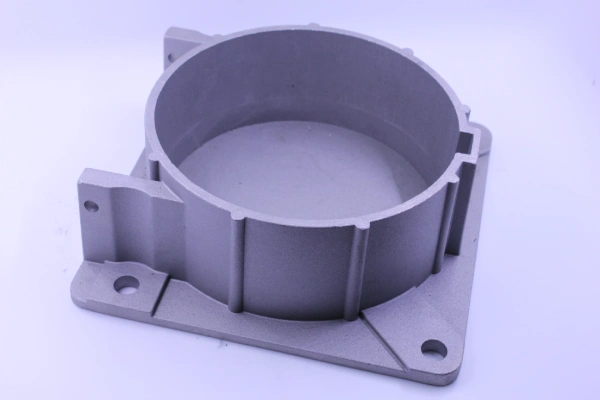
Cost Effectiveness of Aluminum Investment Casting Processes
Managing total procurement expenditures requires a comprehensive assessment of prior production tooling, the supply of alloy raw materials, and long-term production yield. Striking a balance between the manufacturing cost structure and component complexity will determine the ultimate financial viability of an engineering project. This analysis helps supply chain managers calculate the true total cost of ownership for aluminum investment casting.
Raw Material Procurement and Tooling Amortization Costs
Upfront mold amortization and the procurement of alloy raw materials constitute the costs of any aluminum investment casting production batch. When evaluating material options between A356 and AlSi10Mg, A356 is widely available globally and has a lower silicon content, making its raw material price more competitive.
Furthermore, the choice of material affects the service life of the wax injection molds used in the aluminum investment casting process. AlSi10Mg has a silicon content of 10%, making it slightly more abrasive than A356, which accelerates wear on precision mold inserts during high-volume production cycles.
To help procurement managers minimize initial risks, Supro MFG can tailor transparent mold amortization plans based on partners’ annual production volume plans for aluminum investment casting projects. For projects that achieve the highest cost-effectiveness over a long lifecycle, the lower premium of A356 and its lower mold wear characteristics often provide significant advantages.
Post-Casting Machining and Defect Rate Analysis
The total cost of aluminum investment castings depends largely on the yield rate and defect rate during downstream machining:
- AlSi10Mg has excellent melt flowability, which reduces the scrap rate caused by poor casting of complex geometries; however, its high silicon content accelerates cutting tool wear during the final CNC milling process.
- The mechanical properties of A356 aluminum alloy provide excellent machinability, but its wide solidification temperature range requires careful gate placement to avoid internal shrinkage porosity.
To evaluate the total output of AlSi10Mg castings versus A356 castings, it is necessary to balance the costs of mold changeovers against the costs of detecting internal porosity. Leading aluminum investment casting companies analyze this trade-off in advance to avoid unexpected machining costs.
To ensure stable production costs for aluminum investment castings, Supro MFG employs advanced CNC toolpath optimization technology and digital coordinate measuring machine (CMM) inspection. Ultimately, by balancing tool life with casting defect rates, the procurement team is able to select the most cost-effective solution for its structural components.
Selection Guide for Aluminum Investment Casting Projects
Transforming the selection of technical materials into a structured procurement process helps streamline the engineering design phase of aluminum investment casting projects. Establishing a clear framework can help project teams avoid costly redesign cycles before manufacturing begins. This section provides a practical selection guide to help you choose the best solution for your specific application.
The Engineering Decision Tree for Structural Components
To choose between A356 and AlSi10Mg, it is necessary to objectively evaluate the component’s primary working stresses and wall thickness. For complex, thin-walled designs such as robot joints or drone arms, AlSi10Mg’s high fluidity helps prevent filling defects during the aluminum investment casting process. However, for heavy-duty load-bearing components such as automotive suspension control arms, A356’s superior elongation makes it the preferred choice among cast aluminum grades for structural components.
In the aluminum investment casting process, the match between geometry and material properties determines the success or failure of production. Improper material selection may result in high scrap rates or component failure due to unexpected impacts during actual use. For complex geometries with wall thicknesses less than 2 millimeters, AlSi10Mg should be selected; for structural components requiring high impact resistance, A356 should be chosen.
Supro MFG Recommendations for Global Design Engineers
To strike a balance between mechanical properties and cost, engineers should consult with specialized aluminum investment casting companies early in the design process. Relying solely on raw data from technical data sheets often overlooks variables in actual casting production, which can lead to unexpected quality issues with aluminum castings. An experienced team not only focuses on the basic mechanical properties of A356 aluminum alloy but also optimizes gate design and heat treatment parameters for specific part geometries.
Supro MFG uses mold fluid simulation technology to identify potential shrinkage areas in investment castings before cutting into the tool steel. This early optimization saves engineering time and avoids costly modifications later on, thereby protecting your R&D budget.
Contact Supro-Mfg
Both A356 and AlSi10Mg have their own advantages: A356 offers excellent ductility, making it suitable for high-impact structural components; AlSi10Mg has exceptional fluidity, making it ideal for complex, thin-walled parts. Material selection should be based on a comprehensive evaluation of chemical composition, mechanical properties, and cost, taking into account specific geometries and service stresses, to achieve the best cost-effectiveness and reliability for aluminum investment casting projects.
With 25 years of casting experience and ISO/TS 16949 certification, Supro MFG provides a one-stop solution for your aluminum investment casting needs. Please feel free to send us your drawings or requirements to receive personalized technical support and a prompt quote.
Selecting the right alloy profile is only the first step in structural design. If your components are thin-walled structures subjected to high-cyclic fatigue loads, looking at composition alone is insufficient. You must dive into their microstructural behaviors regarding crack propagation and fracture toughness.
Furthermore, if you are concerned about the actual service strength under extreme operating conditions, the downstream thermal processing is the ultimate deciding factor.
 English
 Français
 Deutsch
 Italiano
 日本語
日本語 한국어
한국어 Polski
 Português de Angola
 Русский
 Español de Argentina