
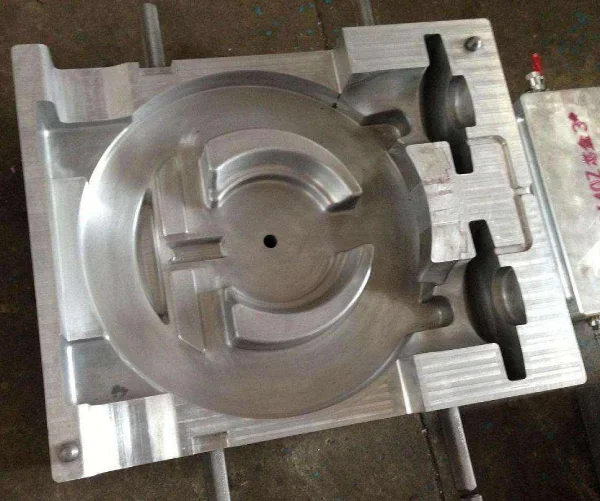
A scientifically informed aluminum die casting mold material strategy is a strategic asset that directly impacts your production line’s reliability, unit cost, and return on investment. In your die casting shop, is production efficiency constantly eroded by persistent “hidden costs”? Issues like unplanned downtime for maintenance, frequent mold welding to repair thermal cracks, and other problems force you to slow production cycles. Supro MFG has identified that the root cause of these production issues often lies in the selection of aluminum die casting mold materials.
This article systematically analyzes the core performance requirements for aluminum die casting mold materials, compares the engineering value of mainstream options, and ensures seamless integration with mold design and post-processing. Ultimately, it establishes a comprehensive selection framework spanning from needs analysis to long-term maintenance.
Performance Requirements for Aluminum Die Casting Mold Materials
The forming quality of aluminum die casting molds directly determines the dimensional accuracy, surface integrity, and mechanical properties of the final product. This means its core material must possess an exceptional performance spectrum capable of withstanding extreme production environments. Selecting the right aluminum die casting mold material is technically essential for achieving high production efficiency, extended mold life, and stable processes. Commercially, it directly translates to lower unit costs, enhanced production reliability, and superior return on investment—shaping your project’s market competitiveness.
Thermal Fatigue Resistance
Thermal fatigue resistance is the primary factor determining the service life of aluminum die casting molds. The material must withstand cyclic stresses caused by repeated heating and cooling (mold release spraying) of molten aluminum (exceeding 600°C). Superior resistance effectively prevents the formation of reticular “thermal cracks.”
Hot Strength & Toughness
At elevated operating temperatures, aluminum die casting mold materials must possess sufficient thermal strength to resist plastic deformation or “softening” under clamping and injection pressures. Simultaneously, they must maintain adequate toughness to absorb operational impacts without catastrophic cracking, ensuring reliability through thousands of cycle operations.
High Thermal Conductivity
High thermal conductivity serves as a direct physical lever for shortening aluminum die casting mold cycle times. Its core function lies in rapidly transferring heat released during casting solidification into the mold body and cooling channels. This directly reduces required cooling time, thereby increasing shots per hour—a key factor in optimizing Overall Equipment Effectiveness (OEE).
Erosion Resistance
High-velocity molten aluminum continuously erodes the gates, runners, and cavity surfaces of aluminum die casting molds. Therefore, exceptional resistance to melt erosion is critical to sustain critical dimensions and surface finish over extended periods, effectively preventing flow imbalance, part quality fluctuations, and premature replacement of key components.
Soldering Resistance
This feature prevents welding or soldering between aluminum alloy and steel mold surfaces, thereby avoiding tearing, surface defects, and forced downtime due to deep cleaning. The aluminum die casting mold material's strong anti-welding properties ensure stable, clean part ejection and significantly reduce such unplanned interruptions.
Comparison of Common Aluminum Die Casting Mold Materials
In aluminum die casting production, the selection of mold materials is a core engineering decision that directly impacts production line reliability, maintenance costs, and ultimate profitability. Understanding how each aluminum die casting mold material addresses failure modes such as thermal fatigue, wear, and cooling bottlenecks—and comparing mainstream materials to translate them into clear engineering options—enables you to precisely match material properties with production objectives.
Hot-Work Die Steel
H13 (AISI/UDDEHOLM ORVAR® 2M) is the preferred material for most aluminum die casting mold cavities. It offers an optimal balance of outstanding thermal fatigue resistance, toughness, machinability, and cost competitiveness. These reliable, comprehensive properties provide a fundamental guarantee for stable, continuous production.
High-end hot-work tool steels (e.g., QRO 90, DIEVAR) effectively minimize thermal stress deformation and delay cracking. For producing large, complex castings or those requiring extremely fast cycle times, they help ensure stable production performance under high loads.
Martensitic age-hardening steel (e.g., MARAGING 300) is suitable for manufacturing long, thin cores, slides, and other high-stress, easily bent aluminum die casting mold components. Its exceptional combination of high strength and toughness, coupled with minimal heat treatment distortion, reduces deformation and fracture in these precision aluminum die casting molds, preventing downtime and mold repairs.
Hard Alloy
When optimizing aluminum die casting molds, tungsten-based cemented carbide serves as a strategic material for achieving maximum production efficiency. Its exceptional hardness and wear resistance completely eliminate wear issues in critical areas. When used in die cast aluminum mold components such as sprue bushings, nozzles, or vulnerable cores, its service life can reach dozens of times that of conventional mold steel, virtually eliminating unplanned downtime caused by wear.
Simultaneously, tungsten carbide's outstanding thermal conductivity makes it an ideal cooling insert material for addressing localized hot spots. It specifically reduces cooling time, directly enhancing the overall production cycle of aluminum die casting molds. Despite its higher cost, it remains the key to achieving revolutionary efficiency breakthroughs in demanding operating conditions.
Other Key Materials
High-performance copper alloys (beryllium copper, chromium-zirconium copper) possess thermal conductivity several times that of mold steel, making them strategic materials for resolving aluminum die casting mold cooling bottlenecks and achieving minimal cycle times. They are typically embedded as localized cooling inserts within thermal hotspots of aluminum die casting molds (such as the center of thick, large castings) to rapidly dissipate heat.
Stainless steel (corrosion-resistant grades) is primarily used for components like runner systems and vent blocks in aluminum die casting molds, making it suitable for humid or fluctuating production environments. Its excellent corrosion resistance withstands rust caused by release agents and water vapor, maintaining smooth runners and reducing maintenance frequency.
Core Advantages, Production Efficiency, and Typical Application Scenarios of Aluminum Die Casting Mold Materials
The following table compares aluminum die casting mold materials across three key dimensions: core advantages, production efficiency, and typical application scenarios:
Material Category | Representative Grade | Core Competitive Advantages | Direct impact on production efficiency | Typical High-Efficiency Application Scenarios |
Hot-Work Die Steel | H13 | Offers the best overall performance and high reliability. | Ensure production continuity and schedule stability while minimizing unexpected failures. | Over 80% of the mold cavities and main structures. |
| High-end modified version | Higher high-temperature strength and thermal conductivity. | Supports more aggressive processes (high-speed, high-voltage) to meet extended lifespan requirements.。 | Molds for large, complex components or monolithic die-cast structural parts. |
| Martensitic age-hardening steel | Exceptionally high strength-to-toughness ratio with minimal heat treatment deformation. | Protect delicate features (slender cores) to minimize maintenance. | High-stress, easily deformed moving parts。 |
Hard Alloy | Tungsten-based alloy | Ultimate wear resistance, high thermal conductivity. | Significantly extends the service life of high-wear components; accelerates localized cooling. | Gate sleeves, erosion-resistant cores, high-efficiency cooling inserts. |
copper alloy | beryllium copper | Thermal Conductivity Champion. | Targeted solutions for cooling bottlenecks significantly reduce cycle times. | Cooling inserts for thick-walled areas or hot spots. |
stainless steel | Corrosion-resistant steel grades | Excellent corrosion resistance。 | Reduce maintenance and keep flow channels clear. | Auxiliary systems such as runner plates and vent blocks. |
H13 hot-work tool steel delivers the most reliable balance, serving as the solid foundation of production efficiency systems. When confronted with extreme wear or cooling bottlenecks, cemented carbide and high-performance copper alloys can achieve targeted efficiency breakthroughs.
Design and Heat Treatment of Aluminum Die Casting Molds
Selecting the right base material in aluminum die casting production only achieves half the goal of efficiency engineering. To fully unlock the material’s potential, subsequent processes must also be optimized. Aluminum die casting mold design determines the blueprint for stress and heat distribution, while heat treatment and surface engineering ensure the material performs at its theoretical limits within this blueprint. Only through the collaborative integration of these two stages can they be transformed into the core assets of an efficient, stable, and reliable production line.
Mold Design with Efficient Production as the Ultimate Goal
Exceptional aluminum die casting mold design represents a strategic investment that safeguards production continuity by proactively eliminating potential failure points. Its core rests on three principles:
(1)Stress-Oriented Design
Thoroughly eliminating stress concentration points—which can amplify localized stresses tenfold—through comprehensive fillet transitions and smooth cross-sectional changes fundamentally prevents the development of thermal fatigue cracks in aluminum die casting molds.
(2)Cooling System Design
The cooling circuit design for aluminum die casting molds must be based on thermal field simulations from mold flow analysis, ensuring uniform and efficient heat dissipation. Advanced techniques such as parallel cooling channels, turbulence generators, or 3D-printed conformal cooling channels optimize the cooling phase—which accounts for over 60% of the entire production cycle—significantly reducing cycle times and directly enhancing production throughput.
(3)Modular and Quick-Change Design
In aluminum die casting mold design, components with a projected lifespan shorter than the mold body—such as cores and inserts—are engineered as standard quick-change modules. This transforms days of offline mold maintenance into hours of online replacement, significantly reducing the risk of downtime.
Heat Treatment and Surface Finishing for Aluminum Die Casting Molds
In the manufacturing chain of aluminum die casting molds, heat treatment and surface finishing are the core post-processes that determine the mold's ultimate performance and service life.
Precise heat treatment is far from a simple “heat and cool” process. It requires strict adherence to supplier specifications, thorough preheating, vacuum quenching, and critically, three or more tempering cycles. This is the only way to achieve the optimal strength-toughness combination and prevent premature cracking in aluminum die casting molds.
Building on this foundation, advanced surface coatings have become a non-negotiable requirement for efficient aluminum die casting mold production. Take composite coatings like plasma nitriding overlaid with PVD (e.g., AlCrTiN) as an example. They enhance die cast aluminum mold efficiency through a triple action: their smooth, inert surface significantly reduces mold sticking and lowers release agent consumption. The coating acts as a thermal barrier, delaying substrate thermal fatigue. Simultaneously, it enhances the mold's wear resistance and corrosion resistance.
Practical experience demonstrates that such treatments can extend maintenance intervals for aluminum die casting molds by 2-5 times and reduce release agent usage by up to 20%. This directly drives improvements in Overall Equipment Effectiveness (OEE), serving as a critical step in realizing the return on investment for the material.
4-Step Selection of Aluminum Die Casting Mold Materials
The selection of aluminum die casting mold material is a systematic decision-making process. It not only affects the mold’s initial performance but also directly determines the long-term production’s economic viability and stability. By following these four steps, the complex decision of selecting aluminum die casting mold material can be transformed into a clear, actionable plan.
Define Production Requirements for Aluminum Die-Cast Parts
To clearly define the production requirements for aluminum die-cast parts, four key pieces of information must be gathered:
First, establish the production plan, which directly determines the fundamental durability requirements for the aluminum die casting mold material. Specifically, this involves the planned mold lifespan or total production volume—is it in the hundreds of thousands or millions of parts?
Analyze drawings to identify the characteristics of the aluminum die-cast parts. Specifically: Are they extremely thin-walled and easy to fill? Or do they feature complex structures with deep ribs or thick-walled sections? The former requires materials with high toughness, while the latter demands superior thermal fatigue resistance and thermal conductivity.
Define the primary quality objective—whether it is achieving an exceptional surface finish or ensuring extremely high internal density.
Review the main failure issues of similar aluminum die casting molds: mold sticking, cracking, or wear? This directly indicates the performance areas requiring reinforcement in the new mold.
Initial Material Selection Based on Requirements
Based on the analysis from Step 1 and in conjunction with the material property matrix discussed earlier, conduct an initial screening of aluminum die casting mold materials. For example, in a typical aluminum die casting mold, the main cavity can be made of H13 steel for its balanced overall performance. For gates subjected to high-speed aluminum melt erosion or cores prone to wear, carbide inserts are a preliminary choice. For molds with thick, large hot spots, beryllium copper inserts with high thermal conductivity should be considered.
Total Cost of Ownership (TCO) and Applications of Aluminum Die Casting Mold Materials
A true Total Cost of Ownership (TCO) calculation must encompass:
- Direct costs, including material expenses, machining fees, heat treatment, and coating charges.
- Usage and maintenance costs, including estimated total mold lifespan, required maintenance frequency (e.g., polishing, welding) and associated expenses, plus replacement costs for wear parts.
- Hidden production costs, including losses from unplanned downtime due to mold repairs, and increased scrap rates caused by deteriorating mold performance (e.g., minor sticking, dimensional variations).
Material selection cannot be detached from specific applications; it must address:
- Cast part characteristics, such as the thin walls and complex structures of aluminum die casting molds, along with materials that combine high toughness and thermal conductivity.
- Production programs refer to mass production at scales of 100,000 to 1,000,000 units, where material durability requirements differ by orders of magnitude.
- Process parameters include higher injection speeds, pressures, and other factors.
Develop Maintenance and Monitoring Plans
Selecting an excellent aluminum die casting mold material also requires a complementary maintenance strategy to ensure its long-term performance. Establish a preventive maintenance plan before new molds enter service, such as regularly inspecting the initiation and propagation of thermal fatigue cracks on cavity surfaces, documenting mold sticking tendencies, and measuring wear on critical dimensions.
Based on this data, maintenance windows can be scientifically scheduled, transforming reactive repairs into proactive upkeep. This approach continuously optimizes mold condition, ensuring the entire production lifecycle of the die-cast aluminum mold operates under controlled and efficient conditions.
Conclusion
The correct decision for aluminum die casting mold material is not to seek the “hardest” or “cheapest” material, but rather to systematically understand material properties, conduct rigorous comparative analysis, and integrate this with precision mold design and heat treatment. This approach endows your production projects with predictability, cost competitiveness, and the capability to meet demanding order delivery requirements. Treating the selection of aluminum die casting mold material as a core strategic investment rather than a passive procurement task is the reliable path to simultaneously achieve high performance, low cost, and efficient production.
Supro MFG firmly believes that manufacturing excellence stems from deep mastery and continuous optimization of every detail. We not only deliver high-quality casting processes and products but also actively translate our knowledge and experience into tangible success for our partners in production efficiency, cost control, and quality consistency.
If you’re ready to transform production fluctuations into the advantage of stable output, we invite you to engage with our engineering team.
Contact Supro MFG today to have our expert engineers analyze your current die casting mold manufacturing challenges and jointly develop solutions for achieving high performance and reliability.
 English
 Français
 Deutsch
 Italiano
 日本語
日本語 한국어
한국어 Polski
 Português de Angola
 Русский
 Español de Argentina