
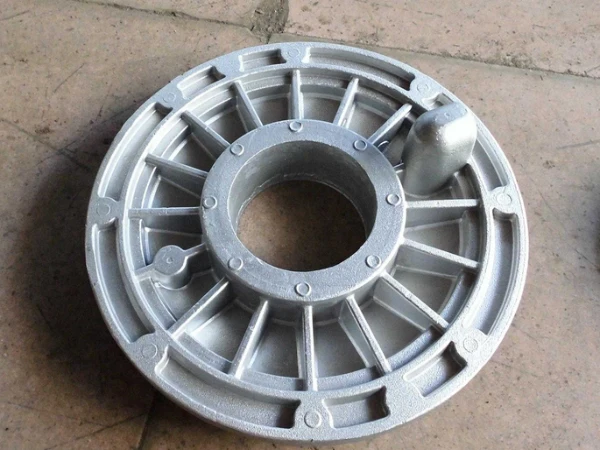
Although large aluminum components such as subframes and motor housings are commonly produced using sand casting to achieve weight reduction, the initial surface quality of castings after demolding often becomes a hidden bottleneck that limits sealing reliability and fatigue life. This paper systematically describes the end-to-end surface control strategy from the mold to the finished product: optimization of sand casting surface finish begins with sand grain grading and refractory coatings to suppress metal penetration; followed by post-processing techniques such as sandblasting and vibratory finishing to improve surface roughness, combined with heat treatment to control the microstructure and prevent deformation; simultaneously, rapid validation strategies for prototype aluminum sand casting allow for early assessment of surface quality, accelerating design iteration. The following sections will break down the process windows and cost trade-offs for each stage.
Factors influencing sand casting surface finish in automotive engineering
When manufacturing structural components and fluid delivery systems for the automotive industry, optimizing the sand casting surface finish parts is a fundamental requirement. The initial surface morphology affects subsequent sealing efficiency, gasket adhesion, and the overall fatigue life of the component under high cyclic pressure.
Sand casting manages these surface finish characteristics by controlling the raw material profile and the chemical reactions at the mold interface during the high-temperature pouring stage. Additionally, by systematically controlling sand particle parameters and applying specialized refractory coatings to the inner walls of the mold, micro-roughness can be suppressed. This rigorous control ensures that the casting surface meets original equipment manufacturer (OEM) standards, thereby significantly reducing the requirements for final machining.
Understanding standard Ra values for automotive aluminum sand casting
To achieve a predictable surface roughness in sand casting, it is essential to have a clear understanding of the standard arithmetic mean roughness (Ra) metric used in automotive engineering. For unmachined aluminum castings, a typical production line can achieve a roughness range between Ra 6.3 µm and Ra 12.5 µm. For exterior components requiring tight dimensional tolerances or immediate powder coating, achieving the lower limit of this roughness range is critical. Foundries use calibrated contact profilometers to measure these specific micro-roughness levels, ensuring that every batch fully complies with international automotive quality standards.
How sand grain distribution affects sand casting surface finish quality
Optimizing sand particle size distribution is one of the primary methods for improving the sand casting surface finish in high-volume production lines. The sand particle fineness values established by the American Foundry Society (AFS) directly determine the microporosity of the mold surface; finer sand particles form tighter gaps, thereby preventing molten aluminum from seeping between the sand particles. Foundries typically use a three- or four-screen particle size distribution with an AFS rating between 65 and 75 to meet the production requirements for precision automotive components. This specific sand particle configuration minimizes mechanical penetration, resulting in castings with a smooth, uniform surface that require only minimal grinding.
The impact of mold coatings on preventing metal penetration and roughness
In the aluminum sand casting process, applying a specialized refractory coating is a critical step in isolating the compacted sand from the high temperatures of the molten alloy. These liquid coatings typically contain zirconia or graphite suspended in a fast-drying carrier solvent and can be sprayed directly onto the mold cavity and core assemblies. The coating forms a highly durable thermal barrier that prevents chemical reactions or physical penetration between the molten metal and the sand grains. The use of these advanced coating systems completely eliminates sand grain sintering defects, enabling sand casting foundries to produce castings with extremely smooth surfaces and no oxide scale.
Post-processing treatments to improve aluminum sand casting roughness
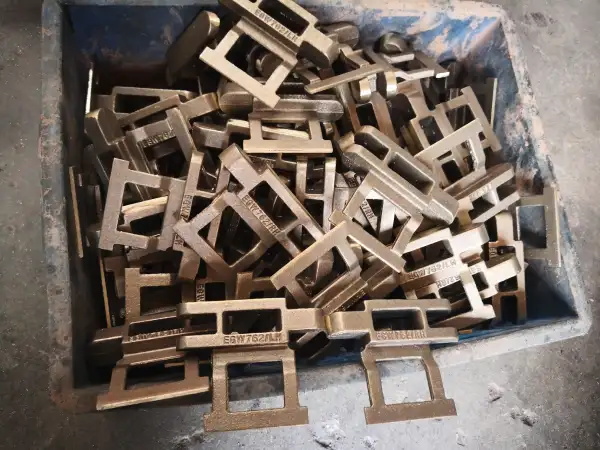
Implementing a secondary post-processing workflow is critical for managing the raw surface topography inherent in the aluminum sand casting process. While the primary molding configuration controls the basic dimensions, it is the post-casting mechanical and chemical treatments that are truly key to optimizing the final product’s surface texture and cleanliness. Automotive buyers typically require specific micro-roughness thresholds to accommodate specialized gaskets or to ensure paint adhesion on structural components. By employing targeted sandblasting, vibratory polishing, and surface treatment processes, foundries can effectively remove microscopic sand inclusions and surface scale. This systematic approach to improving the surface finish of sand castings ensures that parts are fully prepared and ready for immediate installation when they arrive at the automotive assembly line.
Mechanical blasting techniques for uniform aluminum sand casting texture
By utilizing automated mechanical sandblasting technology, foundries can achieve a highly uniform surface texture on aluminum sand castings during mass production. The castings are loaded into a drum-type sandblasting machine, where stainless steel shot or fine glass beads are propelled at a specific pressure to remove the layer of sand sintered onto the surface. This intense mechanical impact effectively smooths out microscopic surface irregularities, transforming the rough texture of the aluminum sand casting blanks into a uniform, satin-matte finish. Implementing this standardized cleaning process ensures that the unmachined outer surfaces meet the stringent visual inspection standards adopted by world-class automotive procurement teams.
Chemical and vibratory finishing options for complex interior channels
Optimizing the internal passages of complex automotive components requires specialized sand casting surface finish processes, such as vibratory deburring and mild chemical cleaning. Molten metal often leaves microscopic roughness or sand marks inside deep, enclosed oil passages, and standard sandblasting nozzles cannot reach these areas. Foundries immerse these components in a vibratory tank containing ceramic media and liquid compounds, utilizing friction to smooth the inner walls of the oil passages. This deep mechanical scrubbing improves the fluid dynamics within the cooling sleeves and successfully enhances the surface finish of features that are out of sight.
Balancing cost and cosmetic standards for unmachined powertrain housings
When managing a portfolio of automotive aluminum sand casting components, balancing the operating budget with aesthetic requirements is a critical business consideration. Extensive, multi-stage sandblasting or manual polishing of non-functional mounting surfaces not only adds unnecessary overhead costs but also fails to improve the mechanical properties of the parts.
Therefore, it is essential to analyze the final installation environment to determine which areas require high-end aluminum sand casting surface finish processes and which areas can meet functional requirements with standard as-cast surface treatment. This targeted allocation of surface treatment resources ensures compliance with all functional engineering specifications while maintaining highly competitive unit costs.
Enhancing mechanical properties through sand casting heat treatment
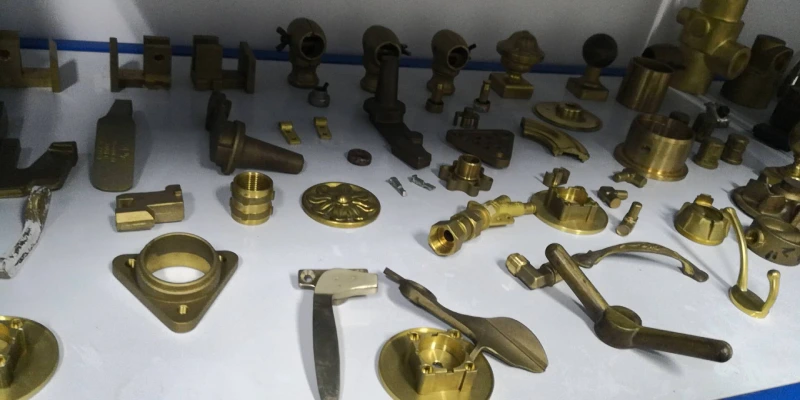
Implementing precise sand casting heat treatment processes is critical to enhancing the structural and mechanical properties of automotive castings. While the initial pouring stage determines the component’s shape, post-casting heat treatment alters the base material to meet stringent durability standards. Automotive structural components, such as control arms and steering knuckles, rely heavily on these heat treatment processes to withstand high-intensity operational fatigue and sudden impact stresses. By utilizing strictly controlled solution treatment and aging furnaces, foundries can precisely regulate the alloy’s hardness and tensile strength values. Ultimately, integrating specialized sand casting heat treatment workflows transforms raw castings into high-performance components that meet the required specifications.
Implementing T5 and T6 sand casting heat treatment for automotive alloys
Implementing specialized T5 or T6 sand casting heat treatment processes is the industry-standard method for maximizing the load-bearing capacity of aluminum alloys used in automotive structures. The T5 process involves removing the blank directly from the mold, allowing it to cool, and immediately subjecting it to artificial aging, which moderately increases hardness while reducing energy consumption during machining.
In contrast, the comprehensive T6 sand casting heat treatment process requires high-temperature solution annealing followed by rapid water quenching and, finally, in-furnace aging to maximize yield strength. Foundries continuously monitor these strict in-furnace parameters to ensure that automotive castings achieve the precise aging condition required for heavy-duty service.
How thermal cycles modify the microstructure of aluminum sand casting
Controlled heat treatment cycles can significantly alter the coarse silicon microstructure inherent in raw aluminum sand casting alloys such as A356 or A380. When the as-cast parts undergo continuous solution treatment at around 540°C, the acicular silicon structure gradually dissolves and spheroidizes, forming smooth, rounded particles. This refinement of the microstructure greatly eliminates micro-stress concentration boundaries within the aluminum matrix, thereby significantly improving overall elongation and impact toughness.
Preventing geometric distortion during high-temperature aging processes
Controlling geometric deformation during the high-temperature sand casting heat treatment cycle is a critical engineering focus when processing complex, thin-walled automotive components. The rapid cooling during the water quenching stage can easily generate severe residual stresses, leading to geometric warpage or dimensional deviations. To ensure critical tolerances, engineers use custom-designed steel quenching fixtures to provide physical support for the part’s geometry throughout the heat treatment cycle; alternatively, they adjust the aging treatment time to eliminate internal stresses without affecting overall hardness. To verify that these surface treatment and tempering standards comply with your CAD model prior to mass production, please refer to this article:[Sand Casting Solutions for Optimizing Lightweight Automotive Parts].
Accelerating product development with prototype aluminum sand casting
By adopting a flexible prototype aluminum sand casting workflow, automotive product development teams can significantly shorten the engineering development cycle for next-generation vehicle platforms. Before investing heavily in permanent steel molds, rapid sand casting methods can be used to produce fully functional metal components within a matter of days. This rapid prototyping approach enables immediate physical evaluation of new power electronics housings, chassis subframes, and suspension components under actual operating conditions for new vehicle models.
By adopting specialized prototype aluminum sand casting strategies, manufacturers can rapidly validate design modifications, identify stress concentration points, and conduct physical crash tests early in the development lifecycle. Ultimately, this agile process reduces financial risk and ensures that the geometry of the final parts is fully optimized before entering mass production.
Rapid tooling strategies for prototype aluminum sand casting validation
The use of advanced rapid mold-making strategies in prototype aluminum sand casting production eliminates the lead times associated with traditional CNC machining of complex wooden or polyurethane patterns. Modern foundries utilize industrial-grade 3D sand printers to spray a binder solution onto layers of silica sand, enabling the direct production of complex mold cavities and core assemblies based on original CAD data without the need for any physical molds. This direct digital manufacturing method allows engineers to validate complex geometric features using actual cast prototypes in just a few days. This rapid approach shortens engineering cycles while maintaining exceptional dimensional accuracy.
Evaluating surface finish and structural integrity in fleet test prototypes
Evaluating the sand casting surface finish and internal integrity of components used in fleet test vehicles is a critical step in automotive product validation. Although 3D-printed sand molds can accelerate initial delivery, it is still necessary to confirm that the resulting surface finish parameters align with the expected micro-roughness profile for final mass production. The testing team subjects these castings to rigorous in-vehicle testing to assess their fatigue resistance under road vibrations and to check for hidden microcracks in machined mating surfaces. This rigorous evaluation ensures that prototype parts can withstand severe real-world cyclic loads.
Streamlining the transition from quick prototype to serial production
To transition from successful prototype aluminum sand casting trials to automated mass production, it is necessary to standardize casting mold design and metallurgical monitoring. Because 3D sand printing and traditional mold-making methods have different cooling rates, engineers analyze early solidification records to adjust the gate geometry of the permanent mold accordingly. Using the same aluminum alloy specifications throughout both the development phase and mass production ensures that the final components meet the mechanical performance benchmarks validated during prototype testing, enabling a repeatable and defect-free large-scale production process.
Looking for a reliable China metal foundry?
- We can help you optimize product design and save costs.
- We can help you with high quality high volume cast parts.
- We can deliver on time and get more sales market opportunities.
- You will benefit from Supro MFG metal casting service.
Contact Supro MFG
This paper systematically analyzes the key technical pathways for sand casting in the production of automotive aluminum parts. From mold-side controls such as sand particle grading and refractory coatings, to post-processing steps like sandblasting and vibratory finishing, to the optimization of microstructure and mechanical properties through sand casting heat treatment, each stage directly impacts the final quality of the sand casting surface finish. At the same time, rapid validation strategies for prototype aluminum sand castings effectively shorten the cycle from design to mass production. Based on these engineering practices, Supro MFG deeply integrates mold parameter control, heat treatment curve optimization, and post-processing techniques to provide automotive customers with end-to-end support—from prototype development to mass production—ensuring that castings meet OEM standards for both surface quality and structural strength. Contact us today to consult with our engineers and enhance the quality of your next automotive project.
 English
 Français
 Deutsch
 Italiano
 日本語
日本語 한국어
한국어 Polski
 Português de Angola
 Русский
 Español de Argentina