
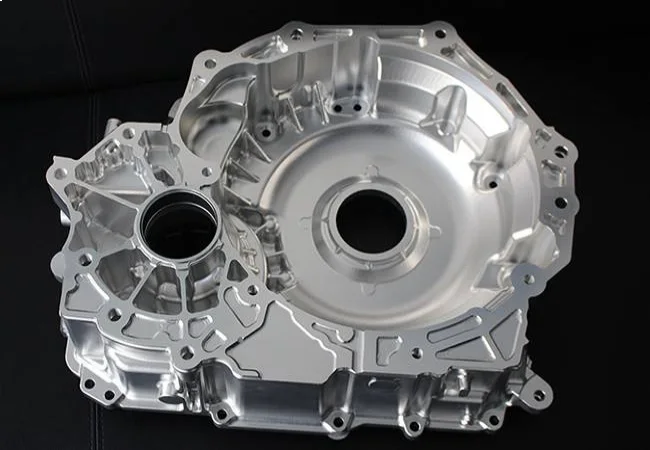
In the aluminum casting industry, where high performance and precision are paramount, hard spots are one of the key defects that affect product quality, machining efficiency, and the performance of the final components. Not only do they cause abnormal tool wear and degrade the surface finish, but they can also become potential structural weaknesses in aluminum castings, affecting the components’ fatigue life and long-term reliability.
As experienced metal casting manufacturers, Supro MFG has established a systematic solution encompassing everything from metallurgical design to process control. Through precise control of alloy composition, efficient melt purification processes, and customized mold thermal management, we help our customers effectively eliminate hard spot defects in castings.
This article will systematically analyze the causes and effects of hard spots in aluminum castings and explain how we help customers systematically avoid this aluminum casting defect through customized solutions ranging from alloy design to process control, thereby ensuring the quality of the final product and production efficiency.
An In-Depth Analysis of Hard Spot Defects in Aluminum Castings
Hard spots are tiny areas within aluminum castings that exhibit abnormally high hardness, primarily consisting of intermetallic compounds. The root cause of this defect lies in uneven cooling during the casting process and excessive levels of certain elements (such as iron). The negative effects are direct and severe: they accelerate tool wear and drive up production costs; they significantly reduce the fatigue life of aluminum castings, increasing the risk of premature failure; and they lead to appearance and performance issues during subsequent anodizing or coating processes. Understanding the nature and impact of hard spots in aluminum castings is the first step toward implementing effective control measures.
What are the hard spots in aluminum castings?
During the production of aluminum castings, defects such as hard spots and hard metal inclusion phases are commonly encountered. These primarily manifest as tiny particles or lumps within the casting that have a higher hardness and a composition different from that of the matrix. These substances not only damage the cutting tools used in machining but also result in cost losses and quality risks for aluminum casting manufacturers.
Hard metal inclusions in castings can take various forms, such as dendritic, block-like, or spherical, distributed within the aluminum matrix. Among these, dendritic inclusions are particularly prone to causing stress concentration due to their sharp shape. The presence of hard spot defects significantly reduces the toughness and machinability of cast aluminum parts and may also induce cracks, posing multiple risks to both production and use.
Causes
The root cause of hard spots in aluminum castings is the uneven cooling rate during solidification. As molten aluminum cools in different parts of the aluminum casting mold, thin-walled areas rapidly form a fine, uniform microstructure. However, in thick sections and hot spots, the large metal volume and slow heat dissipation significantly reduce the cooling rate. This “delay” provides ample conditions for certain elements (such as iron) to form coarse, hard intermetallic compounds—which is the primary cause of hard spots in castings.
The chemical composition of the alloy plays a decisive role in castings. When the iron content in an aluminum alloy exceeds the specified limit (typically more than 0.15%), it readily reacts with silicon and aluminum to form a brittle, needle-like Al₅FeSi phase, which is the primary component of hard spots in aluminum castings. Additionally, errors in process parameters—such as excessively high pouring temperatures or mold temperatures—can exacerbate the non-uniformity of solidification in molten aluminum alloys.
Disadvantages of aluminum casting
(1) Rising production costs
During the machining of aluminum castings, when cutting tools encounter hard spots, wear is accelerated, leading to more frequent tool changes and reduced production efficiency due to frequent downtime for adjustments. For castings that require extensive machining, controlling hard spots is a key factor in controlling costs.
(2)Increases the risk of failure in aluminum castings
Hard spots reduce the mechanical properties of aluminum casting parts. These hard and brittle microstructures are weakly bonded to the matrix and, when the parts are subjected to repeated stress, can easily serve as initiation sites for fatigue cracks. This significantly shortens the service life of aluminum cast components and may lead to premature failure in critical applications, posing a safety hazard.
(3)Factors Affecting the Quality of Post-Casting Surface Treatment of Aluminum Castings
Hard spots can interfere with the final surface treatment process of aluminum castings. During anodizing or powder coating, areas with hard spots may result in an uneven oxide film or lead to poor coating adhesion, causing cosmetic defects and compromising the corrosion protection or decorative effects of the surface treatment. Therefore, addressing defects in aluminum alloy castings is a key prerequisite for ensuring the final quality of the product.
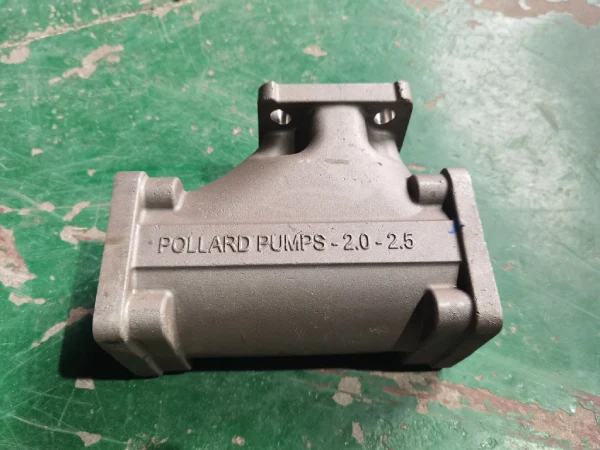
Strategies for Preventing Hard Spot Defects in Aluminum Castings
To effectively prevent “hard spots” defects in aluminum castings, optimized processes and precautions must be implemented throughout the entire production process. The core of systematic control over aluminum casting defects lies in the synergistic interaction of three key stages: First, establishing a foundation through material design by strictly controlling alloy composition; second, ensuring the purity and uniformity of the molten aluminum through advanced melt purification technology; and finally, precisely controlling the thermal management during the solidification process to achieve a microstructure that conforms to theoretical standards. This integrated strategy systematically reduces the risk of hard spot defects and fundamentally improves casting quality and machinability.
Rigorous Design of Aluminum Alloy Raw Materials
The first step in preventing hard spots in aluminum castings is to precisely design the alloy composition. Scientifically balancing the alloy composition and strictly controlling key elements lays a stable foundation for all subsequent casting processes. Precisely controlling the iron (Fe) content within the narrow range of 0.08–0.12% minimizes the formation of coarse, brittle Al₅FeSi phases within the aluminum casting mold. At the same time, strictly regulating other elements—such as zinc and nickel—that are prone to forming harmful phases reduces the risk of impurities at the source.
Drawing on years of experience in casting production, Supro MFG has developed an alloy optimization strategy: adding manganese to a specially formulated aluminum-manganese pre-melted alloy ingot to ensure that manganese is efficiently and uniformly incorporated into the melt, resulting in a manganese-to-iron ratio (Mn/Fe) in the final casting that is consistently greater than 0.5. Practice has shown that this raw material control system significantly improves material homogeneity and is the fundamental guarantee for producing aluminum casting parts with excellent machinability.
Melt Processing and Purification
The quality of the molten metal directly determines the internal purity of the final aluminum castings. During production, Supro MFG employs a combined purification process that integrates rotary degassing with ceramic foam filtration to treat and purify the molten metal. The use of inert gas effectively removes hydrogen from the molten aluminum, preventing the formation of porosity; ceramic filtration, in turn, traps solid impurities such as micron-sized oxide inclusions. This combination ensures a high level of purity in the molten metal.
Furthermore, through online monitoring of the aluminum casting production process and automated systems, real-time closed-loop control of the molten metal’s composition and temperature is achieved. This ensures that the chemical composition of each batch of molten aluminum remains stable within the set range and that temperature uniformity is precisely controlled, thereby creating the optimal conditions for the subsequent solidification process.
Precise Control of the Solidification Process
The final critical step in determining the quality of aluminum casting parts is the precise control of the solidification process. The key to this step lies in accurately managing the orderly dissipation of heat from the casting. First, this goal is achieved through the targeted design of the mold cooling system. Based on the casting’s geometry and variations in wall thickness, a customized cooling system is implemented within the aluminum casting mold to minimize the difference in cooling rates between thick, large-section areas and thin-walled areas.
Building on this foundation, Supro MFG has achieved a breakthrough in the aluminum casting process: by optimizing the layout and flow rate of the cooling water channels, the company has successfully increased the cooling rate of thick, large sections—which are theoretically difficult to handle—from approximately 0.5°C/s to over 3°C/s. When the cooling rate inside the aluminum casting mold is significantly increased, the formation of coarse intermetallic compounds is effectively suppressed, directly and efficiently resolving the issue of hard spots.
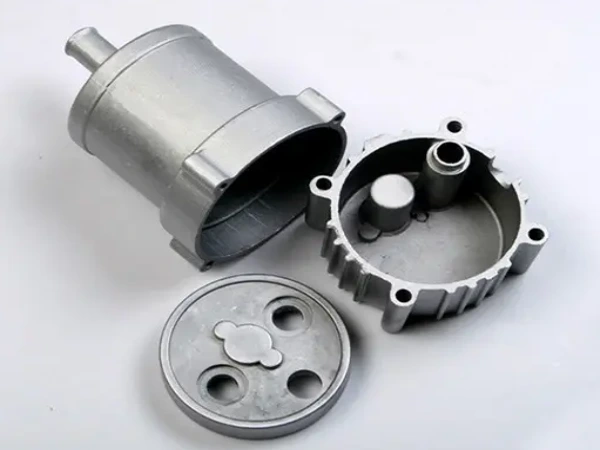
Case Study: A Solution for Eliminating Hard Spots in Precision Hydraulic Components
A European customer of Supro MFG encountered persistent production challenges while manufacturing high-pressure aluminum castings for hydraulic systems. Whenever the flange mating surface was milled, the cutting tools frequently suffered abnormal chipping, and the machined surface exhibited persistent bright spots that could not be eliminated, resulting in failed castings and a low yield rate. After consultation and analysis with our professional engineers, it was preliminarily determined that the problem stemmed from hard spots present at the thick-walled joints of the casting flanges. These hard spots significantly increased machining costs and negatively impacted the market reputation of the metal casting manufacturers.
Steps to Resolve Hard Spot Defects in Aluminum Castings
(1) Optimizing the Alloy Composition
Supro MFG aluminum casting engineers first optimized the original alloy formulation, focusing on precisely adjusting the manganese-to-iron ratio (Mn/Fe) to 0.6. Through scientific metallurgical methods, they altered the morphology of intermetallic compounds that may form in high-pressure aluminum castings, transforming them from harmful needle-like structures into rounder, blunter, and more dispersed forms, thereby fundamentally reducing the tendency for hard spots to form.
(2) Upgrading the Melt Purification Process
Building upon rotary degassing, a dual-layer ceramic filtration system was added. This improvement enables more thorough removal of microscopic oxides and non-metallic inclusions from the melt within the aluminum casting mold, ensuring a higher-purity molten aluminum and laying the foundation for uniform solidification in subsequent stages.
(3) Redesigning the Mold Cooling System
Targeting the thick-walled areas where hard spots tend to concentrate, Supro MFG engineers redesigned the cooling water channel layout of the aluminum casting mold. This primarily involved optimizing the water channel routing and cooling intensity to ensure rapid and uniform heat dissipation in these areas. This key adjustment directly increased the solidification rate in these regions, effectively suppressing the formation of coarse compounds and fundamentally improving the uniformity of the casting’s internal microstructure.
Results and Client Benefits
By implementing a comprehensive control strategy, this case involving hard spot defects in aluminum castings achieved clear results. The machining pass rate for the final castings steadily increased from 82% to over 96%. At the same time, the customer’s tool wear costs were reduced by more than 70%, and production efficiency improved significantly. Testing showed that the improved components fully passed rigorous fatigue life tests without any premature failures, ensuring the reliability of the end products. This has brought significant quality and economic benefits to both parties.
Looking for a reliable China metal foundry?
- We can help you optimize product design and save costs.
- We can help you with high quality high volume cast parts.
- We can deliver on time and get more sales market opportunities.
- You will benefit from Supro MFG metal casting service.
Conclusion
Addressing hard spot defects in aluminum castings is by no means a matter of a single process adjustment, but rather a systematic engineering effort that spans materials science, metallurgical processes, and process control. Hard spot defects in castings are a major cause of machining difficulties, increased costs, and performance risks, with their root causes lying in uneven cooling and excessive concentrations of specific elements.
Supro MFG employs a systematic control strategy—including precise alloy composition design, efficient melt purification, and customized cooling optimization for aluminum casting molds—to effectively eliminate hard spots. Practical case studies demonstrate that this approach significantly improves product yield, substantially reduces machining costs, and ensures long-term component reliability, providing customers with a comprehensive technical solution that addresses quality risks at their source.
Choosing an aluminum casting supplier means selecting an engineering partner who will work with you to address quality risks and optimize production costs. Supro MFG is committed to transforming complex metallurgical science into stable, reliable productivity, helping your projects avoid the headaches of unforeseen defects and ensuring that your cast metal parts projects are produced efficiently from blueprint to finished product. When quality becomes the default standard, you can focus more on innovation and the market.
Please contact Supro MFG to learn how our aluminum casting solutions can enhance your products’ market competitiveness.
 English
 Français
 Deutsch
 Italiano
 日本語
日本語 한국어
한국어 Polski
 Português de Angola
 Русский
 Español de Argentina