
Aluminum foundry in China for OEM parts
Aluminum Casting Services
Aluminum casting services from Supro MFG help OEM buyers source lightweight, machinable and corrosion-resistant aluminum cast parts from an aluminum foundry in China. We review alloy selection, process route, machining allowance, surface finish and inspection requirements before quotation.
Typical projects include housings, brackets, covers, heat-dissipation parts, machinery components and custom cast aluminum components for industrial, automotive, electronics and equipment applications.
What We Review Before Quoting
- 2D drawing, 3D model or sample photos
- Alloy grade, working environment and strength needs
- Die casting, sand casting or permanent mold route
- Machining areas, threads, flatness and sealing surfaces
- Surface finish, coating and inspection report requirements
25+ Years
custom casting experience
ISO 9001:2015
Quality system for OEM casting and machining projects
Die · Sand · Permanent Mold
Process route reviewed by drawing and volume
CNC + Finishing
Machining, surface preparation and coating support
Drawing Review
MOQ and sample timing confirmed after drawing review
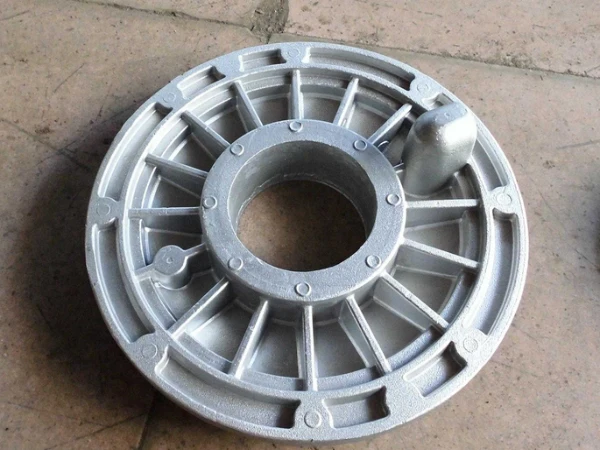
Aluminum casting : Widely preferred for its durability and stability.
Aluminum casting can get customized aluminum alloy parts of any shape and size, with some advantages and characteristics that other metal casting parts cannot compare, such as: beautiful appearance, light weight, heat resistance, corrosion resistance, high strength, easy processing, etc. Favored by many customers, especially in the automobile manufacturing industry, with the widespread use of lightweight and high-strength technology in automobiles, aluminum alloy casting parts are widely used in important automobile parts.
Materials and alloy route
Aluminum Casting Materials and Alloy Selection
Aluminum alloy selection should match product function, load, wall thickness, corrosion exposure, machining scope and surface finish. Instead of quoting only by part name, our team reviews the alloy route together with the casting process and post-machining plan.
For new RFQ projects, send the drawing standard if the alloy is fixed. If the alloy is not fixed, we can review common aluminum alloy casting routes and help compare cost, strength, machinability and surface requirements.
| Alloy Route | Common Project Use | Engineering Notes | RFQ Reminder |
|---|---|---|---|
| ADC12 / A380 Die Casting Route | Aluminum die casting housings, covers, brackets, motor parts, electronic enclosures and repeat-volume components. | Good for high-volume production and repeatable dimensions where tooling investment is acceptable. | Confirm annual volume, tooling expectation, surface finish and machining areas. |
| A356 Sand or Gravity Casting Route | Aluminum sand casting or permanent mold aluminum casting projects for structural parts, machinery components and medium-size castings. | Often reviewed when strength, machinability and lower-to-medium volume flexibility matter. | Confirm heat treatment, wall thickness, machining allowance and inspection standard. |
| 6061 / 6063 / 7075 Discussions | Machined aluminum parts, profiles or special high-strength requirements where casting may not always be the best route. | Some aluminum grades are better suited to machining, extrusion or forging. The route should be reviewed before quotation. | Send the material standard, application load and any required certification. |
Not sure which aluminum route is right for your part? Send your drawing for a factory-direct review.
Process selection
Aluminum Casting Process Options for OEM Parts
The right process depends on quantity, part size, geometry, wall thickness, surface expectation, tooling budget and machining needs. We do not push every project into one route; the casting method is selected after drawing review.
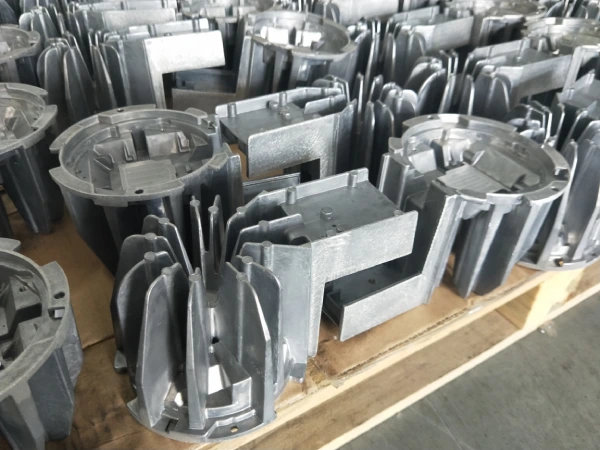
aluminum alloy die casting
Die casting is very similar to permanent mold casting, but instead of gravity, die casting relies on the pressure of the die casting equipment to inject the metal solution into the mold, including: low pressure die casting and high pressure die casting, which allows the material to more fully fill all the details inside the mold. Die casting is very friendly to create castings with complex structures and thin-walled structures, and is widely used in automotive engine housings, electronic equipment brackets, Led lighting accessories, radiator housings, etc.
Supro MFG has advanced die casting manufacturing equipment to meet the needs of low pressure die casting and high pressure die casting products, we provide the most cost-effective on-demand die casting manufacturing solutions for buyers from all walks of life around the world, and through x-ray, composition analysis, Non-destructive testing, mechanical testing, salt spray testing, etc., to ensure on-time delivery of high-quality die-casting parts.
aluminum alloy sand casting
relying on resin sand or green sand to form a cavity with the shape of the final product under the action of aluminum or steel molds, inject molten metal into the sand mold, and cool to form. Aluminum alloy sand casting is economical, but usually requires secondary machining to achieve close dimensional tolerances, and is also very effective for creating large aluminum alloy cast parts or parts with fine detail, suitable for large-scale casting projects.
At Supro casting foundry, we control the casting process and the element composition of the aluminum alloy reasonably to avoid most of the defect problems, enhance the mechanical properties, improve the casting efficiency, and make the aluminum alloy castings more competitive.
Advantages: high efficiency, low cost, economical, complex structure can be realized, suitable for a wide range of materials
Disadvantages: There are many sand holes and pores, and the surface is rough. It is impossible to build fine details.
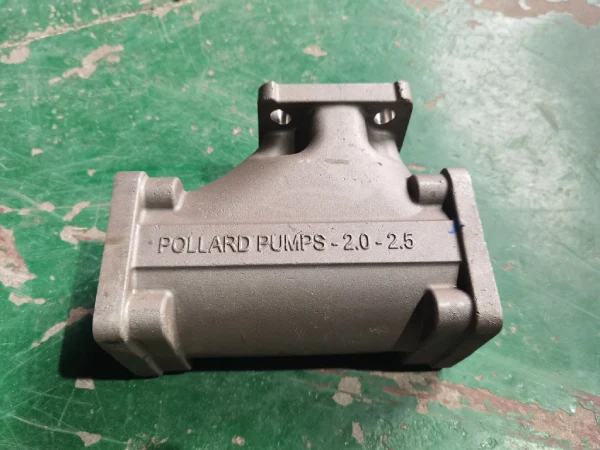
aluminum alloy Permanent mold casting
Creates steel molds and other metal molds or cores. The molten aluminum alloy is cooled and formed inside the mold. This is a reusable metal mold. More often, the aluminum alloy is injected by gravity to fill the mold cavity. Inside. The mold is then separated after cooling and the finished part is ejected or removed.
Supro MFG uses this rapid prototyping casting process to achieve a more consistent microscopic metal structure, increase the density of aluminum alloy castings, and significantly enhance the mechanical properties of the product. It is generally used in industries with high weighing capacity, wear resistance, and corrosion resistance. in demand.
Advantages: Higher product density Fast build time Low product cost High surface finish Finer detailing possible
Disadvantages: High mold cost Does not support design changes Not suitable for large castings Long mold manufacturing cycle
Engineering review
Porosity Control and Aluminum Casting Engineering Review
Aluminum casting porosity, shrinkage, deformation and machining exposure are common concerns for OEM buyers. These risks are not solved by a slogan; they must be reviewed through the drawing, gating concept, wall thickness, machining allowance and inspection plan.
Before production, Supro MFG can review sharp transitions, thick-to-thin sections, ribs, bosses, holes, sealing areas, threaded areas and surfaces that may expose internal defects after CNC machining. This helps reduce avoidable rework and keeps the part function aligned with the selected process route.
Common Risk Points We Check
Wall thickness transition
Porosity-sensitive machining areas
Threaded holes and assembly points
Degassing and melt control
Gating and riser concept
Flatness and sealing surfaces
Surface finish and coating needs
Inspection and reporting scope
Inspection and batch stability
Quality Control for Cast Aluminum Parts
B2B buyers need stable dimensions, repeatable batches and clear quality documentation. Quality control for cast aluminum components should cover material verification, mold condition, pouring control, visual inspection, CNC machining inspection, surface finishing review and final packing checks.
Inspection can be arranged according to project requirements. For critical aluminum cast parts, confirm dimensional reports, material certificates, surface inspection and any NDT or pressure test needs before order release.
Material and Process Control
Project review can include alloy confirmation, melt control, mold preparation, pouring control, cleaning and process traceability where required. For repeat orders, the same control points should be kept consistent from sample approval to batch production.
Dimensional Inspection
CMM or dimensional inspection can be reviewed for mounting faces, holes, sealing surfaces, critical datums and post-machining areas. Buyers should mark key dimensions and datum references clearly on the drawing.
Surface and Final Review
Surface defects, coating adhesion, burrs, packaging and shipment checks can be included based on the buyer’s inspection standard. For visible parts, appearance surfaces and acceptable defect limits should be confirmed before production.
Applications
Typical Aluminum Cast Parts We Can Review
Cast aluminum parts are widely used where buyers need lightweight structures, good machinability, corrosion resistance and practical cost control. The final process depends on drawing details, volume, machining allowance, surface appearance and inspection requirements.
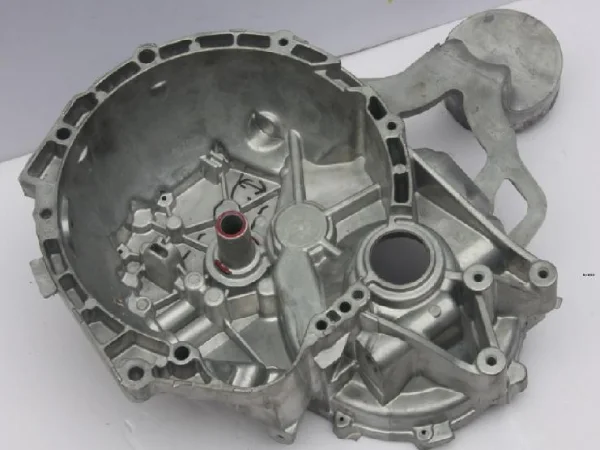
automotive

Motorcycle parts
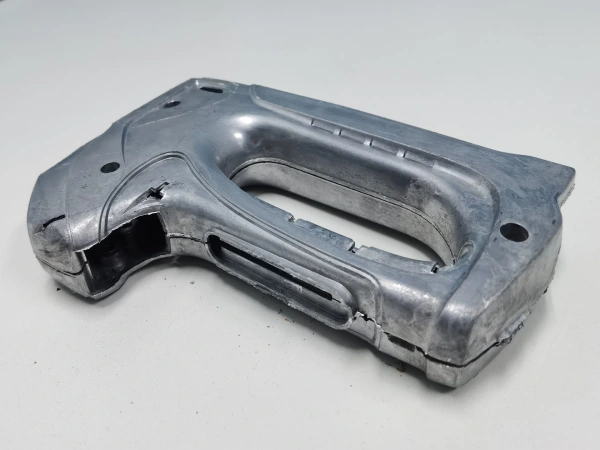
electronic
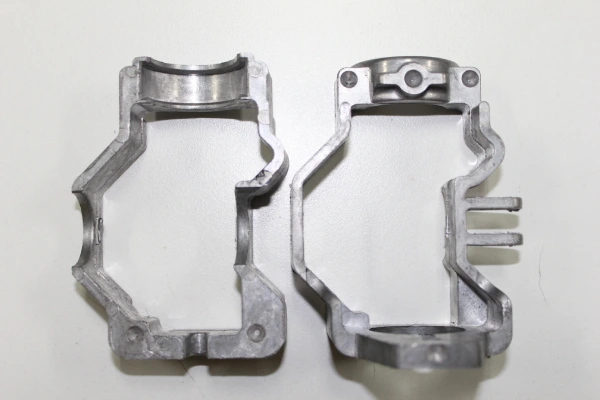
Military industry
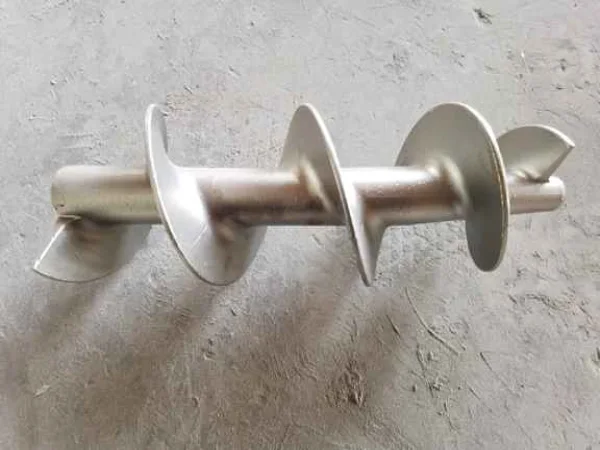
agricultural machinery
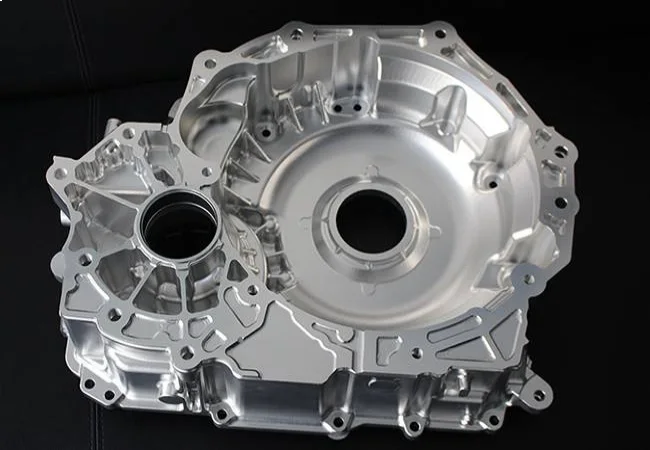
Aerospace
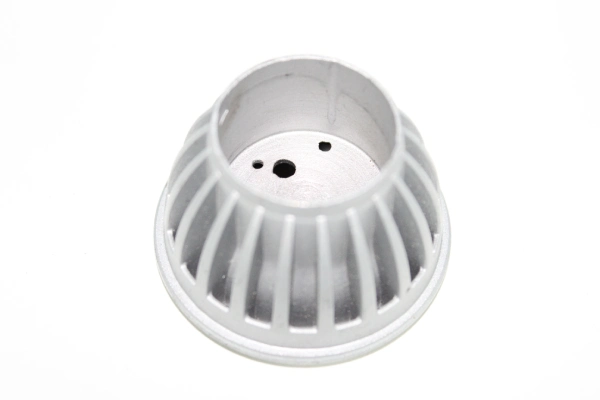
LED accessories
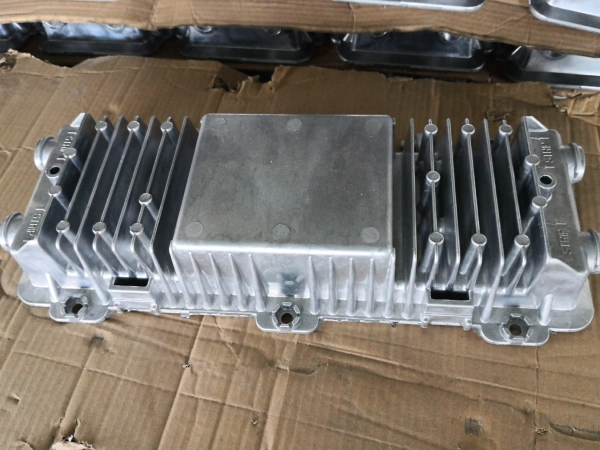
Radiator housing
Request a Drawing Review Before Tooling
Send your drawing, material grade, annual volume, machining areas and surface finish requirement before tooling decisions are made. Our team will compare the casting route, machining plan and inspection scope before quotation.
Inspection and batch stability
Quality Control for Cast Aluminum Parts
B2B buyers need stable dimensions, repeatable batches and clear quality documentation. Quality control for cast aluminum components should cover material verification, mold condition, pouring control, visual inspection, CNC machining inspection, surface finishing review and final packing checks.
When sending an RFQ, mark critical surfaces, datum references, threaded holes, flatness requirements and visible surfaces on the drawing. This reduces quotation gaps and helps build a clear inspection plan.
CNC Machining
Support for holes, threads, slots, sealing surfaces, mounting faces, datum surfaces, flatness control and assembly-critical features.
Surface Preparation
Deburring, polishing, shot blasting, sand blasting and surface cleaning can be reviewed based on visible surfaces and coating needs.
Surface Finishing
Powder coating, painting, plating, anodizing review and protective finishing can be discussed according to the working environment.
How to choose casting technology
for your aluminum alloy casting project?
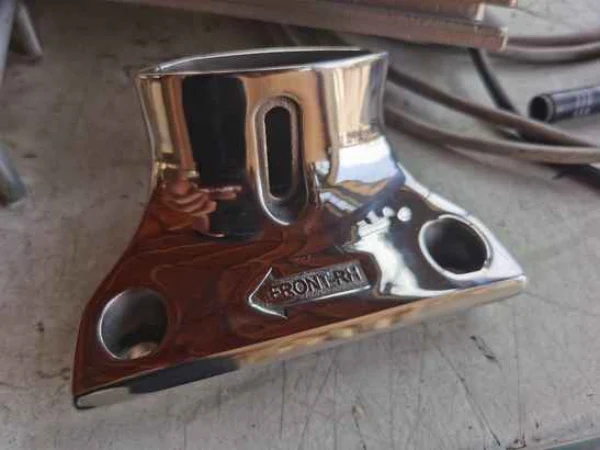
polishing
aluminum alloy has a good luster, and the aesthetic appeal of aluminum alloy metal can be presented by polishing to remove the casting texture on the surface of the casting.
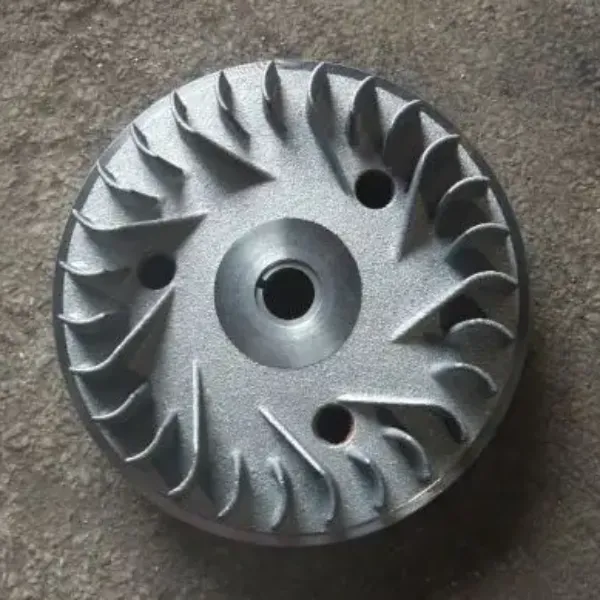
Sand blasting and shot blasting:
low-cost surface treatment, uniformly increase the surface texture of aluminum alloy castings, remove surface impurities and oil stains, generally used as a pretreatment step for coating treatment.
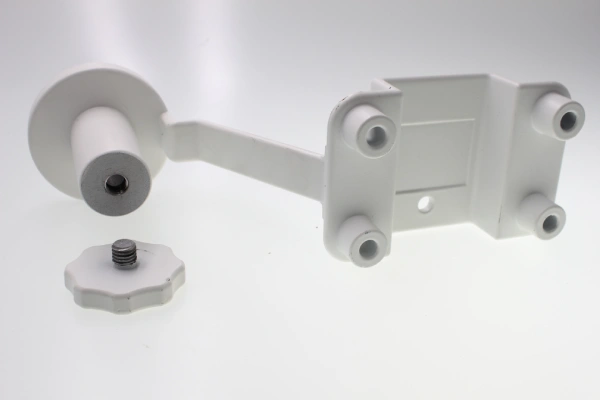
Spray painting:
Evenly spray paint or PVDF coating on the surface of aluminum alloy castings, which can effectively enhance the appearance of the surface and increase the anti-oxidation effect. Customizable color and anti-corrosion properties.
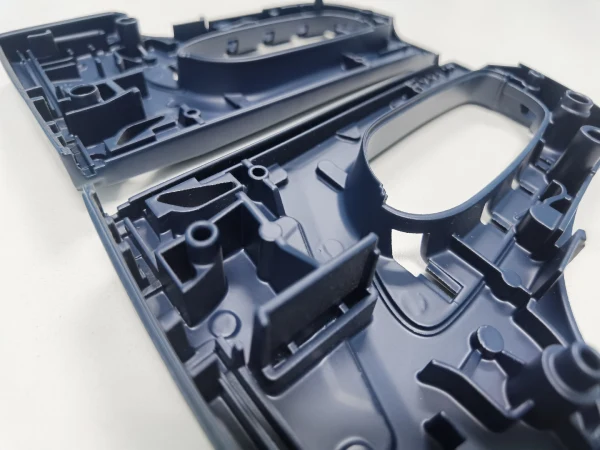
Power coating
It can present excellent appearance and increase the abrasion resistance of aluminum alloy castings. It is usually used in daily consumer goods and public facilities. It can customize the color and texture effect.
How to choose casting technology
for your aluminum alloy casting project?
| Comparison Item | Aluminum Die Casting | Aluminum Sand Casting | Aluminum Permanent Mold Casting |
|---|---|---|---|
| Cost | High tooling cost | Low tooling cost | Economical for repeat production |
| Efficiency | Highest | High | High |
| Production Volume | More than 100,000 pieces | 10–10,000 pieces | 1,000–100,000 pieces |
| Mold / Tooling | Steel die | Wood, aluminum or steel pattern | Steel mold |
| Prototype Suitability | Limited | Rapid prototype friendly | Limited |
| Surface Roughness | Ra 1.6–3.2 | Ra 6.3 | Ra 3.2–6.3 |
| Common Defects / Risks | Deformation risk, draft-angle limits and tooling cost pressure | Sand holes, porosity and lower fine-detail capability | Porosity or shrinkage risk if gating and cooling are not controlled |
Aluminum Die Casting
Aluminum Sand Casting
Aluminum Permanent Mold Casting
The final route should be confirmed after drawing review, alloy selection, annual volume, machining allowance and surface finish requirements. Send your drawing for a process review.
Aluminum alloy casting
has the advantages of application
Aluminum alloy castings have excellent surface finish as well as excellent durability and material stability, which is the main reason why most engineering designers choose aluminum alloy castings, and the benefits of aluminum alloy castings are proved from the actual case of Supro MFG is widely used. With the continuous improvement and progress of non-ferrous metal casting technology, it is helpful for designers' creative inspiration and technological innovation.
Design flexibility
Aluminum castings can create products with a variety of dimensional accuracy, complex structures, curved shapes, and performance configurations, from die-cast eyewear parts weighing less than 1g, to automotive engine casings, wheels, and important components in the aerospace industry. Products can be manufactured efficiently according to requirements, and after a small amount of precision machining, it is close to the expected perfect precision parts.
Feature
The material properties of aluminum alloy castings can promote product designers to have more functional requirements for products, such as: non-magnetic products, severe corrosion resistance, complex cavity structures, thin-walled products, and heat dissipation and other functions, aluminum alloys Castings are your first choice.
Efficient manufacturing
Faster and higher quality product manufacturing process is what all manufacturers expect. At Supro MFG, through reasonable arrangement of aluminum alloy casting process and quality control process, we can ensure that products are manufactured efficiently, maintain a high level of quality, and fully meet the The required requirements and functions, relying on aluminum alloy cast parts, assemblies and components, are more efficient than any other form of production.
High strength and light weight
This is one of the most significant features of aluminum alloy castings, surpassing any other metal and alloy materials. The excellent strength-to-weight ratio makes aluminum alloys in the same structure, the strength is not inferior to steel materials, and has very little weight, increasing the product. The application life and mechanical bearing capacity are widely used.
Aesthetic visual appearance
Aluminum alloy castings not only have the characteristics of being very strong and lightweight, but also the aesthetic surface treatment and metallic luster are important reasons why aluminum castings are widely cited. These applications can often be seen in daily necessities, and they will not be used for a long time. And wear and tear does not impress people like him, without having to make design tweaks and designs.
low cost
All industries have a soft spot for low-cost product manufacturing. Reducing production costs and obtaining high-quality products is the goal that the manufacturing industry has always pursued. Most of the cost-saving methods are from high efficiency and reduced processing. These characteristics are One of the core technologies of aluminum alloy castings, low material cost, high-efficiency operation, a small amount of precision machining and durable quality can all pass the low-cost advantage to manufacturers and buyers, making it easier to develop products sales market.
special corrosion resistance
At Supro MFG, we maintain a long-term supply relationship with many purchasers in the chemical industry and outdoor products industry. Aluminum alloy castings have very strong corrosion resistance, and are usually used in equipment accessories and outdoor technical facilities of chemical companies. Long-term protection in coastal areas In the harsh environment of the city, it will not be subject to large-scale oxidation and corrosion, which enhances the service life and reliability of the product, and obtains greater market value in long-term applications.
Buyer Questions
FAQ for Cast Iron Part Sourcing
These questions focus on RFQ preparation, material selection, inspection and post-delivery quality handling.
Please send 2D drawings, 3D models or sample photos, plus alloy grade, quantity, annual volume, tolerance requirement, machining areas, surface finish, application and inspection requirements. |
Aluminum die casting is often used for high-volume, repeatable parts. Aluminum sand casting is useful for larger parts, low-to-medium volume and flexible tooling. The right route depends on drawing, quantity, budget and surface requirements. |
Yes. Porosity risk can be reviewed through wall thickness, gating and riser concept, machining allowance, thick-to-thin transitions, sealing surfaces and inspection requirements. |
Yes. Many aluminum cast parts require CNC machining for holes, threads, sealing faces, mounting surfaces, flatness and assembly areas. |
Surface finishing may include deburring, polishing, shot blasting, sand blasting, painting, powder coating, plating and anodizing review. |
Common project discussions may include ADC12 or A380 for die casting routes and A356 for sand or gravity casting routes. Final feasibility should be confirmed from the drawing standard and process route. |
Common 2D formats include PDF, DWG and DXF. Common 3D model formats include STEP, STP, IGES and OBJ. |
The process should include photo or report review, batch traceability check, root cause analysis and corrective action. Rework, replacement or credit terms should follow the confirmed purchase agreement. |
Request a Quote
Request an Aluminum Casting Quote
For a faster and more accurate quote, send a 2D drawing, 3D model or sample photos. Please include material grade, quantity, annual volume, tolerance requirement, machining areas, surface finish, application and inspection requirements.
- Accepted drawing formats: PDF, DWG, DXF, STEP, STP, IGES and OBJ.
- If the process is not fixed, our team can compare die casting, sand casting and gravity casting routes.
- If the alloy is not fixed, send the application environment and mechanical requirement for review.
- For visible parts, mark appearance surfaces and coating requirements on the drawing.
 English
 Français
 Deutsch
 Italiano
 日本語
日本語 한국어
한국어 Polski
 Português de Angola
 Русский
 Español de Argentina