
Custom Stainless Steel Casting Manufacturer in China
Supro MFG is a stainless steel foundry in China supporting OEM buyers with corrosion-resistant cast parts from drawing review to batch production. These components are used in valve and pump systems, food machinery, marine hardware, chemical equipment and industrial assemblies where material grade, surface finish and inspection reports matter. For complex geometry, fine detail and better as-cast surface quality, our team can review stainless steel investment casting routes together with CNC machining, finishing and quality documentation.
- ISO 9001:2015 and IATF 16949 certified
- Prototype to batch production for OEM projects
- 304, 316, CF8M, 17-4PH and 2205 grade review
- Founded in 1997 · 8,800 sq.m facility
25+ Years
custom casting experience
15 g-70 kg
existing precision casting range
CT4-CT6
tight tolerance capability
Ra 1.6-3.2
surface finish reference
ISO + IATF
quality system support
MOQ Flexible
reviewed by drawing
Sample 3-4 Weeks
after drawing confirmation
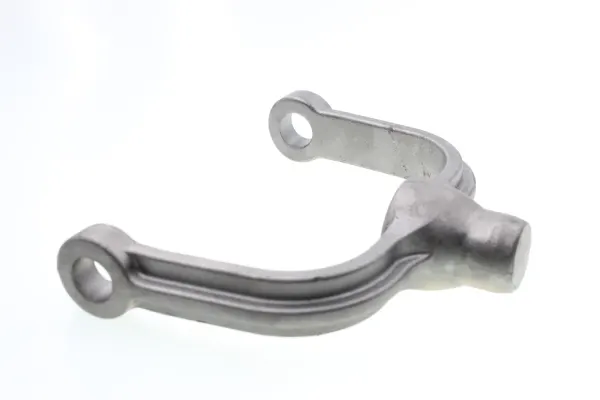
Widely used stainless steel casting - excellent functionality.
Stainless steel casting is done by injecting molten stainless steel material into a designed mold, and then cooled to form a specific shape of the final stainless steel casting product, depending on the form and function of the impractical mold, mainly including: investment casting, sand casting, gravity casting, etc..
Due to the internal components of stainless steel, such as: chromium, nickel, titanium, molybdenum, manganese, silicon, copper, nitrogen, phosphorus and other elements fusion, making stainless steel has a variety of corrosion resistance, wear resistance and other characteristics of metal materials, is widely used in a variety of industries important parts, is one of the indispensable metal materials of modern manufacturing.
Among all the casting processes, the most ideal stainless steel casting is investment casting , which is one of the precision casting processes to meet the needs and standards of almost all stainless steel casting parts, can quickly cast the surface finish, complex structure, economically competitive casting method.
Materials and Grades
Stainless Steel Casting Materials and OEM Grades
Material selection should start with the working environment, corrosion exposure, load, surface requirement and machining plan.
304/304L stainless steel Investment Casting
Type 304 is the most versatile alloy in the stainless steel casting family. It is ideal for a variety of domestic and commercial applications. 304 has excellent corrosion resistance and is easy to machine and form. It can be used in a variety of domestic and commercial applications including: kitchen worktops, sinks, chemical containers, food processing equipment, automotive and aerospace applications, construction materials, architectural trim and molding, etc. (304L is very similar to 304 alloy, the difference being that 304 alloy has a maximum carbon content of 0.08% compared to 0.03% for 304L. (The “L” can be interpreted as low carbon.)
316/316L stainless steel Investment Casting
Compared with investment casting 316 stainless steel castings, 316L stainless steel castings in the molybdenum makes it higher corrosion resistance. Atmospheric corrosion resistance, excellent resistance to intergranular corrosion under welding conditions (casting 316 stainless steel properties). At high temperatures, 316 stainless steel castings have higher creep and tensile strength. Commonly used in paper industry, chemical and textile processing equipment, furnace components, etc.
17-4PH / 410 stainless steel Investment Casting
17-4PH and selected 410 series grades can be reviewed for higher strength, marine exposure or demanding industrial conditions. Stainless steel investment casting can be combined with heat treatment, machining and inspection requirements when the application needs more than standard corrosion resistance.
416 stainless steel Investment Casting
Alloy 416 series is a high chromium martensitic free-cutting stainless steel. It is strong and easy to machine. 416 type stainless steel castings can be used for shafts, gears, valves, screws, etc. It is not recommended for vessels holding high pressure gases or liquids.
| Grade Group | Typical Grades | Common Use | Engineering Notes |
|---|---|---|---|
| Austenitic | 304, 304L, 316, 316L | Valve, pump, food machinery, corrosion-resistant OEM parts. | Good corrosion resistance; 316 stainless steel casting and CF8M casting are often reviewed for stronger chloride resistance. |
| Martensitic | 410, 416, 420 series | Shafts, gears, hardware and selected wear-related parts. | Strength and hardness can be reviewed with heat treatment requirements. |
| Precipitation / Duplex | 17-4PH | Higher strength, marine, oil/gas and demanding industrial applications. | Confirm mechanical performance and corrosion exposure before production. |
For higher tensile or shock-loaded components, compare this route with steel casting for higher strength applications.
Process Options
Investment Casting and Other Process Routes
For corrosion-resistant components with fine details, complex geometry and better as-cast surface requirements, silica sol investment casting is usually the preferred route.
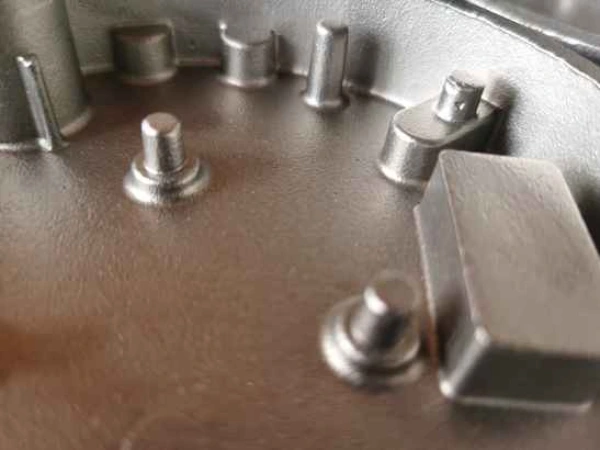
Silica sol investment casting
Supro MFG has advanced die casting manufacturing equipment to meet the needs of low pressure die casting and high pressure die casting products, we provide the most cost-effective on-demand die casting manufacturing solutions for buyers from all walks of life around the world, and through x-ray, composition analysis, Non-destructive testing, mechanical testing, salt spray testing, etc., to ensure on-time delivery of high-quality die-casting parts.
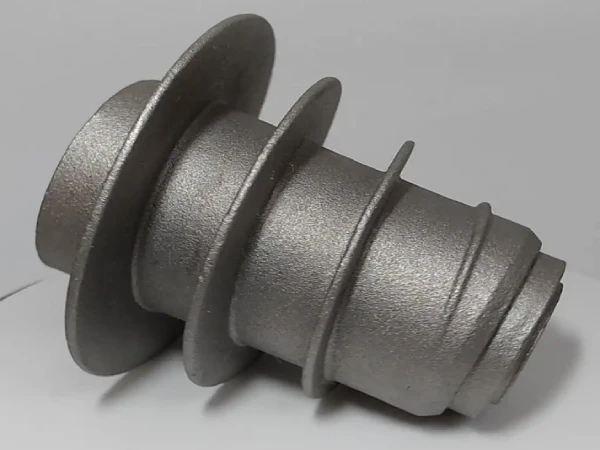
Water glass investment casting
relying on resin sand or green sand to form a cavity with the shape of the final product under the action of aluminum or steel molds, inject molten metal into the sand mold, and cool to form. Aluminum alloy sand casting is economical, but usually requires secondary machining to achieve close dimensional tolerances, and is also very effective for creating large aluminum alloy cast parts or parts with fine detail, suitable for large-scale casting projects.
At Supro casting foundry, we control the casting process and the element composition of the aluminum alloy reasonably to avoid most of the defect problems, enhance the mechanical properties, improve the casting efficiency, and make the aluminum alloy castings more competitive.
Advantages: high efficiency, low cost, economical, complex structure can be realized, suitable for a wide range of materials
Disadvantages: There are many sand holes and pores, and the surface is rough. It is impossible to build fine details.
Supro also provides investment casting and copper casting for complementary alloy requirements.
What is stainless steel investment casting?
Using easily meltable material to create a model of the final product, wrapping multiple layers of special high temperature resistant coating in the outer layer, drying and hardening at high temperatures to form a cavity shell, injecting molten stainless steel solution into the cavity, and cooling to obtain the desired final stainless steel casting.
Stainless steel investment casting can create products with high accuracy (generally CT4 – CT6) and can meet the complex structure of turbines, impellers, valves, pipes and other stainless steel castings, but due to the shrinkage characteristics of the pre-model, it will affect the size of the cavity shell, thus affecting the final product dimensional accuracy.
Stainless steel investment casting is not only suitable for casting parts with complex structure, and for casting dimensional accuracy and surface quality are much better than other casting processes, even high temperature resistant, not easy to process the castings can rely on investment casting smoothly.
Advantages of investment casting in stainless steel.
At supro MFG, we rely on the stainless steel investment casting process to cast a variety of complex stainless steel casting products, including: 304, 316/316L, cf8m, 400 series, 17-4PH, 2205 and high temperature alloy castings, such as: hydraulic turbines, tableware, children’s toys, and even aircraft engine blades.
Not only can we meet the stringent requirements of surface finish, but also cast products with strict dimensional requirements, requiring only a small amount of polishing and other surface treatments to reduce machining costs and material costs as much as possible.
- Dimensional tolerance: ±0.3mm
- Weight: 15 g to 70 kg
- Surface: Ra1.6-Ra 3.2
- Tight tolerances (CT4 – CT6)
- Reliable process control and repeatability
- Flexibility in design and casting
- Efficient production
- Low cost tooling
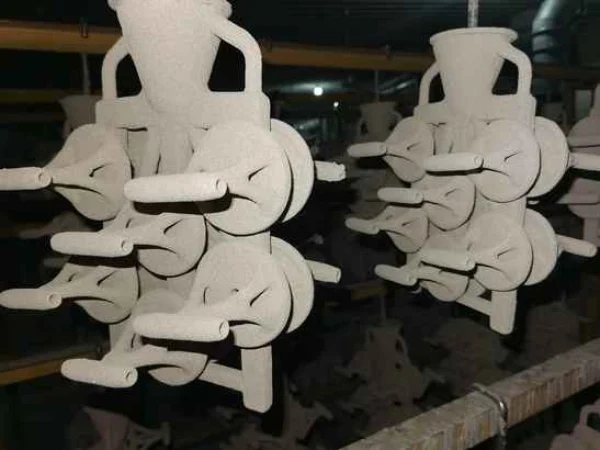
Engineering Support
Engineering Review Before Tooling
A successful stainless project starts before the mold is made. Our team reviews wall transitions, fillets, ribs, holes, sealing faces, draft angles, machining allowance and surfaces that may require polishing or coating.
If the design is still under development, buyers can send 2D drawings, 3D models or sample photos for review.
- Process and grade comparison before quotation
- Machining allowance and critical surface review
- Surface finish and inspection requirements confirmed early
Quality Control
Quality Control for Corrosion-Resistant Cast Parts
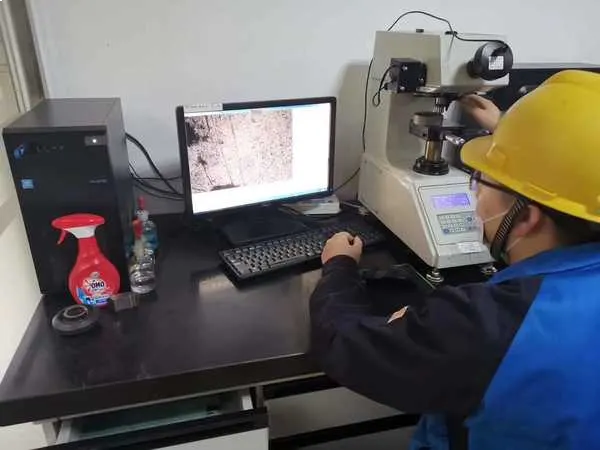
OEM buyers need stable material composition, reliable dimensions and repeatable batches. Supro MFG can support chemical composition analysis by spectrometer, CMM dimensional inspection, mechanical property testing, destructive testing when required and non-destructive testing based on project requirements.
Inspection reports, material certificates and machining inspection records can be prepared when they are included in the quotation requirements.
Mechanical Testing
Mechanical property and destructive testing when required.
CMM Inspection
Critical dimensions, holes, sealing faces and machined areas.
NDT Support
Non-destructive testing based on project requirements.
Ready to send a stainless steel drawing?
Upload 2D/3D files, material grade and quantity requirements for engineering review.
Secondary Operations
CNC Machining, Heat Treatment and Surface Finishing
Many cast parts need secondary operations before assembly. Plan these requirements before quotation.
CNC Machining
CNC machining for stainless steel castings, including holes, threads, sealing faces and mounting areas.
Heat Treatment
Heat treatment for stainless steel parts can be reviewed by grade and mechanical performance needs.
Surface Finishing
Surface finishing for stainless steel cast parts, including polishing, passivation, pickling, blasting, painting and plating.
Buyer Questions
Stainless Steel Casting
These FAQ items answer real sourcing questions instead of generic definitions.
Please send 2D drawings, 3D models or sample photos, plus material grade, quantity, annual volume, tolerance requirement, machining areas, surface finish, application and inspection requirements. |
MOQ can be flexible depending on tooling, material grade, part size and machining scope. As a practical starting point, small-batch projects can be reviewed case by case, and sample timing is typically discussed around a 3-4 week window after drawing confirmation. |
We can review common 2D drawing files such as PDF, DWG and DXF, and common 3D model files such as STP, STEP, IGES and OBJ. For large RFQ packages, please confirm the final file format with our team. |
Common project discussions include 304, 304L, 316, 316L, CF8, CF8M, 410, 416, 17-4PH, 2205 duplex and selected high-temperature alloys. The final grade should be confirmed from the drawing standard and working environment. |
304 or CF8 is often considered for general corrosion-resistant parts. 316, 316L or CF8M is usually reviewed when chloride exposure, marine use or stronger corrosion resistance is required. |
Silica sol investment casting is usually preferred for complex, detailed and higher surface-quality components. Water glass, DLP wax, vacuum casting or sand casting can be reviewed when cost, size, prototype or production requirements make them practical. |
Yes. Many parts require machining for sealing surfaces, mounting faces, holes, threads and assembly areas. Machining requirements should be included in the RFQ and inspection plan. |
Depending on project requirements, inspection can include spectrometer chemical composition analysis, CMM dimensional inspection, mechanical property testing, destructive testing when required, NDT and final shipment review. Material certificates and dimensional reports can be prepared when requested. |
If a buyer reports a quality issue, the process should include photo or report review, batch traceability check, root cause analysis and corrective action. Rework, replacement or credit terms should follow the confirmed purchase agreement and inspection standard. |
Yes. Prototype work can help verify design, assembly, surface finish and material behavior before repeat production. DLP printed wax patterns or prototype tooling can be reviewed depending on the part. |
Upload Your Drawing for a Factory-Direct Quote
We review every inquiry within 48 hours. Factory-direct quoting – no middleman markup.
Send a 2D drawing, 3D model or sample photos. Please include material grade, quantity, annual volume, tolerance requirement, machining areas, surface finish, application and inspection requirements.
- PDF, DWG, DXF, STP, STEP, IGES or OBJ files
- Material grade and corrosion environment
- Quantity, annual volume and target delivery date
- CNC, finishing and inspection requirements
 English
 Français
 Deutsch
 Italiano
 日本語
日本語 한국어
한국어 Polski
 Português de Angola
 Русский
 Español de Argentina