
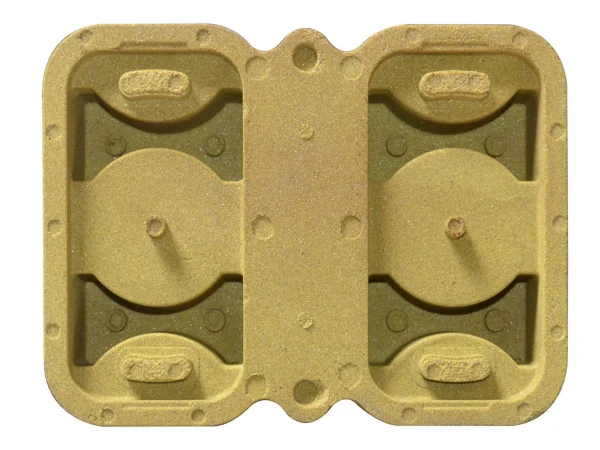
Investment casting molds directly determine the dimensional accuracy, surface finish, and mechanical properties of the final components. Choosing the right mold material is critical to the success of the casting—steel stands the test of time, ceramics deliver ultimate precision, and a wrong choice can burn through the budget. For procurement professionals and engineers, a deep understanding of the design and manufacturing processes for these investment casting molds is essential for obtaining high-quality, ready-to-use castings, reducing post-processing steps, and optimizing the supply chain.
Selecting the appropriate material for investment casting molds is a critical decision that requires balancing factors such as production volume, part complexity, and alloy type. From durable steel molds used for high-volume wax pattern production to high-performance ceramic molds capable of withstanding extreme temperatures, the choice of investment casting mold material determines both the process capabilities and the final quality of the castings.
This article analyzes the key material categories used in investment casting molds and the criteria for selecting them. You will learn about the precision advantages of wax and resin patterns, the comparison between steel and ceramic molds in aluminum alloy casting, and the critical role of high-temperature alloys and ceramic materials in precision casting. The content focuses closely on practical considerations such as material certification and performance verification, providing direct guidance for procurement decisions.
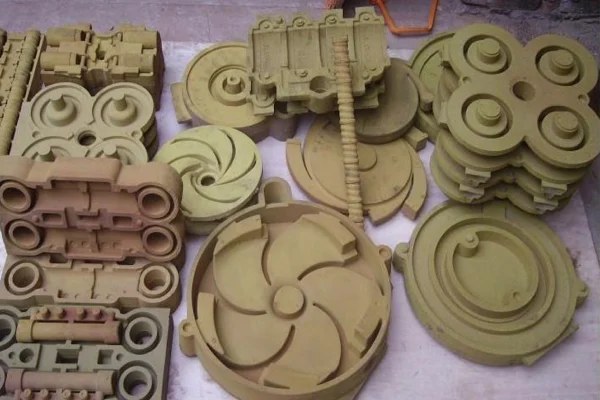
4 Common investment casting mold materials
In the field of aluminum investment casting or high-temperature alloy casting, selecting the right certified materials is a critical step. This is an essential prerequisite for ensuring the safety, performance, and compliance of investment-cast products. Only when investment casting molds are meticulously crafted from specific materials can the final products be guaranteed to possess high precision, durability, and compliance with industry standards.
Wax and Resin: Material Selection for Investment Casting
Wax patterns excel in achieving dimensional accuracy and are the preferred choice for producing aluminum investment castings with complex geometries, thin-walled structures, or high surface quality requirements. Resin patterns, on the other hand, offer greater durability and are commonly used as mold materials in 3D printing (such as SLA or DLP technologies), making them particularly suitable for complex or large-scale investment casting molds.
Both materials play a critical role in the manufacture of investment casting molds. The choice of material ultimately depends on specific application requirements and involves a comprehensive balance between precision, strength, cost, production volume, and development speed. For buyers, understanding how suppliers make informed material selections for investment casting molds based on part characteristics—such as complexity, dimensions, and production volume—is a key factor in evaluating their process capabilities and the reliability of the final component quality.
Exploring the Application of Steel and Superalloys in Mold Durability
For investment casting parts that require mass production or the casting of high-melting-point metals (such as stainless steel and alloy steel), using metal molds to create wax patterns or for direct molding offers advantages over traditional ceramic shells.
Steel molds offer excellent wear resistance and can withstand repeated use without deteriorating. Superalloys (such as the Inconel series) possess exceptional thermal stability, enabling the molds to withstand extreme temperatures during the investment casting process. The use of these robust materials not only significantly extends the service life of investment casting molds but also ensures consistent performance in harsh environments.
The latest market report for 2024 states: “With advances in high-temperature application technologies, global demand for durable mold materials such as steel is expected to grow at an annual rate of 8%.”
The Role of Ceramics in High-Precision Casting
In the field of precision casting, where excellence is paramount and there can be no compromise on part accuracy or performance standards, ceramic molds (typically referring to ceramic shells) play a critical role. This material is the foundation that enables investment casting to produce complex, precision castings.
The advantages of ceramic molds include:
Their refractory properties ensure that the molds retain their shape and functionality in high-temperature environments
The smooth surface created by the ceramic material helps castings achieve exceptional surface finish
Excellent dimensional accuracy is critical for the aerospace and medical industries
Ceramic molds are not only the hallmark material for investment casting, but also an indispensable element for producing high-precision, high-quality castings, directly supporting the demand for complex metal components across multiple high-end manufacturing sectors. For investment casting suppliers, this represents an excellent solution for producing precision castings with superior surface quality and strict dimensional tolerances.
Material certification is critical to the selection of investment casting molds
The quality of investment casting mold materials directly determines the performance and reliability of the final casting parts. Therefore, material certification is by no means a simple process; rather, it is key to verifying the quality of mold materials and ensuring the robustness of the entire investment casting process.
For buyers, insisting that investment casting suppliers provide comprehensive material certification documentation is the most effective way to manage supply chain risks and ensure the long-term, reliable performance of aluminum castings. Key elements include:
Confirmation that materials comply with the strict standards established by industry organizations.
Traceability ensures that investment casting suppliers can accurately trace the origin of certified components.
Performance verification guarantees that the selected materials meet specific requirements under actual operating conditions.
Investment Casting Molds: A Comparison of Steel and Ceramic Molds in Aluminum Casting
Investment casting molds play a critical role in aluminum production, directly impacting product precision, durability, and cost-effectiveness. Steel and ceramic investment casting molds each possess unique characteristics that cater to different priorities. Let’s take a closer look at the options for steel and ceramic molds.
Advantages of Steel Molds in Aluminum Investment Casting
In the mass production of aluminum investment castings, steel molds have become a reliable choice for optimizing the investment casting process and ensuring consistent quality in aluminum castings due to their range of outstanding properties. Their main advantages include:
Mechanical strength ensures long-lasting durability even under repeated use.
Excellent dimensional stability guarantees consistency across different production batches.
High thermal conductivity helps accelerate cooling, thereby improving production efficiency.
Steel molds used in investment casting offer a longer service life, which helps reduce operating costs over the long term. Supro MFG’s steel mold solutions are a prime example of this reliability. Professional design and manufacturing ensure that the molds maintain consistent performance over the long term, even in the demanding environment of aluminum investment casting. For buyers, selecting an investment casting supplier equipped with high-quality, advanced mold manufacturing technology is essential for achieving high consistency and lower scrap rates in aluminum alloy castings.
Ceramic Molds for Aluminum: Precision and Performance
In aluminum investment casting, where the pursuit of ultimate precision and complex designs is paramount, ceramic molds (also known as ceramic investment molds) are key to achieving high-performance aluminum castings. Their primary advantages include:
Thanks to their exceptional performance, they enable the production of intricate designs, delivering unparalleled dimensional accuracy and a smooth surface finish.
Their robust refractory properties allow them to withstand extreme temperatures, ensuring stability during the casting process.
These investment casting molds can handle complex shapes without compromising quality, enabling the production of thin-walled aluminum castings.
Their resistance to thermal shock and high temperatures makes them an indispensable tool for demanding aluminum applications that require precision processes.
For buyers, selecting an investment casting supplier with expertise in ceramic shell technology means securing aluminum investment castings with exceptional surface quality, complex geometries, and tight dimensional tolerances—the foundation for ensuring the performance and reliability of high-end products.
Looking for a reliable China metal foundry?
- We can help you optimize product design and save costs.
- We can help you with high quality high volume cast parts.
- We can deliver on time and get more sales market opportunities.
- You will benefit from Supro MFG metal casting service.
Investment casting molds: Key to Precise & Aesthetic Castings
Understanding the material selection for investment casting molds provides a better insight into the processes involved in producing investment castings with extremely high dimensional accuracy and surface finish. The following sections will detail the key steps, material selection, process parameters, and post-casting treatment procedures required to manufacture high-quality castings. Together, these processes ensure that investment castings combine exceptional functionality (such as strength and precision) with outstanding aesthetics, ultimately delivering high-quality, ready-to-use finished products to customers.
Key Steps in Investment Casting
The first step in producing high-quality investment casting parts is to create a wax pattern that is an exact replica of the final part. A ceramic shell is formed by applying multiple layers of slurry and plaster to the wax pattern. Once the shell has hardened, the wax pattern is removed using a dewaxing process, creating a cavity inside the shell.
Once the preheated investment casting molds have been dried, molten aluminum is poured into the cavities, and the shape is formed using a controlled cooling process. Removing the ceramic shell yields investment-cast parts with complex geometries and smooth surfaces. Subsequent processes, such as cutting, heat treatment, and machining, are typically performed to meet final dimensional and performance requirements.
Precise Control of Investment Casting Process Parameters
Precise control of investment casting process parameters is essential for producing high-quality castings with consistent performance. These parameters directly affect metal filling, solidification behavior, and the integrity of the final product. The following are several key factors that influence the results of investment casting:
1) Temperature affects the flow characteristics of the metal within the mold.
2) Pouring temperature ensures that the casting is fully filled and free of defects.
3) Cooling rate affects grain structure and mechanical properties.
4) Process elements such as the gating system and sprue design optimize metal flow within the mold.
Precise control of these key parameters is essential to ensuring that every investment casting meets the design requirements and maintains consistent, stable quality. This significantly reduces quality risks and subsequent processing costs, thereby enhancing the market value of the castings.
Post-casting Treatment of Investment Castings
Post-casting processing is the final and most critical step in the investment casting process. Castings removed from investment casting molds are merely rough castings; they must undergo a series of key post-processing and finishing operations to become precision parts that meet the requirements of their final applications. These processes typically include:
Removing excess material through processes such as vibration-based removal or cutting;
Achieving surface finishing through grinding or sandblasting;
Performing targeted heat treatment to enhance durability;
Ensuring dimensional accuracy through precision inspection prior to final machining.
For buyers, a comprehensive manufacturing process ensures that they receive final investment casting parts that are reliable in performance, precise in dimensions, and consistent in appearance. This eliminates the need to coordinate multiple outsourced processes, effectively streamlining the supply chain and ensuring the integrity of product quality.
FAQs
Q: What are the key steps in aluminum investment casting for large-volume orders?
A: Each process is a convergence of precision and rhythm: wax patterns shape the geometry of investment casting molds, while ceramic shells enhance strength to withstand pouring temperatures. The gating system, like the lifeblood of the process, guides molten aluminum as it takes shape within the mold. Controlled cooling rates ensure the stable mechanical properties of aluminum investment castings, and non-destructive testing guarantees dimensional accuracy and defect detection prior to final acceptance of the parts. Layer upon layer of meticulous detail ultimately weaves together into a smooth and stable production process.
Q: What are the differences between steel molds and ceramic molds in investment casting?
A:Steel molds are renowned for their toughness—making them the ideal choice when production demands repeated cycles and a long service life for investment casting molds. Ceramic molds, on the other hand, excel in precision—making them indispensable for manufacturing high-precision aluminum alloy investment casting parts when surface finish requirements are stringent or designs call for complex shapes.
Whether working with automotive parts or aerospace components, engineers often need to balance foundry capacity, delivery time commitments, and mold manufacturing technology, all while ensuring the required alloy composition. One mold supports the high-volume production of aluminum investment castings; another elegantly showcases the intricacy of complex structures.
Q: Why is wall thickness so critical for investment casting molds?
A:The thickness of the mold shell strikes a balance between precision and protection, directly affecting the success or failure of the investment casting process. Thicker shells can absorb more heat from the molten aluminum’s pouring temperature but slightly reduce the cooling rate; thinner shells, while allowing for tighter tolerances, may collapse under high thermal loads. Achieving uniformity ensures that every investment casting part meets metallurgical specifications—from medical implants requiring flawless surfaces to energy equipment that must remain durable after hundreds of cycles.
Q: Can post-casting processing shorten the lead time for investment-cast parts while maintaining quality?
A:This is achievable. The following methods allow for a perfect blend of artistry and efficiency:
Heat treatment processes—optimizing mechanical properties without altering the alloy composition.
Machining services—finishing surfaces to precise tolerances.
Surface coating treatments—providing reliable corrosion protection for outdoor applications.
These key processes in the investment casting process collectively shorten lead times while still meeting the stringent certification standards required by customers in defense applications or industrial machinery—achieving a balance between speed, craftsmanship, and accountability, backed by a robust engineering support team at our high-efficiency foundry.
Contact Supro-mfg
Investment casting molds are a core factor determining the precision, performance, and cost of castings. From the trade-off between precision in wax and resin molds to the mass production advantages of steel molds, and the unique ability of ceramic molds to achieve complex thin-walled structures, the choice of investment casting mold material directly impacts the outcome of the process. The use of high-temperature alloys and ceramics further highlights the critical role of material certification in ensuring casting reliability. Mastering the technical principles of investment casting mold making is the fundamental guarantee for purchasers to evaluate supplier capabilities and obtain high-quality, ready-to-use finished products.
 English
 Français
 Deutsch
 Italiano
 日本語
日本語 한국어
한국어 Polski
 Português de Angola
 Русский
 Español de Argentina