
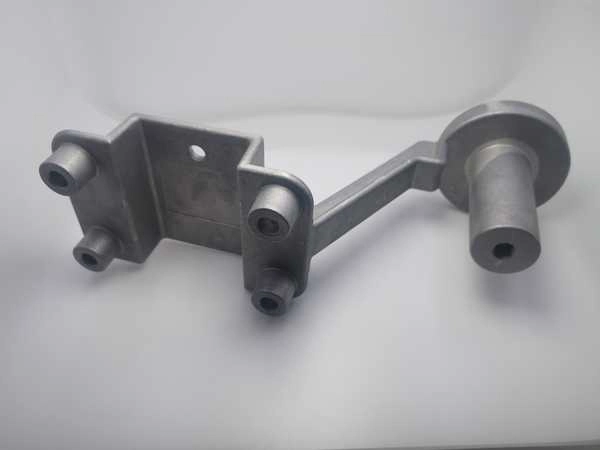
Aluminum investment casting using the A356 alloy has become a cornerstone for modern robotics, medical equipment, and lightweight aerospace sectors where components must shed weight while enduring intense dynamic loads and continuous vibration.
However, many design engineers who specify A356 do not fully understand how the subsequent T6 heat treatment alters its fundamental microstructure. This lack of metallurgical knowledge often leads to costly overdesign—unnecessarily increasing the weight of parts—or results in premature fatigue failure of components during actual use.
To avoid these design pitfalls, this article will provide an in-depth analysis of the precise chemical composition and practical application factors of aluminum investment casting, elucidating why A356-T6 has become the gold standard for high-performance structural applications.
Why Aluminum Investment Casting Relies on A356-T6
For high-stress applications, the commercial success of aluminum investment casting hinges entirely on the metallurgical transformation from molten metal to a hardened structural framework. By combining the A356 alloy’s exceptional mold-filling capability with a rigorous T6 heat treatment cycle, investment casting companies are able to consistently produce lightweight components that perform exceptionally well under demanding operating conditions.
The Metallurgical Synergy of Silicon and Magnesium
The exceptional performance of aluminum investment castings stems from their precise chemical composition at the molecular level. In its as-cast condition, the A356 alloy contains 6.5% to 7.5% silicon, which significantly improves the fluidity of the molten metal during the pouring stage. This high fluidity enables Supro MFG’s casting team to successfully fill the ultra-thin walls and complex internal geometries of aluminum castings without cold shuts or gate defects.
However, in the as-cast condition (F-state), silicon and trace amounts of magnesium (0.25% to 0.45%) exist only as a coarse mechanical mixture, resulting in limited structural strength. To unlock the true mechanical properties of investment-cast aluminum, these elements must undergo controlled structural transformations. Magnesium acts as a latent chemical switch that remains dormant until systematically activated through a rigorous thermal cycling process.
Deconstructing the T6 Heat Treatment Phase
To fully realize the potential of this aluminum investment casting material, a precise two-stage T6 heat treatment is required:
- First, the raw castings undergo solution treatment. Supro MFG’s technicians heat the parts to 535°C (±5°C) and hold them at this temperature for several hours. This step uniformly dissolves magnesium and silicon into the solid aluminum matrix, which is then instantly solidified through controlled quenching in lukewarm water.
- Second, we perform artificial aging by baking the casting at 155°C for 3 to 5 hours, promoting the uniform distribution of nanoscale Mg₂Si precipitates throughout the alloy.
These microscopic precipitates act as physical pinning points that block atomic dislocations when the component is subjected to external stress. Consequently, this precision aluminum investment casting process successfully achieves a significant increase in yield strength, transforming the brittle cast shell into a robust and durable high-performance structural component.
Supro MFG Engineering Note: It is critical to strictly control the temperature tolerance within ±5°C during the melting process. If the temperature deviates from this range, the Mg₂Si phase will not dissolve completely, which will directly reduce the component’s final fatigue strength.
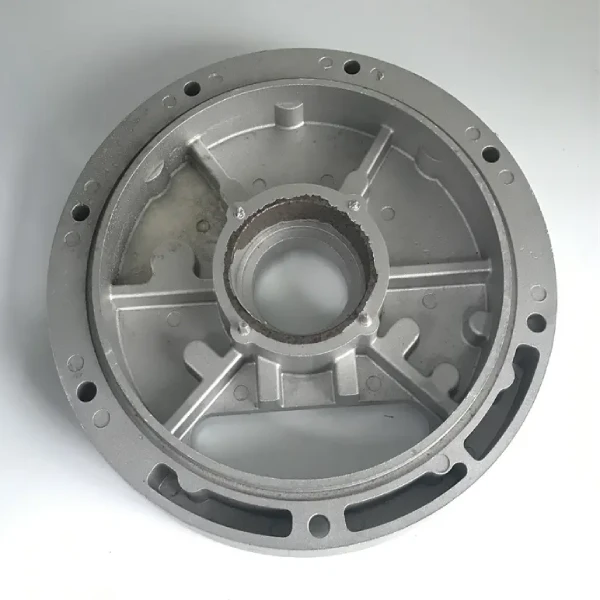
Mechanical Limits of Aluminum Investment Casting
Assessing the precise limits of stress and strain that components can withstand is a critical step that every aerospace or industrial designer must go through. Relying solely on vague material specifications often leads to catastrophic failures in the field or results in the production of suboptimal, bulky components. By clearly defining precise mechanical data and machining benchmarks, aluminum investment casting companies can provide engineering teams with the predictable performance required in high-stress environments.
Yield Strength vs Tensile Strength Balance
For critical components, standard as-cast aluminum (F-temper) lacks the internal strength required for high-stress applications, with a yield strength typically ranging from only 110 to 130 MPa. At Supro MFG, our precision aluminum casting process incorporates a rigorous T6 heat treatment, which significantly enhances these mechanical properties. This heat treatment process achieves a significant improvement in microstructure, ensuring a final tensile strength of ≥290 MPa and a yield strength of ≥225 MPa.
Furthermore, A356 T6 precision castings have an elongation of ≥3.5%, enabling the components to maintain excellent ductility even when subjected to sudden impact. Therefore, verification of these metrics demonstrates that a precise heat treatment cycle is absolutely essential for manufacturing stable structural aluminum precision castings.
The following is a comparison of the mechanical properties of A356 aluminum alloy in different heat-treated conditions:
Material State (ASTM B618) | Ultimate Tensile Strength (UTS) | Yield Strength (0.2% Offset) | Elongation in 2" (50mm) | Brinell Hardness (HBW) | Typical Application Suitability |
A356-F (As-Cast) | 170 - 190 MPa | 110 - 130 MPa | ≥ 2.0% | 55 - 65 | Non-structural covers, oil pans, low-load brackets. |
A356-T6 (Minimum) | ≥ 290 MPa | ≥ 225 MPa | ≥ 3.5% | ≥ 75 | Critical structural loads, robotic arms, aerospace. |
A356-T6 (Supro Typical) | 310 - 330 MPa | 240 - 260 MPa | 4.0% - 6.5% | 80 - 90 | High-fatigue environments, medical enclosures. |
Mitigating Fatigue and Dynamic Load Risks
Failure of high-performance structural components is often caused by progressive fatigue resulting from continuous cyclic loading, rather than a single overload event. Components such as robotic joints and medical robotic arms operate under constant alternating stresses; therefore, the fatigue resistance of A356 aluminum alloy is a primary engineering concern.
At our specialized foundry, Supro MFG achieves a highly refined dendrite arm spacing (DAS) by controlling the cooling rate during the pouring stage of precision aluminum investment casting. A denser, finer grain structure directly suppresses the formation of micro-fatigue cracks and prevents their propagation within the matrix.
Ultimately, the dense metal microstructure, combined with T6 properties, enables this investment-cast aluminum to withstand millions of high-frequency vibration cycles without sudden structural failure.
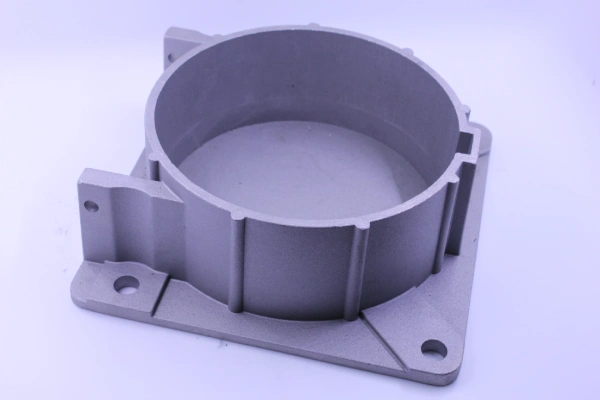
Optimizing Layouts for Aluminum Investment Casting
To bridge the gap between digital CAD models and flawless physical parts, it is essential to focus on “Design for Manufacturing” (DFM). If part geometries are not optimized to account for fluid behavior and thermal contraction, even the highest-quality alloys may experience internal stress concentrations. Adhering to standard geometric design guidelines ensures that aluminum precision casting companies can both perfectly reproduce complex details and maintain absolute structural integrity.
Wall Thickness and Transition Radii Rules
Successful component design depends largely on controlling the natural volumetric shrinkage of aluminum during solidification. Based on Supro MFG’s 25 years of casting experience, an effective design guide for precision aluminum casting calls for maintaining as uniform a wall thickness as possible, with a recommended range of 2.5 to 4.0 millimeters.
When a design requires a transition from thin-walled areas to thick structural bosses, large fillets—ideally 1.5 to 3 times the wall thickness—must be used to avoid sharp internal angles. Analysis of these geometries indicates that abrupt changes in cross-section disrupt the directional solidification process, leading to localized hot spots and microcracks. Ultimately, implementing gradual wall-thickness transitions allows the precision aluminum investment casting material to cool uniformly, thereby significantly reducing residual stresses and eliminating systemic structural weaknesses.
Controlling Internal Porosity in Structural Parts
To achieve optimal reliability in high-load components, a pragmatic and proactive approach is required to manage porosity and shrinkage—challenges inherent in all metal casting processes. To produce high-quality, lightweight structural aluminum castings, Supro MFG employs advanced Magmasoft investment casting flow analysis technology to precisely simulate the process by which molten metal enters the ceramic shell.
During the actual aluminum investment casting process, the Supro MFG team operates a highly efficient rotary degassing system that uses inert argon gas to remove dissolved hydrogen from the molten metal pool prior to pouring. Additionally, a custom-designed pouring system ensures a slow, turbulence-free bottom-fill process, thereby preventing porosity in critical structural areas.
In summary, by combining digital simulation with precise melt control, this specialized aluminum investment casting process produces a dense, near-zero-porosity microstructure that easily meets stringent radiographic inspection standards.
Contact Supro-Mfg
In summary, the use of A356-T6 aluminum investment castings achieves an unparalleled balance between significant weight reduction and a high safety margin for critical structures. When your engineering team correctly applies these well-defined mechanical property limits and design for manufacturability (DFM) rules in their design drawings, this directly translates into a significant competitive advantage for your product—ensuring long-term reliability without adding unnecessary weight.
However, simply labeling ‘A356-T6’ on your engineering drawings is only the first step. To guarantee that these cast components consistently pass strict compliance audits and destructive testing in overseas laboratories, you must understand the corresponding international specifications and the crucial role of test bars. Discover how in our next guide: [Aluminum Investment Casting ASTM Standards: Certifying A356-T6 Properties].
We produce aluminium investment casting to A356-T6 specifications.
 English
 Français
 Deutsch
 Italiano
 日本語
日本語 한국어
한국어 Polski
 Português de Angola
 Русский
 Español de Argentina