
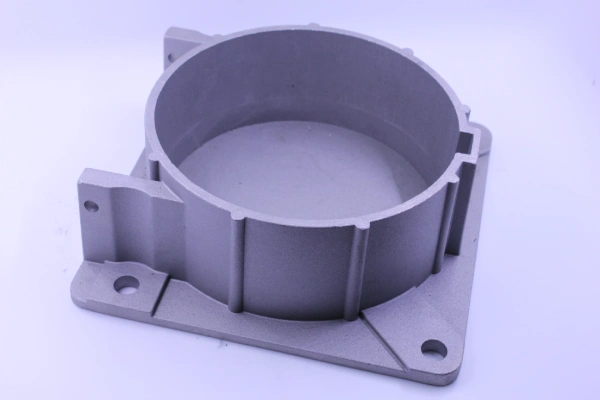
When it comes to cosmetic defects in aluminum investment casting—such as black spots or white spots—design engineers tend to place the blame directly on the surface treatment facility. However, drawing on over 25 years of professional experience in China, Supro MFG clarifies a key industry reality: more than 70% of cosmetic rejections actually stem from subsurface metallurgical issues inherent in the casting substrate, including microscopic porosity and residual ceramic pattern inclusions. These underlying issues are formed during the aluminum investment casting process itself; even with an optimally configured chemical plating bath, the ultimate surface failure caused by insufficient base material density cannot be masked. In reality, many aluminum investment casting companies rely too heavily on post-processing remedies while neglecting the fact that the density of the original casting layer is the decisive starting point. To achieve a flawless oxide film on investment-cast aluminum, the integrity of the base material must be controlled at the metallurgical source. This guide will systematically explain how to create a high-density, defect-free base material through process parameter optimization, thereby ensuring a uniform and durable anodized coating—the core approach to improving the yield rate of aluminum investment castings.
Anodizing Flaws in Aluminum Investment Casting
When high-end original equipment manufacturers (OEMs) switch to using the aluminum investment casting process for their components, they often encounter unexpected cosmetic defects after the anodizing process. This key section analyzes how latent metallurgical defects formed during the casting stage manifest as destructive surface defects following chemical treatment.
Micro-Porosity: The Breeding Ground for Cosmetic Spots
For quality inspectors, managing the quality of anodized aluminum investment castings means addressing the issue of subsurface inclusions. During the solidification phase of aluminum investment castings, atomic hydrogen escapes from the molten metal, forming microscopic pinholes and microporosity just beneath the casting’s surface. When these castings are placed in an acidic anodizing bath, these microscopic voids—invisible to the naked eye—act like miniature capillary traps, drawing in sulfuric or oxalic acid electrolytes.
During the subsequent high-temperature curing or drying stage, the trapped liquid expands due to heat and flows back to the surface. This chemical backflow neutralizes local dye and selectively corrodes the exposed metal, resulting in permanent dark or white spots on the surface.
At Supro MFG, we eliminate this risk by monitoring density levels at an early stage, ensuring that aluminum investment castings remain high-density and free of porosity before any surface chemical reactions occur.
Ceramic Shell Inclusions and Surface Contamination
Surface defects in aluminum investment casting projects can often be traced back to the structural integrity of the refractory mold shell. If the initial coating slurry lacks optimal rheological properties and adhesion, or if it is subjected to thermal shock during the dewaxing process, tiny fragments of the ceramic shell may break off and become entrained in the surging molten alloy. These non-metallic ceramic inclusions become permanently embedded in the outer periphery of the component.
Since ceramic particles are non-conductive, they completely block the localized current required for the uniform growth of the anodized oxide film. The anodizing process bypasses these areas entirely, leaving unoxidized spots and resulting in severe surface defects on precision-cast aluminum investment castings. To address this issue, our engineering team employs a rigorous multi-stage mold flushing process and advanced gate geometries to ensure a clean, contamination-free surface.
In high-precision applications such as medical housings or optical mounts, simply attributing substandard anodized parts to issues with the chemical bath would lead to costly mistakes. True surface perfection can only be achieved by ensuring the integrity of the metal material right in the foundry.
Eliminating Gas Porosity in Aluminum Investment Casting
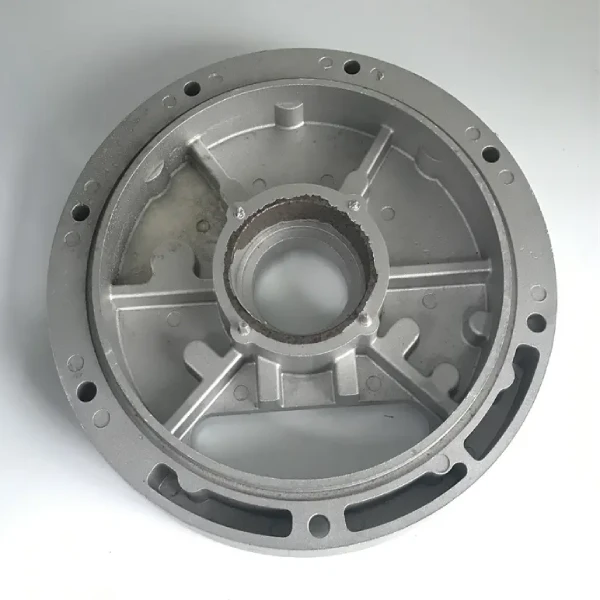
In aluminum investment casting, the most critical technical challenge when preparing blanks for high-end surface treatment lies in removing residual dissolved hydrogen from beneath the casting’s surface. If these gases are not effectively purged before the metal solidifies, they will cause pinholes or hazy white spots during subsequent anodizing. By precisely controlling the melting atmosphere, applying rotational degassing, and using refining agents, we remove the hydrogen before it causes irreversible damage to the solid-phase matrix. At the same time, we adjust the pouring temperature and mold preheating regimen to promote the rise and escape of bubbles between dendrites, thereby forming an ultra-dense crystalline structure just below the surface. The density of this matrix directly determines the uniformity and adhesion of the chemical oxide coating. In fact, the root cause of many appearance-related rejections in aluminum investment casting lies precisely in the loss of control during this melt purification stage, rather than in issues with the post-processing chemical bath.
Rotary Degassing to Achieve a Hydrogen-Free Melt
To achieve a perfect anodized surface finish on aluminum investment castings, hydrogen absorption in the molten metal must be strictly controlled. During the melting process, molten aluminum reacts vigorously with moisture in the environment, breaking down water molecules into atomic hydrogen, which immediately dissolves into the molten metal. If left uncontrolled, this gas will precipitate during solidification, causing microporosity on the surface of the investment-cast aluminum.
To address this issue, Supro MFG employs an automated rotating degassing system that injects high-purity argon gas into the bottom of the holding crucible. A rotating rotor breaks the gas down into a dense cloud of microbubbles, which absorb the dissolved hydrogen and safely transport it to the slag layer at the surface. This precise purging and reduction process enables us to reduce the hydrogen content to well below the critical threshold of 0.12 ml/100 g, thereby completely eliminating the primary cause of subsurface pinholes.
Density Control and Thermal Analysis for Sound Metallurgy
Experienced aluminum investment casting companies do not rely on guesswork; before casting any mold, they first verify the metal’s density. If uncontrolled shrinkage or microscopic porosity is present in aluminum investment castings, it will compromise the fine anodized film formed during the post-casting chemical immersion process.
At Supro MFG, our engineers perform standardized reduced-pressure testing (RPT) and real-time thermal analysis on every batch of alloy before it leaves the factory. By solidifying samples in a controlled vacuum environment, we calculate the precise density index (DI) for that batch to ensure structural uniformity. We approve a furnace batch for casting only when the sample’s density index is verified to be below 3.0%, thereby ensuring that its subsurface regions are free of microporosity and capable of withstanding highly corrosive chemical etching without pitting.
Supro MFG Metallurgy Quality Control Standards (A356-T6 Example)
To ensure that your parts successfully pass the post-casting chemical treatment, the table below details the specific quantitative quality control parameters strictly enforced at our facility:
QC Stage | Key Process Parameter | Standard Foundry Baseline | Supro MFG Target Standard | Target Anodizing Defect Prevented |
Melt Degassing | Hydrogen Gas Content | ≥ 0.25/100g | ≤ 0.12 /100g | Eliminates micro-pinholes that cause localized acid bleeding |
Pre-Pour Testing | Density Index (DI) | 6 % - 10 % | ≤ 3% (Verified via RPT) | Ensures the sub-skin remains dense after machining removes outer skin |
Shell Cleaning | Pre-Pour Mold Flushing | Manual inversion only | Multi-angle High-pressure N2 + Borescope Inspection | Prevents loose ceramic debris from forming conductive dark inclusions |
Slurry Management | Primary Face-Coat Viscosity | Operator visual check | Zahn Cup Flow Test Every 4 Hours | Prevents face-coat erosion under the weight of rushing molten metal |
Controlling Ceramic Inclusions during Aluminum Investment Casting
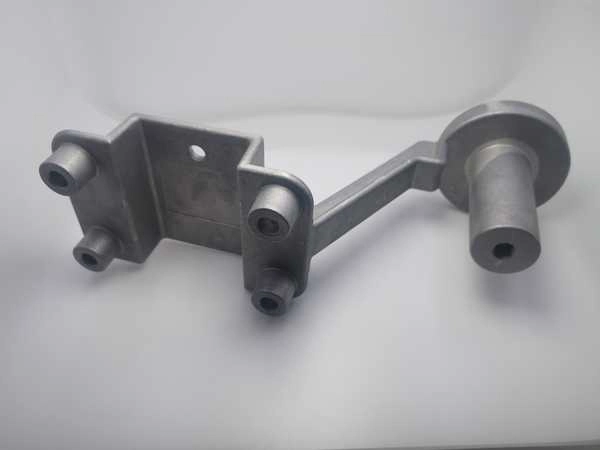
To prevent contamination from non-metallic particles, strict measures must be taken to ensure the integrity of the mold before the metal is melted. This section details how we remove loose shell material during the aluminum investment casting process to protect the integrity of the part’s surface. By stabilizing the structural layer of the mold, we ensure that the final part can be chemically stained to perfection.
Optimizing Slurry Rheology and Face-Coat Strength
In the aluminum investment casting process, ensuring that the casting surface remains intact prior to anodizing hinges on the precise, end-to-end control of the surface mold slurry. In actual casting environments, if the inner layer coating lacks sufficient resistance to thermal shock from high-temperature molten alloy, microcracks may form on the coating surface or the coating may even be eroded by the molten metal, leading to the spalling of refractory sand particles and their contamination of the molten metal.
Supro MFG strictly monitors the viscosity, silica sol binder ratio, and particle size distribution of the refractory powders for both the first and second layers of slurry. These process parameters are remeasured every four hours using an automated Zane flow cup to ensure that the coating does not suffer structural failure under extreme thermal stress. We place particular emphasis on the chemical bond strength of the innermost layer of the coating, which effectively prevents loose particles from delaminating and entering the molten metal, ultimately resulting in clean aluminum investment castings completely free of non-conductive inclusions.
This purity of the substrate is the decisive factor in whether aluminum investment castings can achieve a uniform anodic oxide film—in fact, a large number of cosmetic rejects stem from a failure to control this process step, rather than issues with the subsequent chemical bath.
Advanced Mold Flushing and Gating System Design
Removing residual dust and debris from deep cavities in castings is a major challenge faced by aluminum investment casting companies. If loose ceramic dust remains trapped in narrow corners or internal passages, it can create non-conductive areas, thereby compromising the anodization of aluminum investment castings.
Our engineering team addresses this issue by employing a specialized bottom-gate pouring system designed to minimize fluid turbulence and prevent erosion of the mold walls. Prior to assembly and preheating, we perform multi-angle high-pressure nitrogen purging, supplemented by endoscopic inspection, to remove all loose particles. This rigorous cleaning strategy prevents hidden surface defects in precision castings and ensures that the finished products have a completely uniform bare metal surface, resulting in excellent reaction performance in the anodizing tank.
Buying Advice for Aluminum Investment Casting Projects
When procuring high-end metal components, a strategic approach to supply chain risk management is essential. This section provides key business insights for procurement managers responsible for sourcing high-precision aluminum investment castings for sensitive applications. By identifying structural flaws in typical multi-tier supplier systems, we will focus on how to ensure predictable manufacturing results.
Why Single-Source Accountability Prevents Supplier Blame Games
When managing aluminum investment casting projects that require high-end surface finishes, procurement professionals often face a frustrating dilemma. In a typical multi-supplier supply chain, foundries provide only the metal blanks, while independent anodizing contractors treat the surfaces using chemical solutions. If a batch of products exhibits surface blemishes or color inconsistencies, it triggers a costly cycle of finger-pointing: the anodizing contractor blames hidden defects in the investment casting surface, while the foundry blames poor chemical composition in the electrolytic bath.
To eliminate this structural risk, Supro MFG offers true “one-stop” accountability, with every step—from initial mold design to the final aluminum investment casting anodizing process—completed on a single factory site. As an ISO 9001-2015 and IATF 16949-certified manufacturer, we assume full responsibility for the entire aluminum investment casting process, ensuring that metal purity fully meets the requirements of the chemical production line. This integrated oversight eliminates disputes between suppliers, delivers fully finished, defect-free parts directly to your assembly line, and provides comprehensive quality assurance.
Looking for a reliable China metal foundry?
- We can help you optimize product design and save costs.
- We can help you with high quality high volume cast parts.
- We can deliver on time and get more sales market opportunities.
- You will benefit from Supro MFG metal casting service.
Contact Supro MFG
The dense, inclusion-free surface of the blank produced by the aluminum investment casting process is the key foundation for achieving a flawless anodized finish on aluminum investment castings. Ensuring casting-grade metallurgical quality is the only effective way to eliminate catastrophic spotting after anodizing.
Even when the internal metallurgy of an aluminum investment casting is perfectly sound and free of sub-surface micro-voids, the battle is only half won. If the subsequent blasting media is contaminated, or if the acidic chemical residues from the anodizing baths are not thoroughly neutralized and rinsed, severe color variations and acid bleedout will still ruin your batch. To explore the critical pitfalls and chemical process controls in the surface treatment phase, read our companion guide: [Aluminum Investment Casting Anodizing: Solving Color Mismatch and Acid Bleed]