
The quality of aluminum die casting molds affects a project’s hidden manufacturing costs. In the highly competitive global automotive and industrial procurement market, poor mold design can quickly lead to serious project delays, high scrap rates, and dimensional deviations.
To systematically eliminate these risks, it is essential to master five key mold parameters: thermal balance, gate geometry, venting efficiency, draft angle, and balanced ejection. By optimizing these factors, global buyers can successfully stabilize the aluminum die casting process, extend mold service life, and confidently reduce component defect rates by up to 30%.
This article provides a systematic overview of the five core design parameters for aluminum die casting molds and the selection of mold materials. From contour cooling, which reduces cycle times by 25%, to H-shaped runners that eliminate turbulence, and vacuum-assisted casting that achieves near-zero porosity, Supro MFG—as a one-stop custom die casting mold manufacturer—directly integrates these advanced DFM strategies into its designs to ensure that our clients’ projects achieve high precision, risk-free procurement, and maximum cost-effectiveness.
Thermal Balance in Aluminum Die Casting Mold
Thermal balance management within aluminum die casting molds determines the porosity and crack susceptibility of aluminum castings. If uneven heat dissipation creates localized hot spots, thermal cracking and severe shrinkage porosity will occur as the molten alloy contracts. Professional manufacturers ensure synchronized directional solidification and prevent thermal stress cracking by designing conformal cooling channels that closely follow the mold cavity, strictly controlling the mold temperature of the alloy, and selecting high-quality H13 steel.
How Thermal Imbalance Causes Porosity and Hot Tears
When an aluminum die casting mold design fails to dissipate heat evenly, “hot spots” can form in certain areas, causing the molten alloy to remain liquid longer in those regions than in the surrounding areas. As the aluminum contracts during this delayed cooling period, it separates from the solidified sections, resulting in hot cracks and severe shrinkage porosity. To address this issue, mold design engineers must monitor the temperature difference between the cavity and the core to ensure synchronized and directional solidification.
Designing Conformal Cooling vs. Conventional Channels
Traditional custom aluminum die casting mold manufacturing relies on straight drilling paths, which often fail to cover deep cavities or complex geometries, resulting in uneven heat distribution. Supro MFG’s advanced manufacturing technology enables the design of cooling channels that precisely follow the contours of the cavity, reducing cycle times by 25%. The use of these optimized cooling channels helps achieve the uniform aluminum die casting process required for high-precision components.
Ideal Temperature Settings for A380/A360 Alloys
For commonly used alloys such as A380 and A360, the surface temperature of aluminum die casting molds must be strictly maintained between 180°C and 240°C prior to injection molding. If the temperature is too low, it can lead to premature solidification and cold shuts; if the temperature is too high, it will accelerate mold aging. Selecting high-quality aluminum die casting mold materials, such as premium H13 steel, ensures that the mold will not crack when subjected to these severe thermal stresses.
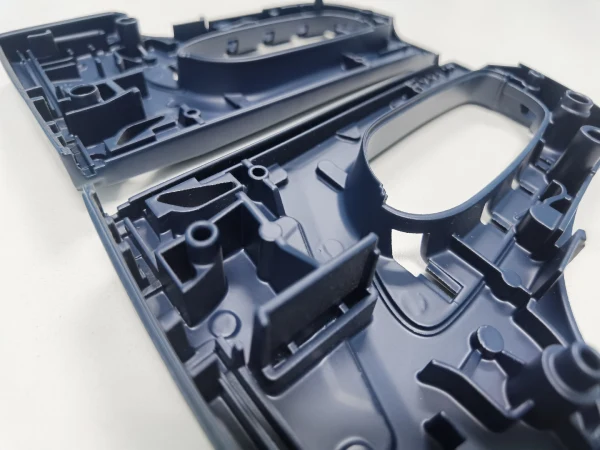
Gating Systems for Aluminum Die Casting Mold
The gating system determines whether turbulence or cold shuts will occur in the molten alloy. If the gate thickness, flow velocity, or runner layout of an aluminum die casting mold is unbalanced, it can lead to defects such as cold shuts. Supro MFG uses tapered, smooth runners, controls gate flow velocity, and employs H-shaped or star-shaped runners to ensure simultaneous filling of multiple cavities, thereby minimizing the scrap rate.
Preventing Turbulent Flow and Cold Shuts
Poorly designed aluminum die casting molds often lead to fluid turbulence, which traps gas and causes internal porosity in the finished product. When the metal flow is obstructed or loses too much heat, a “cold shuts” occurs, manifesting as a visible seam where two metal streams fail to fuse properly. To prevent this, the sprue should be tapered and have a smooth surface to ensure constant pressure throughout the aluminum die casting process.
Optimizing Ingate Thickness and Gate Velocity
The thickness of the gate is a key factor in controlling the flow velocity of molten metal as it enters aluminum die casting molds. Typical flow velocities for aluminum range from 30 to 50 meters per second; excessively high velocities can cause mold erosion, while excessively low velocities can lead to surface defects. Adjusting these parameters requires a thorough understanding of aluminum die casting mold materials to ensure that the gate can be easily trimmed without compromising the structural integrity of the casting.
Balancing Runner Layouts in Multi-Cavity Molds
When using multi-cavity aluminum die casting molds for high-volume production, the runner system must be perfectly balanced to ensure that each cavity is filled at exactly the same time and under the same pressure. If the layout is unbalanced, some parts will be overfilled, while others will be “underfilled” or incompletely filled. Supro MFG’s experienced engineers typically employ “H-shaped” or “star-shaped” runner designs to ensure that the runner length from the gate to each cavity of the custom aluminum die casting mold is exactly the same.
Venting Design of Aluminum Die Casting Mold
An effective venting design ensures that air is forced out of the molten metal and escapes smoothly. If an aluminum die casting mold lacks escape channels, back pressure will slow down filling and lead to structural instability. Supro MFG uses fluid simulation to position vent holes and overflow channels to collect cold metal and dross, while vacuum-assisted casting is employed for zero-porosity parts—a practice that has become the industry standard for high-strength components in the automotive and aerospace sectors.
Eliminating Trapped Air and Internal Blisters
When gas cannot escape from an aluminum die casting mold, it becomes compressed under high pressure, resulting in internal porosity or surface bubbles after the part is removed from the mold. These defects are often difficult to detect before heat treatment or CNC machining, but they can cause part failure or even explosions during the heating process. By optimizing the aluminum die casting molding process through fluid simulation in the early stages, we can identify “dead gas” zones and precisely position vent holes at the convergence points of the metal flow.
Strategic Placement of Overflow Wells
Overflow wells are specifically designed to trap cold metal and oxide scale impurities at the front end of the runner in custom aluminum die casting molds. These overflow wells should be strategically positioned at the end of the filling section or near thick-walled areas where gas tends to accumulate. The use of high-quality aluminum die casting molds with a well-designed distribution of overflow channels can significantly improve the density and surface finish of the final castings.
When to Use Vacuum-Assisted Die Casting
For structural components or airtight parts that require near-zero porosity, standard venting measures in aluminum die casting molds may not meet the requirements. Vacuum-assisted technology actively removes air from the mold cavity before metal is injected, making it the preferred solution for complex custom aluminum die casting projects. Although this requires the use of more specialized mold materials and tighter seals, it has become the industry standard for high-strength automotive and aerospace applications.
Draft Angles for Aluminum Die Casting Mold
Using the correct draft angles on aluminum die casting molds ensures a smooth ejection process and maintains dimensional consistency. Supro MFG’s engineers calculate these angles during the initial design phase to ensure parts can be ejected smoothly without placing undue mechanical stress on the mold or automation system.
Preventing Surface Drag and Ejection Cracks
In aluminum die casting mold design, if the draft angle is insufficient, the part will rub against the steel mold during ejection, causing surface scratches on the aluminum casting and resulting in costly scrap due to surface defects. In severe cases, the excessive force required to eject the part can also cause thin-walled sections to crack or leave deep ejector pin marks. Using aluminum die casting molds with an appropriate draft angle can eliminate this resistance, thereby significantly reducing the scrap rate.
Standard Draft Angles for Inner vs. Outer Walls
Because the shrinking aluminum tightly envelops the internal core, the inner walls require a steeper draft angle (typically 1.5°–2°) when designing custom aluminum die casting molds. The outer walls will contract toward the outside of the cavity; therefore, depending on the feature depth, a smaller draft angle of just 0.5° to 1° is sufficient for optimal performance. Adhering to these strict standards prevents premature wear of the aluminum die casting mold material and ensures efficient operation of high-volume production lines.
Adding Fillet Radii to Alleviate Stress
Sharp corners inside aluminum die casting molds can act as severe stress concentration points, potentially leading to premature cracking of the mold or structural failure of the casting. Designing sufficient fillet radii at the bases of ribs and walls can smooth out these sharp transitions, thereby promoting smoother metal flow and enhancing the geometric strength of the part. At Supro MFG, we ensure that all sharp corners are replaced with calculated fillets to maximize the fatigue life of aluminum die casting molds.
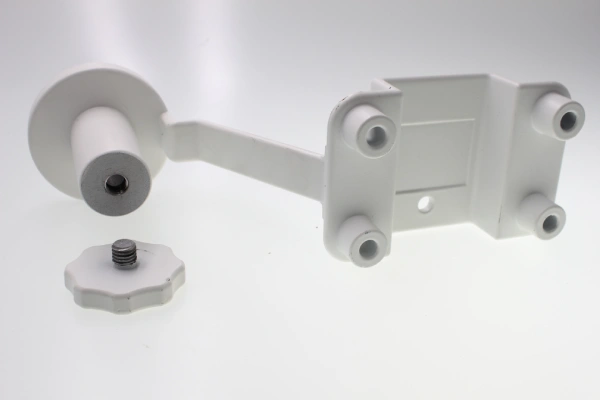
Ejection Systems in Aluminum Die Casting Mold
The design of the mechanical ejection system in an aluminum die casting mold determines how safely the solidified parts can be ejected from the mold. Even if the filling and cooling stages are flawless, improper balancing during the ejection stage can cause permanent damage or deformation to the parts at the very last moment. Supro MFG places great emphasis on the guide system, return pins, and hydraulic ejection pressure to ensure the integrity of every production batch.
Avoiding Part Warpage and Ejector Marks
In aluminum die casting mold design, if the ejector pins apply uneven pressure to a casting that is still warm, localized stress can cause the part to warp or leave visible ejector marks on its surface. This is a common failure point for high-precision components and can result in their scrapping due to structural issues. Ensuring that the ejector force is distributed evenly across the die casting mold allows parts to be removed cleanly and smoothly while maintaining their critical dimensional tolerances.
Optimizing Pin Placement and Pressure
When configuring aluminum die casting molds, Supro MFG engineers position large-diameter ejector pins in the strongest areas of the part, such as thick-walled sections, internal ribs, and bosses. The hydraulic ejection pressure must be carefully adjusted—typically between 40 and 80 bar—with the exact value depending on the casting’s surface area and depth. This strict control stabilizes the aluminum die casting process and prevents thin-walled sections from perforating or fracturing under sudden mechanical loads.
Preventing Flash Buildup to Reduce Downtime
Over time, molten metal may seep into the tiny gaps around the ejector pins, leading to a buildup of flash that causes mechanical jamming. This not only requires immediate production shutdown for mold maintenance but also accelerates wear on the aluminum die casting mold material and results in high equipment downtime costs. Supro MFG effectively addresses this issue by strictly controlling ejector pin tolerances (typically +0.01 mm) and implementing an automatic localized lubrication system, ensuring smooth equipment operation and uninterrupted production cycles.
Selecting the Right Aluminum Die Casting Mold Material to Enhance Performance
Selecting the right material for aluminum die casting molds is essential to ensuring the mold’s service life and consistent part quality. Supro MFG matches steel grades and heat treatment specifications to specific production volumes, ensuring that the mold maintains its structural integrity over hundreds of thousands of cycles.
Premium Die Steels (H13) to Resist Heat Checking
During the aluminum die casting process, rapid heating and cooling cycles cause the mold surface to expand and contract, resulting in “thermal cracks.” The use of high-quality H13 or Dievar steel that has undergone rigorous vacuum hardening significantly improves its resistance to thermal fatigue. Selecting these high-quality steels in aluminum die casting mold design prevents microcracks from transferring a rough texture to the final casting.
Advanced Coatings to Prevent Aluminum Soldering
Aluminum welding refers to the chemical bonding between the molten alloy and the iron in die casting molds, causing the alloy to adhere to the cavity surface and tear the workpiece during ejection. To address this issue, Supro MFG employs advanced surface treatment technologies for aluminum die casting molds, such as physical vapor deposition (PVD) coatings (e.g., CrN or TiAlN) and plasma nitriding. These protective layers reduce the coefficient of friction, decrease reliance on chemical release agent sprays, and significantly extend the service life of molds in high-volume production lines.
Contact Supro-Mfg
In aluminum die casting mold design, optimizing these five key parameters—thermal balance, gates, venting, draft angles, and ejection—can directly reduce the defect rate by 30%. For global buyers, this reduction eliminates the risk of unexpected scrap, CNC machining rework, and costly supply chain delays, significantly lowering the total cost of ownership (TCO).
Supro MFG incorporates rigorous DFM standards into every custom aluminum die casting mold, ensuring repeatable precision and consistent high-volume production.
Contact Supro MFG today to request a free engineering review and mold runner analysis for your next project.
 English
 Čeština
 Français
 Deutsch
 Italiano
 日本語
日本語 한국어
한국어 فارسی
فارسی Polski
 Português de Angola
 Русский
 Slovenčina
 Español de Argentina
 Українська