
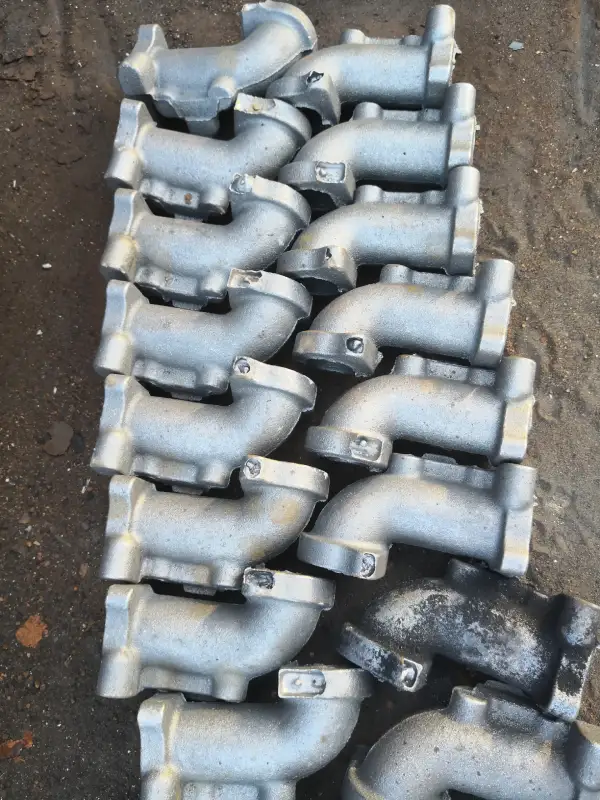
Driven by the dual trends of electrification and lightweighting, sand casting remains the mainstream process for large aluminum structural components such as subframes and battery trays; however, the internal quality consistency of castings is becoming a key concern in the supply chain. This article systematically describes the identification of typical sand casting defects in automotive aluminum alloy castings and their root causes, with a focus on analyzing the mechanisms behind the formation of casting porosity and shrinkage cavities. It also covers how sand casting foundry can establish a comprehensive defect prevention and control system—spanning the entire process from melting to the finished product—through methods such as rotary degassing, optimization of sand permeability, solidification simulation for sprue and chill placement, and multi-layered inspection techniques including X-ray and penetrant testing. The following sections will break down the process windows and key control points for each type of defect, helping to pinpoint issues accurately and implement rapid improvements.
Introduction to sand casting defects in high-performance automotive parts
When manufacturing high-performance aluminum components for the automotive industry, managing sand casting defects is one of the most critical challenges. Because automotive components must withstand extreme cyclic loads and high thermal stresses, even minor internal variations can severely affect the structural durability of the components. Sand casting foundries must systematically identify, analyze, and eliminate these production defects during the early molding and pouring stages. By enforcing rigorous operational standards and applying advanced metallurgical techniques during production, it is possible to effectively reduce these invisible internal defects in parts.
Common types of sand casting defects in lightweight powertrain components
Identifying common sand casting defects is crucial for improving the yield rate of lightweight powertrain components, such as transmission housings. These defects typically manifest as surface misalignment, sand inclusions, cold shuts, or localized cracking, which result from improper thermal gradients during solidification. When pouring castings with complex geometries, turbulent metal flow often traps air or mold gases, leading to hidden structural weaknesses within the casting walls. By analyzing these specific categories of sand casting defects during actual production monitoring, it is possible to precisely identify weaknesses in the pouring system and systematically adjust sand preparation methods to prevent defects from recurring.
The economic impact of quality defects on automotive supply chains
Sand casting defects can impose a significant economic burden on the entire automotive supply chain, potentially leading to production line shutdowns and costly scrap sorting operations. If invisible internal defects in parts are not detected until a late stage of high-speed CNC machining, this can result in the loss of both raw materials and valuable production cycle time. Furthermore, failures caused by undetected structural issues can trigger catastrophic product recalls and severely damage a brand’s market reputation. Therefore, eliminating these casting defects at the source as early as possible remains the most effective financial strategy for reducing overall warranty claims and maintaining lean assembly operations.
Why strict quality control matters for safety-critical structural castings
Implementing strict quality control in modern sand casting foundry is critical for safety-critical structural components such as suspension control arms and subframes. These structural components directly affect vehicle stability and occupant safety, and absolutely no deviations in mechanical performance are permitted. Sand casting foundries employ technologies such as real-time X-ray inspection, thermal analysis, and ultrasonic testing to ensure that every batch of products meets strict density and tensile strength standards. This rigorous inspection of components ensures that no microstructural defects are overlooked, thereby guaranteeing absolute structural safety under demanding real-world driving conditions.
Root causes and remedies for aluminum sand casting porosity
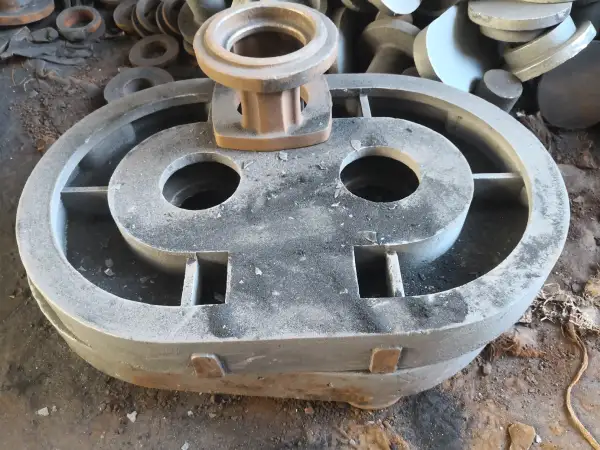
Controlling the aluminum sand casting porosity rate is critical for ensuring the pressure sealing integrity of automotive components used in fluid delivery systems. Porosity typically manifests as microscopic voids within the casting matrix, which can significantly reduce structural strength and lead to leaks under high operating pressures. Addressing this issue requires a two-pronged approach: removing dissolved hydrogen from the molten alloy while ensuring that gases within the mold can escape freely during the pouring stage. By implementing targeted degassing strategies combined with optimized core venting measures, it is possible to eliminate potential internal defects in the castings. This comprehensive approach ensures that finished automotive components consistently pass rigorous pressure decay tests.
Distinguishing between gas porosity and shrinkage cavities in aluminum alloys
Distinguishing between aluminum sand casting porosity caused by gas and traditional shrinkage cavities is crucial for implementing the correct production countermeasures. Gas pores typically appear as perfectly round, smooth-walled micro-pores evenly distributed throughout the casting and are caused by the release of hydrogen trapped during the cooling process. In contrast, shrinkage cavities manifest as jagged, irregular, and dendritic internal cracks, resulting from insufficient metal supply in localized areas during solidification. Cross-sectional X-ray inspection allows for a clear and accurate visualization of the morphology of gas pores, enabling process adjustments that address the true root cause within the metal.
How degassing techniques reduce aluminum sand casting porosity risks
To reduce the risk of aluminum sand casting porosity, the molten metal must be effectively treated before the pouring process begins. Sand casting foundries install rotating degassing impellers in holding furnaces to inject inert gases, such as nitrogen or argon, directly into the molten aluminum alloy. The injected microbubbles adsorb dissolved hydrogen molecules in the melt and safely transport them to the surface, forming a removable slag layer. Continuous monitoring of this process using a reduction pressure tester (RPT) ensures that the hydrogen content remains below the critical threshold at all times, thereby preventing the formation of bubbles inside the mold.
Optimizing mold permeability to allow efficient core gas venting
The key to producing high-quality castings in sand casting is to improve the permeability of the sand mold. This is because when molten aluminum comes into contact with the organic resin binder in the sand core, a large amount of gas is rapidly generated within just a few seconds. If the sand particles are of inconsistent size, or if the mold lacks sufficient venting channels, these gases will be forced into the molten metal, ultimately leaving pinholes or gas cavities on the casting surface. Therefore, it is essential to ensure that the sand mold is loose and porous, and to provide additional dedicated vent holes to allow gases to escape smoothly. This can significantly reduce common sand casting defects.
Advanced methods to control sand casting shrinkage and distortion
When manufacturing thin-walled automotive components, controlling sand casting shrinkage and geometric deformation is critical. As molten aluminum transitions from a liquid to a solid state, volumetric shrinkage occurs naturally; if left uncontrolled, this can lead to warping or internal tearing. To maintain precise structural dimensions, predictive techniques must be employed while optimizing mold layout. By analyzing solidification patterns, targeted thermal management strategies can be implemented for complex geometries. This rigorous approach prevents dimensional instability and ensures that large structural castings consistently meet the strict tolerance requirements of Tier 1 automotive assembly lines.
Predicting sand casting shrinkage behavior in complex geometry housings
To predict sand casting shrinkage behavior, it is essential to accurately understand the metallurgical shrinkage phenomena occurring inside complex automotive housings. When a part features both thick mounting tabs and thin structural walls, volumetric shrinkage in sand casting tends to be unevenly distributed. If these thermal expansion differences are not addressed during the mold-making process, the finished part may experience dimensional distortion or cracking due to internal stresses. By applying empirical shrinkage compensation factors specific to aluminum alloys to adjust the mold dimensions before production begins, natural physical shrinkage can be compensated for, ensuring that the final part meets the original CAD specifications.
The role of solidification software in placing risers and chills
Advanced sand casting simulation software plays a crucial role in identifying potential hot spots and optimizing the placement of risers and chill blocks. By precisely simulating the flow and temperature changes of molten aluminum, it is possible to accurately determine which areas are prone to sand casting defects due to the molten metal being isolated into small, separate bubbles. The installation of external metal cooling ribs can accelerate cooling in thick-walled sections, while directional feeding risers can continuously supply molten metal to areas prone to volume deficiency, thereby improving the casting’s density and internal compactness.
Designing uniform wall transitions to minimize internal thermal stress
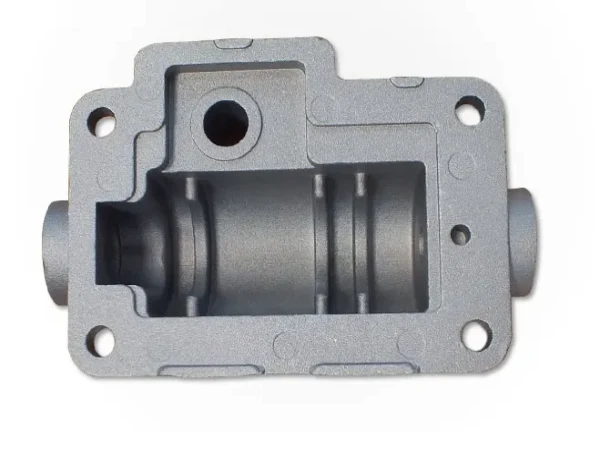
To optimize the geometry of castings in a sand casting foundry, it is necessary to design smooth wall thickness transitions to reduce internal thermal stress. Sudden changes in wall thickness alter the local cooling rate, which can lead to severe warping or macroscopic sand casting defects during cooling. By employing gradual tapers and larger fillet radii, heat can be dissipated evenly, resulting in a uniform microstructural matrix throughout the part. To fully realize optimal mechanical properties after defect-free casting, learn about our approach to [Maximizing Sand Casting Surface Quality in Automotive Aluminum].
Choosing a certified aluminum sand casting foundry for zero-defect production
Selecting a certified sand casting foundry is a crucial step in ensuring a reliable and defect-free supply chain for critical automotive components. Automotive buyers must verify that their manufacturing partners possess both advanced technical infrastructure and strict organizational discipline to eliminate structural defects. Production risks are mitigated by integrating real-time metallurgical testing directly into the foundry’s workflow. At the same time, verifying chemical composition, mold integrity, and solidification parameters prior to mass production ensures component reliability. This comprehensive operational oversight effectively reduces scrap rates and ensures full compliance with international automotive standards.
Essential testing capabilities required for an automotive aluminum sand casting foundry
A sand casting foundry must be equipped with an advanced on-site testing laboratory to analyze the chemical composition of raw materials and the physical properties of sand molds before pouring begins. Each batch of molten aluminum undergoes spectral analysis to ensure that its chemical composition fully complies with automotive engineering specifications. In addition, the technical team regularly tests the properties of the sand, monitoring its compactability, moisture content, and green sand compressive strength to prevent mold wall displacement. By implementing these rigorous pre-pour inspection procedures, the plant is able to maintain exceptional dimensional stability and systematically eliminate potential defects at the foundational stage of the manufacturing process.
Implementing IATF 16949 quality management systems on the pouring floor
The IATF 16949 quality management system is implemented at the sand casting foundry, revolutionizing standard manufacturing processes through data-driven statistical process control (SPC). This rigorous automotive industry standard requires full batch traceability and standardized Failure Mode and Effects Analysis (FMEA). On the production floor, automated sensors record pouring temperature, ladle transfer time, and cooling duration to ensure perfect repeatability across batches. This structured approach to quality management eliminates operational variability, prevents critical sand casting defects, and ensures consistency and compliance during high-volume parts production.
How non-destructive testing prevents defective castings from leaving the plant
The IATF 16949 quality management system is implemented at the sand casting foundry, revolutionizing standard manufacturing processes through data-driven statistical process control (SPC). This rigorous automotive industry standard requires full batch traceability and standardized Failure Mode and Effects Analysis (FMEA). On the production floor, automated sensors record pouring temperature, ladle transfer time, and cooling duration to ensure perfect repeatability across batches. This structured approach to quality management eliminates operational variability, prevents critical sand casting defects, and ensures consistency and compliance during high-volume parts production.
Looking for a reliable China metal foundry?
- We can help you optimize product design and save costs.
- We can help you with high quality high volume cast parts.
- We can deliver on time and get more sales market opportunities.
- You will benefit from Supro MFG metal casting service.
Contact Supro MFG
This paper systematically analyzes the types and causes of common sand casting defects in automotive aluminum alloy castings, focusing on distinguishing the morphological differences between casting porosity and shrinkage cavities, and pointing out that the former is caused by the precipitation of dissolved hydrogen, while the latter is caused by insufficient solidification feed. In actual production, controlling hydrogen content below the critical threshold through rotary degassing, while optimizing sand mold permeability and adding vent channels, can effectively reduce porosity defects; meanwhile, the rational placement of risers and chill blocks using solidification simulation software can directionally compensate for shrinkage volume. These process measures are driving a significant reduction in casting defect rates, enabling more reliable mass production of sand castings for safety-critical structural components such as subframes and battery trays.
Supro MFG is IATF 16949 certified. By utilizing advanced solidification simulation software, precision rotary degassing processes, and rigorous non-destructive testing methods such as X-ray and penetrant inspection, we can systematically address porosity in aluminum sand castings and control shrinkage variables. We are committed to providing zero-defect castings that meet the standards of top-tier OEMs. Contact us today to ensure a stable, high-quality supply of castings for your next automotive project.
 English
 Français
 Deutsch
 Italiano
 日本語
日本語 한국어
한국어 Polski
 Português de Angola
 Русский
 Español de Argentina