
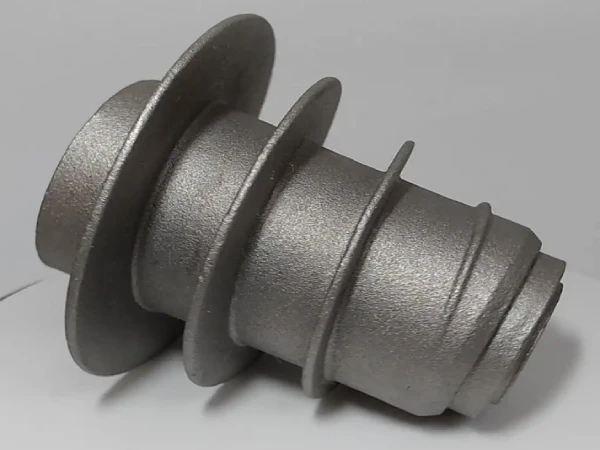
Selecting the appropriate material in stainless steel investment casting projects is a critical decision that balances performance, cost, and product longevity . For many investment casting engineers and procurement decision-makers, making a definitive choice between 304 (CF8) and 316 (CF8M) stainless steel involves navigating the complexities between technical specifications and real-world application requirements.
This article adopts a practical approach to the 304 vs. 316 stainless steel investment casting process, delving into the fundamental differences between the two grades in terms of microstructure, corrosion mechanisms, and mechanical properties. It further provides a systematic selection framework for stainless steel investment casting, grounded in application scenarios, environmental media, and industry standards. This framework assists in making informed decisions during the design phase, ensuring castings deliver optimal performance throughout their entire lifecycle.
What is 304 stainless steel investment casting?
The commonly referred to ‘casting-grade’ 304 material is formally designated as ASTM A351 CF8. This grade features a chemical composition specifically optimised for stainless steel investment casting processes. Its core structure comprises a stable austenitic matrix formed by 18-20% chromium (Cr) and 8-11% nickel (Ni), providing fundamental corrosion resistance and toughness.
Properties of 304 stainless steel investment castings
304 stainless steel investment casting exhibits excellent comprehensive properties, featuring good melt fluidity that enables precise replication of intricate cavities and fine surface textures. Components in the as-cast condition possess balanced mechanical properties sufficient for most structural applications. Concurrently, 304 stainless steel investment casting parts retain good weldability, facilitating subsequent assembly or repair.
However, the corrosion resistance of 304 stainless steel investment castings is primarily suited to oxidising environments and mildly corrosive media. Performance limitations become apparent in environments involving chlorides (such as seawater or de-icing salts) or reducing acids. Consequently, the selection of 304 stainless steel investment casting is based on its favourable economics, reliable process maturity, and suitability for non-harsh service conditions.
What is 316 stainless steel investment casting?
If 304 (CF8) is regarded as the “standard variant” within the stainless steel investment casting series, then 316 (its casting grade being ASTM A351 CF8M) is unquestionably the “specialised enhanced version” for demanding environments. The distinction between 316 and 304 lies in the addition of molybdenum (Mo), typically present at levels between 2.0% and 3.0%. This subtle difference fundamentally defines the corrosion resistance mechanisms of these two stainless steel investment casting materials.
Properties of 316 stainless steel investment castings
316 stainless steel investment casting parts are explicitly positioned as an excellent solution for high-corrosion-risk scenarios. Their derivative grades, such as CF3M (corresponding to 316L), further reduce carbon content to minimise the risk of carbide precipitation at grain boundaries during welding or high-temperature service. This provides superior intergranular corrosion resistance for stainless steel investment casting parts.
316 stainless steel investment casting components are particularly suited for thick, complex castings requiring extensive welding or where subsequent heat treatment is impractical. When application reports mention keywords such as ‘marine atmospheres,’ ‘chloride environments,’ ‘bleaching conditions,’ or ‘acidic processes,’ selecting CF8M or CF3M ensures the long-term integrity and system safety of stainless steel investment casting parts.
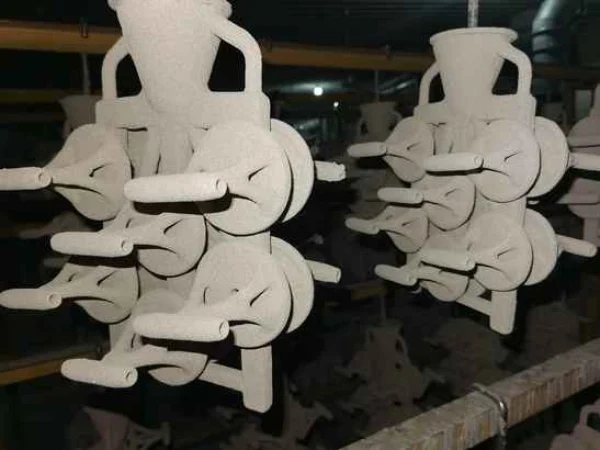
Core performance comparison between 304 vs. 316 stainless steel investment castings
By quantifying data and specific performance parameters for 304 versus 316 stainless steel investment casting, we clearly reveal the fundamental differences between the two alloys in corrosion resistance, mechanical strength, and processability. Even seemingly minor compositional variations can yield step-change improvements in corrosion resistance. Grasping the core comparisons in stainless steel investment casting is a crucial step in progressing from ‘available options’ to making the ‘optimal engineering decision’.
Comparison of chemical composition and corrosion resistance
The key advantage of 316 stainless steel investment castings stems from the addition of molybdenum, which provides them with quantifiable, superior resistance to localized corrosion.
The following table illustrates the core differences between 304 vs. 316 stainless steel investment castings in terms of key chemical composition and corrosion resistance metrics:
Feature Comparison | 304 Stainless Steel Investment Casting (CF8) | 316 Stainless Steel Investment Casting (CF8M) |
Key Elements | Chromium (Cr): ~18-20% Nickel (Ni): ~8-11% Molybdenum (Mo): ≤ 0.5% | Chromium (Cr): ~16-18% Nickel (Ni): ~10-14% Molybdenum (Mo): 2.0-3.0% |
Pitting Resistance Equivalent Number (PREN) | ~18-20 | ~25-30 |
Resistant to pitting/crevice corrosion | General | Outstanding |
Resistant to all types of corrosion | It exhibits excellent resistance to most oxidizing acids (such as nitric acid), alkalis, and atmospheric corrosion. | Compared to 304 stainless steel, it exhibits superior resistance to many reducing acids (such as sulfuric acid and phosphoric acid) as well as organic acids. |
Resistance to Stress Corrosion Cracking (SCC) | Sensitive in concentrated chloride solutions (>60°C) such as MgCl₂. | It exhibits slightly better resistance than 304 under the same demanding conditions, but it is not immune. |
Comparison of mechanical properties and physical characteristics
The mechanical properties of 304 vs. 316 at room temperature are highly similar, yet subtle differences persist. Regarding strength and hardness, under typical stainless steel investment casting conditions (CF8/CF8M), the minimum yield strength (Rp0.2) for 304 is approximately 205 MPa, whereas 316 typically achieves 220 MPa or higher. Tensile strength also increases correspondingly. In critical applications involving fatigue or higher design stresses, a 5-10% strength increment may be factored into calculations. Hardness values follow a similar trend, with 316 investment casting parts exhibiting slightly higher hardness than 304 investment casting parts.
Regarding high-temperature performance and thermal stability, both 304 and 316 stainless steel investment castings maintain excellent oxidation resistance during intermittent use below approximately 870°C and continuous use below 925°C. However, at elevated temperatures (e.g., >600°C), 316 exhibits slightly higher sensitivity than 304, though this can be mitigated by controlling ferrite content and selecting low-carbon grades (e.g., CF3M).
Within the 500–600°C temperature range, 316 stainless steel investment castings exhibit slightly superior creep strength compared to other materials due to solution strengthening effects. For dedicated high-temperature applications, heat-resistant cast steels with high chromium-nickel content are typically selected directly, or heat-resistant cast steels incorporating niobium-titanium elements (such as the HK or HT series).
Comparison of process performance
Both 304 and 316 stainless steel investment castings are typical austenitic stainless steels, exhibiting excellent melt flow properties and suitability for producing complex thin-walled castings. The primary distinction lies in their solidification patterns: as the solidified structure of 304 typically contains a small amount of δ-ferrite (approximately 5-15%), which helps reduce thermal cracking susceptibility. Conversely, 316 requires more precise chemical composition control (particularly the Cr/Ni equivalent ratio) to maintain ferrite within the ideal range (typically <10%). This prevents excessive ferrite from transforming into sigma phase at elevated temperatures, which would compromise the toughness of stainless steel investment castings.
Regarding welding and post-processing of stainless steel investment castings, both 304 and 316 exhibit good weldability, provided best practices for stainless steel welding are followed: using matching or over-alloyed filler metals, strict cleanliness, inert gas shielding (back-side shielding is particularly crucial for 316), and controlled heat input.
Experienced stainless steel investment casting foundries such as Supro MFG manage ferrite effects through alloy fine-tuning and process optimisation, producing castings with enhanced toughness.
Looking for a reliable China metal foundry?
- We can help you optimize product design and save costs.
- We can help you with high quality high volume cast parts.
- We can deliver on time and get more sales market opportunities.
- You will benefit from Supro MFG metal casting service.
Application Scenario Selection Guide for 304 vs. 316 Stainless Steel Investment Castings
Astute purchasers and engineers of stainless steel investment casting services typically refrain from making decisions based solely on material composition or initial cost. Instead, they ensure material properties precisely align with the genuine requirements of the application scenario. This approach is complemented by a comprehensive analysis of the full lifecycle costs associated with stainless steel investment casting, enabling decisions that balance reliability with market efficiency.
Applications and Limitations for Selecting 304 Stainless Steel Investment Castings
304 stainless steel investment casting (CF8) is suitable for applications requiring stable material properties but not exposed to highly corrosive media.
Typical applications for 304 stainless steel investment castings include:
Interior architectural fittings and hardware;
Support structures and enclosures for food processing equipment (structures not directly contacting corrosive products or cleaning agents);
Moderate chemical environments (certain neutralisation reaction vessels);
General-purpose pump and valve housings;
Non-implantable components of medical devices.
It is essential to avoid the use of 304 stainless steel investment castings in any environment involving prolonged exposure to seawater, highly concentrated chloride solutions (such as salt baths), strong oxidising acids (such as hot concentrated nitric acid), or bleaching agents, as these conditions may lead to localised corrosion or stress cracking.
Applications and Limitations for Selecting 316 Stainless Steel Investment Castings
316 stainless steel investment castings (CF8M) are materials specifically engineered to withstand aggressive media. When a component’s operating environment exceeds the capabilities of 304 stainless steel, selecting this material constitutes a mandatory engineering requirement to ensure safety, reliability, and compliance.
Typical applications for 316 stainless steel investment castings include:
Hardware and fittings for marine and coastal infrastructure;
Pump valves and piping systems handling halide-containing fluids in chemical processing and pulp industries;
Process equipment demanding exceptional cleanliness and corrosion resistance within pharmaceutical and biotechnology sectors;
Exterior components subjected to prolonged exposure to industrial salt spray or highly humid, corrosive atmospheres;
Critical surfaces in high-end food and beverage processing where direct product contact occurs.
It should be noted that when terms such as ‘chlorides’ or “brine” appear in environmental assessment reports or process descriptions, or when specific industry standards such as NACE MR0175/ISO 15156 are directly referenced, the investment in 316 stainless steel investment casting properties is not paying for ‘better’ performance, but rather investing in essential reliability and risk mitigation.
Comprehensive Cost-Benefit Analysis
To make a market-effective decision between 304 and 316 stainless steel investment castings, a total cost of ownership analysis enables you to balance upfront investment against long-term benefits, avoiding the surge in maintenance costs that can result from solely pursuing low initial prices.
For mild service environments, the lower initial cost of 304 investment castings offers greater market competitiveness, directly reducing financial pressure during project initiation. However, in corrosive environments, the superior corrosion resistance of 316 stainless steel investment castings—despite their higher initial price—delivers extended maintenance-free service life and enhanced operational reliability. This ultimately reduces hidden costs such as maintenance expenses.
Therefore, when evaluating stainless steel investment casting projects across their entire lifecycle, the choice between 304 and 316 materials requires careful consideration of factors including cost and value.
Other Factors Ensuring Stainless Steel Investment Casting Quality
Ensuring market-effective stainless steel investment castings requires not only a comprehensive consideration of application scenarios and cost-benefit trade-offs, but also an assessment of the partner's qualifications and process capabilities.
When evaluating prospective stainless steel investment casting suppliers, it is imperative to verify technical credentials, such as material test reports compliant with ASTM A351 or equivalent standards. Furthermore, depending on the criticality of the stainless steel investment casting components, requesting more detailed validation reports from partners can mitigate project risks. These may include: casting process simulation reports, radiographic testing (RT) reports, and surface defect penetration testing (PT) reports.
Conversely, advanced manufacturing techniques and rigorous management systems constitute pivotal indicators of a reliable stainless steel investment casting supplier’s core capabilities. For demanding applications like 316 stainless steel investment casting components, proactively inquire about the supplier’s implemented management systems and whether they hold ISO 9001 certification.
Supro MFG possesses comprehensive standard production capabilities for stainless steel investment casting and holds ISO 9001:2015 quality management system certification. We provide global clients with professional stainless steel investment casting solutions, encompassing everything from DFM analysis to fully traceable delivery.
Contact Supro-mfg
When embarking upon a stainless steel investment casting project, making an informed choice begins with a thorough understanding of material properties and their precise alignment with the intended application.
304 stainless steel investment casting (CF8) offers exceptional value for money, making it suitable for general-purpose components in atmospheric and mild chemical environments. However, when environments involve chlorides, acidic media, or high salinity, the resistance to pitting and crevice corrosion provided by 316 stainless steel investment casting becomes an indispensable solution.
Furthermore, a genuine cost analysis for stainless steel investment casting must be based on total cost of ownership. In demanding conditions, the initial premium of 316 investment casting is offset by extended service life and reduced failure risk. Other critical factors ensuring casting performance include selecting certified stainless steel investment casting suppliers with stringent process controls (such as AOD refining) and comprehensive quality documentation (including MTRs and NDT reports).
Supro Metal Foundry is China’s leading metal investment casting manufacturer. Our team possesses 30 years of extensive foundry experience, offering robust casting capabilities for both rapid investment casting prototypes and high-volume production.
Supro MFG’s metal investment casting services encompass: product design and optimisation, mould design and manufacture, metal casting processes, quality control, precision CNC machining, material and physical property testing, surface coating treatments, and packaging and shipping. This comprehensive metal casting service delivers exceptional market returns for our global partners’ projects.