
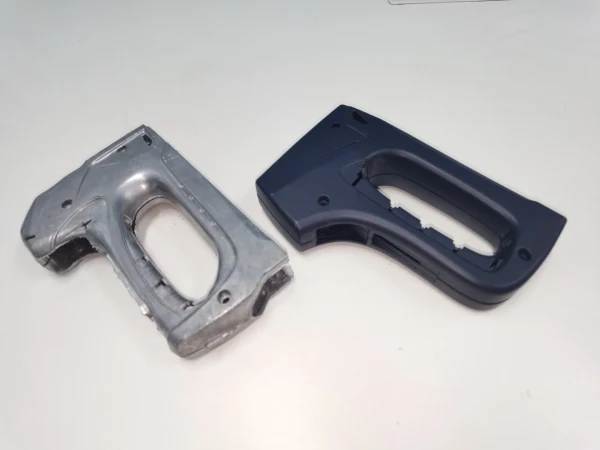
3D printed metal casting combines digital design with traditional metallurgy, reshaping the landscape of prototype development and small- to medium-volume production. This technology grants engineers unprecedented design freedom, enabling them to manufacture structurally complex and high-performance 3D printed metal castings at speeds far exceeding those of traditional methods, thereby providing critical support for accelerating the time-to-market of innovative products in industries such as automotive and aerospace.
However, successfully implementing metal casting via 3D printing is not merely a matter of replacing one technology with another; it is a systematic engineering process. It requires a deep understanding of process differences, precise material matching, strict adherence to a quality control system that includes non-destructive testing and heat treatment, and a comprehensive cost analysis. This enables economic decisions based on total cost of ownership—whether choosing between aluminum alloys and tool steel, or between sand casting and die casting processes.
This article breaks down the core framework for implementing this hybrid manufacturing solution. Topics covered include: key differences in metal alloy requirements between the two processes; critical steps from mold design to post-processing; methods for establishing quality control based on ASTM standards; and cost comparisons and mass production strategies based on industry reports (such as those from Wallers Consulting and SmarTech Analysis).
Understanding the Metal Casting Process for 3D Printed Parts
Combining the boundless freedom of digital design with the proven strength of traditional metal casting—this is the transformative fusion brought about by 3D printed metal casting. Breaking through the limitations of traditional prototyping and small-batch production, it enables the manufacture of structurally complex, high-performance metal parts with unprecedented speed and cost-effectiveness. Discover how modern metal casting technology and additive manufacturing work together to create a new generation of components.
Key Differences: Metal Alloys for 3D Printing and Casting
Although 3D printed metal casting and traditional metal casting share a similar goal—producing robust metal parts—the different processes have distinct requirements. In the field of metal alloys, methods that have proven effective in traditional casting may not work at all in 3D printing. Understanding these differences is crucial for the successful implementation of metal casting via 3D printing, as they directly impact the final performance, cost, and feasibility of the parts. The specifics are as follows:
Aluminum Alloys: Both processes are applicable, but traditional casting requires high-silicon alloys (such as A356). In additive manufacturing, however, low-silicon aluminum alloys (such as AlSi10Mg) are more suitable; they are more uniform in powder form and, after laser melting, can form dense parts with excellent mechanical properties.
Stainless Steel: Whether produced using 3D printed molds for metal casting or through direct printing, components typically exhibit a finer, more uniform grain structure. Traditional castings, on the other hand, require post-processing. For applications requiring high precision and minimal post-processing, a hybrid approach combining metal casting with 3D printed parts is emerging as an efficient strategy.
Tool Steel: The core of additive manufacturing lies in its controllable microstructure. By precisely adjusting laser parameters and scan paths, the hardness, toughness, and wear resistance of the material can be customized. This is often difficult to achieve with casting processes, as the solidification process in casting is harder to control precisely and is prone to segregation and internal defects.
The fundamental difference between these two processes lies in the fact that additive manufacturing relies heavily on the sphericity, particle size distribution, and uniformity of the metal powder, whereas casting focuses more on the alloy’s melt flowability, solidification shrinkage, and mold filling capability. Thermal conductivity, oxidation behavior, and residual stress levels also vary depending on the process.
In short, selecting an alloy for your cast metal 3D printed prototype or final part depends on whether you’re using a casting or printing process—a critical decision that will impact every aspect of the product, from performance and production cycle to overall cost.
An Overview of Investment Casting and Sand Casting Technologies
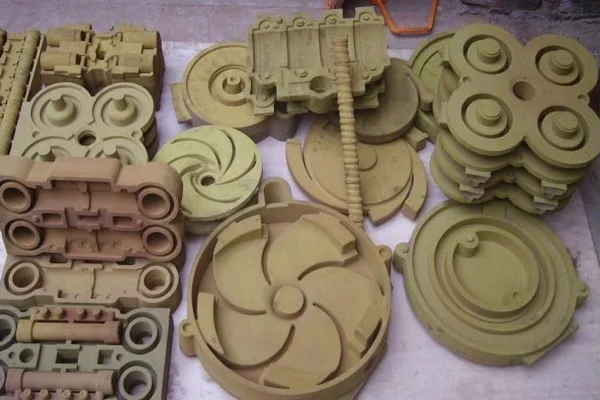
In the world of 3D printed metal casting, molds serve as the key bridge to bringing creative ideas to life. Not all molds are created equal—especially when your design originates from a digital model and needs to be transformed into a physical metal object. Let’s break down two common methods:
Investment Casting
- Uses wax or resin models
- Capable of producing high-precision ceramic shells
- Suitable for small-batch precision parts
Sand Casting
- Relies on reusable sand molds
- More accommodating for large components
- Shorter lead times—but with weaker detail reproduction
According to a recent report (2024) by Wallers Consulting, hybrid workflows that combine additive design with traditional casting processes are “shortening production cycles by over 40%.”
When you need to produce high-precision parts with complex internal cavities, fine textures, or thin-walled structures, the investment casting approach combined with 3D printed mold metal casting partnerships is the undisputed winner. However, for rapid mass production of heavy components, the sand casting method utilizing 3D printed sand molds can turn ideas into reality faster.
Essential Equipment for Metal Casting: An In-Depth Analysis
When working with molten metal, you can’t afford to leave things to the last minute. Whether you’re conducting small-scale prototype metal casting or using 3D printed metal casting for prototyping, professional equipment ensures a successful operation and the safe transformation of printed models into high-quality finished products.
Key Equipment Categories:
- Melting Furnaces and Crucibles—High-temperature-resistant vessels capable of withstanding pressure at extreme temperatures without cracking.
- Casting Molds and Ladles—Used to precisely pour molten metal into pre-formed cavities.
Finishing Equipment and Heat Treatment Units—Used to remove burrs from castings and enhance the strength of the final components.
Protective Gear Is Essential—Face shields, gloves, and fire-resistant aprons are all must-haves.
Applications of Metal Casting and 3D Printed Parts in the Aerospace and Automotive Industries
The integration of CAD-driven design with traditional metallurgical processes is reshaping the rules of various industries:
Aerospace:Using investment casting technology, lightweight brackets made from 3D printed wax patterns significantly reduce fuel costs.
Automotive Manufacturing:The sand casting process, based on 3D printed sand cores, enables rapid prototyping of complex manifolds.
Functional prototypes? No problem. Production-ready parts? No problem either. Through strictly controlled casting and post-processing techniques, 3D printed metal casting parts can meet or even exceed the performance standards of traditional forgings. The ability to rapidly iterate while still producing durable cast metal parts gives engineers true freedom to innovate.
Supro MFG now offers customers customized solutions that integrate additive design with precision casting—optimizing the entire process from digital modeling to final heat treatment. This end-to-end 3D printed metal casting service ensures the shortest and most reliable path from concept to high-quality metal parts, helping customers stand out in a highly competitive market.。
Key Steps for Successful Prototype Metal Casting
A rigorous engineering process that spans from digital design to physical finishing is key to successfully implementing 3D printed metal casting. Below are three clear, key steps. By mastering these core elements, you can efficiently and reliably transform your conceptual designs into high-quality metal casting prototypes ready for testing and validation.
Step 1: Select the appropriate metal alloy for prototyping
In a hybrid workflow for 3D printed metal casting, material selection must balance the characteristics of traditional casting with the requirements of additive manufacturing processes. Choosing the right metal alloy for your project is the critical first step in balancing performance, cost, and manufacturability:
Aluminum Alloys:
- Excellent strength-to-weight ratio, suitable for lightweight parts
- Easy to machine and cast
- Common aluminum alloy grades include A356 and 6061
Tool Steels:
- Excellent hardness, wear resistance, and resistance to deformation
- D2 and H13 are the preferred options for functional prototypes
Cost vs. Functionality Trade-offs:
Budget and the purpose of the prototype are factors that cannot be overlooked. Inexpensive alloys, such as zinc-aluminum alloys, are effective for purely visual prototypes. When prototypes are needed for actual mechanical testing, sturdier materials (such as stainless steel) are a better investment. Due to their superior strength and corrosion resistance, they provide more reliable test data, offering a solid foundation for the final product design.
When selecting a metal alloy, it is essential to systematically consider multiple factors: how it behaves during melting and solidification (e.g., shrinkage rate), its compatibility with the chosen casting process, and whether it meets the physical requirements of the end application. The performance requirements for a high-tolerance aerospace component differ from those for a consumer-grade product housing. Furthermore, keep in mind that your choice will impact downstream steps, such as machining or surface finishing.
If you are using any form of 3D printed metal casting, ensure that the material you select is compatible with rapid prototyping methods (such as binder jetting or direct metal laser sintering).
Step 2: Designing Efficient Investment Casting Patterns
According to the Q1 2024 Manufacturing Innovation Report released by QYResearch, precision pattern design can reduce dimensional defects by up to 28%, directly impacting first-pass yield.
Pattern design is a critical factor that determines success or failure—either everything falls into place, or the entire process falls apart. Use precise CAD models customized to compensate for casting shrinkage. When time is tight, consider switching to 3D printed patterns; resin-based SLA prints, in particular, offer exceptional dimensional stability. Never overlook parting line strategies—poor planning can compromise mold integrity.
Model Material Selection:
- Wax: Traditional but brittle
- Resin (SLA process): Durable and high-resolution
- Thermoplastic: Recyclable but with lower detail fidelity
Tips for Improving Dimensional Accuracy:
- Add a draft angle (approximately 2–3°) to facilitate demolding
- Avoid sharp internal corners—they can cause stress concentration
- Use rounded corners whenever possible
The clever use of sacrificial models can bridge the gap between digital models and physical castings. Particularly when creating 3D printed patterns, pay close attention to layer height settings during the metal casting process from 3D prints, as this directly affects the quality of the final surface texture.
Step 3: Improving Post-Processing Techniques for Prototype Castings
The following are common post-processing techniques and their effects on 3D printed metal casting parts:
Technique | Purpose | Typical Duration | Surface Impact |
Heat Treatment | Improve strength/hardness | 2–8 hours | No visible change |
CNC Machining | Tighten tolerances | Varies by part | High precision finish |
Sandblasting | Remove scale/smooth texture | <30 mins | Matte surface |
Chemical Etching | Clean micro-residues | ~10 mins | Slight sheen |
Once a cast metal 3D printed prototype has been formed and removed from the mold, the actual finishing process begins—this refers both to surface treatment in the literal sense and to performance enhancement in a metaphorical sense. The right combination of finishing techniques can transform a rough prototype into a finished product that is ready for display or even testing.
Quick Tips:
Use controlled heat treatment to optimize grain structure—this is particularly effective for tool steel components produced via investment casting and can significantly improve their durability.
When precision fits or perfect symmetry are required, use light-touch CNC machining for localized corrections to ensure critical dimensions meet specifications.
Cosmetic parts? Barrel polishing can impart a showroom-quality luster, which is crucial for the appearance of prototype metal casting parts such as those used in consumer electronics.
The inspection phase is non-negotiable—perform dimensional verification using a coordinate measuring machine (CMM) to ensure the results of previous processes are validated.
If you’re using any form of metal casting from 3D printed parts, the post-processing stage is particularly critical: it eliminates layer lines while enhancing mechanical properties, helping your product transcend the “barely acceptable” threshold and achieve excellence.
Quality Control of 3D Printed Metal Castings
To maintain the exceptional quality of 3D printed metal castings, it is essential to strictly control quality at every stage of the process. These factors include authoritative material and process standards, advanced non-destructive testing techniques, precise heat treatment, and rigorous dimensional verification. Let’s take a closer look at how these factors ensure that 3D printed metal casting parts are robust, precise, and meet specification requirements.
The Importance of ASTM Standards in Metal Casting Quality
When discussing quality in the field of 3D printed metal casting, one cannot overlook ASTM international standards. These are not merely superficial checklists—they form the foundation for producing high-quality, predictable metal castings, particularly 3D printed metal casting parts.
First, ASTM material specifications (such as A356 for aluminum or A743 for steel) establish guidelines to ensure that each alloy behaves predictably under stress. This is crucial for the successful implementation of the 3D printed metal casting process.
Second, industry standards such as ISO and ASTM ensure consistency between suppliers and manufacturers. Adhering to test procedures ensures that defects are detected in a timely manner before shipment. Certification under systems such as ISO 9001 helps build trust with both customers and regulatory agencies. Regulatory agencies typically require strict adherence to these benchmarks—non-compliance is simply not an option.
Finally, adopting these standards in 3D printed metal casting projects is far more than just a formality to pass inspections. They form the foundation of commercial and technical trust and represent a reliable commitment to ensuring that every 3D printed metal prototype—and ultimately every final part—operates stably and safely under real-world, high-pressure conditions.
Non-Destructive Testing Methods for Metal Parts
When metal parts have complex geometries, cutting them open to inspect their quality is not an ideal solution. Proven non-destructive testing (NDT) techniques effectively assess the internal integrity and surface quality of metal castings and 3D printed parts without causing damage, thereby minimizing scrap rates.
- Ultrasonic testing precisely locates internal defects by detecting the reflection of high-frequency sound waves within the part.
- Radiographic testing uses X-rays to non-destructively reveal hidden porosity or cracks.
- For surface inspection, magnetic particle testing or penetrant testing can be used; these methods, specifically designed for 3D printed mold and metal casting partnerships, are particularly suitable for iron-based alloy castings.
- For conductive materials (such as most aluminum and copper alloys), eddy current testing uses the principle of electromagnetic induction to quickly and accurately detect surface and near-surface defects such as cracks and corrosion; its testing speed and potential for automation make it particularly suitable for batch screening.
Each inspection technique is designed for specific materials and geometries—therefore, when validating complex 3D printed metal casting projects, selecting the correct combination of methods is a critical step in ensuring that the resulting metal castings from 3D printing are reliable and meet performance standards.
Heat Treatment: Ensuring the Strength of 3D Printed Castings
Heat treatment may sound a bit old-fashioned, but it remains the preferred solution for enhancing the mechanical properties of printed metal materials. According to a January 2024 report by AMPOWER, an industry analysis firm, “More than half of all metals produced via additive manufacturing require post-processing heat treatment to achieve industrial-grade strength.”
The key reason for this is that, whether produced through direct printing or via the “metal casting from 3D print” process, the microstructure of these metals may exhibit inhomogeneities and typically retains residual stresses caused by rapid heating and cooling.
Therefore, the targeted application of the following processes is crucial:
- Annealing, whose primary function is to eliminate these internal stresses and improve dimensional stability.
- Tempering, which finely balances hardness and toughness;and for aluminum alloy parts produced via the 3D printed metal casting process, precision solution treatment and aging cycles are the methods to unlock their maximum strength.
These processes significantly improve the parts’ fatigue strength and durability. What if this step is omitted in pursuit of speed? Products cast via 3D printed metal casting may look perfect on the surface, but they are highly likely to fail prematurely under actual mechanical loads or thermal cycling.
Dimension inspection is key to maintaining production accuracy
Precision is not just a nice-to-have—when dealing with the stringent tolerances required for finished metal parts, accurate dimensional inspection is a non-negotiable minimum standard. Let’s take a look at how the following dimensional inspection tools ensure the precision of every 3D printed metal casting part:
- High-end coordinate measuring machines (CMMs) can measure multi-axis data simultaneously—verifying internal cavities while also inspecting external dimensions.
- When project deadlines are tight and faster inspection speeds are required, automated robots equipped with high-resolution laser scanning technology combined with optical sensors can rapidly generate dense point clouds of parts for efficient comparison with the original CAD model.
- Tools based on modern metrology principles ensure that tolerances match the CAD files perfectly—which is crucial for batch prototyping or small-batch production of metal castings involving complex geometries.
Whether verifying geometric dimensions and tolerance specifications or performing comprehensive tolerance analysis, these tools ensure that the final product accurately fulfills the precision promises outlined in the design documentation. When you use additive manufacturing for advanced metal casting to produce your next batch of custom aerospace brackets, these tools will help you avoid customer complaints.
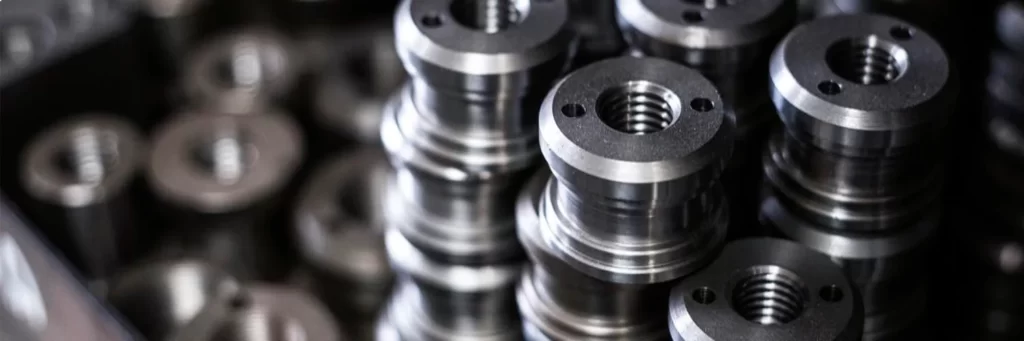
Cost Analysis: 3D Printed Metal Casting vs. Traditional Methods
Why are aluminum alloys often more cost-effective than tool steel for prototype metal casting? As your 3D printed metal casting parts transition from prototyping to mass production, how does die casting deliver significant long-term cost advantages through economies of scale? The following cost comparison between 3D printed metal casting and traditional methods will help you make more informed production decisions.
Cost Assessment: A Comparison of Aluminum Alloy 3D Printing and Tool Steel
In the field of additive manufacturing, material selection directly determines the success or failure of a project’s budget. The following is a comparative analysis of the key cost differences between aluminum alloy and tool steel when used in the 3D printed metal casting process:
Material Cost: Aluminum has a lower unit price, but this is not the only factor to consider.
Printing Time and Energy Consumption: Tool steel requires more time and consumes more energy, driving up overall costs.
Post-processing intensity: Aluminum alloy 3D printed metal prototypes typically feature good surface finish, often reducing the need for machining. Tool steel may require heat treatment to achieve the desired hardness and toughness, adding to labor hours.
According to SmarTech Analysis’s Q1 2024 report, the use of aluminum alloys in industrial 3D printing has grown by over 27%, driven by their lower total cost of ownership.
Therefore, while tool steel excels in terms of ultimate strength, wear resistance, and heat resistance, aluminum alloy is the more economical choice when your goal is rapid metal casting prototyping or cost control. Understanding these trade-offs will help you make more informed decisions when planning your next 3D printed metal casting parts project.
Long-Term Cost Savings of Die Casting Compared to Sand Casting
You might think that traditional sand casting has lower upfront costs—and that’s certainly true for small-batch prototype metal casting. However, when it comes to large-scale production, die casting—combined with 3D printed metal casting for prototype and mold development—offers even greater advantages.
The specific cost analysis is as follows:
Here is a comparison of equipment installation costs between sand casting and die casting:
Process | Tooling Cost | Avg Lead Time | Reusability |
Sand Casting | Low | Short | Low |
Die Casting | High | Longer | High |
The high initial cost of die casting stems from its durable steel molds, but it is precisely these molds that deliver long-term returns. For high-volume production of 3D-printed metal casting parts, the high reusability of the molds translates to extremely low marginal costs per unit.
When comparing production volumes within the optimal range, die casting becomes more cost-effective once production reaches approximately 5,000 units, due to its lower unit cost and higher repeatability. As noted in Deloitte’s April 2024 “Advanced Manufacturing Insights Report”: “In high-volume production, die casting can reduce unit costs by up to 40% compared to sand casting.”
This means that when you scale up production of cast metal 3D-printed prototypes—especially for parts with complex geometries—die casting outperforms sand casting in both efficiency and total cost.
By using digital processes—such as 3D-printed molds for metal casting—to validate designs upfront, Supro MFG can significantly shorten the development cycle from prototype to production mold. This helps you seamlessly transition metal castings from 3D-printed prototypes to mass production at an unprecedented speed and with a lower total cost.
Conclusion
3D printed metal casting successfully combines the flexibility of digital design with the controllability of traditional metallurgy. Through precise pattern design and quality control that strictly adheres to standards such as ASTM, this process enables engineers to efficiently produce 3D printed metal casting parts with complex structures.
From rapid prototyping to mass production (such as through Supro MFG’s end-to-end services), 3D printed metal casting delivers significant economic advantages across various production scales through comprehensive cost analysis, all while ensuring performance.
FAQ: Frequently Asked Questions About 3D Printed Metal Castings
Why is aluminum alloy suitable for high-volume production?
Lightweight is their hallmark—making them ideal for aerospace and automotive components. Their exceptional corrosion resistance extends the service life of industrial machinery. A lower melting point means lower energy consumption in smelting furnaces, resulting in a quiet victory in terms of operating costs.
How do investment casting and sand casting compare in terms of large-scale manufacturing?
Investment casting ensures precision in every curve, and its smooth surfaces enable it to meet the requirements of medical devices and precision aerospace components. When budgets are tight, sand casting is a more cost-effective option, though it offers slightly lower precision; it can be used for construction machinery or basic automotive components. Typically, practicality takes precedence over perfection.
Why are die-casting molds more cost-effective for high-volume orders?
They work tirelessly—rapid turnaround shortens delivery cycles, while the molds’ longevity has withstood countless production runs of copper alloy or carbon steel housings. Less manual labor means greater consistency from the first piece to the thousandth, easily meeting ISO 9001 certification requirements.
What post-processing steps can enhance the strength of tool steel prototypes?
The Shortcut to Durability: Heat treatment imparts toughness, surface finishing polishes every cut to perfection, and machining services hone their sharpness before production begins—these industrial machine parts are about to enter mass production, where they will endure relentless, grueling tests.
Supro MFG is a Chinese foundry specializing in providing metal casting manufacturing solutions and technical support. With extensive experience in 3D printer metal casting services, we work with you to solve manufacturing problems and technical challenges, ensuring the smooth progress of your business projects, offering cost-effective factory quotes, and delivering high-quality cast parts on time.
Get started on your next casting project and hear how our experts analyze the details of the casting process.
 English
 Français
 Deutsch
 Italiano
 日本語
日本語 한국어
한국어 Polski
 Português de Angola
 Русский
 Español de Argentina