
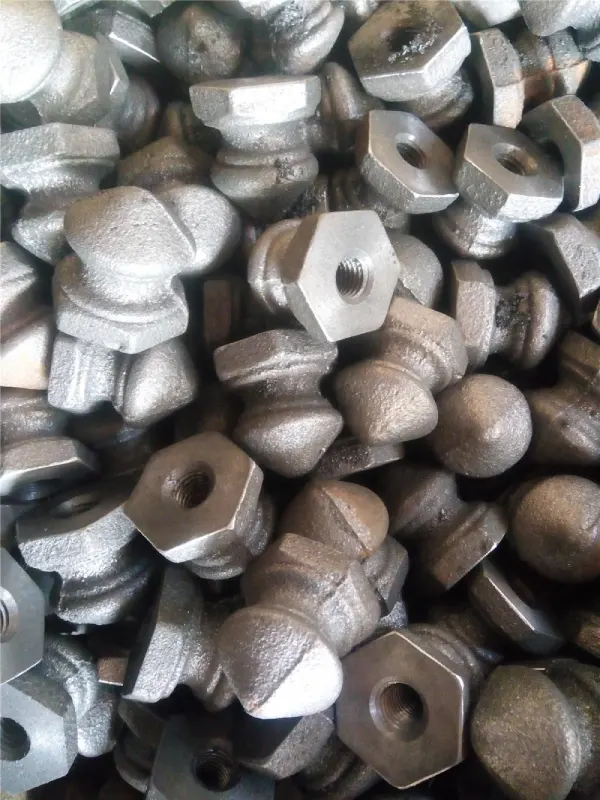
Amid trends toward automotive lightweighting and integration, sand casting remains the core process for manufacturing complex hollow structural components such as engine blocks and water jacket housings. As wall thicknesses decrease and internal passages become increasingly complex, relying solely on traditional experience makes it difficult to balance dimensional accuracy with casting yield. This article systematically examines several key technical aspects in the development of hollow aluminum castings: from material selection and structural design for sand casting cores to the impact of binder systems in resin sand casting on permeability and collapse characteristics; from core head positioning and anti-displacement measures in sand casting pattern making to shrinkage compensation calculations and the layout of the feed system. These stages are interdependent, and improper control of any single aspect can lead to cold shuts, porosity, or dimensional deviations. The following sections will break down the design logic and operational key points for each stage, combining specific process parameters with simulation verification methods.
Engineering complex automotive geometries using sand casting
Modern automotive manufacturing relies heavily on sand casting to produce structural components with complex internal passages and high performance. The application of sand casting in automotive manufacturing requires striking a balance between metal fluidity and thermal stability during the solidification process. Therefore, volume changes must be carefully calculated to ensure that the internal geometry meets geometric specifications. This fundamental method enables the efficient production of high-performance powertrain housings and lightweight chassis components that meet strict industry standards.
Challenges of hollow automotive component casting
When manufacturing thin-walled, hollow automotive components, managing the complex sand casting process presents unique engineering challenges. To successfully complete the casting cycle, it is essential to prevent the molten aluminum from solidifying prematurely within the narrow cross-sections of the structure. When molten metal fills these confined spaces, high thermal gradients often lead to localized defects, such as cold shuts or hot tears. Furthermore, controlling internal gases generated during the pouring process is critical to preventing gas entrapment. Therefore, the flow rate of the molten metal must be precisely controlled to ensure uniform wall thickness throughout the casting’s structural framework.
Function of sand casting core in hollow designs
The use of high-precision sand casting cores is the primary method for forming complex internal passages in hollow automotive structures. When molten aluminum fills the mold cavity, the robust core must be able to withstand intense buoyancy and immense metal hydrostatic pressure. Without proper support and positioning, these internal sand cores may shift or deform, resulting in significant dimensional errors. Properly designed cores provide vent channels that allow volatile gases to escape safely during solidification. This ensures that the internal passages in components such as water jackets and intake manifolds meet strict functional specifications.
Material selection for high-durability automotive cores
Selecting the optimal material for sand casting cores directly determines the final dimensional accuracy of complex hollow automotive castings. Casting engineers evaluate the specific sand aggregates and binders used in resin sand casting to achieve optimal thermal stability and post-pour collapse.
Core Material Type | Primary Binder System | Key Engineering Advantage | Typical Automotive Application |
Silica Sand | Phenolic Urethane Cold Box | High tensile strength and excellent dimensional accuracy | Engine block water jackets, cylinder heads |
Chromite Sand | Furan No-Bake Resin | High thermal conductivity and resistance to metal penetration | Heavy-duty truck suspension brackets, subframes |
Ceramic Microspheres | Inorganic Silicate | Extremely low thermal expansion and high gas permeability | Turbocharger housings, thin-walled EV battery trays |
Implementing resin sand casting for high precision cores
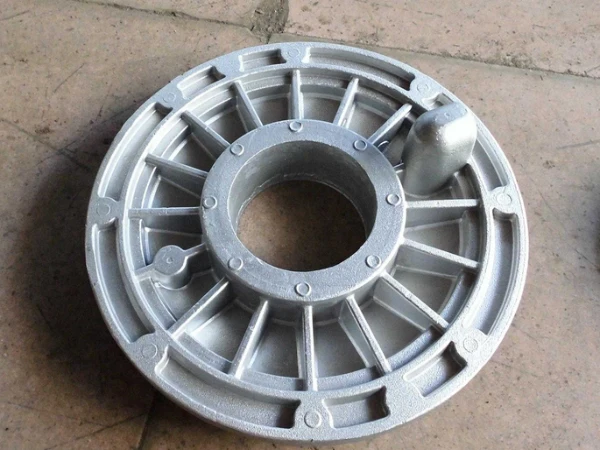
The use of a specialized resin sand casting process is the standard method for manufacturing high-precision automotive cores that are resistant to thermal deformation. This casting technology enables rapid sand bonding through chemical curing, offering dimensional stability far superior to that of traditional green sand processes. This chemical stabilization treatment ensures that critical cooling channels maintain their cross-sectional shape even when subjected to high mechanical loads. By carefully adjusting the proportions of the chemical binder, it is possible not only to reliably eliminate porosity defects in the cores but also to simplify the desanding process after solidification, ultimately producing hollow aluminum housings with excellent internal structural consistency and high strength and durability.
Binding mechanisms of resin sand casting systems
For automotive cores with complex geometries, the use of high-performance resin sand casting binders is crucial for chemically bonding the sand grains. This modern resin sand casting technology involves coating high-quality silica sand or ceramic sand with furan resin or phenolic-polyurethane resin, which can be rapidly cured using an acid catalyst or contact gas. This molecular cross-linking forms a rigid, high-strength sand matrix capable of withstanding the intense flow of molten aluminum during pouring and maintaining its shape. As a result, the resulting cores retain exceptional dimensional accuracy, ensuring that complex internal passages are formed precisely according to the specifications in the design drawings.
Improving gas permeability in automotive core designs
Designing advanced sand casting cores requires strict control of gas permeability to prevent porosity from forming beneath the surface layer in thin-walled shells. This specialized sand casting core design process integrates and strategically arranges internal venting channels, allowing expanding gases to safely escape through the printed area. Since chemical resins release gaseous byproducts upon contact with molten aluminum, optimizing the ratio of sand to binder and the particle size distribution is critical for maximizing natural permeability. By combining these structural venting channels with a highly permeable sand mixture, gas entrapment within critical engine passages can be successfully prevented.
Core collapse property and post-cast sand removal
Ensuring that sand casting cores have good collapse properties allows the sand to be easily flushed out of the complex channels of automotive castings after casting. Improperly formulated cores may fail to disintegrate under the residual heat of the solidifying aluminum, leading to hot cracks in the castings or causing severe cleanup bottlenecks during mechanical core removal. Modern chemical binders are specifically designed to undergo thermal decomposition at specific temperatures, allowing the sand to flow freely out of internal channels during core knock-out. The rate of thermal decomposition of resin binders during cooling directly affects the solidification rate of the surrounding molten metal, which in turn determines the final microstructure and mechanical properties of the aluminum casting. For a comprehensive understanding of these metallurgical outcomes, please refer to our guide [Mastering Sand Casting Microstructures for Superior Automotive Aluminum].
Optimizing sand casting pattern making for core prints
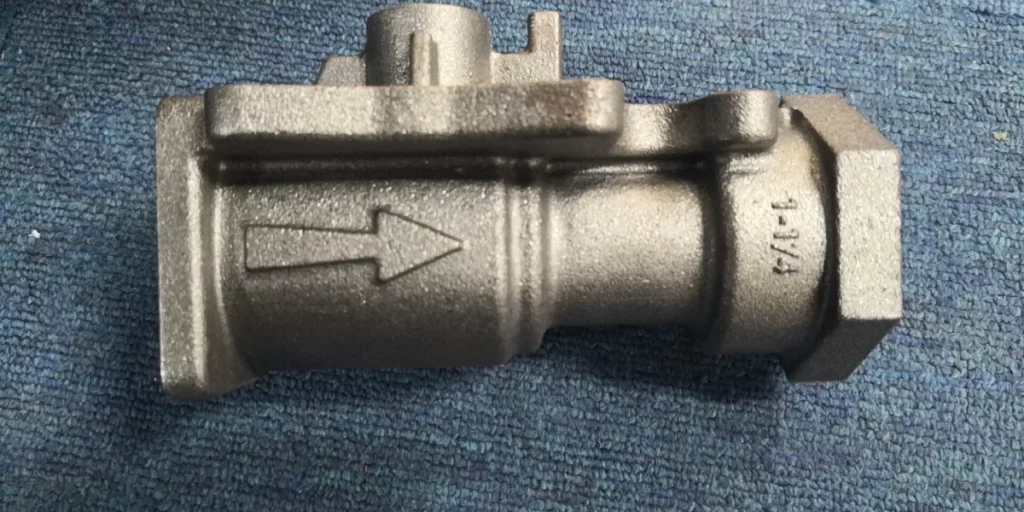
High-precision sand casting pattern making is critical for determining the exact position of the core impression in automotive casting molds. This process defines the physical contact surface of the sand core, preventing it from shifting under mechanical stress. When the pattern is machined to strict dimensional tolerances, it creates a highly repeatable mold cavity that supports the internal core-ejection system. By optimizing the pattern’s draft angle and parting lines, seamless mold assembly and reliable pouring alignment can be ensured, ultimately resulting in zero defects in the oil passages and water jackets of critical automotive structural components.
Precision tooling standards in sand casting pattern making
Establishing strict dimensional standards during the sand casting pattern making process is the foundation for achieving tight tolerances in automotive housings. Using CNC machines for sand casting pattern making ensures that wooden or metal patterns perfectly match the geometry of the CAD model. However, care must be taken to carefully design draft angles and install wear plates on the pattern surface to prevent damage to the sand mold during demolding. These precise physical pattern standards ensure that the two halves of the sand mold fit together perfectly during final assembly, thereby minimizing flash along the parting line and maintaining high dimensional repeatability throughout the production process.
Designing robust core prints for stable placement
To secure the internal sand core in the mold, a heavy-duty sand casting core—known as a “core holder”—must be incorporated. When designing each core holder, the exact surface area must be calculated to ensure it can support the actual weight of the core without crushing the surrounding green sand. The core holder must have an optimized taper to facilitate insertion while preventing any rotational movement during mold handling. A properly proportioned and structurally robust core holder not only provides excellent stability but also serves as a reliable venting path for the high-pressure mold gases generated during the pouring process.
Preventing core shift during aluminum melt injection
Controlling buoyancy during the sand casting process is critical to preventing fluctuations in inner wall thickness caused by core displacement. During the rapid sand casting pouring phase, lightweight sand cores naturally float in the dense, flowing molten aluminum alloy. Properly positioned core imprints, locating rings, or locking mechanisms can counteract these upward hydraulic forces and securely hold the cores in place. By calculating and offsetting these dynamic fluid pressures, the cores can be kept perfectly centered, thereby maintaining the designed wall thickness of automotive hollow structural components.
Managing aluminum sand casting shrinkage in hollow parts
When manufacturing thin-walled, hollow automotive aluminum alloy castings, controlling sand casting shrinkage is a primary objective. To effectively manage shrinkage, it is essential to have a thorough understanding of the mechanisms of volumetric and linear shrinkage during the transition of aluminum alloys from the liquid to the solid state. When casting hollow parts, internal cores restrict this natural shrinkage, which can result in severe internal stresses or lead to hot cracks. By combining advanced casting simulation software with precise modeling allowances, shrinkage behavior can be accurately predicted. This engineering approach ensures that critical dimensions—such as bearing seats and mounting surfaces—consistently meet strict automotive design specifications.
Understanding aluminum sand casting shrinkage behavior
Analyzing the dynamic shrinkage behavior of sand casting is critical to preventing structural deformation in complex hollow aluminum components. This physical shrinkage is divided into three distinct phases: liquid shrinkage, solidification shrinkage, and solid-state cooling shrinkage. As molten aluminum cools within the mold, the rate of shrinkage depends largely on local wall thickness and cooling gradients. If the surrounding sand mold or internal core is too rigid, it physically impedes this natural shrinkage, placing the solidifying metal under tensile stress. This mechanical resistance typically leads to microcracks or dimensional distortions in high-stress areas.
Calculating volumetric contraction in complex geometries
During the initial mold design phase for automotive hollow shells, it is critical to accurately calculate sand casting shrinkage rates. Engineers must scale up the model dimensions by applying a specific alloy shrinkage factor to compensate for sand casting shrinkage; for example, for aluminum-silicon alloys, this factor is typically around 1.3%. When dealing with hollow parts, the presence of internal sand cores complicates these calculations because they restrict shrinkage along certain axes. Using solidification modeling software, these local mechanical constraints can be simulated. This digital analysis yields precise and non-uniform scaling factors, ensuring that the finished castings meet strict dimensional specifications.
Feeding system design to prevent shrinkage cavities
Optimizing the overall sand casting pouring system is the primary method for eliminating internal shrinkage porosity at the junctions of thick-walled structures. Designing an efficient sand casting mold layout requires placing the risers near the thickest walls of the automotive component. These risers must remain in a molten state longer than the casting itself, serving as a source of liquid metal to compensate for volume shrinkage during solidification. By establishing directional solidification from the thinnest walls toward the sprue, shrinkage voids can be ensured to remain entirely within the disposable pouring system rather than in the casting itself.
Looking for a reliable China metal foundry?
- We can help you optimize product design and save costs.
- We can help you with high quality high volume cast parts.
- We can deliver on time and get more sales market opportunities.
- You will benefit from Supro MFG metal casting service.
Contact Supro MFG
This paper systematically analyzes the key technical aspects of the entire process for manufacturing complex hollow automotive components using sand casting. From the selection of core materials and structural design, to the binder system and control of venting and permeability in resin sand casting, to the precise positioning of the core head and measures to prevent misalignment during mold making, as well as the calculation of shrinkage compensation and the design of the feed system—every step directly affects the dimensional accuracy and internal quality of the final casting. Combining this engineering expertise with casting simulation software can significantly reduce the number of trial molds and the scrap rate, thereby shortening the development cycle for sand casting.
Supro MFG specializes in the field of aluminum alloy precision casting. Leveraging an ISO-certified manufacturing system and a team of engineering experts, we provide the automotive industry with one-stop solutions ranging from prototype validation to mass production. At the same time, Supro MFG ensures product structural integrity and dimensional consistency through precise process control. Contact Supro MFG today to turn your next automotive casting project from design drawings into reliable finished products.
Our custom sand and investment casting team can review your core design.
 English
 Français
 Deutsch
 Italiano
 日本語
日本語 한국어
한국어 Polski
 Português de Angola
 Русский
 Español de Argentina