
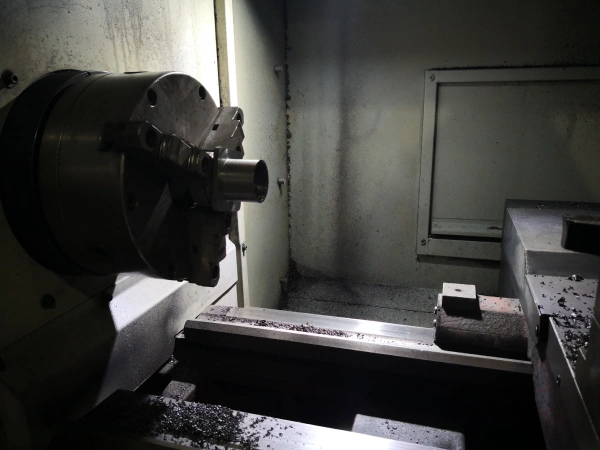
Selecting a stainless steel investment casting supplier is a critical strategic decision that can make or break a project. A poor choice can lead to project delays, cost overruns, and even damage to a brand’s reputation. When faced with numerous suppliers claiming to offer “high quality,” what objective, verifiable, and internationally recognized standards can be used to evaluate them?
As experts with deep expertise in the field of investment casting, Supro MFG understands that simply verifying an ISO 9001 certificate is far from sufficient to demonstrate its true production capabilities. A true assessment lies in evaluating whether its quality management system functions as an effective management tool. To this end, Supro MFG has designed a rigorous evaluation system for the reference of stainless steel investment casting buyers.
This article provides an in-depth analysis of the critical quality system certification standards for stainless steel investment casting, highlights key quality evidence from the production floor, and offers a practical checklist for capability audits. It provides our partners with a practical framework and decision-making tool for evaluating stainless steel investment casting suppliers.
Quality Management System Certification Standards for Stainless Steel Investment Casting Suppliers
When selecting suppliers, certification is an important entry requirement and a key factor in mitigating cost risks. The quality certification system for stainless steel investment casting consists of a general framework and industry-specific quality systems. It also encompasses two core components: material standards and standards for inspection and testing methods. This comprehensive quality control process, spanning from material selection to finished product inspection, provides clear and thorough certification criteria for identifying high-quality stainless steel investment casting suppliers.
The global standard ISO 9001:2015
ISO 9001:2015 is a general standard for quality management in casting. It requires suppliers to establish a systematic management model covering the entire process of stainless steel investment casting—from order review to final inspection—and to set clear control metrics for each stage. The key lies in guiding investment casting suppliers on how to proactively identify and prevent risks in stainless steel production, thereby establishing a foundational framework for achieving consistent product quality.
Industry-Specific Quality Management Systems
In high-risk, highly regulated sectors such as aerospace, medical devices, and energy and chemicals, industry-specific quality system certifications serve as both a mandatory requirement and a key demonstration of professional competence. Below are the qualifications that stainless steel investment casting suppliers in these sectors are required to possess.
Aerospace (International): AS9100D / EN9100.
This is the gold standard and entry requirement for the global aerospace supply chain, with a core focus on full lifecycle traceability of stainless steel investment casting—from raw material batches to the final product.
Medical Devices (International): ISO 13485:2016.
This system is specifically designed for the medical device industry. Its core objective is to establish a quality management system capable of consistently providing safe and effective medical devices while meeting global regulatory requirements (such as the U.S. FDA and the EU MDR).
Pressure Equipment (Europe): PED 2014/68/EU.
This is the EU’s legally binding regulation governing pressure equipment. It serves as the entry requirement for pressure equipment castings (such as valves and pump housings) to enter the EU market. Relevant stainless steel investment casting manufacturers must ensure their products comply with PED requirements and bear the CE mark.
Pressure Equipment (North America): ASME Boiler & Pressure Vessel Code, Section VIII.
This serves as the authoritative foundation for the design, manufacture, and certification of pressure equipment in North America. Stainless steel investment casting suppliers are typically required to hold “ASME U” or “UM” stamping authorization.
Comparison Table of Material Standards for 1.3 Stainless Steel Investment Casting
The following is a list of commonly used stainless steel grades and their corresponding European and American standards, designed to help you quickly understand the equivalence between materials under different standard systems.
ASTM standards are generally more widely used in the American and Asian markets.
EN standards are harmonized standards of the European Union.
UNS numbers are a universal identifier across standards systems.
Material Type | American Standard (ASTM A351) | Unified Numbering System (UNS) | European Standard (EN 10283) | Brief Description of Key Properties | Typical Application Areas |
Austenitic Stainless Steel | CF8 | J92600 | GX5CrNi19-10 | General-purpose 18-8 stainless steel with excellent formability and corrosion resistance. | Food processing equipment, chemical pipeline fittings, general structural components. |
| CF8M | J92900 | GX5CrNiMo19-11-2 | Molybdenum (Mo) is added, which significantly enhances resistance to pitting corrosion and crevice corrosion. | Marine environments, chemical process pumps & valves, medical devices, seawater treatment components. |
Low-Carbon Austenitic Stainless Steel | CF3 | J92500 | GX2CrNi19-11 | Low-carbon variant of CF8, featuring superior intergranular corrosion resistance in the sensitized zone after welding. | Welded assemblies, large structural components requiring post-weld treatment. |
| CF3M | J92800 | GX2CrNiMo19-11-2 | Low-carbon variant of CF8M, combining excellent corrosion resistance and weldability. | Pharmaceutical & biotechnological pipeline systems, nuclear industry fittings, high-standard welded components. |
Duplex Stainless Steel | CD3MN | J92205 | GX2CrNiMoN22-5-3 | High strength, with outstanding resistance to stress corrosion cracking and chloride-induced pitting corrosion. | Oil and gas exploitation, chemical storage tanks, pump casings and impellers in high-chloride environments. |
Martensitic Stainless Steel | CA15 | J91150 | GX4CrNi13-4 | Hardenable through heat treatment, possessing high strength and moderate corrosion resistance. | Turbine blades, pump shafts, valve parts, wear-resistant mechanical components. |
Standards for Inspection and Testing Methods
A set of inspection and testing procedures for stainless steel investment casting parts, based on internationally recognized standards, serves as the sole objective basis for verifying that products comply with design specifications and ensuring their long-term reliability in service.
Non-destructive testing (NDT) is the primary method for assessing the integrity of investment casting parts without damaging the parts themselves. Specifically:
Radiographic testing (RT) is conducted in accordance with ASTM E155, which provides a set of reference film patterns for evaluating internal defects (such as shrinkage, porosity, and inclusions) in stainless steel investment casting parts.
Liquid Penetrant Testing (PT) is performed in accordance with ASTM E165 and is used to reveal all surface-opening defects in investment casting parts (such as cracks and cold shuts).
Magnetic Particle Testing (MT) is conducted in accordance with ASTM E709 and is primarily used to detect surface and near-surface defects in ferromagnetic stainless steel materials (such as martensitic stainless steel CA15).
Mechanical property testing strictly complies with ASTM A370, which specifies the sampling locations, specimen dimensions, and test procedures for tensile, impact, and hardness testing. The yield strength, tensile strength, and elongation data reported must meet the requirements of the corresponding material standard (e.g., ASTM A351).
Chemical analysis is conducted in accordance with ASTM A751. On-site spectroscopic analysis is used for rapid process control, while final confirmatory analysis (typically performed by a third-party laboratory or using more sophisticated equipment) requires the issuance of a formal report confirming that the concentration of each element falls within the specified range.
To facilitate quick reference for purchasers and engineers in the field of stainless steel investment casting, the key international standards in this sector are listed below, organized by category and region.
Standard Category | Region/System | Standard No. |
General Quality Management System | International | ISO 9001:2015 |
| International | IATF 16949:2016 |
Industry-Specific Quality Management System | Aerospace (International) | AS9100D / EN9100 |
| Medical Devices (International) | ISO 13485:2016 |
| Pressure Equipment (Europe) | PED 2014/68/EU |
| Pressure Equipment (North America) | ASME Boiler & Pressure Vessel Code, Section VIII |
Stainless Steel Casting Material Standards | United States | ASTM A351/A351M |
| United States | ASTM A743/A743M |
| Europe | EN 10283 |
| Germany | DIN 17445 |
| United Kingdom | BS 3100 |
| International | ISO 4991 |
Inspection & Testing Method Standards | Non-Destructive Testing (NDT) | ASTM E155 |
|
| ASTM E165/E165M |
|
| ASTM E709 |
| Mechanical Property Testing | ASTM A370 |
| Chemical Analysis | ASTM A751 |
| Dimensional Inspection | ASME Y14.5 |
Looking for a reliable China metal foundry?
- We can help you optimize product design and save costs.
- We can help you with high quality high volume cast parts.
- We can deliver on time and get more sales market opportunities.
- You will benefit from Supro MFG metal casting service.
Quality evidence from the production site of a stainless steel investment casting supplier
The professional capabilities of a stainless steel investment casting supplier can be assessed based on three core dimensions: key evidence of the effectiveness of the quality system, such as the substantive content of internal audits and management reviews; whether the supplier’s preventive and corrective action system incorporates in-depth root cause analysis; and whether structured approaches to continuous improvement are applied in production. Metrics such as CAPA reports and key performance indicators can objectively verify whether the investment casting supplier possesses internal mechanisms that ensure long-term success and reliability.
Key Evidence of the Effectiveness of the Quality System
When evaluating the quality management system of a stainless steel investment casting supplier, the key lies in assessing the actual effectiveness of its self-improvement mechanisms. This can be diagnosed through two core processes: internal audits and management reviews.
Internal audits are self-assessments conducted by investment casting suppliers to evaluate the nature, objectives, and operation of their quality management systems. When conducting an evaluation, you should request access to their recent audit plans and closure reports. For example, verify whether the scope of their audits covers all critical processes. Effective internal audits can continuously drive the optimization of the investment casting process.
Management Review is a “strategic meeting” led by the company’s top management that directly determines the allocation of resources and the direction of the quality system. When conducting your assessment, you may request to review the minutes of the last one or two Management Review meetings to gain a direct understanding of management’s genuine commitment to quality and their willingness to allocate resources.
Corrective and Preventive Action (CAPA) System
A stainless steel investment casting supplier’s effective CAPA system demonstrates its commitment to eliminating the risk of problem recurrence at the systemic level and ensuring continuous project optimization. During the evaluation, the supplier’s complete CAPA reports can be reviewed. These reports primarily consist of five key components: an accurate description of the problem; immediate corrective actions taken; root causes identified at the process or system level using tools such as the 5 Whys analysis or fishbone diagrams; corrective and preventive actions developed based on these findings; and evidence verifying the effectiveness of these actions.
For example, when addressing the issue of porosity in stainless steel investment casting, the root cause should not be attributed solely to “improper sprue design.” An effective analysis should trace the issue back to its systemic origins, such as “existing sprue design specifications failing to cover such thick, large-section structures” or “process engineers failing to perform mold flow analysis in accordance with procedures.”
The Production Method of Continual Improvement
When evaluating a stainless steel investment casting supplier, you can directly ask about their recent improvement projects. For example, have they used design of experiments to optimize the shell drying process and improve the surface quality of investment castings? Have they identified and eliminated process waste by mapping value streams, thereby shortening lead times?
On the other hand, you should focus on the stainless steel investment casting supplier’s key performance indicators (KPIs). Examples include first-pass yield, first-pass compliance with melt composition specifications, and on-time delivery rates. Examining trend charts for these KPIs and the corresponding improvement actions allows you to objectively assess the true health and effectiveness of their continuous improvement system for investment casting.
Checklist for Evaluating the Capabilities of a Stainless Steel Investment Casting Supplier
When conducting an on-site audit of an investment casting supplier, a checklist focused on core capabilities can translate abstract quality commitments into concrete, verifiable production processes. An audit of a stainless steel investment casting supplier’s capabilities can be conducted on two levels: the depth of technical expertise and the visibility of process control.
In-Depth Assessment of Technical Capabilities
An evaluation of a stainless steel investment casting supplier should not be limited to a list of equipment, but should delve into the details of its applications and quality control:
First, let’s examine how investment casting mold design and manufacturing are carried out. Suppliers such as Supro MFG have teams of professional engineers who manage the entire process—starting from the product drawings—in strict accordance with the technical specifications and quality standards of the casting industry, ensuring that the mold’s dimensional accuracy, surface finish, and durability meet product standards.
The melting and pouring capabilities of a stainless steel investment casting supplier are key factors in determining the intrinsic properties of the material. Key points to consider include: Is an analysis performed for every batch to ensure precise chemical composition? Does the supplier maintain detailed melting records that document critical parameters such as alloy additions, temperature profiles, and deoxidation processes?
For stainless steel castings, proper post-processing and heat treatment are critical to achieving consistent corrosion resistance and mechanical properties. Verify that the supplier has controlled-atmosphere heat treatment furnaces, and request to see standardized process control charts and actual temperature logs for different material grades.
Finally, confirm whether the stainless steel investment casting supplier has the capability to perform critical tests, such as chemical composition analysis (using a direct-reading spectrometer), metallographic examination, and mechanical property testing (using a tensile testing machine).
Visualization of Process Control
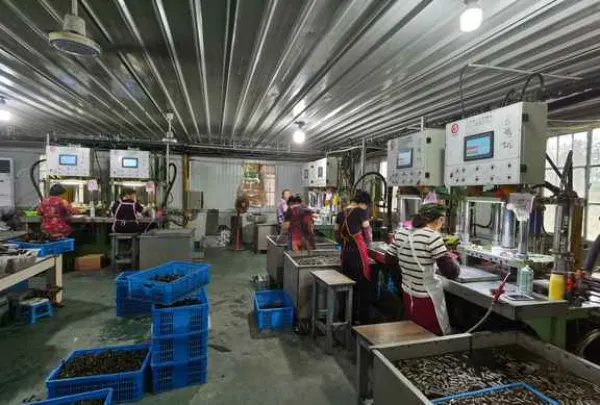
A well-organized production site is the foundation of stable production. When assessing a production workshop, please pay attention to the following key factors that can be readily observed:
6S management standards: Primarily assess the cleanliness and orderliness of the work area. Equipment maintenance status: Review inspection records and maintenance schedules for key equipment (such as melting furnaces and heat treatment furnaces). Work-in-progress identification and segregation: Observe whether parts in production are clearly labeled with status indicators (e.g., pending inspection, approved, rejected). Clear differentiation of inspection statuses: Verify that critical workstations (such as wax pattern production and final inspection) have clear work instructions and inspection standards.
By conducting a systematic audit of stainless steel investment casting suppliers using this checklist, you can build a comprehensive profile of the supplier’s true capabilities, providing a solid foundation for subsequent decision-making.
Audit Process for the Best Stainless Steel Investment Casting Suppliers
Supro MFG is a stainless steel casting manufacturer with extensive experience in investment casting. For international clients, we offer the option of conducting evaluations and collaborating online. To this end, we have established a transparent and rigorous process that allows our partners to systematically verify our expertise in stainless steel investment casting and build long-term trust.
Preliminary Screening
Our online company profile is the best way for you to get a clear understanding of who we are. Here, you’ll find Supro MFG’s quality management system certification (ISO 9001:2015), as well as detailed information on our stainless steel investment casting process, equipment inventory, and typical industry applications—all designed to help you quickly determine if we’re the right fit for your needs.
Provide feasible solutions
Once you provide your design requirements to Supro MFG’s technical staff, our engineering team will promptly submit a quality control plan that includes a preliminary manufacturing process proposal, identification of key quality control points, and an early analysis of potential manufacturing risks. This ensures that our collaboration on stainless steel investment casting projects focuses on technical and quality feasibility from the very outset.
Sample Validation
Upon signing the sample agreement, we will deliver the first batch of samples along with a comprehensive validation report package. This report includes a full-dimension inspection report for stainless steel investment casting parts, certificates of material chemical composition and metallographic analysis, as well as non-destructive testing results for critical areas. These objective data serve as primary evidence of our process capabilities and consistency.
Virtual On-Site Audit
Supro MFG can accommodate buyers who require on-site audits. Through real-time video calls, we will guide you on a tour of our production facilities, laboratories, and key production processes; demonstrate equipment operation; provide instant online access to the documentation you request (such as melting logs, heat treatment curves, and equipment inspection checklists); and directly address your questions in real time.
Small-scale trial production
We will fulfill small-batch orders for stainless steel investment casting parts to mass-production standards, while strictly monitoring the process capability index (CPK) throughout the process. You will ultimately verify the stability of our mass production and the reliability of our collaboration through consistent product quality, on-time delivery rates, and our team’s rapid response to and resolution of technical issues.
Periodic Review
Once the partnership begins, we will establish a shared performance dashboard based on mutually agreed-upon key performance indicators (KPIs), such as first-pass yield and on-time delivery rates. Through regular online performance review meetings, we will jointly review data, resolve issues, and plan continuous improvement initiatives to ensure the partnership continues to deepen and grow.
Through this structured online evaluation process, Supro MFG will demonstrate our professional capabilities to you. With transparent, data-driven communication throughout the entire process, we aim to become your trusted strategic partner in metal casting.
Contact Supro-mfg
When searching for a stainless steel investment casting supplier, the key challenge lies in effectively verifying their production quality capabilities to manage project risks and ensure the performance of the final product. The systematic evaluation framework provided in this article is designed to help you establish an objective online verification process. By following this approach, you will be able to identify strategic partners who meet the necessary qualifications, possess a culture of continuous improvement, and demonstrate reliable delivery capabilities—thereby ensuring the long-term success and value of your stainless steel investment casting projects.