
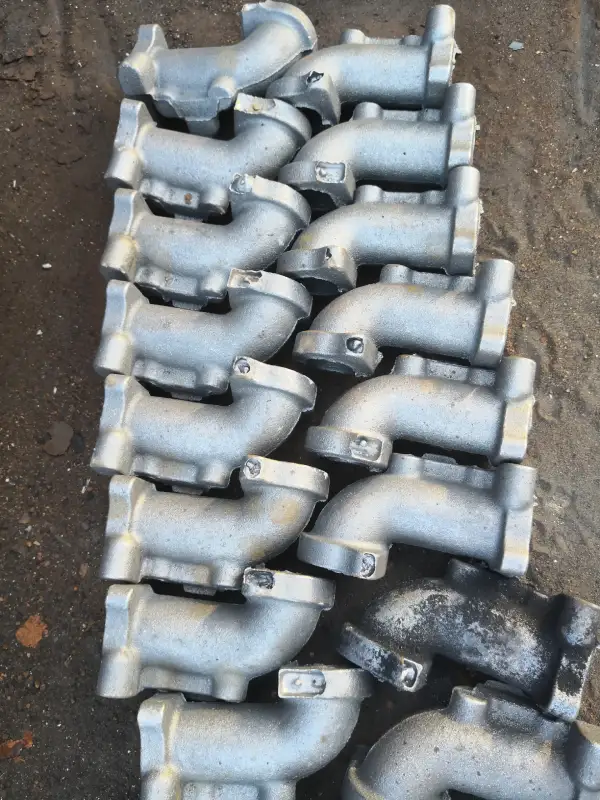
Steel sand casting is essentially a forming method that uses sand molds as the mold cavity. Molten liquid steel is poured into the mold cavity, where it cools and solidifies to form the desired casting.
The modern industrial system is constantly innovating manufacturing processes, yet one traditional metal forming method remains widely used after thousands of years: steel sand casting.
Whether it’s the steel structural supports of monumental buildings, the core components of automobile engines, or the frames and housings of large industrial equipment, steel sand casting technology provides the foundational support behind them all. As one of the most fundamental and widely applied techniques in metal casting, sand casting continues to form the robust “skeletons” for diverse industries through its unique flexibility and cost-effectiveness.
This article will delve into the essence of steel sand casting, explore its extensive applications, compare it with other steel casting processes, and provide a comprehensive understanding of this classic manufacturing technique’s technical core and practical value.
What is steel sand casting?
As a casting process with a long history, it possesses numerous core advantages and remains a vital technology in the foundry industry to this day.
Fundamental Principles
Steel sand casting is essentially a forming method that uses sand molds as the mold cavity. Molten liquid steel is poured into the mold cavity, where it cools and solidifies to form the desired casting.
This casting process involves several precisely designed steps:
Molds (typically wooden or metal patterns) are fabricated based on the part drawings.
Filling the mold cavity with prepared molding sand.
Compacting and consolidating the sand to form a cavity matching the part’s geometry.
Pouring molten steel into the sand mold cavity.
Breaking the sand mold after the steel solidifies to remove the casting.
Post-processing operations such as sand removal and grinding.
To enhance the surface finish of steel castings, a coating is sometimes applied to the surfaces of the sand mold and core during production.
Key Advantages
Steel sand casting has become a fundamental process in metal casting primarily due to the following core advantages:
Exceptional adaptability
It efficiently produces everything from small components to large sand-molded stainless steel castings weighing tens of tons.
Outstanding cost-effectiveness
The molding materials used in steel sand casting are inexpensive and readily available. Mold fabrication is relatively straightforward, resulting in low tooling costs and exceptional cost efficiency.
Broad Material Compatibility
Suitable not only for carbon steel sand casting but also for producing stainless steel sand-molded castings, high-alloy steel sand-molded castings, and numerous other metallic materials.
Flexible Production Volume Adaptability
Sand casting accommodates single-piece production, batch production, and mass production of castings, making it an ideal choice for product development and large-scale manufacturing.
Looking for a reliable China metal foundry?
- We can help you optimize product design and save costs.
- We can help you with high quality high volume cast parts.
- We can deliver on time and get more sales market opportunities.
- You will benefit from Supro MFG metal casting service.
What Are the Applications of Steel Sand Casting?
With its flexible forming capabilities, controllable costs, and compatibility with multiple materials, steel sand casting has become a core manufacturing process for critical components across diverse industries.
Notably, for specialized applications like corrosion-resistant parts in chemical processing equipment, castings manufactured using duplex stainless steel sand casting technology deliver both exceptional corrosion resistance and mechanical strength, meeting the demands of demanding operating environments.
Heavy Industry Sector
Sand casting is suitable for structural components of large equipment with complex shapes, substantial volumes, and demanding structural requirements, such as machine tool beds, gearboxes, pump housings, and valves.
Automotive and Transportation Sector
Steel sand casting is used to manufacture engine mounts, chassis components, transmission housings, and railway vehicle parts. Due to the requirement for high strength and resistance to frequent vibration, the superior mechanical properties of steel castings make them the preferred choice.
Energy and Infrastructure Development Sector
Sand casting technology provides reliable solutions for components in wind power equipment, hydroelectric turbine blades, and mining machinery parts. Particularly for large sand casting stainless steel, it is virtually the only economically viable production process.
Construction Sector
This technology is suitable for producing components with complex geometries and high structural strength requirements, such as metal fasteners for buildings and steel structural connectors.
Looking for a reliable China metal foundry?
- We can help you optimize product design and save costs.
- We can help you with high quality high volume cast parts.
- We can deliver on time and get more sales market opportunities.
- You will benefit from Supro MFG metal casting service.
Casting Involves More Than Just Steel and Sand
Steel sand casting is not merely a simple combination of steel and sand, but rather a systematic engineering process requiring specialized process design, parameter control, and quality assurance.
Casting Steel
Based on the end-use requirements of the final product, different types and grades of steel can be selected:
Carbon steel sand casting is the most common type of steel sand casting. It is suitable for producing components requiring strength and hardness but with low corrosion resistance demands. Carbon steel castings can meet various needs ranging from general structural parts to high-strength transmission components.
Stainless steel sand casting is suitable for producing castings requiring high corrosion resistance, such as chemical processing equipment, marine engineering equipment, and food processing machinery. Among these, biphasic stainless steel sand-molded castings are increasingly widely used in modern industry due to their combination of the advantages of austenitic and ferritic stainless steels.
In specialized fields like aerospace and defense, high-temperature alloy steels and high-manganese steels are employed for sand casting to meet extreme environmental demands.
Sand Mold Formulation
The “sand” used in sand casting is not ordinary sand, but a specially formulated molding material:
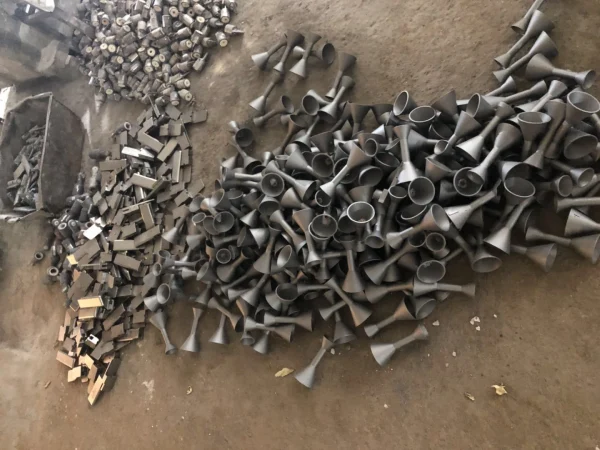
The basic raw materials for producing sand molds are foundry sand and molding sand binders, with silica sand being the most commonly used foundry sand.
To impart sufficient strength to molds and cores, molding sand binders are added. The most widely used binder is clay, which can be further categorized into three types: clay wet sand molds, clay dry sand molds, and chemically hardened sand molds.
Molding sand must also possess multiple properties, such as permeability, strength, refractoriness, plasticity, and shrinkage resistance. These properties directly impact the quality of the final casting.
What Other Types of Steel Casting Exist Besides Steel Sand Casting?
Common steel casting processes also include die casting and investment casting. Below is an introduction to these two processes and a comparison of the three process types.
Steel Die Casting
The working principle involves forcing molten steel at high pressure into the cavities of precision metal molds, where it solidifies under pressure to form castings.
The primary advantages of die casting include high production efficiency, dimensional stability of castings, and excellent interchangeability, making it suitable for mass production. However, the high melting point of steel poses significant challenges to mold longevity, limiting its application primarily to specialized fields.
Steel Investment Casting
The process involves creating a meltable model from a low-melting-point material (such as wax), coating it with multiple layers of a special refractory coating to form a mold shell. After the model is melted out, the shell is fired at high temperatures before molten metal is poured in to produce the casting.
Investment casting is particularly suited for producing small steel castings with complex shapes and high precision requirements. Castings exhibit high dimensional accuracy, typically achieving CT4-6 grades (compared to CT10-13 for sand casting), and superior surface finish relative to conventional castings. However, the investment casting process is complex, involves a lengthy production cycle, and carries higher costs, making it generally unsuitable for mass production.
Comparison of Three Casting Processes
The process involves creating a meltable model from a low-melting-point material (such as wax), coating it with multiple layers of a special refractory coating to form a mold shell. After the model is melted out, the shell is fired at high temperatures before molten metal is poured in to produce the casting.
Below is a comprehensive comparison of the three primary casting methods:
Process Parameters | Sand casting | Die casting | Investment casting |
Dimensional Accuracy | Medium | High | High |
Surface Finish | Medium | High | High |
Mold Cost | Low | High | Medium-high |
Production Efficiency | Medium | High | Low to medium |
Applicable Dimensions | Small to very large | Small to Medium | Small |
Material Compatibility | Wide | Limited | Wide |
Suitable for Batch Production | Single pieces to large batches | High Volume | Small to large batches |
This demonstrates that:
Steel sand casting offers distinct advantages in adaptability, cost-effectiveness, and dimensional range, particularly for large sand castings of stainless steel.
What Is the Experience of Collaborating with Supro for Steel Sand Casting?
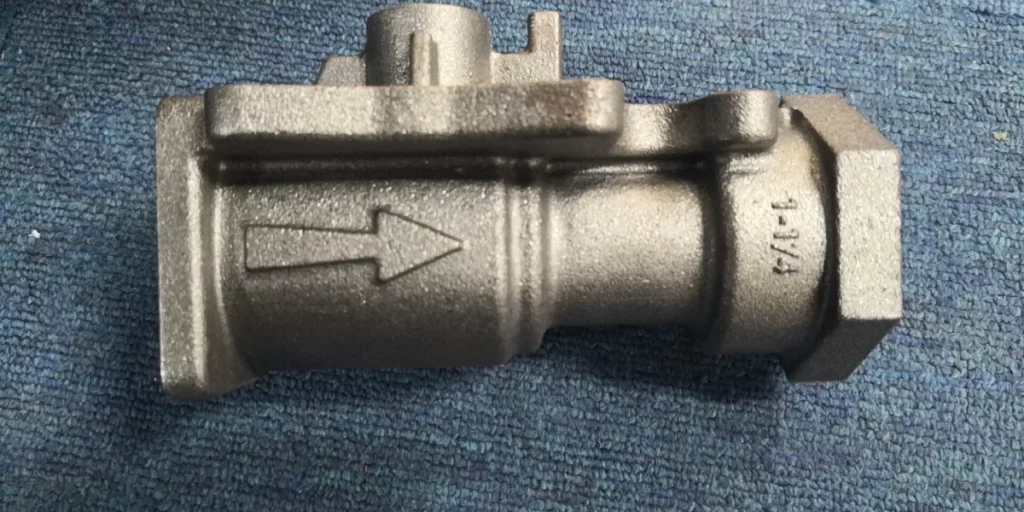
As a seasoned steel sand casting supplier, Supro leverages years of industry expertise to deliver comprehensive, high-quality services from initial consultation to final product delivery. Whether producing standard steel sand castings or customized steel sand castings, we precisely align with production requirements, ensuring a seamless and worry-free collaboration throughout the entire process.
One-Stop Steel Sand Casting Solution from Drawings to Finished Products
Supro breaks away from the traditional segmented service model in manufacturing, offering high-quality one-stop steel casting services: Clients need only provide their design concepts, and our team will determine the appropriate processes based on requirements or recommend optimized steel sand casting solutions. Subsequently, Supro Metal Foundry handles core operations including sand mold preparation, steel melting (including stainless steel material formulation), and casting, delivering high-quality, high-standard products directly to our clients.
Dual Assurance of Technology and Quality
Supro consistently prioritizes technological innovation and quality management as the core drivers of corporate development, providing customers with comprehensive technical support, such as sand-cast stainless steel production.
Equipped with advanced casting machinery and inspection instruments, Supro ensures every production stage undergoes stringent quality control.
Your Ideal Manufacturing Partner
By choosing Supro as your steel sand casting foundry, you gain not just a supplier but a reliable manufacturing partner. We are committed to building long-term, stable relationships with our customers. Through professional technical support and timely delivery services, we help clients reduce production costs and shorten product time-to-market.
Contact supro-mfg
Steel sand casting, as a time-honored yet continuously evolving manufacturing technology, continues to play an irreplaceable role in modern industry. With the constant emergence of new materials, processes, and technologies, this craft maintains a dynamic equilibrium between tradition and innovation.
From simple metal fasteners to complex engine blocks, and from carbon steel sand casting to stainless steel sand casting, this technology has earned widespread favor in manufacturing due to its unique flexibility and cost-effectiveness. Whether for general industrial applications demanding cost-effectiveness and adaptability, or for high-end manufacturing sectors requiring exceptional precision and performance, sand casting serves as a vital tool in the production process.
If you’re considering a steel sand casting project, partnering with a professional like us is a wise choice. As an experienced steel foundry, Supro provides end-to-end solutions from design to manufacturing, ensuring your project achieves the optimal balance between quality, cost, and time.
 English
 Français
 Deutsch
 Italiano
 日本語
日本語 한국어
한국어 Polski
 Português de Angola
 Русский
 Español de Argentina