
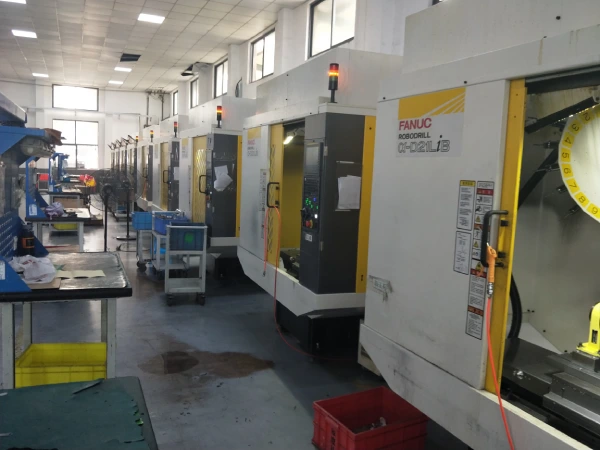
High-pressure die casting offers the optimal balance between complex geometries and high production efficiency in precision metal manufacturing. However, the inherent generation of process defects remains a core factor affecting the reliability, performance, and overall cost of the final product.
When encountering unexpected component failure, performance degradation, or seal leakage during testing or field applications, the root cause typically lies in the failure to effectively control defects during the high pressure die casting process. The five most destructive defects in high pressure die casting are: porosity, shrinkage, cold shuts/short shots, cracks, and sticking/scratching. These defects are interrelated, and the most effective approach is to develop a systematic high pressure die casting solution to prevent or rectify them.
This paper analyses the five core defects in high pressure die casting, dissects their formation mechanisms, and proposes solutions. It provides a clear, measurable, and controllable technical framework to lay the foundation for achieving stable, zero-defect production.
High Pressure Die Casting Defect I: Porosity
In the field of high-pressure die casting, porosity directly compromises the structural integrity and long-term reliability of products. The formation of porosity primarily stems from two critical factors: inadequate design of the mould venting system and turbulent air entrainment occurring during the slow injection phase. These elements collectively lead to the formation of internal porosity within high pressure die-cast components, significantly diminishing their mechanical strength, fatigue life, and gas tightness. By implementing appropriate control methods, the occurrence rate of such defects can be effectively mitigated.
Mechanism and Effects of Porosity Formation in High Pressure Die Casting
In the high pressure die casting production process, porosity represents one of the most prevalent and damaging defects. Typically manifesting as minute cavities concealed within the casting or near its surface, porosity constitutes a primary threat to product quality and reliability.
The formation of porosity primarily stems from two critical factors inherent to the high pressure die casting process. Firstly, air trapped within the mould cavity cannot be fully expelled during casting and is consequently entrained within the molten metal. Secondly, volatile materials such as release agents decompose upon heating, generating gases. These trapped gases form spherical or ellipsoidal cavities during the solidification of high pressure die cast parts, exerting a detrimental impact on the component's mechanical strength, fatigue life, and airtightness.
Analysis of Causes for Porosity Formation in High Pressure Die Casting
Porosity issues frequently stem from inadequate process control during two critical stages of high-pressure die casting.
In practical production, many high pressure die casting moulds suffer from venting channels that are insufficiently deep, poorly positioned, or lack adequate total surface area. This obstructs gas escape pathways, while mould release agent residues and oil contamination gradually clog these minute venting channels. Consequently, even initially well-designed moulds progressively fail. Porosity resulting from inadequate venting typically manifests at the ends of high pressure die-cast components and in filling dead zones.
Another critical factor stems from improperly set slow-injection speeds during high-pressure die casting. When molten metal enters the cavity in a turbulent state, this turbulence entraps air within the metal, forming bubbles that are difficult to expel. It should be noted that excessively rapid slow injection speeds during high-pressure die casting may prematurely seal vent channels, while excessively slow speeds cause the metal front temperature to drop, compromising filling quality. Therefore, precise adjustments must be made during die casting based on product structure, gate location, and mould temperature.
Methods for Controlling Porosity in High Pressure Die Casting
Addressing porosity issues in high-pressure die casting requires a systematic solution built upon three core technological aspects:
Supro MFG employs a precision venting depth of 0.12–0.15mm, achieving maximum venting efficiency in high-pressure die casting while effectively preventing molten metal splatter. Concurrently, a rigorous venting system maintenance protocol is implemented, involving thorough cleaning after every 5,000 mould cycles to prevent chronic ‘suffocation’ caused by carbide accumulation. This preventive maintenance ensures the high pressure die casting mould remains in optimal venting condition.
The application of vacuum die casting technology involves reducing pressure below 100mbar within 80 milliseconds while continuously monitoring pressure curves. This ensures each injection achieves an effective vacuum state, reducing porosity to below 1% and enabling heat treatment for high pressure die casting.
Ideal laminar flow filling in high pressure die casting hinges upon precise slow-to-fast injection transition points. Supro MFG establishes individual injection parameter profiles for each product based on specific filling simulations and experimental data, ensuring molten metal completes cavity filling in a stable laminar flow state.
These three technical elements mutually reinforce one another. Only by optimising them as an integrated whole can a leap in the internal quality of high-pressure die casting parts be achieved.
High Pressure Die Casting Defect II: Shrinkage
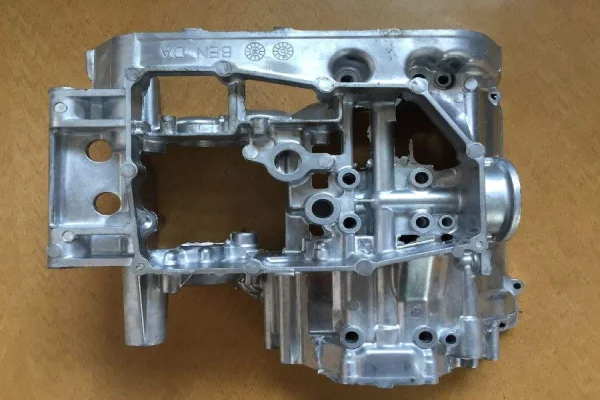
Shrinkage defects rank as the second most prevalent issue in high pressure die casting, following only porosity. Typically manifesting as irregularly shaped cavities with rough internal surfaces within thick-walled sections and hot-spot areas, these defects severely compromise material density, tensile strength, and fatigue life. Achieving high-quality die casting production necessitates a thorough understanding of their root causes and the implementation of a systematic engineering approach.
Mechanism and Effects of Shrinkage Formation in High Pressure Die Casting
The nature of shrinkage and porosity in high pressure die casting defects is entirely distinct. Shrinkage cavities manifest as irregularly shaped voids with rough inner walls, arising from the failure of liquid metal to achieve effective shrinkage compensation during solidification in the high-pressure die casting process.
Such defects directly compromise material density, reducing tensile strength and elongation while significantly diminishing component fatigue life. Shrinkage cavities typically concentrate in thick cross-sections, hot spots, and last-solidified areas of die-cast parts.
Fundamental Causes of Shrinkage in High Pressure Die Casting
In high-pressure die casting production, the causes of shrinkage porosity defects are typically linked to two interrelated core factors: pressure parameters and temperature control.
When the high-pressure die casting pressure range is insufficient or the holding pressure time is too brief, the molten metal within the mould cavity cannot achieve sustained, adequate shrinkage compensation during the solidification and contraction phase. This results in microscopic shrinkage cavities forming in the thick-walled regions of the casting, severely compromising material density.
Concurrently, the design quality of the cooling system determines the control capability over the solidification process in high pressure die casting. If the mould cooling water channels are improperly arranged, leading to inconsistent heat dissipation rates across different sections, this disrupts the ideal sequential solidification conditions.
Methods for Controlling Shrinkage in High Pressure Die Casting
To effectively address shrinkage defects in high pressure die casting, a systematic engineering approach can be adopted to control three key factors.
The most fundamental approach to controlling shrinkage defects in high pressure die casting parts is the scientific setting of holding pressure parameters. Supro MFG performs precise calculations of holding pressure and duration based on component geometry. For thick-walled sections, sufficient pressure gradients are established to ensure unobstructed shrinkage compensation pathways. Concurrently, holding pressure is maintained until the gate is fully solidified, thereby guaranteeing the material density of die casting parts.
Supro MFG's thermal management for high pressure die casting moulds constitutes core technology. By optimising cooling channel layout, precise temperature gradients are established across different casting sections. This facilitates directional solidification from peripheral areas towards the gate, effectively channelling shrinkage defects into non-critical zones or the overflow system. Consequently, the structural integrity of the main body of high-pressure die casting parts is preserved.
For thick-walled thermal hubs in high pressure die cast components, high-thermal-conductivity rapid-cooling inserts provide an immediate solution. These specialised inserts significantly enhance local cooling rates, altering metal solidification characteristics to fundamentally eliminate conditions conducive to shrinkage cavities.
The integrated system employs three measures for high-pressure die casting: optimal holding pressure parameters provide the necessary force for feeding, an optimised cooling system directs solidification flow, while rapid-cooling inserts resolve thermal concentration issues in critical areas. Implementing these measures substantially enhances the internal quality of castings, meeting the stringent structural integrity demands of high-end applications for die-cast components.
High Pressure Die Casting Defect Three: Cold Shuts and Insufficient Filling
During the millisecond-scale filling process in high-pressure die casting, cold shuts and short shots reveal fusion failure issues at the metal flow front. Systematic analysis indicates that defect formation stems from sustained mould temperatures below 180°C accelerating metal solidification; an ill-designed gating system increasing flow resistance; and excessively low injection speeds prolonging filling time. Resolving these high pressure die casting defects necessitates multi-dimensional engineering strategies to fundamentally eliminate cold shuts and short shots, thereby producing structurally sound, high-quality die-cast components.
Mechanism and Effects of Cold Shuts and Insufficient Filling in High Pressure Die Casting
During the rapid filling phase of high pressure die casting, the fundamental cause of cold shut defects lies in the loss of fusion capability by the leading edge of the metal flow. This is not a surface imperfection, but rather a structural defect arising when molten metal, during divergent filling, fails to achieve metallurgical bonding upon meeting due to excessively low temperatures at the front.
Such defects critically compromise component integrity, resulting in mechanical strength significantly inferior to the base material. Under static or dynamic loading, these interfaces become stress concentration points, leading to component failure. Crucially, cold shuts prove difficult to detect through conventional high-pressure die casting inspection methods, yet can precipitate catastrophic consequences during end-use.
Fundamental Causes of Cold Shuts and Insufficient Filling in High Pressure Die Casting
Cold shuts and insufficient filling represent failures in the filling process of high-pressure die casting. The formation of these defects is not accidental but results from the combined influence of three key factors.
Excessively low mould temperatures (e.g., persistently below 180°C) constitute the primary cause of these high pressure die casting defects. When the mould surface temperature fails to sustain the fluidity of molten metal, a semi-solidified layer rapidly forms at the flow front. These excessively cooled metal streams cannot achieve metallurgical bonding upon convergence, resulting in the characteristic cold shuts typical of die casting defects.
The rationality of the high pressure die casting gating system design is equally critical. Improper internal gate placement or insufficient runner dimensions can cause molten metal to exhaust its energy during the late filling phase, preventing it from reaching the far end of the cavity.
The setting of injection velocity during high pressure die casting is a core influencing factor. Excessively low filling speeds prolong the contact time between molten metal and the mould, causing excessive heat dissipation. When the kinetic energy of the molten metal is insufficient to overcome filling resistance, incomplete filling occurs in thin-walled areas or complex structures of die-cast parts.
Methods for Controlling Cold Shuts and Insufficient Filling in High Pressure Die Casting
Effectively eliminating cold shuts and insufficient filling defects in high-pressure die casting requires a systematic solution encompassing thermal management, fluid dynamics, and process control.
Firstly, foundational assurance lies in mould thermal equilibrium. Supro MFG employs zone-specific temperature control technology to maintain the high pressure die casting mould's surface temperature within the stable process window of 180-220°C. This preserves the fusion capability at the molten metal's flow front. Scientific mould temperature management not only reduces cold shuts but also significantly improves the surface quality of high-pressure die casting parts.
Through CAE simulation analysis, the gate cross-section and flow direction of die-cast parts are redesigned to ensure laminar flow progression of molten metal, thereby optimising the high-pressure die-casting filling system. Reasonably increasing the internal gate cross-sectional area and optimising runner layout effectively reduces flow resistance by over 30%, creating essential conditions for complete filling.
The key to preventing cold shuts and short shots in high-pressure die casting lies in precise control of injection parameters. Slow injection speed should be increased to 0.3–0.5 m/s, while fast injection speed should be optimised to 4–6 m/s based on product structure, ensuring filling is completed within 40–80 milliseconds. This guarantees fusion of the molten metal before reaching the critical heat loss point, thereby avoiding high-pressure die casting defects.
Only by implementing these three measures within the high pressure die casting system – namely stable mould temperature, an optimised gating system, and precise injection parameters – can cold shuts be fundamentally resolved, yielding structurally sound, high-quality castings.
High Pressure Die Casting Defect IV: Cracks
Cracks are regarded as the most critical type of defect in high pressure die casting, representing linear fissures that form during metal solidification or cooling and directly signal the failure of the component. In-depth analysis indicates that crack formation primarily stems from the intricate interplay between material properties and mould design. Mitigating this die casting defect necessitates a multi-dimensional, collaborative approach to fundamentally eliminate this threat, thereby producing high-reliability high-pressure die casting parts that meet stringent requirements.
Mechanism and Effects of Crack Formation in High Pressure Die Casting
Cracks are regarded as the most severe type of high-pressure die casting defect. This imperfection manifests as linear fissures formed when metal contraction is impeded during solidification or cooling, or when mechanical stresses exceed the material's strength limit. From a metallurgical perspective, this defect can be categorised into two types: hot cracks and cold cracks.
Cracks inflict catastrophic damage to component integrity, acting as stress concentration points within high pressure die-cast parts. Under load, they propagate rapidly, causing sudden fracture. The latent threat posed by cracks is often difficult to fully identify through conventional inspection methods. Concealed die-casting defects may expand during subsequent processing or use, leading to unforeseen component failure.
Fundamental Cause Analysis of Cracks in High Pressure Die Casting
Cracks in high pressure die castings frequently stem from complex interactions between material properties and mould design.
From a material perspective, the inherent thermal brittleness of the alloy is the primary cause of high pressure die casting defects. Certain aluminium alloys exhibit significantly reduced strength and ductility at elevated temperatures, rendering them unable to effectively resist tensile stresses generated by solidification shrinkage. Alternatively, impurity elements such as iron or zinc exceeding critical levels may cause low-melting-point brittle phases to form at grain boundaries, thereby inducing cracking defects in high pressure die castings.
The rational design of the high pressure die casting mould is also a significant factor influencing crack defect formation. Sharp corners and abrupt wall thickness variations create stress concentration effects, causing localised stresses to multiply. For weakened areas that have not fully cooled, such mechanical stresses are sufficient to induce tearing in the high-pressure die casting part.
Methods for Controlling Cracks in High Pressure Die Casting
Supro MFG's effective resolution of crack defects in high pressure die casting establishes a systematic solution across three dimensions: materials science, structural mechanics, and process control.
The foundational element of high pressure die casting is material control, namely the rigorous monitoring of key alloy elements such as silicon, copper, and magnesium within specified ranges, while simultaneously maintaining impurity elements like iron and zinc below critical thresholds. Spectral analysis further ensures consistent material composition across batches, mitigating grain boundary embrittlement caused by impurity segregation at source to prevent high pressure die casting defects.
Supro MFG's high pressure die casting mould design incorporates stress analysis principles. Internal sharp corners are redesigned with rounded transitions featuring radii no less than 1mm, a straightforward measure reducing stress concentration factors by over 50%. Furthermore, CAE simulation analyses solidification sequences to prevent excessive internal stresses arising from uneven shrinkage in high pressure die casting parts.
Ensuring balanced ejection systems prevents deformation or tearing of castings due to localised stress concentrations. Optimising ejection sequencing to complete demoulding within the temperature range where castings possess sufficient strength while retaining plasticity significantly reduces the risk of cracking in high pressure die casting parts.
This three-pronged optimisation forms Supro MFG's comprehensive high-pressure die casting crack prevention system. Achieving the optimal balance enables the production of structurally sound, highly reliable die casting parts that meet the stringent demands of high-end applications in automotive, aerospace, and other sectors.
For a detailed understanding of the causes of hot cracks and cold cracks, along with their solutions, please see here.
High Pressure Die Casting Defect V: Mold Adhesion and Scratches
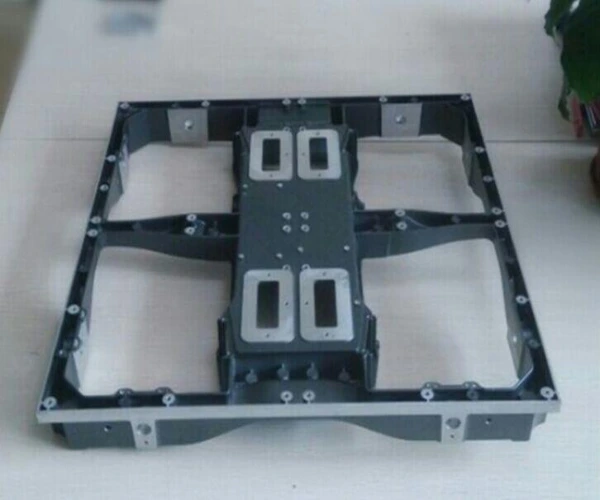
Mould sticking and surface tearing primarily manifest as difficulties in ejecting castings from the mould after forming during high pressure die casting, or as laceration marks left on the surface. This constitutes a critical indicator of imbalance within the mould and process system, directly impacting production efficiency and cost control. In-depth analysis reveals the complex causes of this issue. Only through the precise optimisation of every stage of the high pressure die casting process and calibration to industrial-grade standards can the risk be fundamentally eliminated, thereby re-establishing a stable and efficient production system.
Mechanism and Effects of Mold Adhesion and Scratching in High Pressure Die Casting
Sticking and scoring are not mere surface imperfections, but clear indicators of an imbalance in the interaction between the high pressure die casting mould and the casting. When the formed casting separates from the mould, microscopic welding or mechanical interlocking between the metal and the mould surface can cause the surface material of the high pressure die casting part to be torn or scraped, resulting in the characteristic sticking and scoring defects.
These high pressure die casting defects directly incur threefold consequences: Firstly, damaged casting surfaces necessitate additional manual grinding or polishing, increasing post-processing costs; Secondly, irreparable high-pressure die casting scratches directly result in product scrap, reducing yield rates; Finally, persistent sticking progressively degrades the mould surface finish, diminishes the high-pressure die casting mould's service life, and creates latent risks for subsequent sticking incidents.
Analysis of Fundamental Causes of Mold Adhesion and Scratching in High Pressure Die Casting
When high pressure die casting defects such as sticking and scoring occur, the root causes typically lie in two critical areas: mould condition and material compatibility.
Insufficient surface polishing quality on high pressure die casting moulds (Ra values exceeding 0.4μm) significantly increases ejection resistance, while inadequate draft angles effectively mechanically lock the casting within the mould. Another issue is coating failure on the mould. When the high-pressure die casting mould substrate is directly exposed to molten aluminium at high temperatures, it readily leads to minute welded adhesion.
Conversely, material selection for high pressure die casting is equally critical. Active elements in certain aluminium alloy formulations (such as iron and silicon) exhibit greater affinity with mould steel (typically H13) at elevated temperatures, heightening the risk of interfacial reactions.
Methods for Controlling Mold Adhesion and Scratching in High Pressure Die Casting
How can mould sticking and surface scratching in high-pressure die casting be effectively resolved? Supro MFG's solution employs a systematic approach integrating mould design, surface engineering, and process control to establish a reliable demoulding protection system.
Firstly, elevating the polishing grade of high-pressure die casting cavities to Ra<0.1μm and ensuring adequate draft angles (typically no less than 1.5°) forms the foundation for eliminating mechanical interlocking. Concurrently, applying advanced physical vapour deposition coatings such as CrN or AlCrN introduces micron-level protective layers. These not only deliver exceptional isolation but also ensure smooth part ejection through their extremely low coefficients of friction.
Another approach to circumventing high pressure die casting defects involves selecting release agent formulations matched to alloy characteristics (e.g., DC340 release agent for aluminium alloys) and employing optimised spraying parameters to ensure uniform protective film formation on cavity surfaces. Precise control of spraying trajectories and timing within the die casting mould guarantees coverage while preventing porosity defects caused by excessive application.
These three measures constitute a comprehensive high-pressure die casting protection system. Only through this multi-layered, systematic engineering approach can mould sticking issues be fundamentally resolved, enabling efficient, stable, and high-quality production.
Conclusion
These five high-pressure die casting defects—gas porosity, shrinkage, cold shuts, cracks, and sticking—constitute the primary challenges to product quality.
Gas porosity in high pressure die casting arises from inadequate venting systems and turbulent air entrapment. Shrinkage is caused by insufficient feed and uneven cooling. Cold shuts and short shots are closely linked to the temperature of the high pressure die casting mould, the gating system, and the injection speed. Cracks are predominantly triggered by material properties and stress concentration within the mould. Mould sticking issues, meanwhile, involve the surface condition of the die casting mould and material compatibility.
Only by constructing a systematic high pressure die casting engineering solution from multiple dimensions—including mould design, process parameters, and materials science—can defects be effectively avoided, ensuring stable product quality.
Supro MFG translates these systematic high pressure die casting solutions into executable precision processes. Every die-cast component delivered to our clients adheres to a comprehensive quality engineering framework (ISO 9001:2015 and IATF 16949), with stringent tolerance control. This rigorous commitment to quality enables us to provide global clients with high pressure die casting solutions that deliver both structural integrity and reliable performance.
Contact Supro today for professional, one-stop high pressure die casting services. Let us help you plan the most efficient manufacturing pathway.
For production die casting, review our die casting services.
 English
 Français
 Deutsch
 Italiano
 日本語
日本語 한국어
한국어 Polski
 Português de Angola
 Русский
 Español de Argentina