
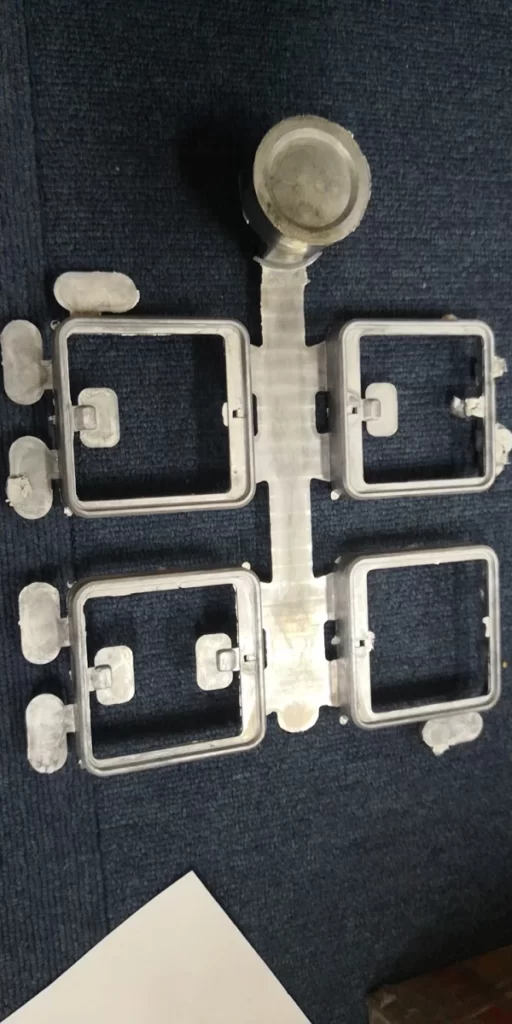
Die cast tooling cost represents the largest one-time expense in any die-casting project budget. Most buyers receive quotes that list only a vague total price without a detailed breakdown. This “black-box quote” prevents engineers and product managers from understanding why seemingly similar molds can carry price tags that differ by a factor of two—or where the extra money is actually going. What is even more problematic is that low-cost molds often reveal issues such as short service life, low yield rates, and frequent maintenance during mass production, ultimately driving up the per-unit cost of die cast tooling over the production run. This is precisely the root cause of “budget overruns and eroded profits” in many die-casting projects.
The total die cast mold cost is composed of six major components: materials, design, machining, heat treatment, management, taxes, and trial molding and transportation—each with its own typical proportion that varies by project complexity. By comparing the initial purchase price with the amortized cost per unit, you can assess the full lifecycle value of the mold investment and avoid the pitfall of focusing solely on the “total price.” Mastering the underlying logic of die-cast mold costs allows you to effectively evade quotation traps, optimize full-lifecycle expenditures, and build long-term supplier partnerships grounded in transparency and trust.
This article breaks down die casting mold costs item by item in a transparent and professional manner. Whether you are evaluating a new project budget or have concerns about an existing quote, this article will serve as your “cost breakdown checklist.” You will gain a clear understanding of where every component of the die cast tooling expense actually goes, enabling you to make rational supplier selections and investment decisions.
6 Die Casting Tooling Cost Components
Total die cast tooling cost = Materials + Design + Machining + Heat Treatment + Administration + Trial Molding. The following sections will analyze each component individually and provide a range of its percentage share, giving you a clearer understanding of the cost breakdown.
Die Casting Mold Material Costs
Materials are the foundation of mold manufacturing, and material costs typically account for 15%–35% of the total die-casting tooling cost. For example, in a typical medium-sized aluminum alloy die-casting mold, material costs account for approximately 35% of the total mold cost.
The cost of steel for the mold base and cores constitutes the main portion of die casting mold material costs. The cost of a standard mold base is controllable and predictable, while the material used for the cores determines the mold’s service life. High-quality H13 steel can withstand approximately 50,000 die-casting cycles, whereas standard No. 45 steel can only withstand about 5,000 cycles; the material cost difference between the two is 16-fold.
To optimize the cost of die cast tooling, H13 steel can be selected for high-volume production to reduce the amortized cost per unit. For small-batch prototypes, 45 steel can be used. Material selection should always be aligned with the company’s production scale and quality requirements.
Design, Engineering, and Mold Flow Analysis
Mold structure design, engineering development, and fluid analysis typically account for 10%–15% of the total die cast tooling cost, and this proportion is even more pronounced in high-end precision aluminum molds. The specific workflow includes the following key steps:
- CAD design determines the mold parting line, cooling channels, and ejection system—a time-consuming task that requires the involvement of experienced engineers.
- CAE die casting fluid analysis simulates the metal filling and solidification processes to predict defects such as porosity or cold shuts, thereby reducing trial mold failures.
- CAM programming converts 3D models into CNC machining paths.
Although these steps increase the cost of die cast tooling, they help avoid costly rework and schedule delays. To control die cast tooling costs without compromising quality, reduce long-term risks, and improve first-article success rates, it is essential to invest in comprehensive CAE analysis and validated die cast tooling design early in the process.
Machining and Assembly
Machining and assembly account for 30%–50% of the total die cast tooling cost; for example, this figure is typically around 37.5% for standard aluminum die casting molds.
CNC rough machining is used to remove excess material from die steel blanks. High-end imported machine tools can achieve a precision of ±0.005 millimeters, but the capital investment and machining costs significantly drive up die-cast tooling costs, as these machines cost 2–3 times as much as domestic equipment. Electrical Discharge Machining (EDM) is used to machine deep grooves and complex contours that cannot be reached by cutting tools; this is a time-consuming and expensive process. Subsequently, CNC finishing and manual trial assembly are used to polish the cavities, assemble the sliders, and adjust the parting line to ensure the mold operates smoothly.
To control die-cast mold costs without compromising quality, priority should be given to high-precision machining of critical features, and EDM should be used only when necessary. Adopting a balanced machine tool strategy can reduce the overall cost of the mold.
Heat Treatment and Surface Hardening
Heat treatment and surface hardening account for 5%–10% of the total die casting tooling cost.
Raw tool steel is supplied in a soft condition and must undergo vacuum quenching and tempering to achieve a hardness of HRC 48–52, thereby ensuring it can withstand high pressure and thermal cycling. H13 core steel requires multiple tempering cycles to improve toughness. Nitriding or PVD coating not only further enhances the mold’s resistance to thermal fatigue but also effectively controls die cast tooling costs. For example, PVD coatings can extend mold life from 60,000 to 150,000 shots, thereby reducing mold change costs by 60%.
To optimize die-cast mold costs from a long-term perspective, it is advisable to invest in appropriate heat treatment and surface coatings. Although this increases the initial cost of die-cast tooling, it lowers the amortized cost per unit and reduces unplanned downtime.
Administrative Expenses, Profit, and Taxes
Administrative expenses, profits, and taxes typically account for 26%–37% of the total die cast tooling cost. These include facility costs, quality control, mold wear and tear, research and development, labor, and value-added tax (VAT). To ensure that these costs are reasonable, please select a die cast tooling supplier that provides a clear breakdown of these items and complies with tax regulations.
Trial Molding, Packaging, and Shipping Costs
Tooling, packaging, and shipping costs typically account for 3%–6% of the total die cast tooling cost. Tooling costs include press operating hours, alloy materials, and labor costs—for large molds, these costs usually do not exceed 3%, while for precision molds, they may reach as high as 5%. Large molds are protected during shipping using sturdy wooden crates, which incurs packaging and shipping costs. To avoid unexpected expenses, clearly list the included cost items during the procurement process and set a cost cap for trial mold modifications.
The Full Lifecycle Value of Die Casting Tooling Costs
When evaluating the cost of die casting molds, one cannot simply focus on the “lump-sum price” at the time of purchase. Total life-cycle value is the key factor in determining a project’s profitability. In the following section, we will use a real-world example to compare the initial purchase price with the amortized cost per unit, and explain why high-performance materials and thermal management designs—despite requiring a higher upfront investment—can yield greater cost savings during mass production.
Initial Purchase Price vs. Amortized Cost per Unit
Many die casting mold buyers focus only on the initial price, while overlooking the amortized die casting tooling cost per unit.
For example, assuming a total production run of 60,000 parts, let’s compare a 30,000-shot injection mold costing $12,500 with a 60,000-shot injection mold costing $15,300. Since two sets of the lower-cost 30,000-shot die casting molds are required to produce 60,000 parts, the unit cost per part reaches $0.42, whereas the higher-quality 60,000-shot die casting mold costs only $0.255 per part—a cost reduction of nearly 38%.
To truly optimize die-cast mold costs, one should evaluate the full lifecycle costs rather than focusing solely on the initial quote. In practice, align the mold investment with annual production volume. For high-volume production, although the cost of die cast tooling is higher, the investment can be recouped quickly by lowering the amortized cost per part and reducing the number of mold changes.
High-Performance Materials and Thermal Management Design Lead to Greater Cost Savings
Although high-performance die steel and upfront thermal management design may increase the initial die-casting tooling costs, they can effectively reduce equipment downtime and lower product defect rates throughout the production cycle. For example, using high-quality H13 dies with optimized cooling channels can significantly extend the service life of the dies while improving yield rates for both initial prototyping and mass production.
Proactively investing in such process and material configurations can reduce overall operating costs in the long term. For instance, die-casting molds featuring PVD coatings and conformal cooling structures may incur initial costs 15–20% higher, but in high-volume mass production scenarios, they can reduce the amortized cost per unit by more than 30%. When evaluating the cost of die-cast tooling, it is essential to consider the full life cycle—not just the purchase price—to achieve genuine cost savings and efficiency gains.
4 Methods for Reducing Die Casting Tooling Costs: From Design to Procurement
Reducing die casting tooling costs isn’t just a matter of “pressuring suppliers to lower prices.” Optimizing mold design, selecting materials scientifically, increasing the number of cavities appropriately, and signing long-term procurement agreements—these four approaches can reduce tooling costs without compromising quality.
Path 1: Design & Structure Optimization
Optimizing die structure design is an excellent way to reduce die cast tooling costs and improve return on investment without compromising quality. For example, reducing the number of parting lines from three to two can shorten the machining cycle by 20% and lower manufacturing costs by 12%.
Applying DFM principles early in the die-casting mold design process can eliminate unnecessary sliders, undercuts, and overly tight tolerances. This results in lower die-casting tooling costs, shorter lead times, and reduced rework.
Path 2: Right-Sizing Material Selection
Matching the alloy grade to the part’s function can reduce die cast tooling costs without over-specifying the material. For standard structural parts, ADC12 offers better flow properties and higher yield rates than A380, and is also less expensive. However, it is important to avoid becoming “over-reliant” on high-grade alloys, as this may drive up material costs, lengthen procurement lead times, and increase the complexity of mold machining due to over-engineering.
Path 3: Increasing Cavity Count (Multi-Cavity Molds)
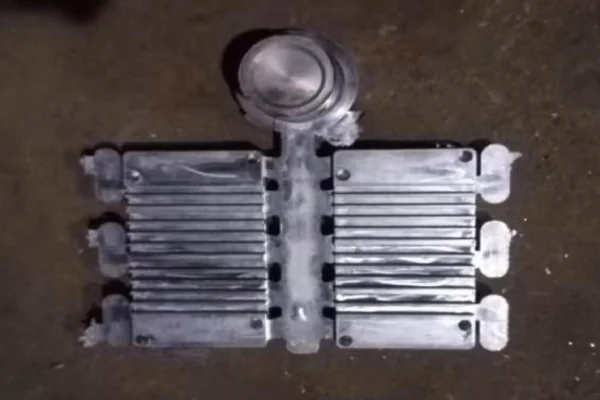
Multi-cavity molds allow the investment in mold development to be spread across more products per molding cycle, effectively reducing the die cast tooling cost per unit. For example, increasing the number of mold cavities from 2 to 6 can reduce the cost per unit by up to 60%. For high-volume die-casting production with mature processes and stable orders, prioritizing multi-cavity mold designs is more cost-effective. Although the initial cost of a 6-cavity mold is higher, the additional investment can be quickly recouped during long-term mass production thanks to shorter molding cycles and lower energy consumption per unit, resulting in a clear overall cost-effectiveness advantage.
Path 4: Long-Term Frame Agreements
Stable customers with monthly demand of 50,000 units or more can reduce die cast tooling costs by signing an annual framework agreement. For such contracts, Supro MFG typically offers discounts of 20%–30% on tooling costs and unit prices, providing more competitive pricing in exchange for a commitment to a predictable annual production volume. Long-term agreements also ensure stable supply and grant priority in the factory’s production schedule.
Contact Supro-Mfg
Die-cast tooling costs consist of six major components; only through a transparent breakdown can you avoid pricing pitfalls. From a full lifecycle perspective, high-performance materials and prudent material selection can significantly reduce the amortized cost per unit. By following four approaches—design optimization, scientific material selection, multi-cavity molds, and annual framework agreements—you can systematically reduce costs without compromising quality.
Contact Supro MFG today for a free mold cost assessment and transparent quote, and let our team of experts tailor a cost-saving solution for your project.
 English
 Čeština
 Français
 Deutsch
 Italiano
 日本語
日本語 한국어
한국어 فارسی
فارسی Polski
 Português de Angola
 Русский
 Slovenčina
 Español de Argentina
 Українська