
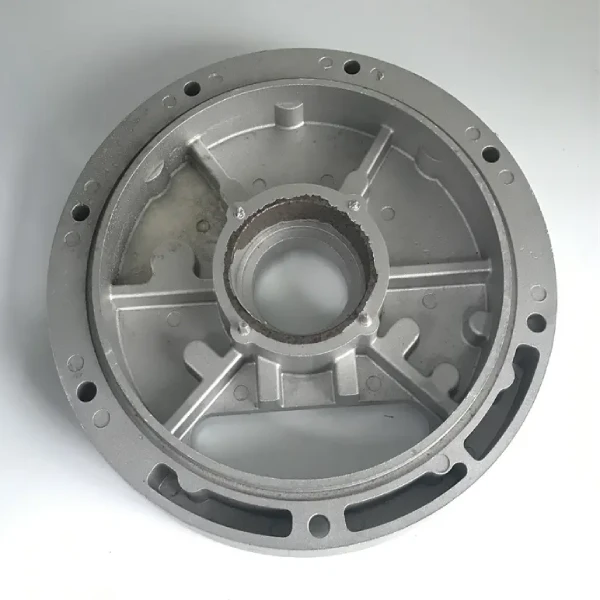
Heat treatment in aluminum investment casting is a critical milestone in the metallurgical process. During this process, raw castings are transformed into high-strength, mission-ready components. For global procurement specialists and quality compliance managers, downstream heat treatment is often the most critical link in supply chain risk.
Many Western buyers have encountered frustrating production bottlenecks: parts delivered by overseas foundries pass basic hardness tests but fail standard destructive tensile verification. This technical guide provides a detailed analysis of how precise heat treatment parameters activate critical hardening stages, control dimensional tolerances, and ensure complete IATF 16949 batch traceability, thereby eliminating the risk of structural failure.
Aluminum Investment Casting Hardening Mechanisms
Heat treatment of aluminum investment castings is a critical milestone in the metallurgical process; during this process, raw castings are transformed into high-strength components ready for mission-critical use. For global procurement specialists and quality compliance managers, downstream heat treatment is often the most critical aspect of supply chain risk. This technical guide details how precise heat treatment parameters can activate key hardening phases, thereby eliminating the risk of structural failure.
Dissolution and Precipitation Dynamics of Magnesium Silicide
The transformation of raw aluminum investment castings into high-strength components through chemical conversion relies entirely on the precise heat treatment of magnesium silicide. In the early stages of the aluminum investment casting process, high-temperature solution treatment forces individual magnesium and silicon atoms to detach from grain boundaries and dissolve completely into the solid solution within the aluminum matrix. Subsequent water quenching locks these elements in place, creating an unstable supersaturated state. During the subsequent artificial aging process, these trapped atoms systematically precipitate, forming a uniform, nano-scale, coherent structure distributed throughout the matrix.
At Supro MFG, we closely monitor these phase transformation processes to meet the stringent A356 T6 heat treatment specifications. In summary, precise dissolution and aging parameters transform the original matrix structure, ensuring that your precision aluminum castings possess optimal load-bearing capacity.
Why Hardness Alone Fails Tensile Compliance Testing
When certifying high-integrity aluminum investment castings, relying solely on surface hardness data can lead to significant blind spots. Although surface hardness increases rapidly when secondary phases trap dislocations locally, overall tensile properties require a balanced elongation to accommodate macroscopic strain. When overseas foundries use uncontrolled artificial aging temperatures or extend the solution treatment cycle, nanoscale precipitates rapidly coarsen into large, disordered phase particles—a defect known as over-aging. This microstructural coarsening results in surface hardness values measured by indentation appearing to meet specifications, while the material’s internal properties fail tensile verification because the coarse matrix can no longer withstand elongational deformation.
Understanding this discrepancy between T6 hardness and tensile strength in cast aluminum helps quality managers identify potential manufacturing issues early on. Supro MFG mitigates this risk by conducting comprehensive destructive tensile tests on representative test bars, rather than relying on quick surface tests. Ultimately, evaluating the complete tensile curve ensures that the precision aluminum investment casting material you select avoids unexpected in-service failures.
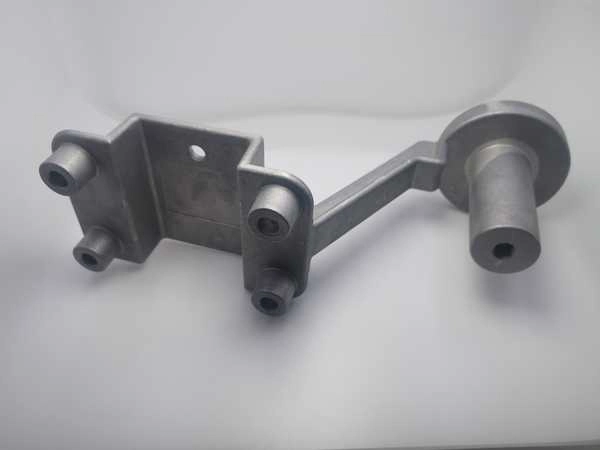
Aluminum Investment Casting Thermal Parameters
Managing the heat treatment window requires strict calibration of equipment to eliminate potential mechanical defects in finished structural components. In the aluminum investment casting process, even slight temperature fluctuations inside the furnace can cause permanent damage to a production batch. This section provides an overview of the precise temperature and time standards required to produce stable, high-performance alloys.
Solution Treatment Time and Temperature Calibration Standards
To achieve the required metallurgical properties, the temperature range for solution treatment must be strictly controlled. For A356 alloy, the standard heat treatment temperature range is typically maintained between 535°C and 540°C; whereas AlSi10Mg alloy requires a slightly lower and more stringent range of 520°C to 530°C to control its near-eutectic silicon structure. Even exceeding these temperature limits by just one degree can trigger localized eutectic melting at grain boundaries, permanently compromising precision aluminum investment casting materials and resulting in significant supply chain risks.
At Supro MFG, we routinely perform multi-point furnace temperature monitoring to prevent overheating and ensure consistent quality across all aluminum investment castings. In short, strict temperature control prevents internal structural melting and ensures that your production batches meet stringent mechanical specifications.
Quenching Delay and Artificial Aging Stabilization Controls
The speed of the quenching process directly determines the final mechanical strength of high-performance precision aluminum castings. After solution treatment is complete, the hot casting must be transferred to a water quenching tank within a strict 10- to 15-second time window to successfully lock the dissolved magnesium and silicon atoms into the supersaturated solid solution. If the transfer time is too long, hardening elements will precipitate prematurely along grain boundaries, thereby reducing the final properties of AlSi10Mg T6 and compromising the component’s strength. Following successful quenching, artificial aging must be performed at a constant temperature to systematically precipitate strengthening phases while avoiding over-aging.
To maintain strict process control, Supro MFG employs a PLC-controlled automated transfer arm to ensure that the quenching transfer process is rapid and repeatable. Ultimately, by managing these critical timing parameters, advanced aluminum investment casting companies can provide reliable, high-strength components for demanding industrial applications.
To assist quality managers in verifying these critical processing steps on the production floor, our standard heat treatment specifications are as follows:
Thermal Stage | A356-T6 Control parameters (ASTM B917) | AlSi10Mg-T6 Control parameters (EN 1706) | Critical Quality Gate |
1. Solution Temp | 535℃ - 540℃ | 520℃ - 530℃ | Must be maintained within $\pm ± 3℃\circ\text{C}$. Overheating triggers localized eutectic burning, scrapping the batch. |
2. Solution Time | 4 – 8 Hours | 4 – 6 Hours | Ensures Mg and Si fully dissolve. Thinner walls use the lower limit; heavy parts use the upper limit. |
3. Quench Delay | < 15 Seconds | < 10 Seconds | The vital window between furnace exit and water immersion. Delays cause early precipitation, failing tensile checks. |
4. Quench Medium | Water Temp: 60℃ - 80 ℃ | Water Temp: 60 ℃-70 ℃ | Minimizes residual stress. Warm water prevents micro-warpage and investment casting dimensional stability heat treatment issues. |
5. Artificial Aging | 155 ℃ - 165 ℃ | 160 ℃ - 170 ℃ | Uniformly precipitates nanoscale $Mg_2Si$ hardening structures across the aluminum matrix. |
6. Aging Time | 3 – 6 Hours | 4 – 6 Hours | Must be strictly timed. Under-aging provides insufficient strength, while over-aging destroys material ductility. |
Quality Assurance Milestone
Executing a flawless T6 thermal profile is the only verifiable way to perfectly unlock the maximum ductility and safety advantages of an [aluminum investment casting microstructure ]. Consequently, when finalized structural blueprints demand a balance between engineering budget limits and field performance requirements, design procurement teams should cross-reference their choices with our standard [structural grade selection matrix] to avoid hidden component failures.
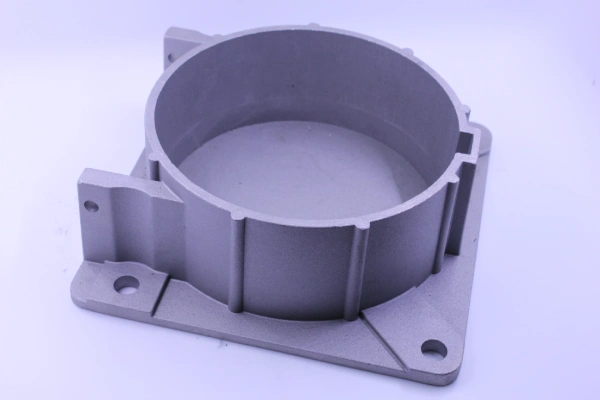
Aluminum Investment Casting Dimensional Stability
Maintaining strict geometric tolerances for the contours of complex components during intense heat treatment processes presents a significant manufacturing challenge. Rapid temperature changes often generate internal stresses, causing deformation in thin-walled structures and affecting critical dimensions. This section will explore how advanced foundries control and correct geometric displacement to maintain tolerances at the microscopic level.
Managing Quenching Stresses and Geometric Warpage Risks
Rapid water quenching during the cooling phase can cause severe temperature gradients, making it difficult to control the geometry of complex aluminum precision castings. When a red-hot casting comes into contact with a water bath, the thin-walled outer layer cools and contracts much faster than the thick inner core. This uneven cooling rate generates high residual thermal stresses within the casting, leading to subtle geometric distortions and warping. Controlling this deformation during the heat treatment cycle of aluminum investment castings requires meticulous planning, as even slight warping can cause misalignment of critical bores.
At Supro MFG, we address these physical challenges by adjusting the agitation intensity of the quenching bath and pre-configuring custom immersion fixtures, thereby minimizing uneven cooling. In summary, managing thermal quenching stresses is critical to maintaining the flatness of complex structural castings and preserving their intended geometry.
Managing Quenching Stresses and Geometric Warpage Risks
Rapid water quenching during the cooling phase can cause severe temperature gradients, making it difficult to control the geometry of complex aluminum precision castings. When a red-hot casting comes into contact with a water bath, the thin-walled outer layer cools and contracts much faster than the thick inner core. This uneven cooling rate generates high residual thermal stresses within the casting, leading to subtle geometric distortions and warping. Controlling this deformation during the heat treatment cycle of aluminum investment castings requires meticulous planning, as even slight warping can cause misalignment of critical bores.
At Supro MFG, we address these physical challenges by adjusting the agitation intensity of the quenching bath and pre-configuring custom immersion fixtures, thereby minimizing uneven cooling. In summary, managing thermal quenching stresses is critical to maintaining the flatness of complex structural castings and preserving their intended geometry.
Post-Heat Treatment Tolerance Preservation Profiles
To ensure micrometer-level engineering tolerances, a well-coordinated and comprehensive plan must be developed to directly link post-casting heat treatment with the final CNC machining steps. After the quenching process is complete, experienced aluminum investment casting companies use specialized manual or hydraulic straightening fixtures to correct minor geometric distortions before the alloy is fully hardened through artificial aging. Once aligned, the parts undergo precision low-temperature aging stabilization in custom-matched heavy-duty fixtures, permanently locking the balanced geometry in place. This comprehensive approach ensures dimensional stability in investment casting, and the heat treatment effectively minimizes geometric displacement during subsequent metal-cutting operations.
Supro MFG employs this rigorous straightening and fixture aging process to consistently guarantee critical dimensional accuracy for our global B2B procurement partners. Ultimately, by combining precise heat treatment with targeted mechanical correction, we ensure that your finished aluminum die-cast parts meet strict assembly tolerance requirements, thereby avoiding costly rework.
Aluminum Investment Casting Quality Traceability
Establishing a rigorous quality tracking system enables the transformation of standard metallurgical processes into fully traceable engineering solutions suitable for international procurement. For mission-critical industries, clear evidence of heat treatment process compliance is just as important as the physical components themselves. This section outlines the rigorous validation methods used to ensure complete transparency for every production batch.
Separately Cast Test Bars and Destructive Validation Protocols
To verify the mechanical properties of airtightness, individual cast test specimens processed simultaneously with the main production batch must be evaluated. In the global aluminum investment casting process, these standardized test specimens hold official status and serve as the legal proof of a batch’s mechanical properties. Technicians conduct rigorous destructive tensile tests on these test bars in accordance with the ASTM E8 standard to verify their actual yield strength, tensile strength, and elongation. Relying solely on quick surface inspections carries risks; therefore, verifying the complete tensile curve remains the standard method for demonstrating compliance with mechanical property requirements.
At Supro MFG, we machine and perform tensile tests on standard test specimens from every furnace to ensure absolute reliability. In summary, conducting standardized destructive testing on representative test bars enables advanced aluminum investment casting companies to verify structural integrity prior to shipment.
Maintaining IATF 16949 Auditable Thermal Processing Records
To successfully enter the automotive and aerospace supply chains, it is essential to maintain comprehensive and transparent production records. When global procurement managers seek suppliers of aluminum castings that comply with the IATF 16949 standard, they require tamper-proof documentation covering all melting, quenching, and aging cycles. Modern foundries meet these stringent requirements by integrating digital multi-channel temperature loggers and strict lot tracking codes, which trace each component back to its original melt log. This in-depth tracking method ensures that the exact historical furnace temperature parameters for any individual part can be audited even years after delivery.
Supro MFG implements this digital traceability solution by recording all heating curves within a paperless documentation network, ensuring readiness for audits at any time. Ultimately, by maintaining auditable production records, global buyers can procure high-quality aluminum investment castings without any concern about liability for hidden defects.
Contact Supro-Mfg
Mastering the heat treatment process for aluminum investment casting helps ensure the safety of the aluminum parts supply chain. Relying solely on hardness data may mask issues related to excessive microstructural aging; therefore, to eliminate the risk of structural failure, it is absolutely non-negotiable to strictly adhere to the IATF 16949 standard and control the solution treatment temperature, rapid quenching delay time, and validation of standardized test specimens.
Contact the Supro MFG engineering team today to request certified test bar reports and ensure your next project meets mechanical performance requirements.
 English
 Français
 Deutsch
 Italiano
 日本語
日本語 한국어
한국어 Polski
 Português de Angola
 Русский
 Español de Argentina