
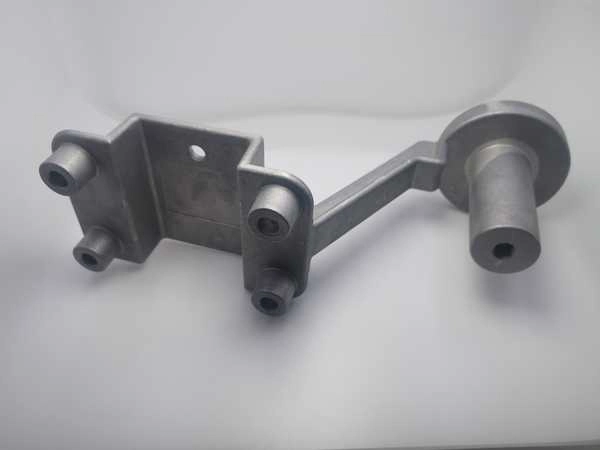
A356 aluminum investment casting is a key technological approach for producing high-performance, lightweight aerospace structural components. Through a precision investment casting process, this method transforms the excellent strength-to-toughness balance and corrosion resistance of A356 aluminum alloy into high-integrity castings with complex geometries, precise dimensions, and reliable internal quality.
Its successful application relies not only on an in-depth understanding of the metallurgical properties of A356 material but also on a systematic engineering approach tailored to the aerospace industry. This includes utilizing investment casting to achieve thin-walled (as thin as 1.5 mm) and monolithic structures, ensuring performance consistency through end-to-end process control, and strictly adhering to industry standards to address core challenges such as zero-defect requirements and supply chain risks.
This article will analyze A356 aluminum investment casting from three perspectives: the quantitative characteristics of A356 as the core material, including its chemical composition, mechanical properties after processing, and environmental adaptability; the specific process parameters and control points required to realize its performance potential through investment casting; and the systematic engineering practices—such as compliance with AMS and other standards, implementation of SPC and NDT inspections, and conducting DFM analysis—to ensure project success.
A356 Aluminum Alloy: The Core Material for Lightweighting in Aerospace
As the most widely used cast aluminum alloy in the aerospace industry, A356 aluminum alloy derives its core value from the unique balance of high strength, good toughness, and excellent corrosion resistance achieved through precise control of chemical composition and heat treatment.
Chemical Composition and Metallurgical Properties of A356
A356 aluminum alloy is one of the most widely used casting aluminum alloys in the field of lightweight design today. Among its elements, silicon is present in the highest concentration; when the silicon content falls within the range of 6.5–7.5%, the alloy exhibits optimal solidification characteristics. Although magnesium is present in lower concentrations, it is essential; when magnesium and silicon are present in the proper ratio, they can significantly enhance the material’s strength.
Iron is often regarded as an impurity in conventional aluminum alloys, but in aerospace-grade A356 alloys, it is key to achieving high toughness and corrosion resistance in A356 aluminum investment casting. Its content is strictly limited to ≤0.20%. Aluminum alloys for casting with low iron content—achieved through the use of high-purity raw materials and strict process control—can consistently achieve an elongation of over 5%, outperforming many alloys in the same series.
A superior combination of mechanical properties: strength, ductility, and fatigue resistance
The mechanical properties of A356-T6 are distinguished by an excellent balance of strength, toughness, and fatigue life. After standard T6 heat treatment (solution treatment + artificial aging), the ultimate tensile strength (UTS) is no less than 240 MPa, the yield strength (YS) is no less than 165 MPa, and the elongation can reach 5% or higher. This means the material retains the necessary capacity for plastic deformation while withstanding high loads, making it an efficient material for meeting the requirements of lightweight aerospace components.
Compared to similar alloys, the A356 aluminum alloy offers clear overall advantages. Compared to the A357 alloy, A356 provides superior manufacturing cost-effectiveness while maintaining comparable strength and excellent fatigue resistance. Compared to high-strength aluminum-copper casting alloys such as C355, A356 offers better casting performance, significantly reduced susceptibility to hot cracking, and superior corrosion resistance. Therefore, for most aluminum investment casting structural component applications, A356 achieves the optimal balance between performance reliability, process adaptability, and overall cost.
Inherent Quality for Demanding Environments
A356 aluminum investment castings are capable of reliably withstanding a variety of harsh environments in aerospace applications:
(1) Excellent corrosion resistance: Strict control of impurity elements such as iron reduces the formation of harmful intermetallic compounds, thereby lowering the susceptibility to electrochemical corrosion. A dense protective aluminum oxide film naturally forms on the material’s surface, enabling A356 aluminum investment castings to exhibit superior long-term corrosion resistance in environments such as those with high humidity or salt spray.
(2) Good weldability and machinability: For components requiring subsequent assembly or repair, A356 can be reliably welded using conventional methods such as TIG and MIG, with good recovery of properties in the heat-affected zone. In terms of machinability, its uniform microstructure and appropriate hardness ensure good cutting performance, controllable tool wear, and the ability to achieve high-precision dimensions and excellent surface finish.
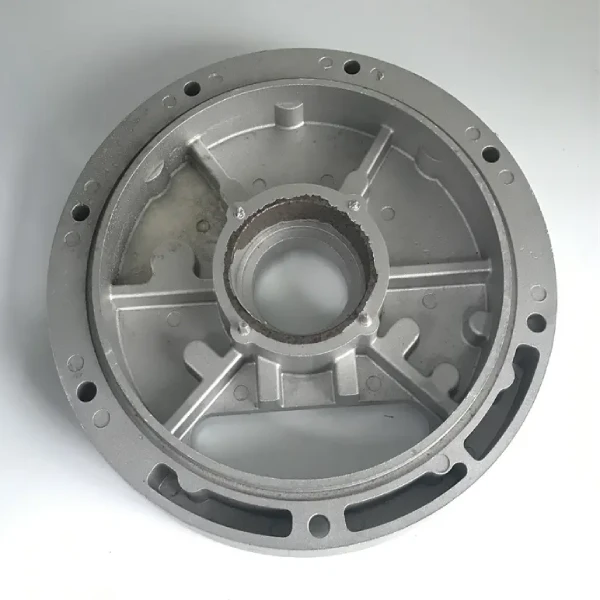
Aluminum Investment Casting: Maximizing the Performance Potential of A356
In the demanding aerospace industry, aluminum investment casting offers unique advantages for maximizing the performance potential of A356. It enables the production of lightweight aluminum alloy castings with complex geometries, excellent metallurgical integrity, and high performance.
How Aluminum Investment Casting Unlocks the Performance Potential of A356
Aluminum investment casting maximizes the performance of A356 aluminum alloy through its unique precision molding capabilities. It enables the production of parts without draft angles and achieves an exceptional surface finish directly, with typical Ra values as low as 3.2 micrometers or less, significantly reducing the need for subsequent machining.
Aluminum investment casting can perfectly form monolithic aluminum castings with complex internal cavities and thin-walled structures (as thin as 1.5 mm)—features that are difficult to achieve with traditional casting methods—directly contributing to the ultimate goal of lightweight design in the aerospace industry. Through precise control of shell preheating and the potential use of vacuum pouring, aluminum precision casting can effectively reduce microporosity, increasing the material’s fatigue life potential by 20% or more—a critical factor for components subjected to high dynamic loads.
End-to-End Process Control for the Aerospace Industry
In the aerospace sector, the core of the A356 aluminum investment casting process lies in implementing standardized controls at every stage—including wax pattern molding, ceramic shell preparation, melting and pouring, and T6 heat treatment. Examples include precise wax pattern dimensional tolerances, controlled shell preheating temperatures (typically above 500°C), and strict temperature-time window management during solution treatment. This level of process control in the A356 investment casting process is the foundation for meeting stringent design specifications.
To ensure that every batch of A356 castings maintains a high degree of consistency in strength, density, and fatigue performance, Statistical Process Control (SPC) is implemented so that even the slightest fluctuations in production can be promptly identified and corrected. This traceable and repeatable production capability is a prerequisite for becoming a qualified aluminum investment casting supplier.
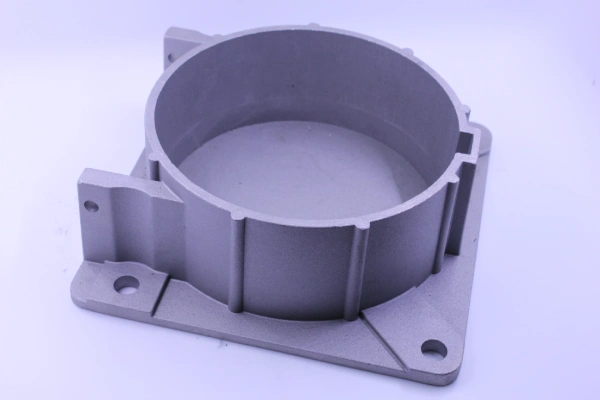
A356 Aluminum Investment Casting: Meeting the Challenges of Aerospace Manufacturing
To successfully apply A356 aluminum investment casting technology in the aerospace sector, it is essential to systematically address the unique challenges posed by its high standards and complexity. This involves three key aspects: ensuring that the entire process complies with stringent industry standards; achieving a near-zero-defect quality target through advanced methods; and managing project risks ranging from design collaboration to stable supply.
Strict Industry Regulations and Standards
In aerospace manufacturing, materials and processes must strictly comply with authoritative industry standards such as AMS and MIL. Taking A356 aluminum alloy investment castings as an example, the material properties must meet specific standards such as AMS 4281, which clearly specifies chemical composition, mechanical properties, and heat treatment requirements.
Furthermore, establishing a comprehensive traceability system is a mandatory requirement. This means that every A356 aluminum investment casting must have a complete production history that can be traced, including the alloy batch number used, specific melting parameters, heat treatment batch records, and all relevant inspection reports. A complete data chain spanning the entire process—from raw materials to finished products—ensures consistent quality of A356 investment castings, enables efficient problem analysis, and meets airworthiness audit requirements.
Zero-Defect and Ultimate Reliability Requirements
In the aerospace industry, the high reliability of aluminum investment castings can be ensured through a systematic engineering approach, the core of which lies in combining verification and prevention:
(1) NDT serves as a multi-tiered verification method. Fluorine Penetrant Inspection (FPI) can detect microscopic cracks or discontinuities on the surface of all A356 aluminum investment castings. For components subjected to critical loads, Radiographic Testing (RT) can assess the presence of porosity or inclusions. For precision components with complex internal passages, Industrial Computed Tomography (CT) provides a complete three-dimensional image of the internal structure, enabling comprehensive, non-destructive analysis of dimensions and defects.
(2) Prevention is at the core of quality management. Statistical Process Control (SPC) is a widely adopted tool. Through continuous monitoring and statistical analysis of key process parameters—such as melting temperature, mold shell preheating temperature, and solution treatment time and temperature—the aluminum investment casting production process is consistently maintained at optimal conditions.
Collaboration and Supply Chain Risks in Complex Engineering Projects
To address the complexity of aerospace projects, DFM analysis is incorporated as early as the conceptual design phase to optimize wall thickness transitions, reduce stress concentrations, and select the most suitable gating system for A356 aluminum investment casting. This early-stage collaboration significantly reduces the cost of later changes and fundamentally enhances the manufacturability and reliability of the product.
Building a resilient supply chain is a standard industry practice for mitigating risk. This includes establishing a qualified, multi-source supply network for critical raw materials (such as high-purity aluminum ingots), implementing strict supplier quality management, and adopting lean manufacturing methods in-house to ensure stable production capacity. Through the close integration of material requirements planning and production scheduling, the manufacturing system can respond more effectively to demand fluctuations, ensuring on-time delivery of aerospace casting projects.
Supro MFG is your trusted partner for aluminum alloy investment casting projects
Selecting the right partner is critical to the success of an A356 investment casting project. As a professional aluminum investment casting foundry, Supro MFG offers proven technical expertise and a rigorous project management system to ensure that your design is transformed from blueprints into reliable, high-quality castings.
A Reliable Aluminum Alloy Investment Casting Foundry
Supro MFG engineers specialize in DFM analysis. By evaluating part geometries and optimizing wall thickness transitions and gating systems, they identify the optimal solution early on, significantly improving the success rate of aluminum investment casting and controlling overall costs. Additionally, Supro MFG offers rapid prototyping services, using short-run tooling or 3D printing technology to produce functional prototypes, enabling you to accelerate the validation of design, assembly, and functionality, and effectively shorten the product development cycle.
End-to-End Project Management
Supro MFG implements an end-to-end project management system and is committed to maintaining transparent communication with clients, providing regular progress updates and data sharing to ensure you are always kept informed of the project’s status. Based on flexible production capacity and precise scheduling, we develop and strictly adhere to reliable delivery schedules to meet your stringent project milestone requirements and ensure the stability and predictability of the supply chain.
Looking for a reliable China metal foundry?
- We can help you optimize product design and save costs.
- We can help you with high quality high volume cast parts.
- We can deliver on time and get more sales market opportunities.
- You will benefit from Supro MFG metal casting service.
Conclusion
A356 aluminum investment casting is a systematic engineering process that transforms materials science into reliable aerospace components. Through rigorous control of chemical composition, the T6 heat treatment process, and the precision investment casting process, this technology enables the consistent production of complex, lightweight components with excellent strength, toughness, and corrosion resistance.
Achieving this goal requires manufacturers to possess comprehensive capabilities spanning material certification, SPC process control, advanced NDT testing, and supply chain management. Selecting a partner like Supro MFG, which is certified as a specialized aluminum investment casting foundry, is key to ensuring that projects comply with AMS specifications and are successfully delivered.
Please feel free to contact us to discuss your project requirements; we will provide you with more competitive integrated manufacturing solutions.