
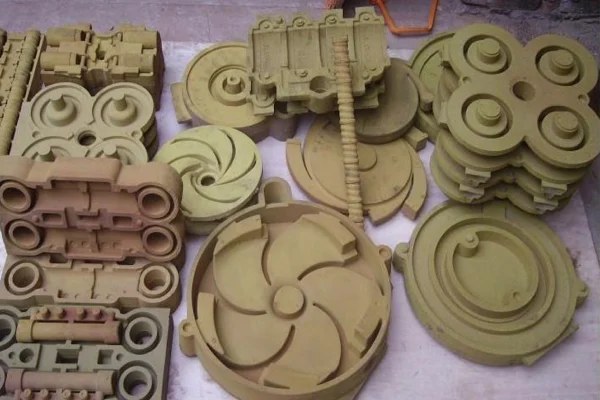
Investment casting molds are central to the manufacturing of complex, precision metal parts. For customers seeking high-quality, repeatable production and cost control, the key to success lies not only in the molds themselves, but also in the systematically validated design and manufacturing processes behind them. To achieve this goal, it is necessary to systematically establish the three pillars of investment casting mold engineering: systematic steps combining precise calculations with engineering expertise; specialized process control for molds with complex geometries; and the development of efficient processes geared toward large-scale production.
Based on data from industry reports (such as Global Foundry Insights) and best practices, this article provides a step-by-step guide to investment casting mold engineering, criteria for material selection, defect prevention strategies, and practical techniques for improving efficiency. It aims to offer actionable insights that can be directly applied to project development and production optimization.
5 Design Steps for Customized Investment Casting Molds
Designing high-performance investment casting molds is not a matter of guesswork, but rather the result of precise calculations. The following five steps, combining practical experience and shop-floor wisdom, provide a detailed breakdown of the process that not only meets the design requirements for investment casting molds with complex geometries but also ensures the consistent production of high-quality castings.
Carefully Selecting the Material for the Shell
Manufacturing a mold shell is by no means a simple matter of piecing parts together; precise material selection is the first step toward success, as it determines the mold’s ultimate performance and service life. Every material combination affects the flow characteristics of molten metal within the mold. If the materials are selected improperly, the shell may deform, crack, or develop even more serious defects. The following are the key material selections for precision casting mold shells:
(1) For components requiring thermal shock resistance, ceramic shell materials such as zirconia sand should be used.
(2) When surface smoothness is a priority, fused quartz is the optimal choice, particularly for aerospace-grade components.
(3) A stable colloidal silica binder ensures that the slurry does not decompose during the casting process.
Precision Gating Systems Reduce Porosity
The key to reducing porosity in castings lies in flow control. A pouring system optimized through investment casting mold design ensures smooth and stable metal flow. Core design principles include: shortening the feed path to minimize temperature loss during pouring; using tapered gates to prevent back pressure and trapped air bubbles; and arranging gate layouts to avoid turbulence caused by sharp bends.
A well-balanced design effectively reduces the porosity of castings and minimizes defects, while also optimizing investment casting tooling costs. For manufacturers seeking consistent mold quality, this represents a win-win solution.
Properly Position Riser Pipes to Prevent Thermal Cracks
Hot cracks are catastrophic defects in investment casting mold production. When cooling is uncontrolled, they can completely tear apart the casting. Establishing the correct solidification sequence and effective feed channels is key to optimizing the sprue layout of a casting mold. The principles include:
(1) Position the sprue near thick-walled areas where the metal solidifies last.
(2) The sprue size must be matched to the pouring distance to prevent the buildup of shrinkage stress.
(3) Arrange the gates along the thermal gradient to achieve directional cooling.
By optimizing the gate layout, uniform cooling of investment casting parts can be ensured, thereby preventing internal cracks from forming after pouring and before delivery. This significantly improves the mechanical properties and reliability of castings produced using investment casting molds.
Optimizing the Slurry Impregnation and Plastering Processes to Enhance Shell Strength
In the construction of investment casting molds, the impregnation and plastering processes represent the intersection of precision craftsmanship and practical functionality, determining whether a precision casting mold can withstand thermal stress and mechanical pressure without collapsing. A rigorous operational rhythm is key to ensuring the quality of the shell:
(1) Maintain a consistent slurry viscosity to prevent sagging between layers.
(2) Apply the slurry evenly between dipping intervals—no lumps, no weak spots.
(3) Allow each layer to dry completely before applying the next to prevent delamination.
This rigorous operational sequence builds robust, layered ceramic shells that withstand high temperatures during sintering without flaking or cracking, and remain intact when molten metal is poured into the cavities of intricate casting molds. This process results in high-quality, defect-free investment casting parts.
Visual inspection and non-destructive testing to ensure defect-free results
Even if the investment casting molds used to produce castings are meticulously crafted, the castings produced from these molds may still harbor hidden internal defects such as porosity and shrinkage. According to a 2024 report published by Global Foundry Insights, “more than 60% of dimensional failures in precision castings stem from undetected subsurface defects.”
For this reason, a rigorous, multi-tiered inspection process is the ultimate safeguard for ensuring the quality and reliability of investment-cast parts. Supro MFG’s quality assurance system includes:
(1) Dye penetrant testing to detect surface cracks invisible to the naked eye.
(2) X-ray non-destructive testing (NDT) scans to detect internal voids or inclusions at an early stage.
(3) Visual inspection under a magnifying glass to identify microscopic defects.
The combined application of these precision inspection tools forms a reliable quality firewall, ensuring that every part produced through our investment casting process is meticulously crafted and dependable. From aerospace brackets to industrial impellers, every product we deliver has undergone rigorous testing and is trustworthy.
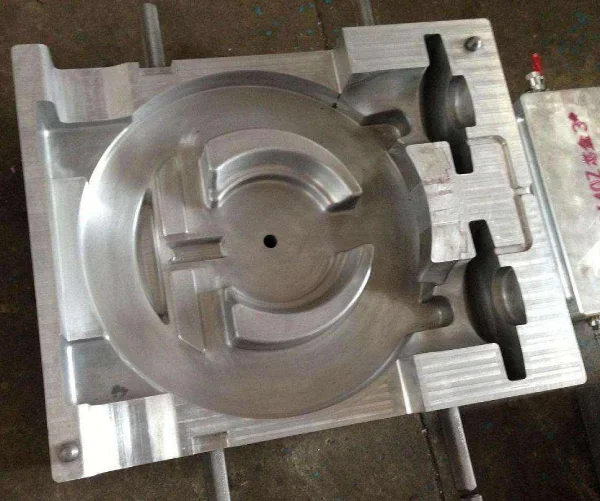
Manufacturing of Investment Casting Molds with Complex Shapes
When the geometric complexity of castings pushes the limits of traditional manufacturing, the key to success lies in combining forward-thinking investment casting mold design, top-tier mold materials, and precise environmental control. Only then can even the most structurally complex molds reliably produce conforming parts.
Wax Pattern Assembly: Mastering the Details in Complex Castings
During the preparation of an investment casting mold, the quality of the wax pattern determines the accuracy of the subsequent precision casting mold cavity and the quality of the final casting. Professional wax pattern preparation must follow these key principles:
(1) Use precision-cut molds to shape the wax pattern, minimizing deformation as much as possible.
(2) Assemble components while the wax pattern is still malleable to ensure a tight fit.
(3) Apply ceramic slurry immediately after assembly to lock in the geometry.
The assembly feasibility of the wax pattern must be thoroughly considered during the investment casting mold design phase. Even minor misalignments can lead to significant defects during metal pouring. Therefore, Supro MFG’s experienced team uses a temperature-controlled chamber when bonding the patterns. This ensures that the shrinkage rate of the wax is controlled and that surfaces remain clear and sharp, meeting stringent mold tolerance requirements.
The Exceptional High-Precision Surface Finishing Capabilities of Fused Silica
To achieve a butter-smooth finish on investment casting parts, fused silica is an excellent choice among the many investment casting mold materials available. It has an ultra-low coefficient of thermal expansion and reacts minimally with molten alloys. It maintains dimensional stability even at high temperatures and helps reduce microcracks that can cause surface roughness in the final product. Most importantly, fused silica slurry offers excellent reproducibility, helping to faithfully reproduce the fine details of the wax pattern when creating investment casting molds, thereby transferring perfect surface textures and geometric features to the final metal investment casting parts.
According to a 2024 report published by Global Materials Insight, in the field of aerospace-grade turbine blades, fused silica-based coatings improve surface finish ratings by 35% compared to alumina-based alternatives. This is why industries with tight tolerances hold it in such high regard, and why Supro MFG incorporates it into every high-end investment casting mold it produces.
Optimizing the Gating System to Eliminate Cold Shuts
In the production of investment casting molds, cold shuts are surface defects severe enough to compromise the integrity of the entire part. They manifest as linear marks formed when the leading edge of the molten metal flow fails to fuse completely. Optimizing the gating system in investment casting mold design is key to preventing cold shuts. Specific strategies include:
(1) Balancing the flow paths to ensure that molten metal reaches all cavities simultaneously.
(2) Avoid sharp turns or sudden expansions—these cause the metal to cool too quickly.
(3) Use simulation tools such as MAGMASOFT® to simulate gate behavior prior to pouring.
An excellent runner design not only prevents defects and reduces investment casting tooling costs associated with repair welding or scrap but also improves yield and reduces post-casting grinding operations. The key lies in properly guiding the metal flow through the entire investment casting mold while preventing premature cooling.
Implement Environmental Controls to Prevent Warping
Environmental stability is the invisible force that ensures the precision of investment casting mold preparation. A sudden rise in humidity or poor air circulation can cause irreversible deformation of delicate wax patterns or ceramic molds that are drying, compromising the dimensional accuracy of the investment casting mold even before it enters the furnace. In such cases, environmental control measures are crucial:
Step 1: Maintain the drying chamber temperature at 20–24°C using a temperature control system.
Step 2: Use a desiccant dehumidifier to control relative humidity between 45% and 55%.
Step 3: Periodically rotate the investment casting molds on the racks to ensure all surfaces are heated and dried evenly.
Step 4: Monitor stress points using an infrared thermal imager—early warning can prevent subsequent shell cracking.
By strictly controlling these environmental and process factors, you can not only avoid costly rework but also ensure that the final investment casting parts fully meet specification requirements. Even when faced with complex, thin-walled shapes that push the limits of the mold, you can achieve stable and reliable production.
Looking for a reliable China metal foundry?
- We can help you optimize product design and save costs.
- We can help you with high quality high volume cast parts.
- We can deliver on time and get more sales market opportunities.
- You will benefit from Supro MFG metal casting service.
High-Volume Casting: Efficient Custom Investment Casting Mold Solutions
Achieving both increased output and improved quality in precision castings begins with intelligently upgrading the efficiency of every investment casting mold cycle. By combining automation, precise temperature control, and real-time data monitoring, you can build a highly reliable and repeatable production system. The following methods can help you optimize your molds and achieve significant increases in output.
Automated Warehouse Retrieval: Improving Investment Casting Production Efficiency
In modern investment casting mold production facilities, automated warehousing and intelligent retrieval systems can significantly improve overall production efficiency and the accuracy of material flow. The key advantages and implementation strategies are as follows:
(1) Faster material flow between workstations
(2) Reduced downtime caused by manual material retrieval
Achieve consistency in inventory management through real-time tracking:
(1) Identify high-frequency storage areas
(2) Automate the storage of molds and raw materials
(3) Utilizing sensors to monitor inventory levels and trigger restocking
Seamless transitions between production stages mean fewer bottlenecks; automated systems never stop working or misplace pallets.
By integrating an automated warehousing system, you not only save significant time and labor costs but also usher your casting shop into a new era of smart, lean manufacturing. This ensures efficient coordination throughout the entire process—from investment casting mold design to the production of final parts—enabling molds to operate continuously, efficiently, and without interruption.
Integrated Shell Firing Furnace to Speed Up Turnaround Time
In the complete preparation process for investment casting molds, shell firing serves as the critical link between shell fabrication and metal pouring. Integrating an advanced, controllable firing furnace system is essential for accelerating overall production turnaround and ensuring mold quality. Key optimization strategies include:
(1) Preheating the mold using zone-specific heat treatment to prevent cracking
(2) Synchronizing the curing cycle with the upstream slurry coating process
(3) Calibrating the firing cycle based on shell thickness and complexity
Seamless furnace integration is not just about temperature—it’s about precisely controlling the timing of the entire heat treatment process to ensure that every investment casting mold is prepared in optimal condition and ready for pouring at any time. When you achieve uniform shell heating through efficient heating elements, the returns are substantial: shorter curing times, fewer reworks, and smoother transitions throughout the entire mold workflow.
Scaling Up Production Using Mold Handling Robots
In the pursuit of large-scale investment casting mold production, the integration of intelligent mold handling robots can break through efficiency bottlenecks and ensure operational consistency. Robotic arms significantly reduce human error during mold transfer. Automated lifts gently handle fragile shells to prevent damage. Intelligent conveyor belts synchronize in real time with production schedules. Through programming, the robots can adaptively adjust their gripping force and movements based on the type of precision casting mold, enabling efficient and precise large-scale handling.
With millimeter-level repeatability and continuous operation capabilities, the robots ensure that every set of precision casting molds is handled consistently and precisely throughout the workflow. By integrating intelligent mold-handling robots, companies can expand production capacity while ensuring that the quality of every investment casting part remains rock-solid.
Ensuring Shell Strength Through Stable Process Control Parameters
“Foundries that maintain parameter consistency during the shell building process can increase their yield by 18% to 23%.” — Global Foundry Insights Report, Q1 2024. This data illustrates the critical importance of stable process control in ensuring the final performance and cost-effectiveness of investment casting molds.
The key to achieving this stability lies in the precise monitoring of the following parameters:
(1) Closely monitor slurry viscosity, as it directly affects coating adhesion
(2) Insufficient drying time can cause cracking, while excessive drying time can clog pipes
(3) Be vigilant against furnace temperature fluctuations
When handling precision components for high-value investment casting molds, even subtle changes in drying conditions or coating thickness can quickly lead to errors and scrap. To reduce scrap rates, maintain product integrity, and control investment casting tooling costs, it is essential to implement strict and traceable control over the above parameters throughout the entire investment casting process. This is not only a demonstration of technical expertise but also a commitment to ensuring final quality.
Contact Supro MFG
In summary, this paper systematically outlines the methodology for constructing high-quality investment casting molds. The key lies in implementing rigorous investment casting mold design and process control—from material selection to precision inspection—to ensure strict adherence to mold tolerances. By integrating automation and intelligent systems, this solution enables the consistent production of high-quality castings while optimizing investment casting tooling costs, thereby meeting a wide range of production needs, from complex parts to high-volume production.
Please feel free to contact Supro MFG to discuss your project requirements; we will provide you with more competitive integrated manufacturing solutions.