
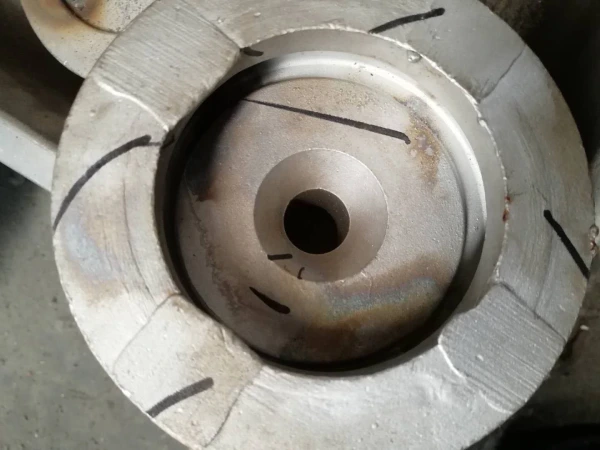
White rust is the most easily overlooked yet most destructive form of corrosion in aluminum alloy castings. The white powder on its surface is by no means ordinary dirt—it is the direct product of an electrochemical reaction that is initially hidden but can gradually lead to pitting corrosion and fatigue failure. This risk is significantly amplified, particularly in humid, high-salinity, or environments with extreme temperature fluctuations, making systematic identification and protective strategies urgently needed.
Understanding the causes of white rust is a prerequisite for effective protection. Moisture retention, dissimilar metal contact, and defects such as porosity and segregation generated during the casting process can all significantly accelerate corrosion in aluminum alloy castings. If left unchecked, corrosion will spread from localized defects to through-wall damage, directly affecting the in-service reliability of aluminum castings.
This paper systematically analyzes the chemical mechanisms, root causes, and engineering hazards of white rust. Focusing on aluminum casting alloys, it proposes a comprehensive protection strategy covering the entire process—from surface treatment and design for manufacturing to logistics and packaging—while also providing graded removal solutions for both mild oxidation and severe corrosion. By combining the control of aluminum alloy casting defects with proactive protective measures, the service life of castings can be significantly extended, thereby reducing maintenance and scrap costs caused by corrosion.
What is White Rust on Aluminum Alloy Castings?
The white rust found on aluminum alloy castings is not iron-based corrosion like that seen on ferrous metals, but rather the visible result of electrochemical corrosion. It appears as a chalky powder or white spots. Although this type of corrosion is easily overlooked, it can gradually erode the casting’s matrix from the surface, affecting its structural stability and service life; therefore, a thorough understanding of its characteristics and environmental factors is necessary to develop effective protective measures.
The Chemistry of Aluminum Alloy Casting Rust
The white rust that appears on the surface of aluminum alloy castings is the result of electrochemical corrosion. It typically manifests as white powder or irregular white spots, and its chemical composition consists primarily of a mixture of aluminum hydroxide (Al(OH)₃) and aluminum oxide (Al₂O₃).
When aluminum is exposed to air, a dense protective film rapidly forms on its surface. This film effectively isolates the internal metal matrix from the external environment, which is the primary reason why aluminum alloy castings are corrosion-resistant. However, this natural protective film is not entirely stable. First, it can easily lead to defects such as porosity and segregation during the casting process. Second, the intermetallic compounds within it form microgalvanic cells with the aluminum matrix. When electrolytes such as moisture are present in the environment, electrochemical corrosion is triggered, accelerating the breakdown of the film and corrosion of the matrix. Particularly in high-humidity environments (relative humidity > 60%) or high-salinity coastal environments, the corrosion process of aluminum casting alloys is further exacerbated, ultimately affecting the structural integrity and service life of the castings.
White Rust vs. Red Rust: What’s the Difference for Engineers?
The difference between white rust on aluminum alloy castings and red rust on steel is that white rust is often mistaken for ordinary surface stains. By the time noticeable white powder appears, pitting corrosion has often already shortened the component’s fatigue life. Red rust, on the other hand, is immediately visible; it is expansive and highly destructive, and once it develops, corrosion continues to progress at an ever-increasing rate.
White rust is hidden and deceptive, whereas red rust reveals the risk of failure early on. Engineers must establish proactive inspection standards as stringent as those for steel to prevent defects in aluminum alloy castings.
The Root Causes of Corrosion Aluminum Alloy Castings Corrosion
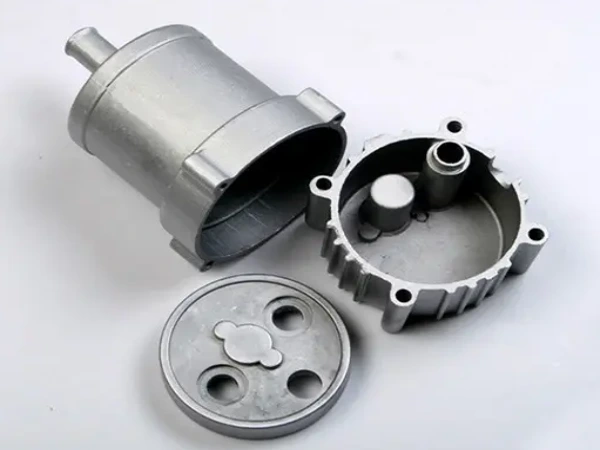
Corrosion in aluminum alloy castings is not caused by a single factor; it is typically the result of the interaction of environmental, metallurgical, and casting defects. The combination of moisture retention, fluctuations in temperature and humidity, galvanic effects, and internal defects in the castings can all induce and accelerate corrosion. Only by understanding each root cause can targeted preventive measures be implemented.
Trapped Moisture and the "Packaging Sweat"
Studies have shown that moisture acts as a catalyst for corrosion in aluminum casting alloys. When castings are sealed in plastic packaging before they are fully dry, temperature fluctuations cause condensation to form on the metal surface. This forms an electrolyte layer that promotes electrochemical reactions.
Condensation trapped inside plastic packaging is the primary cause of spotting on the surfaces of aluminum alloy castings, especially when cleaning agents remain on the surface. Storage environments with relative humidity exceeding 80% can significantly accelerate the onset of corrosion.
In addition, temperature instability is another major factor contributing to corrosion in aluminum alloy castings. Fluctuations exceeding ±2°C trigger repeated condensation cycles, each of which deposits fresh moisture on the alloy’s surface. For manufacturers transporting aluminum castings across different climates, this poses a recurring risk.
Galvanic Corrosion: Dissimilar Metal Contact
Electrochemical corrosion occurs when aluminum alloy castings come into contact with other metals (such as copper, carbon steel, or stainless steel) in the presence of an electrolyte. This effect is particularly exacerbated in marine environments. For example, in naval applications, contact between cast aluminum housings and brass accelerates the corrosion of the aluminum.
The area ratio between dissimilar metals in contact plays a decisive role in the severity of electrochemical corrosion in aluminum alloy castings. When an aluminum alloy acting as an anode comes into contact with a dissimilar metal cathode that has a larger surface area, corrosion of the aluminum matrix at the interface is significantly accelerated. This behavior is similar to that of a battery: the resulting current accelerates the dissolution of the less noble metal.
How Aluminum Alloy Casting Defects Accelerate Decay
Porosity, shrinkage cavities, and double layers in aluminum alloy castings are all root causes of corrosion. These discontinuities trap electrolytes and cause corrosive substances to accumulate, thereby transforming localized defects into corrosion cells with self-propagating properties.
Porosity has the most significant impact on the corrosion resistance of aluminum alloy castings: shrinkage porosity in the 250-micrometer range reduces the effective load-bearing cross-section and creates stress concentration points, with fatigue life decreasing proportionally as pore size increases. The double-layer film entrained during turbulent casting tends to induce various defects, accelerating the corrosion of aluminum casting alloys. Alloy composition further complicates the issue: aluminum-silicon alloys are prone to pitting corrosion, while copper-containing alloys are more susceptible to stress corrosion cracking in chloride environments.
Preventing White Rust: Proven Aluminum Alloy Castings Protection Strategies
Eliminating the hazards of white rust on aluminum alloy castings is not achieved through a single measure, but rather through a systematic protection system that spans the entire casting process: scientifically quantified surface treatment, precision-controlled design at the source of casting, and strictly standardized logistics and packaging controls. All three of these elements are indispensable.
Advanced Surface Treatment and Aluminum Alloy Casting Coating
Corrosion is a core challenge faced in harsh environments such as marine settings. Surface treatment serves as the first critical line of defense against corrosion in aluminum casting alloys, and it directly determines their service life.
The protective effectiveness of different processes varies significantly. For example, traditional anodizing of aluminum alloy castings performs reliably in standard indoor environments: 2024-T3 aluminum alloy castings, after chromic acid anodizing and potassium dichromate sealing, can pass a 750-hour salt spray test. When faced with extreme environmental conditions, Supro MFG’s engineers employ micro-arc oxidation technology to overcome traditional performance limitations, reducing corrosion current density by two orders of magnitude while significantly minimizing casting defects (such as microcracks in the coating).
Supro MFG offers a wide range of customized protection solutions for aluminum alloy castings. The company’s aluminum alloy casting coating systems complement each other perfectly: the anodized coating is dense, uniform, and cost-effective, making it suitable for standard indoor conditions; the micro-arc oxidation coating features high hardness and low porosity, making it particularly well-suited for long-life aluminum alloy casting components in marine environments with high salt fog exposure.
DfM (Design for Manufacturing) to Eliminate Water Traps
DFM can eliminate corrosion triggers from the structure of aluminum alloy castings. Surface coatings can only address external corrosion; if casting defects themselves have created pathways for moisture, no post-processing can completely eliminate the corrosion risk posed by moisture retention. Only by optimizing the casting structure and molding process at the source can the pathways for corrosive media to penetrate be fundamentally blocked, thereby effectively enhancing the castings’ corrosion resistance over the long term.
Improper design of the gating system can easily lead to defects in aluminum alloy castings, such as double-layer oxide films, porosity, and shrinkage voids. These defects can trap corrosive media over the long term, creating potential corrosion hazards. Extensive production experience at Supro MFG has demonstrated that simulating and optimizing the pouring process can significantly reduce oxide entrapment and inclusions; during the melting stage, strict control must be exercised over the moisture content of furnace charge and tools, as well as the refining temperature. Additionally, in the structural design of aluminum alloy castings, avoiding water-trapping grooves and closed blind holes, and adding drainage holes where necessary, can effectively suppress white rust and crevice corrosion caused by water retention.
Logistic Best Practices: VCI Packaging and Climate Control
Combining vapor-phase corrosion inhibitor (VCI) packaging with active environmental control enables aluminum alloy castings to effectively withstand humid environments. During ocean container transport, repeated condensation caused by “container rain”—resulting from daily temperature fluctuations—keeps the surfaces of castings constantly damp. Once relative humidity exceeds 70%, the corrosion rate of aluminum alloys rises significantly, which is particularly detrimental to the transport of metal products. Standard VCI anti-corrosion film can extend the metal protection period to 1–2 years under sealed conditions. It effectively inhibits corrosion of aluminum alloy castings even in extreme environments with relative humidity as high as 95%, providing long-lasting protection.
To maximize protection, logistics packaging should adhere to the following principles:
- Ensure that the surfaces of aluminum alloy castings are completely dry before packaging.
- Use six-sided sealed packaging to prevent moisture penetration.
- If the relative humidity inside the packaging exceeds 70%, additional desiccants must be included to compensate for humidity.
These three measures, together with Design for Manufacturing (DfM) and surface engineering treatments, form a closed-loop protection system covering the entire process from smelting to logistics.
How to Clean Existing White Rust on Aluminum Alloy Castings Safely
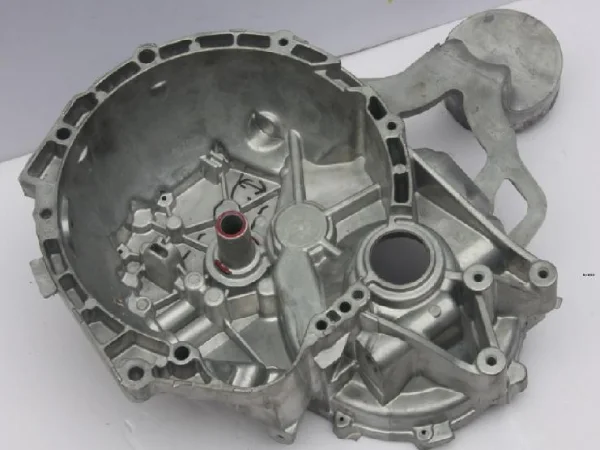
When removing white rust that has formed on aluminum alloy castings, one fundamental principle must be followed: select a treatment method appropriate to the degree of corrosion to avoid secondary damage caused by excessive cleaning. White rust resulting from mild oxidation can be removed using mild chemical or mechanical methods; severe corrosion, however, requires remanufacturing measures such as sandblasting or re-anodizing. Only by accurately assessing the corrosion level can the casting’s operational reliability be restored at the lowest possible cost.
Gentle Chemical and Mechanical Cleaning for Mild Oxidation
Mild white rust is characterized by only scattered white spots or a thin layer on the surface; at this stage, corrosion of the aluminum casting alloy has not yet penetrated the oxide film to reach the base material. In such cases, the corroded area can be cleaned by gently wiping it with a dilute acid solution (such as dilute nitric or phosphoric acid). During the process, the acid concentration and contact time must be strictly controlled. After cleaning, the surface should be thoroughly rinsed with clean water immediately and then passivated.
Another option is to use a near-neutral, environmentally friendly rust remover. BOBRO Cleaning-CA9510 is such a product; its 5% dilute solution has a pH of 9.0–10.0 and is weakly alkaline. Soaking at room temperature for 3–15 minutes is sufficient to remove scale and white rust residues from the surface of aluminum casting alloys, while causing no corrosion or over-etching of the base material. After completion, the parts must be thoroughly rinsed with clean water and dried immediately.
For aluminum alloy castings with mild corrosion where chemical agents are not suitable, white rust can be removed mechanically. Using 800–1200-grit sandpaper, a fine wire brush, or non-woven abrasive cloth, wipe the corroded areas in the same direction with controlled pressure to remove only the white corrosion products without damaging the underlying dense oxide film.
After cleaning aluminum alloy castings to the required standard, passivation treatment should be performed immediately to form a dense protective film on the surface, effectively preventing the recurrence of white rust.
Restoring Severe Corrosion: Refinishing and Re-Passivation
When white rust has penetrated deep into the base material and visible pitting or corrosion depressions appear on the surface, it indicates that the aluminum alloy castings have been severely corroded, and mild chemical or mechanical cleaning is no longer effective. At this point, a remanufacturing solution can extend the service life.
Sandblasting is typically used to treat corrosion in aluminum casting alloys. First, glass beads or aluminum oxide grit are propelled at high pressure to thoroughly remove the corrosion layer from the surface of the aluminum casting. Then, a sealing treatment is applied within a specified timeframe to effectively inhibit further corrosion and provide optimal conditions for the adhesion of subsequent protective coatings.
Another approach involves chemical polishing followed by re-anodizing the aluminum castings. First, acid etching is used to remove the entire corrosion layer and surface defects, restoring the casting to a uniform surface condition. Subsequently, the anodizing process is repeated. Compared to the natural oxide film, the thickness of the anodized film is controllable (typically within the range of 5–25 µm), and its corrosion resistance is more reliable.
Contact Supro-Mfg
White rust on aluminum alloy castings is essentially the result of electrochemical corrosion, caused by factors such as moisture retention, dissimilar metal contact, and casting defects. It can be effectively prevented through surface treatment, Design for Manufacturing (DfM) structural optimization, and VCI packaging. For corrosion that has already occurred, chemical cleaning, mechanical polishing, or sandblasting followed by re-passivation should be applied based on the severity of the corrosion to ensure the long-term reliability of the castings.
 English
 Français
 Deutsch
 Italiano
 日本語
日本語 한국어
한국어 Polski
 Português de Angola
 Русский
 Español de Argentina