
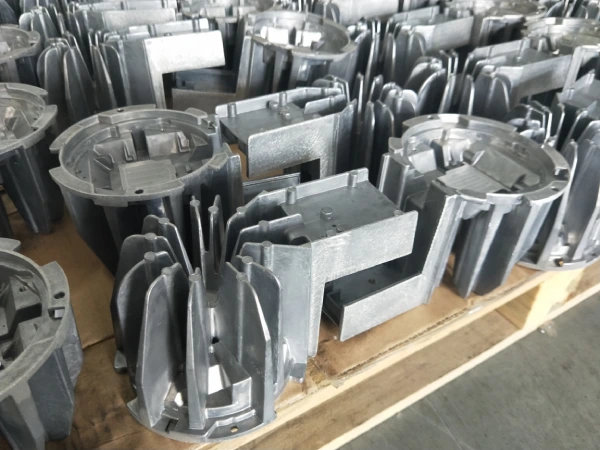
Thermal cracks in aluminum die casting molds are inevitable when cooling channels are poorly designed, cycle times are too short, or injection pressure is too high. These three factors interact, causing thermal stress to intensify and accelerating surface fatigue with each production cycle. Understanding this mechanism is the first step toward effective prevention. For foundries and die-casting shops, premature cracking in die cast aluminum molds can lead to production downtime, higher maintenance costs, inconsistent part quality, and a shortened overall mold service life. Addressing thermal management issues is critical to profitability and production reliability; if not properly controlled, thermal cracking can result in mold scrapping and delayed deliveries to customers.
This article will explore the causes of thermal cracking in aluminum die casting molds, analyze its primary contributing factors, and share five practical cooling solutions to eliminate mold thermal cracking. Mastering these key insights will help optimize mold design, reduce maintenance costs, and ensure stable, profitable, and scalable production of custom die-cast components.
Heat Checking Hits Aluminum Die Casting Molds?
Heat cracking in aluminum die casting molds results from the combined effects of cooling, cycle time, and pressure. An imbalance in cooling channels, shortened cycle times, and excessive injection pressure—when combined—further amplify thermal stress, causing the mold surface to gradually crack under repeated thermal shock and mechanical stress. Understanding these root causes enables the development of effective preventive strategies to mitigate the risk of heat checking.
The Role of Cooling Channels in Heat Checking
Cooling channels are critical for maintaining a stable temperature in aluminum die casting molds and extending their service life. An unbalanced cooling channel layout can cause rapid accumulation of thermal stress, leading to thermal cracking. Poor heat dissipation in the core area increases temperature gradients, while uneven cooling results in stress concentration. Recurring hot spots on the cavity surface can generate microcracks and cause surface fatigue. For aluminum die casting molds, conformal cooling channels enable stable heat transfer and reduce thermal stress, whereas through-cooling channels tend to cause uneven cooling of the mold walls.
Implementing a balanced cooling design in aluminum die casting mold design effectively suppresses crack formation and protects custom die casting molds from thermal fatigue damage. At the same time, it ensures the stability of the aluminum die casting process, effectively reduces maintenance costs, and extends the service life of various molds. At Supro MFG, engineers fine-tune the cooling channels of each die casting mold to ensure they do not burn out prematurely.
How Cycle Time Accelerates Surface Fatigue
Although short cycle times can significantly increase production output, they accelerate surface fatigue in aluminum die casting molds. Rapid thermal cycling causes drastic temperature fluctuations: after molten aluminum is injected into the die casting mold, its surface heats up instantly, and then the cooling process begins. As the metal repeatedly expands and contracts, stress gradually accumulates, progressing from the initiation of microcracks to their propagation along the cavity. This process accelerates dramatically with each cycle. Early signs, such as a decline in surface finish and the appearance of fine heat flow marks, indicate that the aluminum die casting molds are nearing the end of their service life.
A 2025 outlook from the International Aluminum Institute notes that high-efficiency die casting is increasing production intensity, placing “greater durability demands on tooling systems.”
“As cycle speeds rise globally, tool steel fatigue resistance becomes a defining factor in cost control,” the 2025 industry briefing highlighted.
Smart factories focus on adjusting the pace, not just the speed. Supro MFG consistently maintains sustainable production efficiency without compromising the surface integrity of aluminum die-casting molds.
Injection Pressure and Thermal Stress Correlation
Inside an aluminum die casting mold, injection pressure and heat act in concert. When pressure overshoots, the mold is subjected to both heat and pressure simultaneously, accelerating the formation of thermal cracks under this dual stress.
When high pressure forces molten aluminum to rapidly fill the cavity, heat transfer at the interface between the metal and the mold suddenly intensifies, causing a sharp rise in the temperature gradient. For a precision die-cast aluminum mold, high injection pressure not only amplifies the thermal stress levels on the cavity surface but also generates greater shrinkage tensile forces during the solidification phase, providing the mechanical driving force for cracks to propagate along weak areas.
Properly controlling system pressure during the aluminum die casting mold design phase, or balancing clamping force with injection parameters during the process, can delay surface fatigue. For cold chamber processes, managing the coupled effects of injection pressure and thermal stress is fundamental to suppressing early surface cracking. Balancing injection pressure, cooling, and alloy temperature helps maintain the stability of the die casting mold and extends its actual service life.
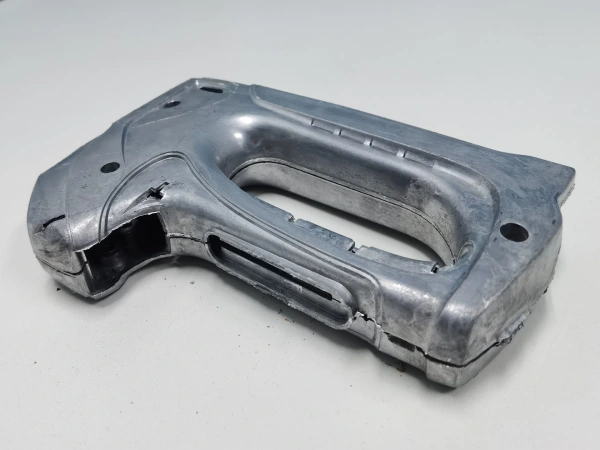
3 Key Factors Causing Aluminum Die Casting Mold Cracks
Cracks in aluminum die casting molds typically develop gradually as a result of the long-term cumulative effects of thermal stress, external mechanical forces, and material fatigue. When a mold is subjected to prolonged overheating or excessive pressure, it is highly susceptible to thermal cracking and premature failure. The following section will analyze the three primary causes of failure in aluminum alloy die casting molds and explain how proper mold design can ensure the long-term stability of die casting production.
Inadequate Cooling Channels
Insufficient cooling channels directly affect the structural integrity of aluminum die casting molds. When the runner geometry is poorly designed, uneven coolant flow near the gate obstructs the waterways surrounding the runner, resulting in thermal imbalance. Hot spots appear on the surfaces of the core and cavity, leading to poor heat dissipation. Under this prolonged influence, internal stresses continuously accumulate in the die casting mold steel, causing cracks to form on the mold surface. If thermal management is neglected during the aluminum die casting mold design phase, localized overheating will accelerate fatigue, and microcracks will gradually propagate in high-temperature areas.
During the aluminum die casting process, balanced cooling channels can suppress stress concentration and extend the mold’s service life. Supro MFG optimizes internal cooling channels to ensure that die casting molds maintain dimensional accuracy and resistance to thermal cracking even under high-intensity production.
Excessive Injection Pressure
Excessive injection pressure is one of the direct causes of premature thermal cracking in aluminum die casting molds. When equipment parameters are set too aggressively and hydraulic pressure exceeds reasonable limits, the gate flow velocity and filling rate rise in tandem, significantly increasing the mechanical load on the mold cavity walls. For a die-cast aluminum mold, excessive injection pressure not only amplifies the thermal shock between the molten metal and the mold surface but also generates greater shrinkage tensile forces during the solidification phase, causing cracks to propagate rapidly along parting lines and in weak areas.
“Die casting operations in 2025 continue to report tooling fatigue linked to rising casting parameters and higher cavity pressure,” notes a 2025 North American Die Casting Association industry outlook.
Poor pressure control not only causes flash but also accelerates structural fatigue within aluminum die casting molds. Proper casting parameters ensure part quality while extending mold life. Supro MFG effectively extends mold life by fine-tuning injection curves without compromising cycle time.
Tool Steel Fatigue Under Thermal Cycling
Fatigue of die steel under thermal cycling is an irreversible failure mechanism in aluminum die casting molds. With each heating and cooling cycle, mold steels such as H13 are subjected to repeated thermal stress. Alternating expansion and contraction gradually alter the material’s microstructure. As the number of cycles accumulates, hardness decreases, and the material’s ability to resist cyclic stress is weakened. In the short term, the aluminum die casting mold material can still cope. However, after thousands of castings, microcracks will form beneath the surface. Improper heat treatment or poor material properties can accelerate this process.
To effectively delay fatigue in H13 and other mold steels, high-quality steel should be selected during the aluminum die casting mold design phase. Preheating and cooling rates must be strictly controlled, and surface temperatures monitored during the casting process to promptly detect abnormal fluctuations. By selecting appropriate steel and strictly adhering to heat treatment specifications, the service life of the manufactured aluminum die casting mold will be significantly extended.
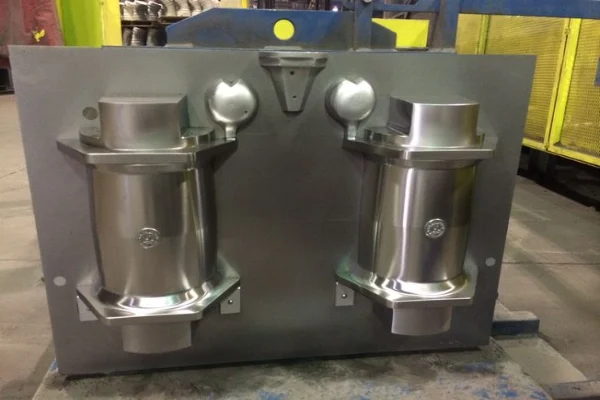
5 Practical Cooling Solutions to Prevent Heat Checking for Aluminum Die Casting Mold
Thermal creep within aluminum die casting molds can compromise the surface finish of castings, prolong production cycles, and cause a sharp increase in scrap rates. When the temperatures of the aluminum, die-cast parts, and mold system become excessively high, microscopic defects can rapidly expand. The following section outlines five practical cooling design solutions that ensure stable mold operation, suppress thermal cracking, extend mold service life, and help companies achieve profitable mass production.
Conformal Cooling with Beryllium Copper Inserts
For high-stress areas of aluminum die casting molds, such as near the gate and thick-walled ribs, the use of beryllium copper inserts for conformal cooling is a proven solution. Since hot spots tend to concentrate in high-stress areas and pose the highest risk of thermal cracking, beryllium copper—with its excellent thermal conductivity—accelerates the transfer of heat from around the ejector pins and inside the cavity to the cooling channels, rapidly reducing surface temperature fluctuations. For die-cast aluminum molds, embedding beryllium copper in areas with peak temperatures effectively reduces porosity and shrinkage cavities while extending the service life of the mold inserts.
During the aluminum die casting mold design phase, the geometry of the inserts must be matched to the cavity profile of the die core, and mechanical locking must be employed to prevent displacement under high pressure. During production, Supro MFG employs a conformal cooling layout that combines copper alloys with quenched steel, ensuring the stability of the aluminum die casting mold even during prolonged production runs.
Optimizing Gate and Runner Layout for Heat Dissipation
Optimizing the gate and runner layout to promote heat dissipation is a key strategy for extending the thermal life of aluminum die casting molds. A well-designed gate, combined with a balanced runner system, can evenly distribute the heat from the molten metal throughout the cavity, preventing localized overheating.
By tracking the flow velocity of the molten aluminum through runner analysis and adjusting the gate thickness, engineers can ensure a uniform temperature distribution across the cavity walls. For aluminum die casting molds, controlling the filling pattern and injection speed during the design phase can significantly reduce peak thermal stresses.
A well-designed aluminum die casting mold not only ensures proper part filling but also facilitates uniform heat dissipation, thereby preventing surface cracking in aluminum castings under stress. Supro MFG’s engineers fine-tune thermal management settings based on actual production data and continuously optimize gate layouts to suppress the formation of thermal cracks at the source.
Integrating CAD-Designed Cooling Channels
With CAD-designed cooling channels, thermal management for aluminum die casting molds no longer relies on empirical estimates but is based on precise simulation data. Through comprehensive 3D mold design and thermal analysis, engineers can arrange curved cooling channels near the cavity walls and use design optimization tools to avoid structural weak points.
The incorporation of additive manufacturing during the aluminum die casting mold design phase to fabricate complex cooling channels further improves cooling uniformity, reduces warpage, and extends the overall service life of the mold.
Reducing Cycle Time to Limit Thermal Build-up
Reducing cycle time is an effective strategy for limiting heat buildup and protecting aluminum die casting molds. Shorter die casting cycles reduce heat accumulation on the mold surface, preventing heat from continuously building up in the cavity walls. Combined with precisely calibrated process parameters, this can significantly alleviate internal thermal stress in the mold.
For aluminum die casting molds, optimized cycle timing significantly improves cooling efficiency, effectively delaying the onset of thermal cracking and extending the mold’s service life. It also boosts overall production capacity and reduces unit production costs. When the aluminum material, die casting process, and mold timing are perfectly synchronized, overheating issues are eliminated.
Supro MFG performs precise tuning on every aluminum die casting mold to ensure tight coordination between the cooling, filling, and ejection phases.
Automated Temperature Control
Automated temperature control is a key method for protecting aluminum die casting molds from thermal cracking.
Real-time monitoring using CMM and X-ray technology ensures that aluminum die casting molds operate as planned. The CMM handles dimensional measurements, while X-ray is used for in-depth defect detection. Measurement data is fed into a quality dashboard, triggering immediate process feedback to optimize mold temperature balance. This process reduces scrap rates, stabilizes cavity geometry, and extends mold life. Supro MFG uses this system to ensure consistency for every mold in every shift.
Embedded temperature sensors track cavity hotspots, and real-time thermal feedback maps thermal expansion. The system automatically recalibrates clamping force to protect the parting line from overload stress. For aluminum die casting molds, this adaptive mechanism reduces flash and stress concentration before issues escalate, maintaining mold integrity.
During melt preparation, automated degassing and furnace adjustments further enhance temperature stability. Rigorous furnace heating and active degassing improve melt purity and reduce the risk of thermal shock. Consistent alloy quality minimizes the tendency for porosity and shrinkage voids within aluminum die casting molds.
Supro MFG integrates automated temperature control throughout every aluminum die casting cycle, ensuring smooth mold operation, extended mold life, and the consistent production of high-quality castings.
Contact Supro-Mfg
The causes of thermal cracking in aluminum die casting molds include uneven cooling, short cycle times, and excessive pressure. By implementing five key strategies—cooling via beryllium copper inserts, CAD-designed runner systems, optimized gate layout, shorter cycle times, and automated temperature control—it is possible to effectively mitigate the accumulation of thermal stress and extend mold life. Supro MFG’s years of engineering experience have proven that precise thermal management is the key to preventing thermal cracking and ensuring stable mass production.
 English
 Français
 Deutsch
 Italiano
 日本語
日本語 한국어
한국어 Polski
 Português de Angola
 Русский
 Español de Argentina