
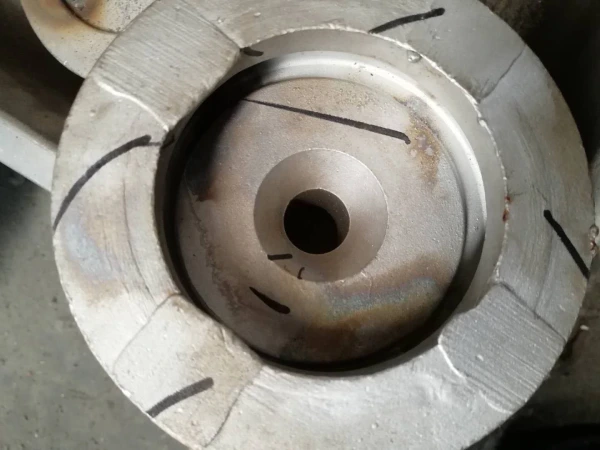
Дефекты в литье алюминия представляют собой сложную инженерную задачу, требующую системного мышления и постоянного совершенствования. Как покупатель алюминиевых отливок, вы, вероятно, обнаружите, что традиционные методы контроля качества оказываются неэффективными при столкновении с определенными устойчивыми дефектами.
Эти стойкие дефекты литья алюминия не только напрямую ухудшают механические свойства продукции и сокращают срок её службы, но и незаметно подрывают рентабельность предприятия и его авторитет на рынке. Данные отрасли свидетельствуют о том, что более 65% литье алюминия В настоящее время производители несут дополнительные затраты на обеспечение качества из-за сложных дефектов, таких как трещины, твёрдые включения и аномальные металлографические структуры.
В этой статье систематически анализируются механизмы формирования и пути решения для четырех часто возникающих и трудно контролируемых алюминиевых дефекты литья наряду с двумя низкочастотными, легко контролируемыми дефектами. В нем представлены проверенные технические решения и конкретные технологические параметры, которые помогут вам создать научно обоснованное эффективное производство алюминия предотвращение дефектов литья и системой управления, тем самым повышая качество продукции и укрепляя конкурентоспособность на рынке.
Анализ и решения четырех часто встречающихся и трудно контролируемых дефектов алюминиевого литья
В производстве алюминиевого литья высокочастотные неконтролируемые дефекты относятся к проблемам качества, которые возникают часто и трудно поддаются управлению. К таким дефектам относятся трещины, аномальные металлографические структуры, твердые включения и деформация. Для достижения эффективного контроля, углубленный анализ дефектов литья алюминия и точные методы контроля обязательны.
Трещины в алюминиевых отливках возникают преимущественно в результате концентрации термических напряжений. Аномальные микроструктуры проявляются в виде крупного зерна и ликвации, в то время как твердые включения происходят из скопления интерметаллических соединений. Деформация главным образом обусловлена неравномерным распределением температуры и остаточными напряжениями.
Устраняя эти повторяющиеся дефекты литья алюминия, компания Supro создала комплексное решение, охватывающее весь процесс — от контроля сырья до послепроизводственной доработки. Это обеспечивает систематическое управление дефектами, значительно повышая надежность продукции и производственная эффективность.
Трещины в алюминиевых отливках
В алюминии процесс литья, дефекты в виде трещин представляют собой одну из наиболее распространенных и дорогостоящих проблем в литейном производстве.
Механизм образования трещин
Трещины в алюминиевых отливках можно разделить на горячие и холодные трещины. Горячие трещины проявляются в основном как разрушающие изломы, образующиеся во время затвердевания металла, и характеризуются окисленными поверхностями, широкими зазорами и извилистой морфологией, простирающейся вдоль границ зерен. Они обычно возникают в зонах алюминиевых отливок, затвердевающих в последнюю очередь, или в местах резкого изменения поперечного сечения.
Холодные трещины проявляются как дефекты, возникающие во время механической обработки, когда внутренние напряжения превышают предел прочности материала. Эти трещины имеют вид тонких, прямых и сплошных линейных дефектов с гладким поперечным сечением, демонстрирующим металлический блеск или легкое окисление. Они часто наблюдаются в алюминиевых отливках и сварных соединениях.
Ключевые параметры, влияющие на образование трещин в алюминиевых отливках, охватывают три аспекта: состав алюминиевого сплава, конструкцию формы и контроль технологического процесса. Что касается состава сплава, необходим строгий контроль вредных элементов, таких как железо и цинк, при этом основные легирующие элементы, такие как кремний и магний, должны оставаться в пределах оптимальные диапазоны концентраций для отливок.
In mould design, features such as fillet radii, толщина стенки transitions, and cooling system layout directly influence stress distribution. Supro’s practical data indicates that increasing the fillet radius from R3 to R5 reduces the stress concentration учесть отливки примерно на 30%. В рамках технологических параметров поддержание отклонения температуры разливки в пределах ±8 °C и градиента температуры формы в диапазоне 120–180 °C позволяет эффективно сбалансировать компромисс между текучестью и напряжениями усадки.
Крайне важно отметить, что горячие точки на стыках между толстыми сечениями и тонкими стенками наиболее подвержены растрескиванию. В этих зонах структурные напряжения, возникающие из-за различий в времени затвердевания, часто превышают предел прочности материала на разрыв.
For qualified aluminium casting, see our услуги точного литья по выплавляемым моделям.
Решения и превентивные меры против появления трещин
Успешное предотвращение образования трещин в алюминиевых отливках требует системного подхода, охватывающего весь жизненный цикл изделия: оптимизированного проектирования на основе CAE-моделирования, строгого контроля плавки и измельчения зерна, точного управления параметрами заливки и температуры, а также стандартизированных термическая обработка и операции постобработки.
Внедрение сквозного контроля, охватывающего проектирование, материалы, процессы и постобработку, имеет важное значение. Этап проектирования имеет решающее значение для предотвращения образования трещин, Внутреннее качество материала служит основой для получения безупречных алюминиевых отливок, точный контроль процессов имеет решающее значение для достижения стабильного производства, а стандартизированная термообработка и операции постобработки представляют собой последнюю гарантию целостности отливок. Эта взаимосвязанная системность решение обеспечивает производство высоконадежных алюминиевых отливок без дефектов в виде трещин.
Подробное объяснение решений по контролю образования трещин см. в этой статье.
Ненормальная микроструктура в алюминиевых отливках
Металлографическая структура алюминия отливки относятся к внутренней структуре металла, включающих различные зёрна, фазовые составы, закономерности распределения и дефекты. В совокупности эти факторы определяют окончательный properties of the castings.
Mechanism of Abnormal Microstructure Formation
Abnormal metallographic structures in aluminium castings manifest as coarse grain sizes, dendritic segregation, compound agglomerations and other forms. For instance, in 7xxx series aluminium alloy castings, grain size variations of up to 80μm have been observed between the ingot periphery and core regions. Such structural inhomogeneities directly cause fluctuations in mechanical properties.
Such aluminium casting defects correlate with imbalances in specific alloy element concentrations and cooling conditions. When cooling rates fall below the critical threshold of 3°C/s, solute diffusion becomes impeded, triggering severe inter-dendritic segregation. Concurrently, excessively low temperature gradients markedly increase the risk of grain coarsening in aluminium castings. Furthermore, abnormal agglomerations of intermetallic compounds exacerbate damage to material toughness.
Solutions and Preventive Measures for Abnormal Microstructure
To achieve a uniform, fine microstructure in aluminium castings, precise control of the solidification process is essential. Supro’s practice indicates that for 7075 alloy ingots with a diameter of 200mm, the optimal parameters for electromagnetic stirring are a carrier frequency of 22.5Hz and a modulation frequency of 5Hz. Under these conditions, the grain size of the aluminium casting can be controlled within the range of 80-100μm, while the macro segregation index is reduced from the conventional 15-20% to 3-5%.
To effectively prevent and address abnormal microstructures in aluminium castings, Supro MFG has established a multi-tiered casting quality inspection system. Firstly, grain morphology is assessed using a solution of 15% hydrochloric acid + 10% nitric acid + 75% water (at room temperature for 5-10 minutes).
Subsequently, an SDAS value is measured using a metallographic microscope (200× magnification, 0.5% hydrofluoric acid etching) – this parameter is critical for mechanical properties (when SDAS decreases to 20μm, tensile strength increases by 18%).
Finally, scanning electron microscopy/backscattered electron diffraction/energy dispersive spectroscopy (SEM/EBSD/EDS) analysed the aluminium casting’s microstructure, crystalline structure, and elemental segregation. Supro designates this testing methodology as the ‘macro corrosion testing method’.
For detailed solutions addressing abnormal metallographic structures, please consult this article.
Hard Spots in Aluminium Castings
During the machining of aluminium castings, the occurrence of localised areas exhibiting abnormally elevated hardness constitutes a hard spot defect.
Mechanism of Hard Spot Formation
During aluminium casting machining, hard spot defects compromise product quality and performance. These primarily arise from uneven cooling rates during casting or improper control of parameters such as casting temperature and pressure. Characteristic symptoms include reduced tool life and the appearance of abnormal bright spots on machined surfaces. The presence of hard spots in aluminium castings significantly increases production costs and subsequent processing requirements, diminishes material fatigue life, and may even serve as a crack initiation point.
Supro research has identified a pattern in hard spot distribution, with these defects more prevalent in thick cross-sections and hot spots of aluminium castings. Slower cooling rates afford sufficient time for intermetallic compounds to form, resulting in significantly larger hard spots compared to other areas. Furthermore, alloy composition plays a decisive role in hard spot formation. For instance, maintaining a manganese-iron ratio above 0.5 substantially mitigates the detrimental effects of these defects.
Solutions and Preventive Measures for Hard Spots
A systematic solution for hard spots in aluminium castings can be approached through three key areas: raw material control, melt treatment, and optimisation of the solidification process. Regarding raw material control, Supro maintains stringent incoming material inspection standards, controlling iron content within the ideal range of 0.08-0.12%. The content of elements prone to forming hard spots, such as zinc and nickel, is restricted, particularly for aluminium castings requiring high machinability.
Melt treatment constitutes the pivotal stage in controlling hard spots. A composite purification process combining rotary degassing with ceramic filtration effectively removes inclusions and gases from the melt. Supro MFG’s production experience demonstrates that incorporating Al-10Mn master alloy ensures manganese recovery exceeding 85% with uniform distribution, thereby effectively eliminating hard spot impacts in aluminium castings.
Solidification process control decisively influences the morphology of hard spots in aluminium castings. Optimising the mould cooling system to increase the cooling rate of thick sections from 0.5°C/s to 3°C/s effectively suppresses the formation of intermetallic compounds. Production evidence demonstrates that this integrated control strategy reduced tool wear costs attributable to hard spots by 70%, while elevating the machining pass rate from 82% to 96%.
For detailed solutions on controlling hard spots, please refer to this article.
Deformation in Aluminium Castings
In the aluminium casting process, deformation defects represent a critical challenge affecting the dimensional accuracy, assembly compatibility, and structural integrity of finished components.
Mechanism of Deformation Formation
The causes of deformation defects in aluminium castings lie in uneven temperature distribution and the resulting internal stresses. During solidification and cooling, temperature gradients exist between different parts of the casting, leading to inconsistent shrinkage. When this differential shrinkage is constrained by the mould or the casting’s own structure, the resulting internal stresses cause deformation.
Deformation primarily manifests in three forms: warping, distortion, and dimensional deviation. Warping typically occurs in flat plate aluminium castings, distortion is more common in frame-structured castings, while dimensional deviation affects the overall contour accuracy of the casting.
Supro MFG’s production experience indicates that key factors influencing deformation severity include the casting’s structure, mould design, and process parameters. A wall thickness ratio exceeding 3:1 increases deformation risk. The ejection system layout within the mould design directly impacts the stress state during casting removal. Process parameters primarily affect deformation through the influence of mould temperature uniformity on the aluminium casting.
Solutions and Preventive Measures for Deformation
To achieve precise control over aluminium casting deformation, Supro MFG has established a comprehensive solution encompassing detection, prevention, and correction. On the production line, blue light scanning technology completes full-dimension inspection within three minutes with an accuracy of ±0.02mm, while the machine vision system identifies warping in aluminium castings in just 15 seconds, with an error rate below 1.5%.
Precise temperature zoning controls mould surface temperature variations within ±8°C, reducing flatness deviation in frame-type castings from 1.5mm to 0.5mm. Combined with topology optimisation and pre-deformation design, straightness pass rates for aluminium castings rose from 67% to 92%.
For warped aluminium castings, controlled thermal correction at 300°C-400°C successfully salvaged 35% of defective parts, significantly reducing quality costs. This systematic approach achieves closed-loop management of aluminium casting deformation through data-driven implementation.
For detailed explanations of deformation control solutions, please refer to this article.
Ищете надежный металлургический завод в Китае?
- Мы поможем вам оптимизировать конструкцию изделия и сократить расходы.
- Мы можем помочь вам с высоким качеством и большими объемами литые детали.
- Мы можем осуществить поставку вовремя и получить больше возможностей на рынке сбыта.
- Вы получите выгоду от Supro MFG литье металлов сервис.
Analysis and Solutions for 2 Low-Frequency, Easily Controllable Aluminium Casting Defects
Low-frequency controllable aluminium casting defects specifically refer to those issues that occur relatively infrequently, possess a well-defined formation mechanism, and can be effectively controlled through conventional process adjustments to ensure casting quality. These defects primarily include under-filling and porosity.
The occurrence of such aluminium casting defects is often directly linked to specific process parameter settings and can be readily identified and controlled using existing technical means. Insufficient filling primarily results from premature solidification of molten metal or fusion impeded by oxide films, whilst porosity stems from inadequate shrinkage compensation during the late solidification stage.
Addressing these issues, Supro employs systematic solutions such as designing gating systems using the modulus method. This approach has successfully reduced the porosity scrap rate from 8.3% to 1.2%. These systematic solutions enable effective management of low-frequency aluminium casting defects.
Aluminum Casting Misruns
Misruns is a typical defect in aluminium casting production.
Mechanism of Misrun Formation
Aluminium casting undercutting manifests as linear gaps or contour defects resulting from incomplete fusion of molten metal flows. The edges of undercut areas exhibit smooth transitions, with severe surface oxidation forming a distinct boundary from normal casting zones.
Этот core mechanism of aluminium casting underflow lies in premature solidification at the metal flow front or the oxidation film at the flow front impeding the fusion of multiple metal streams. For instance, A356 alloy exhibits over 60% reduced fluidity below 595°C. During filling, molten metal first contacting the mould’s cold walls rapidly forms an oxidised surface layer. When these layers meet within the cavity, they fail to achieve metallurgical bonding, resulting in undercutting.
Key parameters influencing short casting include pouring temperature, mould temperature, injection velocity, and iron content. Supro’s recorded data indicates a significant increase in short casting risk when pouring temperatures fall below 650°C. Elevating iron content from 0.1 wt% to 0.2 wt% reduces the solid phase fraction, thereby mitigating short casting issues. Controlling mould temperature gradients ensures uniform filling conditions.
Solutions and Preventive Measures for Misruns
To effectively control underfill defects in aluminium casting, Supro MFG has established a systematic solution encompassing process optimisation and precision inspection. Through intelligent simulation systems, the pouring system is optimised to control the internal gate velocity at 35-45m/s, reducing filling time by 30%. Process parameters employ multi-stage control: pouring temperature 680-710°C, mould temperature 180-220°C, and segmented injection speed control (0.2-0.5m/s low-speed venting, 2.5-4.0m/s rapid filling). This reduced aluminium casting short casting rate from 5.8% to 0.6%.
For special aluminium castings, low-iron alloys (0.1 wt%) employ sleeve heating (400–450°C), while large thin-walled components utilise vacuum assistance (80 mbar). Supro’s practice demonstrates this approach significantly enhances the filling capacity of aluminium casting equipment.
Regarding aluminium casting inspection, fluorescent penetrant testing identifies surface defects as small as 0.1mm, while X-ray systems detect internal discontinuities down to 0.3mm. Graded standards are established based on application scenarios: non-structural components permit ≤3mm defects (spaced ≥25mm apart), whereas structural components have zero tolerance. This system reduces on-site failure rates for aluminium castings by 42%, achieving an optimal balance between quality and cost.
For detailed solutions addressing misruns, please refer to this article.
Aluminium Casting Microporosity
Porosity is the most common internal defect in aluminium casting, and effective feeding is crucial for achieving dense castings.
Mechanism of Microporosity Formation
Porosity essentially arises from insufficient shrinkage compensation during the solidification of aluminium castings, leading to the formation of internal cavities within the casting. This defect commonly occurs during the final stages of solidification when the flow of liquid between dendrites becomes obstructed and cannot compensate for solid shrinkage, resulting in the formation of dispersed cavities within the aluminium casting.
Key factors influencing the formation of porosity in aluminium castings include alloy properties, cooling conditions, and mould design. Aluminium alloys with wide solidification ranges, such as A356, are more prone to developing dispersed microporosity due to their broader paste phase, which obstructs shrinkage compensation pathways.
Cooling rate directly influences the size and distribution of porosity defects. Supro’s practical data indicates that increasing the cooling rate from 1°C/s to 5°C/s reduces the average porosity size from 120μm to 35μm. Controlling hot spots in mould design is particularly crucial for producing conforming castings, as improper wall thickness transitions can cause localised overheating and form concentrated porosity zones.
Solutions and Preventive Measures for Microporosity
To prevent porosity defects in aluminium castings, Supro has established a comprehensive solution spanning precise detection to systematic prevention. A multi-tiered assessment system inspects casting structures: pressure testing verifies airtightness; X-ray inspection employs a five-level grading system per ASTM E505 (critical zones require ≤ Grade 2); metallographic analysis ensures porosity ratios ≤ 2% for general castings and ≤ 0.5% for pressure-bearing components. Industrial CT further enables three-dimensional quantitative analysis.
A modular method designs the riser system (modulus ratio ≥1.2), complemented by insulation sleeves to enhance shrinkage compensation efficiency by 40%. Directional solidification technology is employed, with chill blocks positioned in hot spot zones to achieve over 85% directional solidification rate.
During melt treatment, rotary degassing controls hydrogen content below 0.15 ml/100 g Al. Optimised process parameters set holding pressure duration at 1.5 times the square of wall thickness. Implementing this system reduced critical casting porosity scrap rates from 8.3% to 1.2%.
For detailed solutions addressing porosity, consult this article.
Systematic Solutions for Effectively Avoiding Aluminium Casting Defects
To achieve the goal of zero-defect aluminium casting, a scientific and systematic solution can be employed. Supro MFG has established a comprehensive system covering the entire process from defect source control to continuous improvement. This transforms quality control from passive detection to proactive prevention, ensuring the consistency and reliability of aluminium casting performance.
Strict Control of Process Parameters to Enhance Overall Aluminium Casting Quality
Supro establishes stringent control windows for critical process parameters, such as maintaining melt temperature within ±5°C. Through precise parameter control, production processes are optimised, laying a robust foundation for high-quality aluminium casting production.
Employing composite purification technology and rapid spectral analysis systems, the hydrogen content in aluminium casting melt is stabilised below 0.15ml/100g aluminium, with oxide inclusion removal efficiency exceeding 85%. This ensures all elemental contents remain within optimal composition ranges at all times.
Advanced Inspection Technologies for Real-Time Monitoring of Aluminium Casting Quality
Supro integrates advanced sensing technology into production lines to establish a comprehensive quality monitoring network, enabling real-time detection of surface defects in aluminium castings down to 0.1mm. Combined with deep learning algorithms, this achieves automated classification with over 95% accuracy.
By employing embedded sensor networks to collect aluminium casting data and correlating quality analysis results, process anomalies are flagged proactively. This shifts issue detection from traditional post-production inspection to the manufacturing process itself.
Data-Driven Production Processes for Continuous Improvement of Aluminium Casting Production Systems
Supro MFG has established a comprehensive aluminium casting quality traceability system. The data platform integrates equipment parameters, inspection data and process settings, uncovering intrinsic correlations between process parameters and defect types to provide clear direction for continuous improvement of the aluminium casting process.
Concurrently, a predictive model for aluminium casting defects has been developed. This system monitors process parameters in real time, providing early warnings of potential quality risks with an accuracy rate exceeding 90%. It has repeatedly prevented batch-level aluminium casting defects from occurring. Crucially, this data-driven continuous improvement mechanism forms a complete PDCA cycle, ensuring the aluminium casting quality management system evolves continuously and enhances customer satisfaction.
Supro MFG’s systematic solution empowers aluminium casting manufacturers to transform quality control from reactive response to proactive prevention. This approach simultaneously elevates product quality and substantially reduces quality-related costs, securing sustained competitive advantage for enterprises in the global marketplace.
Заключение
The quality challenges encountered in the aluminium casting production process directly impact the mechanical properties, service life, and ultimate application reliability of the product. This represents an urgent issue requiring resolution for numerous aluminium casting manufacturers. Based on defect occurrence frequency, control difficulty, and their potential impact on product performance, Supro categorises six aluminium casting defects as follows: high-frequency, difficult-to-control defects such as cracks, microstructure, hard spots, and deformation; and low-frequency, easily controllable defects such as short casting and porosity.
Aluminium casting defect management constitutes a complex engineering endeavour requiring systematic thinking and continuous improvement. Only through a deep understanding of the formation mechanisms of various defects and the implementation of targeted prevention and control strategies can the occurrence of aluminium casting defects be effectively prevented. This approach significantly enhances product quality levels, reduces quality costs, and strengthens market competitiveness.
Should your project require high-volume, precision-engineered, thin-walled complex aluminium castings, or necessitate solutions for low-productivity casting challenges, contact Supro’s specialist engineering team at any time. We pledge to deliver bespoke casting services tailored to your requirements, ensuring every component exhibits exceptional dimensional consistency and density.
 English
 Français
 Deutsch
 Italiano
 日本語
日本語 한국어
한국어 Polski
 Português de Angola
 Русский
 Español de Argentina