
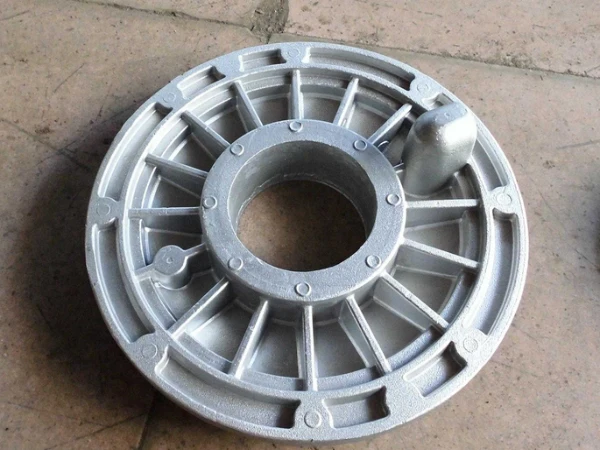
As electric vehicle drive systems continue to evolve toward higher rotational speeds and higher torque density, the role of sand casting in the manufacture of powertrain housings has shifted from mere structural forming to a core process step in NVH performance control. This paper systematically outlines an end-to-end solution ranging from sand casting design optimization to process control: by geometrically tuning rib layout and wall thickness transitions, the natural frequency of the housing is shifted outside the motor’s excitation bandwidth; through grain refinement and control of the solidification microstructure in aluminum sand casting, vibration energy is naturally dissipated via friction at grain boundaries—a damping mechanism that cannot be replicated in machined blanks. At the same time, systematic calibration of sand casting process parameters directly determines the density of the castings and the level of microscopic defects, which in turn affects the integrity of the acoustic energy transmission paths. Finished sand casting parts are then subjected to dual verification via X-ray tomography and dynamic modal testing to ensure that each housing strictly aligns with the CAE simulation model in terms of stiffness and damping metrics. The following sections will break down the key implementation points and process windows for these technologies item by item.
Engineering Sand Casting Solutions for Automotive NVH Performance
Modern electric drive housings require a reliable sand casting process to reduce high-frequency structural vibrations and in-vehicle noise. By using aluminum sand casting, foundries can produce complex geometries with inherent damping properties—a result that is difficult to achieve with monolithic machined structures. This method ensures that the powertrain operates quietly even under demanding operating conditions. By combining flexible проектирование пресс-форм, wall thickness control, and optimized material density, it is possible to ensure that cast housings meet the stringent IATF 16949 noise standards. At the same time, precise mold preparation and выбор сплава can transform structural housings into effective barriers that block automotive resonance vibrations.
Addressing Vibration in Electric Drive Housings
High-speed electric motors require precision sand casting technology to suppress humming noises and housing resonance. When manufacturing aluminum sand-cast housings, it is necessary to balance the wall thickness with the counterweight provided by internal ribs to shift the natural frequency outside the motor’s excitation range.
During production, ceramic sand cores are used to form complex internal damping chambers without adding extra weight. This targeted counterweight design blocks the continuous propagation of sound waves along the motor housing. As a result, the finished assembly effectively reduces cabin noise during rapid acceleration cycles.
Enhancing Structural Rigidity of Cast Components
By optimizing the sand casting design, foundries can reinforce critical stress points in sand-cast parts without increasing the cross-sectional thickness. The use of a progressive rib layout and smooth wall angles eliminates localized changes in stiffness that can trigger harmonic vibrations.
During the mold-making process, the compaction of sand around structural ribs is strictly monitored to prevent localized soft spots. This custom-designed geometry improves the overall torsional stiffness of the motor housing. As a result, the component can withstand bending forces under full torque conditions while preventing the generation of secondary structural noise.
Advantages of Cast Aluminum over Machined Billets
Compared to forged parts, engineered sand casting parts offer superior acoustic damping properties, making aluminum sand casting the preferred choice for powertrain housings. The natural grain structure formed during the solidification of molten metal generates internal boundary friction, which absorbs micro-vibrations. Machined billet components often vibrate like tuning forks at high frequencies because their uniform, rolled grain structure lacks this internal damping mechanism. By controlling the cooling rate within the sand mold, the resulting microstructure naturally dissipates vibrational energy before it is transmitted to the vehicle chassis.
Sand Casting Design Optimization for Attenuating Structural Noise
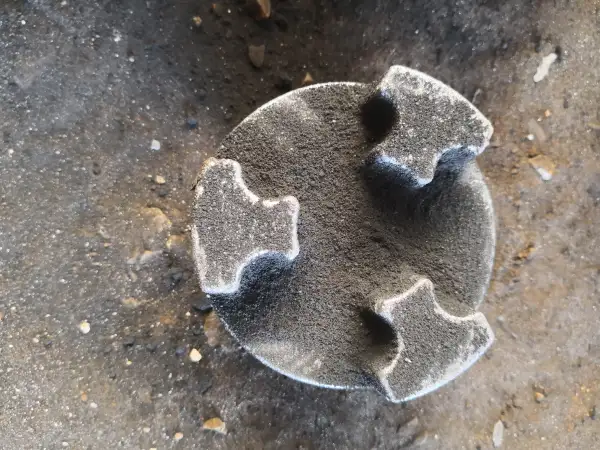
An effective sand casting design can directly reduce structural acoustic transmission in powertrain housings produced via the casting process. During the early stages of CAD design, the part geometry is optimized by incorporating gradual wall-thickness transitions and a rational rib grid layout. These geometric modifications redistribute operational loads and shift the component’s natural resonance frequency above the engine’s normal operating range. Furthermore, by integrating internal sound-deadening baffles directly into the sand casting mold, unwanted noise propagation is eliminated without the need for additional components. This comprehensive design approach ensures that automotive housings are both durable and quiet, while delivering reliable performance under dynamic driving loads.
Wall Thickness Transitions and Rib Patterning
Advanced sand casting design principles require smooth cross-sectional transitions to ensure the structural stability of sand casting parts. Sudden changes in wall thickness can cause stress concentrations, which amplify mechanical noise and accelerate fatigue. Therefore, in actual design, wide fillets and asymmetric transverse rib patterns should be incorporated into the flat surfaces of the housing to break up standing waves. By verifying these fillet radii during mold fabrication to ensure uniform sand density throughout the mold cavity, the finished housing can evenly dissipate vibration energy, thereby significantly reducing panel-radiated noise.
Modal Frequency Tuning via Casting Geometry
Optimizing sand casting design allows for precise tuning of the modal frequencies of high-stress casting shells. By performing finite element modal analysis, resonance mode shapes can be identified, and the local mass distribution can be adjusted accordingly. Adding local ribs or altering wall curvature can shift the critical resonance frequency outside the excitation bandwidth of the electric drive unit. During the mold-making process, technicians use 3D laser scanning technology to verify these geometric adjustments and ensure they match the digital simulation model. As a result, this aluminum sand casting housing is able to resist resonance during high-speed operation, thereby maintaining a quiet interior in the passenger compartment.
Integrated Acoustic Baffles in Complex Mold Designs
A custom sand casting design enables the foundry to cast internal sound-absorbing baffles directly into the casting. Resin-bonded sand cores are used to form internal chambers and meandering channels within the housing walls to absorb sound energy. These complex cores, manufactured to precise tolerances, are then accurately installed to prevent metal infiltration or core displacement during the pouring process. This integrated casting method effectively isolates internal gear noise without relying on secondary plastic covers. Ultimately, the monolithic housing provides exceptional sound insulation while also reducing the number of steps required for final assembly.
Precision Sand Casting Process Parameters directly Impacting Damping
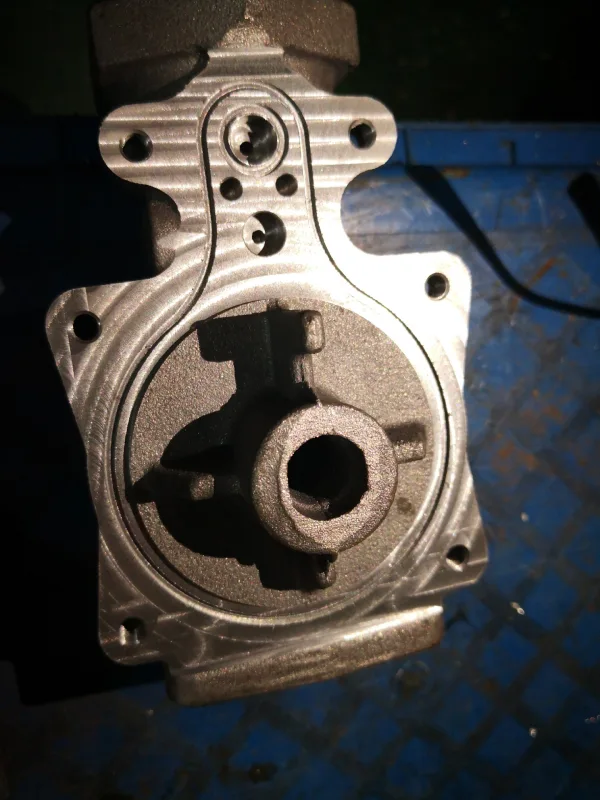
Strict control of sand casting process parameters is critical for producing high-damping housing components. By systematically adjusting the песчаная форма hardness, pouring temperature, degassing time, and hydraulic characteristics of the gates, internal micro-defects are eliminated. Proper management of these variables ensures the formation of a dense, fine-grained metal microstructure, which effectively absorbs high-frequency vibrations. By stabilizing sand mold density and optimizing molten metal flow, structural voids that hinder the dissipation of acoustic energy can be eliminated. This rigorous process control ensures structural integrity and stability, enabling the drive housing to meet stringent automotive NVH standards.
Mold Density and Grain Refinement Control
By controlling key sand casting process parameters, it is possible to optimize the grain structure of high-performance sand casting parts. Monitoring the mold compaction pressure and the moisture content of the green sand ensures uniform mold wall stiffness during the pouring process. Furthermore, adding titanium-boron-based fine-graining agents to molten aluminum increases the grain boundary area, thereby enhancing the material’s internal damping properties. By measuring grain size through microstructural cross-sectional analysis, the density consistency of critical shell sections can be verified. Consequently, the fine-grained aluminum matrix is able to dissipate vibrational energy more efficiently.
Gating System Optimization to Prevent Micro-Turbulence
Calibrating specific sand casting process parameters ensures a smooth metal flow during the pouring of critical housings. The use of ceramic foam filters and a bottom gating system helps maintain laminar flow throughout the mold cavity. Smooth, turbulence-free mold filling prevents the trapping of oxide films and the formation of microslag, as these phenomena can compromise the structure’s damping pathways. Verifying the filling rate using thermal imaging sensors ensures uniform metal distribution. To fully realize mechanical properties after defect-free casting, learn about our approach to [Контроль турбулентности потока при литье в песчаные формы для предотвращения дефектов в алюминиевых отливках для автомобилестроения].
Hydrogen Gas Control and Micro-Porosity Reduction
Monitoring key sand casting process parameters can prevent the formation of porosity in critical castings. Rotational argon degassing must be performed before pouring molten aluminum, and hydrogen content must be measured using a vacuum analyzer. Removing dissolved hydrogen eliminates microscopic pores, thereby preventing these pores from obstructing the transmission of acoustic energy through the shell walls. In addition, sample test pieces must be inspected regularly to verify that the density index consistently remains below strict threshold limits. Consequently, these dense, porosity-free sand casting parts provide predictable structural damping and exceptional mechanical durability.
Quality Verification for High-Performance Sand Casting Parts
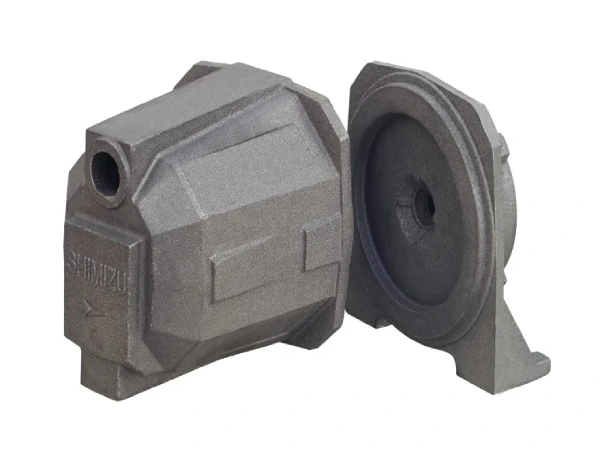
Strict quality inspections of finished sand casting parts ensure that every housing meets automotive NVH and durability targets. Industrial X-ray tomography and ultrasonic testing technologies are used to identify internal defects prior to machining. In addition, frequency response testing verifies that the natural frequencies of the actual литье в песчаные формы parts match those of the initial CAE simulation model. Dimensional inspections performed using a coordinate measuring machine (CMM) ensure the accuracy of reference surfaces, thereby preventing stresses caused by misalignment during final assembly. This comprehensive testing system verifies structural integrity and ensures that mass-produced vehicles deliver reliable sound damping performance.
Non-Destructive Testing for Structural Integrity
The use of advanced non-destructive testing (NDT) methods to inspect critical sand casting parts ensures the structural integrity of the casting shell. Subsurface porosity or shrinkage cavities are identified through digital industrial radiography and penetrant testing. Technicians evaluate internal acoustic pathways to ensure that no internal defects interfere with the dissipation of acoustic energy at the housing walls. These NDT evaluations strictly adhere to the ASTM E155 reference standard and classify the acoustic integrity of the castings. Consequently, only sand-cast parts that fully meet structural density requirements proceed to the final CNC machining and vehicle assembly stages.
Dynamic Modal Testing on Prototype Castings
Evaluating sand-cast parts during the pilot production phase through impact modal testing can validate the initial assumptions of the sand casting design. The prototype housing is suspended on elastic mounts and struck with a calibrated impact hammer equipped with a force sensor. Accelerometers installed at key rib joints capture the frequency response function, allowing the damping ratio curve to be plotted under actual operating conditions. By directly comparing these measured dynamic results with the finite element modal model, engineers can verify the resonance margin. Ultimately, this dynamic test confirms that the casting will not amplify vibrations in the powertrain.
Dimensional Compliance and Machining Allowance
Dimensional verification of complex sand casting parts ensures proper alignment of cast components and controls stress. A coordinate measuring machine (CMM) can measure critical mounting surfaces, core alignment features, and wall thickness distribution against a 3D CAD model, maintaining consistent machining allowances and preventing uneven wall thinning during the final milling operation—which could alter the local stiffness of the housing. Finally, an automated inspection report is generated to confirm that geometric tolerances comply with the stringent ISO 8062 standard for sand casting parts. Consequently, precise dimensional compliance prevents assembly stress and unnecessary vibration.
Ищете надежный металлургический завод в Китае?
- Мы можем вам помочь оптимизировать дизайн продукта и сократить расходы.
- Мы можем помочь вам с высоким качеством и большими объемами литые детали.
- Мы можем осуществить поставку вовремя и получить больше возможностей на рынке сбыта.
- Вы получите выгоду от Supro MFG литье металлов сервис.
Связаться с Supro MFG
This paper systematically analyzes the engineering applications of sand casting in noise reduction and vibration damping for automotive housings. By optimizing sand casting design and wall thickness transitions, combined with grain refinement in aluminum sand castings and modal frequency tuning, the stiffness and damping ratio of components can be significantly improved. At the same time, strict control of sand casting process parameters—such as pouring temperature, mold density, and degassing time—can effectively eliminate micro-pores and oxide film defects, ensuring the structural density of sand-cast parts. Combined with non-destructive testing and dynamic modal verification, this approach guarantees the acoustic consistency of mass-produced products.
As a reliable manufacturing partner specializing in custom aluminum sand casting, Supro MFG provides high-stiffness, low-vibration structural housings that meet international automotive standards. Contact our engineering team today to evaluate your project specifications and receive a professional DFM report.
 English
 Français
 Deutsch
 Italiano
 日本語
日本語 한국어
한국어 Polski
 Português de Angola
 Русский
 Español de Argentina