
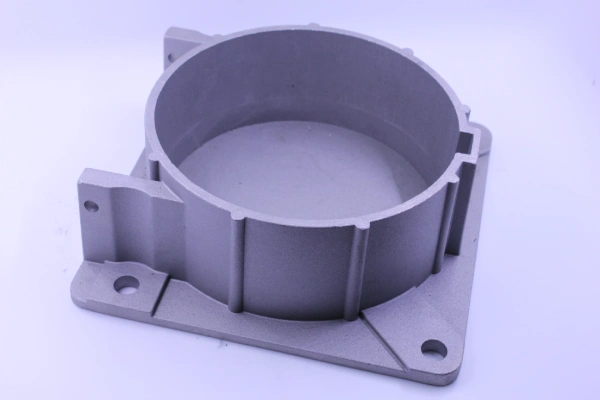
ロストワックス鋳物の表面品質は、製品の機能性と信頼性を直接的に反映します。この品質を制御する鍵は、5つの隠れた要因を体系的に特定し、軽減することにあります。その根本的なメカニズムと限界を徹底的に理解することが、鋳物の表面品質を最適化するための前提条件となります。.
実際の製造現場では、同じ合金グレードや鋳造パラメータを使用した場合でも、表面仕上りは ロストワックス鋳造 異なるバッチの間では、依然として顕著な変動を示すことがあります。これらの違いは多くの場合、単一の 工程ステップ, 不十分なワックスパターンの作製、スラリー粘度の偏り、不適切なバインダーの選択、脱ろう時の亀裂、表面の残留砂などの潜在的な要因が累積した結果生じるものです。.
活用して Supro MFG 精密鋳造分野における豊富な実務経験に基づき、本稿では、ワックスパターンの源泉管理、セラミックスラリーパラメータの調整、バインダーシステムの最適化、脱ろう工程における保護対策、および後処理洗浄戦略という5つの重要な側面に焦点を当てて分析を行う。鋳造技術者に実践的な表面品質管理の道筋を提供し、それによって安定した、再現性のある、高品質な鋳造の実現を支援することを目指している。 ロストワックス鋳造 表面仕上げ.
ロストワックス鋳物の表面がくすむ5つの隠れた原因
表面品質 ロストワックス鋳造 バッチ全体の品質を直接左右する。その 仕上げ面の 製品が目立って鈍かったり粗かったりする場合、それは多くの場合、工程詳細の管理が不十分であることが原因です。ワックスパターンの準備からシェルの除去に至るまで、わずかな誤差であっても徐々に蓄積される可能性があります。以下では、5つの重要なポイントに分けて説明します 鋳造に影響を与える要因 表面品質と、鋳造品の表面を新品同様に滑らかで美しい状態に保つ方法について説明します。.
ワックスパターンの仕上げ不良
ワックスパターンの表面仕上げは、インベストメント鋳造部品の最終的な表面品質を決定します。金属表面はワックスパターンとモールドキャビティの質感を完全に複製するため、粒子、傷、スケール、または充填材の不均一な分布はすべて、そのまま鋳物に転写され、恒久的に残ります。.
ワックスパターンの表面仕上げが不十分な場合、スラリ塗布前に存在するミクロンレベルの傷や工具痕が表面のスラリ層にそのまま転写される。これらは焼結後に拡大され、Ra 1.6〜3.2 μmという従来の基準を大幅に超える表面粗さを持つロストワックス鋳造品をもたらす。さらに深刻なことに、ワックスパターン表面の汚染はシェル密着の不均一を引き起こし、シェル形成および脱ろう時に局所的な応力集中を誘発するため、シェル割れの危険性を高める。.
Supro MFGでは、ロストワックス鋳造品の表面品質を厳格に確保するため、シェル形成の前にマルチアングル照明の下で虫眼鏡を使用して各ワックスパターンの検査を行い、研磨グレードを標準化し、Ra値を記録しています。このように上流工程から管理を徹底することで、鋳造品の表面が最初からクリーンで欠陥のない状態であることを保証します。.
スラリー粘度の不適切な管理
スラリー粘度の不適切な管理は、ロストワックス鋳造品の表面完全性を直接損ないます。スラリー粘度とは、セラミック混合物がワックスパターンの表面を流れて覆う能力を指します。スラリーが厚すぎると耐火コーティングの凝集を引き起こす可能性があり、一方、スラリーが薄すぎると耐火コーティングの強度が不足し、脱ろうおよび焼結時に鋳造シェルにひび割れが生じる原因となる可能性があります。また、流動特性が悪いと、鋳造品の表面に巣や表面の波状模様が生じる原因にもなります。.
ロストワックス鋳造の表面仕上げを一定に保つため、Supro MFGではシェル含浸工程において、スララリー濃度の日常的なモニタリング、バインダー含有量の慎重な調整、および各含浸後のロストワックス鋳造シェル厚さの測定という3つの基準を厳守しています。以下は、ロストワックス鋳造のシェル製造工程における主要な工程パラメータの管理範囲です。.
パラメータ | ローレンジ | 最適範囲 | 高範囲 |
スラリー粘度 (s) | 10未満 | 12–16 | 18歳以上 |
Shell thickness (mm/layer) | <0.3 | 0.4–0.6 | >0.8 |
Dry time (hrs) | <2 | 3–4 | >6 |
Surface Ra (µm) | >6.0 | 3.2–4.5 | >7.5 |
Binder Selection and Curing Errors
Poor-quality binders or improper curing processes can compromise the surface integrity of investment castings even before pouring begins.
Inappropriate selection: Mismatches between high-temperature alloys and binder types, or insufficient chemical stability during the burn-out process, can result in inadequate shell strength or integrity. This allows molten steel to erode the shell or pull out grains, causing surface roughness and pitting on the investment castings.
Improper curing: Uncontrolled drying times between dip coatings and fluctuations in curing temperature result in uneven binder adhesion, causing microcracks in the shell that ultimately lead to investment casting shell cracking. More insidiously, incomplete curing can leave permanent pits on the casting surface.
Shell Cracking during Dewaxing
Shell cracking during the dewaxing process in investment casting can compromise the surface integrity of the casting. The dewaxing process is a stage in which stress builds up rapidly. As the heated wax expands, internal pressure within the ceramic shell rises sharply, causing fractures at weak points. Thermal shock resulting from uneven heat distribution within the steam autoclave or poor venting design can further exacerbate shell cracking. When molten metal seeps along these cracks, permanent mesh-like patterns appear on the surface of the investment castings.
Preserving the integrity of the shell during the dewaxing process ensures a smooth and consistent surface finish for investment castings. Supro MFG optimizes the venting pathways in the autoclave and controls the heating rate to prevent cracking during the dewaxing stage, thereby preventing metal from seeping into the castings.
Residual Investment Particles on Castings
If residual investment particles remain adhering to the casting surface after demolding, this will affect the quality of the final investment-cast parts. Sources of contamination include molten residual shell at hot spots, incomplete cleaning, and violent reactions between the alloy and refractory materials. These adhering particles cause pits on the casting surface, while embedded sand grains form visible defects; additional grinding further reduces dimensional accuracy.
To achieve a clean investment casting surface finish, Supro MFG implements three strategies: optimizing vibration and sandblasting cycles, inspecting the surface of every casting before shipment, and refining post-processing standards. By thoroughly removing residues, Supro MFG ensures that every custom investment casting leaves the factory with a sharp, clean appearance.
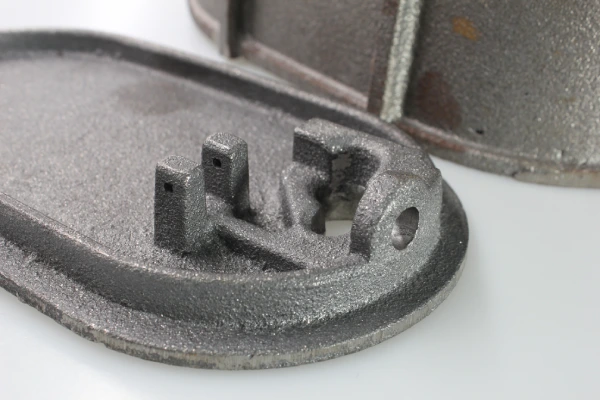
4 Key Steps to Optimize Investment Castings Mold Materials
In investment casting, the proper selection of mold materials is crucial. The quality of ceramic shell molds directly affects the surface finish, tolerances, and long-term durability of castings. When producing high-precision investment-cast parts, scientific and rational material control can effectively reduce the scrap rate and ensure product consistency.
Selecting High-Purity Refractory Sands
The production of investment casting molds begins with the selection of suitable sand. High-purity refractory sand can fundamentally prevent unnecessary chemical reactions with the molten alloy, effectively eliminating defects such as metal penetration, sand adhesion to the surface, and dimensional deviations; conversely, sand that does not meet purity standards will directly cause a series of process issues, affecting the yield rate of finished products.
Refractory sands commonly used in industrial production primarily include:
(1) Silica (silicon dioxide): Offers a high cost-performance ratio and is suitable for standard steel castings.
(2) Zircon: Has a low coefficient of thermal expansion and is particularly suitable for investment casting parts with tight tolerances.
(3) Alumina: Offers high refractoriness and is suitable for alloys subjected to extreme temperatures.
In addition to purity and material compatibility, the particle characteristics of the sand are equally critical. Uniform particle size improves slurry flowability; a balanced particle size distribution minimizes the risk of investment casting shell cracking; and proper control of the fine powder ratio helps maintain the shell’s permeability, providing optimal conditions for molten metal filling and degassing.
The core advantages of high-quality refractory sand are clear: stable refractory performance limits metal erosion; a controlled expansion rate ensures dimensional accuracy; and a smoother surface directly enhances the surface finish of investment castings while reducing post-processing steps.
To ensure casting quality from the source, Supro MFG has established a rigorous raw material audit system. For custom investment casting applications—such as aerospace and pump components—we precisely match the most suitable sand type and particle size combination based on product performance requirements, ensuring that every batch of refractory sand provides reliable support for the production of stable, traceable investment castings.
Tailoring Binder Formulations for Strength
The binder system tightly binds the ceramic network together. In the investment casting process, the chemical properties of the binder directly affect the durability of the shell. If the binder is not finely tuned to the process conditions, defects will propagate layer by layer starting from the shell-forming stage, ultimately affecting the quality of the casting.
In industrial applications, the mainstream types of binders each have their own suitable scenarios:
(1) Colloidal silica: Excellent dispersion stability and a predictable curing process.
(2) Ethyl silicate: Forms a strong and tough ceramic bond after sintering, effectively mitigating the risk of investment casting shell cracking.
(3) Hybrid polymer modifiers: Enhance the flexibility of the shell.
Controlling the performance parameters of the binder is equally critical: Precise target viscosity ensures uniform coating coverage of the sand grains, preventing localized variations in thickness. Stable rheological properties prevent refractory powder sedimentation, ensuring a dense structure in cast investment shells. A balanced solids content determines green body strength, providing reliable support for subsequent processes such as dewaxing and sintering.
Customized formulations tailored to different scenarios unlock additional advantages: optimized formulations achieve higher sintered strength, reliably supporting the molding requirements of heavy-duty investment casting parts. Enhanced permeability helps prevent porosity defects and reduces the risk of cracking during dewaxing.
Precise control of the binder formulation ensures that cast investment shells remain intact throughout the entire process, from impregnation to sintering. Supro MFG fine-tunes these systems to meet the demands of complex geometries in modern investment castings.
Controlling Slurry-to-Powder Ratios
The proper slurry ratio for investment casting mold material directly determines the shell’s thickness, density, and the uniformity of coating deposition. An improper ratio can lead to uncontrolled coating viscosity, surface porosity and rippling, and significantly increase the risk of shell cracking.
During production, the ratio of liquid to solid phases, total solids content, and slurry density must be precisely controlled. Practical production experience shows that slurry density, viscosity, and coating thickness all increase in tandem with an increase in the powder-to-liquid ratio; deviations from the optimal range directly degrade the surface finish of the investment casting.
In terms of process control, continuous stirring is used to maintain the suspension, viscosity is regularly tested, and sedimentation is closely monitored. A stable and appropriate powder-to-liquid ratio not only ensures uniform coating deposition and reduces weak points in the ceramic shell but also effectively prevents molten metal infiltration that causes investment casting shell cracking.
To ensure consistent casting quality, Supro MFG strictly monitors the slurry formulation to ensure that every batch of investment casting parts establishes a reliable performance foundation during the shell-forming stage. This is particularly important for challenging areas such as complex geometries, thin-walled ribs, or sharp edges, helping to reduce scrap rates and improve delivery consistency.
Implementing Precise Drying and Firing
The strength of the ceramic shell is fully developed during the drying and firing processes. Careful firing minimizes distortion and ensures the dimensional accuracy of investment castings. For manufacturers undertaking high-volume casting projects, this rigorous process control is the key to distinguishing between ordinary output and reliable, repeatable results.
Through controlled humidity, stable airflow, and gradual dehumidification—combined with precise temperature-controlled heating profiles, a stable kiln atmosphere, and predetermined holding times—it is possible to effectively reduce the risk of investment casting shell cracking, maintain the geometric stability of the ceramic shell, and ensure complete combustion of the investment material.
信頼できる中国の金属鋳造工場をお探しですか?
How Shell Hardness Shapes Final Surface Quality of Investment Castings?
In ロストワックス鋳造, even slight variations in shell hardness can alter surface texture and detail definition, and may even affect the defect rate. From the wax pattern to the finished metal part, the casting shell is constantly under stress throughout the 鋳造工程. If handled properly, the casting will have a crisp, sharp appearance; if handled improperly, quality will rapidly deteriorate.
Defining Shell Hardness and Its Measurement
In investment casting, shell hardness is a key indicator for measuring the core mechanical properties of castings, directly reflecting the material’s ability to resist indentation and wear. It demonstrates resistance to surface indentation under load conditions. During the pouring of molten metal, it represents the shell’s ability to maintain structural strength. In investment casting, it also indicates the shell’s stability when subjected to thermal cycling.
Achieving the required shell hardness is crucial, as it effectively prevents surface erosion of the shell by molten metal, ensures dimensional stability of the casting, and enhances the repeatability of mass production for high-precision investment castings.
Drawing on years of experience in customized investment casting, Supro MFG employs standardized testing methods to ensure that every ceramic shell meets strict mechanical performance targets prior to metal pouring. The primary measurement techniques include:
(1) Surface inspection using a hardness tester.
(2) Laboratory testing methods for determining compressive strength.
(3) Controlled-load indentation testing.
Microcrack Formation under Varying Hardness
In investment casting, investment shell hardness that is too high or too low can cause microcracks. When the hardness is too high, it exacerbates stress concentration, making the shell more prone to cracking under the thermal shock of pouring, which in turn leads to brittle fracture. When the hardness is insufficient, the shell is prone to deformation under mechanical stress, compromising its overall integrity, significantly increasing the likelihood of defects, and severely affecting the surface finish of the investment casting.
A balanced hardness level can reduce the likelihood of crack networks appearing on the final casting. Supro MFG controls the crack behavior of each batch of investment castings by monitoring the sintering curve and slurry composition.
Impact on Reproducing Fine Casting Details
Surface control is a critical aspect of quality assurance for high-detail investment castings. A finely calibrated shell mold protects the delicate wax pattern during firing, ensuring that intricate casting details are preserved. This helps the molten alloy accurately capture fine, thin ribs and tight radii of curvature, preventing the formation of fillet radii.
This not only ensures the smoothness of the investment casting’s surface finish and the reliability of pattern transfer but also enhances the casting’s replication accuracy and visual fidelity through stable dimensional accuracy, high feature resolution, and controllable surface texture.
Achieving the Ideal Hardness-Texture Balance
Hardness optimization for investment castings requires careful trade-offs and precise control to balance the surface texture and permeability of the investment casting shell, stabilize the coefficient of thermal expansion, prevent shell cracking, and achieve a better overall balance between casting quality and performance. Specifically, this involves:
(1) Rationally formulating the investment casting mold material, optimizing the binder ratio and sand particle size selection, and strictly controlling the drying process.
(2) Simultaneously calibrating production parameters, selecting the best raw materials, and implementing end-to-end quality control.
Supro MFG strives to maintain this optimal balance by fine-tuning the investment casting shell formulation—ensuring sufficient hardness to retain fine details, sufficient toughness to prevent cracking, and sufficient smoothness to achieve top-tier precision casting results.
Supro MFGへのお問い合わせ
The surface quality of investment castings is influenced by multiple factors, including latent causes, mold materials, and shell hardness. Latent factors such as wax pattern treatment and slurry control can easily lead to quality fluctuations, while material optimization—such as using high-purity sand and customized binders—serves as the foundation. Precise drying and sintering, along with a balance between hardness and texture, further ensure quality. Through meticulous end-to-end process control, Supro MFG effectively mitigates defects, helping to achieve a stable, high-quality surface finish and performance in ロストワックス鋳造.
 English
 Français
 Deutsch
 Italiano
 日本語
日本語 한국어
한국어 Polski
 Português de Angola
 Русский
 Español de Argentina