
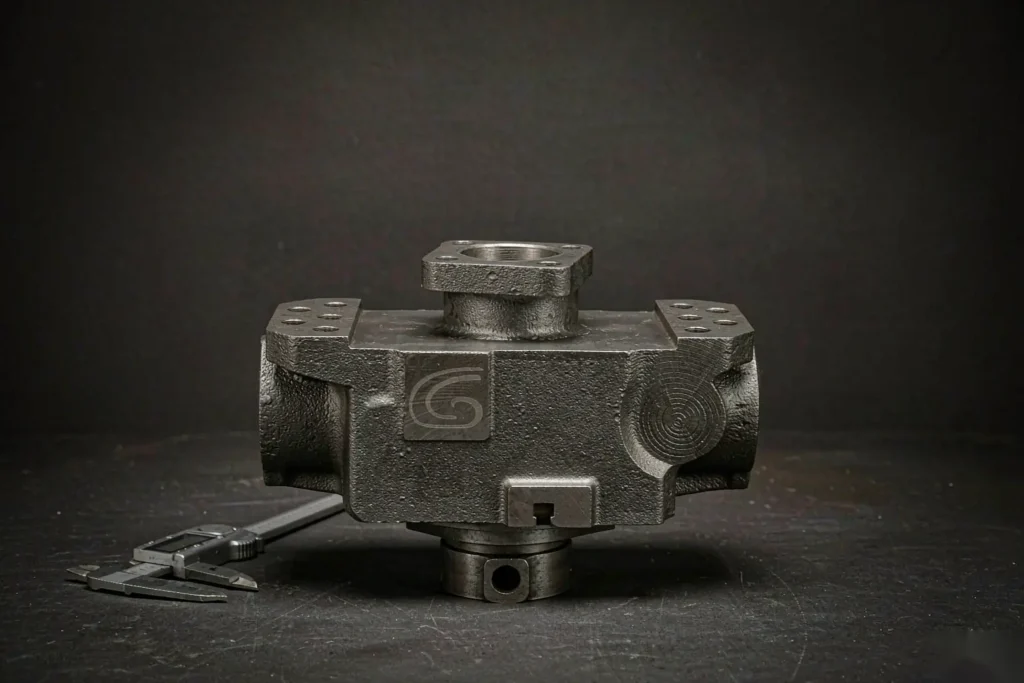
Casting product liability is rarely discussed at the quotation stage, yet it decides who pays when a cast component fails in the field. A pump housing that cracks after fourteen months in service does not produce a scrap ticket; it produces a field campaign, a regulatory notification, an insurance claim and a contract argument that can exceed the entire annual spend on the part.
This article treats casting product liability as an engineering and commercial problem that can be sized before a purchase order is signed. It separates three things buyers routinely conflate: the quality claim between buyer and foundry, the third-party injury or property damage that insurance responds to, and the first-party cost of retrieving and replacing affected units. It then works one full recall arithmetic, maps the insurance layers and their gaps, and gives an eight-field RFQ block plus a thirty-day action plan. All figures below are shop-floor-scale examples built from stated assumptions so that you can substitute your own volumes and rates and reproduce the result. Start with the metal casting guide if you need the process vocabulary, and use the casting RFQ framework as the document this article plugs into. Product-safety obligations are framed at European Commission level, while AIAG PPAP discipline sets the record-retention expectations that a supplier notification clause has to beat.
What Casting Product Liability Actually Covers
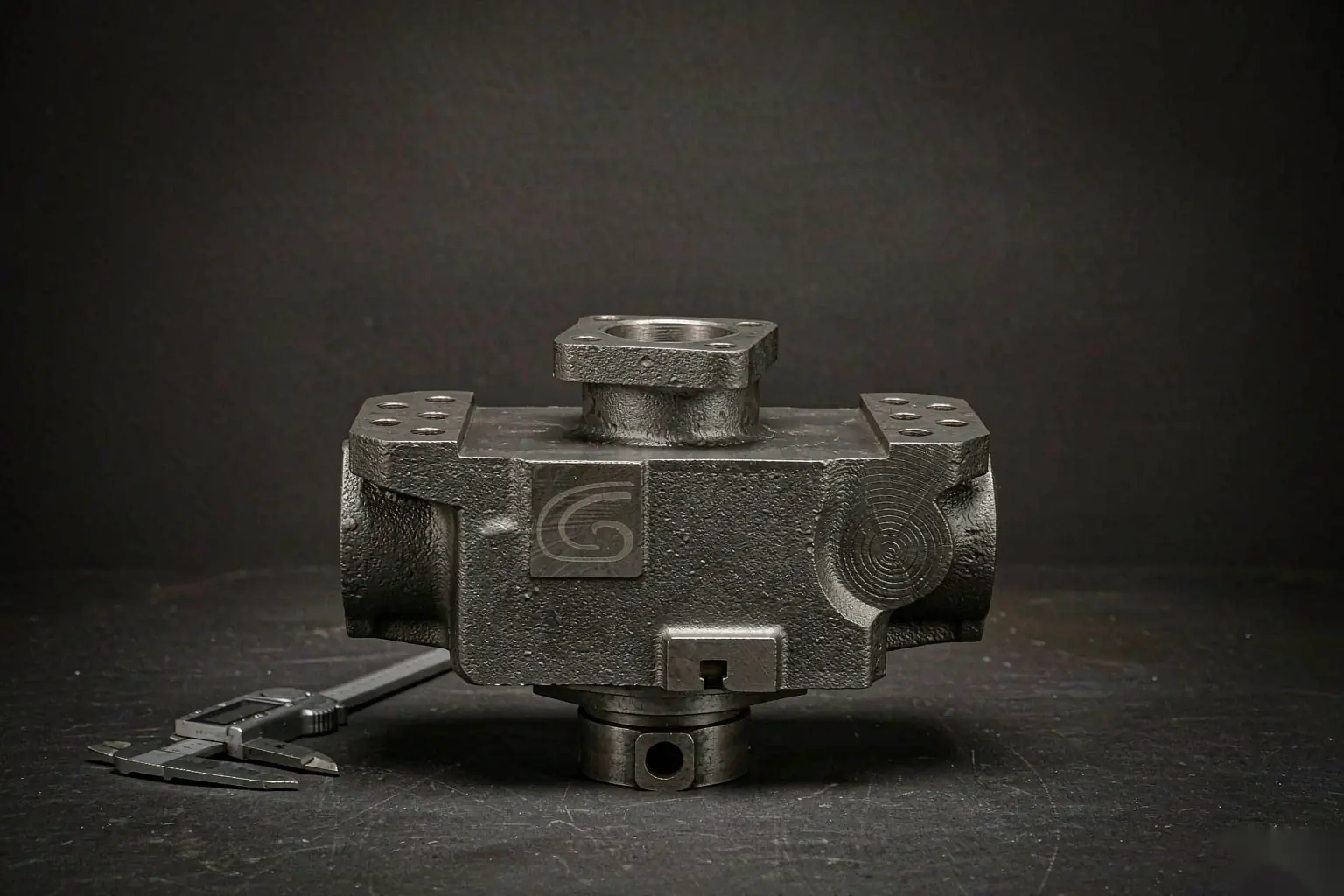
The phrase casting product liability is used loosely in supply agreements, which is exactly why disputes start. Legally and commercially it covers four distinct exposure types. Only two of them are normally insured, and only one is usually capped properly in a casting supply contract. The table below is the working definition used throughout this article; keep it next to the casting quality agreement when you review clauses.
| Exposure type | Typical trigger | Who bears it first | Usually insured? |
|---|---|---|---|
| Manufacturing defect (a casting departs from its own specification) | Porosity, shrinkage, wrong grade, missed heat treatment | Foundry, via warranty / quality claim | No — commercial warranty, not liability cover |
| Design defect (the specified geometry is unsafe in service) | Wall too thin, fillet too sharp, fatigue path through a boss | Buyer if buyer owns the design | Partly — buyer product liability |
| Third-party bodily injury / property damage | Housing ruptures, fluid sprays, downstream equipment damaged | OEM, then recourse to foundry | Yes — CGL / product liability |
| First-party recall expense (retrieve and replace your own product) | Field campaign, notification, logistics, labour | OEM unless contract shifts it | Only with product recall expense cover |
| Warning / instruction defect | Missing pressure rating, unspecified service temperature | Party controlling documentation | Rarely, and often excluded |
The first row is not casting product liability in the insurance sense at all — it is a casting defect claim between two contracting parties, governed by the warranty and inspection clauses. Confusing the two is expensive: a buyer who writes only a generous warranty clause and never checks the supplier certificate of insurance has covered the small exposure and left the large one open. Our earlier article on casting tooling insurance covers a fifth category that is frequently mislabelled as product liability: damage to, or loss of, the buyer-owned die or pattern. Tooling cover protects an asset; it does not respond to a person injured by a casting.
The second row matters more in castings than in most purchased parts, because the buyer often supplies the CAD and the foundry supplies only process feasibility. If a designer specifies a 6 mm wall where the load case needs 9 mm, the foundry can deliver a dimensionally perfect part that still fails. That is why part consolidation projects and tolerance stack reviews must record who owns the load case. Casting simulation output and riser design records are the evidence that separates “we poured what you designed” from “we designed a part that could not be poured”.
Where the Boundary Sits in Practice
A clean way to draw the line: if the loss is the value of the casting itself, it is a quality matter; if the loss is somebody else’s body, property or production line, casting product liability begins. In our casting nonconformance workflow, a concession (use-as-is) decision is precisely the moment this line gets crossed — accepting a radiographic level 3 cavity in a non-critical boss is a commercial decision, but accepting the same indication in a pressure boundary transfers a field-failure risk to the end customer. Record who signed the concession and which clause authorised it.
The distinction also explains why scrap rate improvements and casting product liability exposure can move in opposite directions. Tightening internal acceptance criteria raises internal scrap and lowers field escapes; loosening them to protect yield does the reverse. A supplier reporting a beautiful 3.6 percent scrap figure without disclosing the acceptance threshold has told you nothing about the escape rate. Ask for both numbers in the same table.
Where Casting Product Liability Enters the Supply Contract
Insurance responds to a claim; the contract decides whether the claim can be brought against the foundry at all. Six clauses determine the outcome of most casting product liability disputes. Each one below is written as a before/after pair because the default wording in many foundry terms and conditions quietly removes the buyer’s recourse. Tie these into the payment terms schedule so that the certificate of insurance is a condition of the first payment, not an attachment nobody reads.
| Clause | Default foundry wording (risk to buyer) | Buyer position that works |
|---|---|---|
| Liability cap | Seller liability limited to the price of the defective castings | Cap = greater of 12-month spend or 2x annual contract value; carve out fraud, gross negligence, bodily injury and recall expense |
| Consequential loss | Seller excludes all indirect, incidental and consequential loss | Exclude lost profit and goodwill only; expressly include third-party claims, field labour and regulatory notification cost |
| Insurance covenant | Seller maintains “appropriate” insurance | Name CGL, product liability and product recall expense; state per-occurrence and aggregate limits, deductible, and 30-day notice of cancellation |
| Additional insured | Not offered | Buyer named as additional insured on the product liability policy; certificate of insurance refreshed annually |
| Notification | Buyer to notify within 7 days of delivery | Defect notice within 30 days of discovery (not delivery); 24-hour initial notification on any field incident; 5 working days for 8D containment |
| Traceability & records | Records retained 1 year | Heat-to-cast permanent marking; melt, inspection and heat-treatment records retained for product life plus 5 years, minimum 10 years |
The cap clause is where the arithmetic turns. In the worked example below, a “price of defective castings” cap would return roughly $1,500 on a loss exceeding one million dollars. The carve-outs are not legal decoration: gross negligence and wilful concealment are frequently unenforceable to cap, and bodily injury is normally excluded from commercial caps as a matter of public policy. Our total cost of ownership model shows why a slightly higher piece price from a supplier with a real recall policy can be cheaper in expected value than the lowest quotation.
Contract Chain: Subcontractors and Title Transfer
Castings rarely reach the OEM in the as-cast state. Secondary operations, heat treatment, weld repair and surface finishing are frequently subcontracted, and each hand-off is a place where the evidence chain breaks. The contract must make the foundry responsible for its subcontractors’ records as if they were its own. Otherwise a failed housing produces three suppliers each holding one third of the traceability file. Verify this at the foundry audit rather than at the claim stage; the desktop supplier audit is where the subcontractor list should first be collected.
Title and risk transfer also shape casting product liability. Under Incoterms the buyer may carry the transport risk well before the part is inspected, and import classification determines which records customs will hold. If your inward inspection is the first real gate, align it with a casting incoming inspection plan that samples by heat number, not by delivery date. A first article inspection package with no heat-code linkage is a dimensional report, not a liability record.
The Evidence Chain That Decides Casting Product Liability
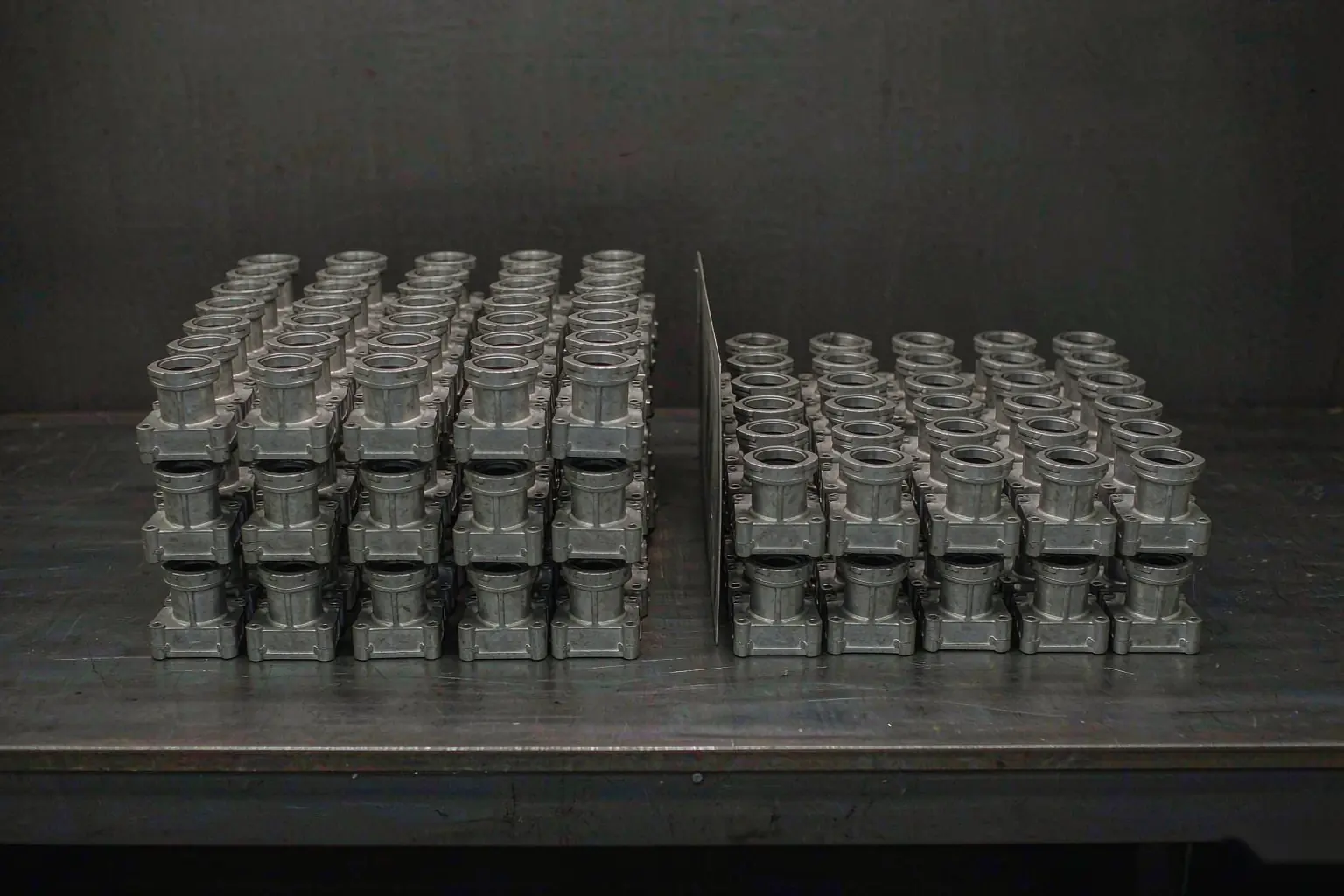
When a field failure lands, the question is not “was the casting defective” but “which castings were defective”. That is a data question, and it is answered or lost months before the failure. A defensible casting product liability file links one shipped serial number back to a single heat, a single mould line, a single set of inspection results and a single signed release. The seven links below are the minimum; grade the supplier on them during the on-site audit using the same scoring logic as the inspection methods selection.
| # | Evidence link | What must be captured | Typical retention |
|---|---|---|---|
| 1 | Heat / melt identity | Furnace charge, spectrometer chemistry, treatment and inoculation times | 10 years minimum |
| 2 | Permanent part marking | Cast-in or laser heat code, not a removable sticker or a paper tag | Life of part |
| 3 | Melt quality record | Density index, residual magnesium, pouring temperature, filtration lot | 10 years |
| 4 | Dimensional record | CMM report keyed to heat code, with gauge calibration traceability | 10 years |
| 5 | NDT record | Radiographic or ultrasonic film and its acceptance level | 10 years |
| 6 | Thermal / repair record | Heat-treatment chart, any weld repair location and re-inspection result | 10 years |
| 7 | Release and shipment | Certificate of conformance, pack list, serial range, customer and destination | 10 years |
Link 1 is where melt treatment records become a liability asset rather than a process convenience. In ductile iron, residual magnesium fading past roughly eight minutes after inoculation changes nodularity and mechanical behaviour; in aluminium, hydrogen and oxide entrainment change fatigue life. Neither is visible in a finished dimensionally acceptable casting. Link 5 is where a standard such as the ASTM E446 reference radiographs for steel castings gives both parties an objective severity scale instead of an argument about photographs. Gauge calibration belongs to link 4, and measurement traceability practice is documented by NIST metrology. Welds in link 6 should be tied to a recognised procedure such as those published by the American Welding Society.
Ten-Minute Traceability Test
Run this at the audit, unannounced: pick one finished casting from the shipping area, hand it to the quality manager, and ask for the heat record, the chemistry, the NDT film, the heat-treatment chart and the pack list. A foundry with a real chain returns all five inside ten minutes. A foundry with a paper system returns two, and the rest “will be sent tomorrow”. That gap is the difference between the two recall scenarios quantified below. The 47-check audit score weights this under traceability for exactly this reason.
Photographic records are not enough. Images without a heat-code cross-reference cannot be queried when a customer reports a serial number, and a certificate of conformance signed before the last operation is not a release. Where automotive supply chains apply AIAG PPAP / production part approval discipline, the retention and change-notification expectations are already close to what casting product liability requires; adopt that discipline for industrial castings too. If the design or process changes, capture it against the lead-time baseline as a re-approval event, not as a quiet substitution.
Two failure modes dominate. The first is batch smearing: a foundry pours two heats into one delivery and assigns a single code, which multiplies the suspect population. The second is silent change: a new sand supplier, a different filter lot or a relocated heat-treatment subcontractor with no written notification. Both are inexpensive to prevent with a change-notification clause and a capacity reservation agreement that fixes the production line, and both are almost impossible to reconstruct after a field failure.
Quantifying a Recall: A Worked Example
Abstract discussions of casting product liability end when somebody writes down the population. The model below uses one hydraulic pump programme. Every input is stated so you can replace it with your own numbers; the arithmetic is deliberately simple so that it survives a contract meeting.
Stated Assumptions
- Programme: 12,000 pump assemblies shipped per year, each containing one ductile iron housing to ASTM A536 grade 65-45-12.
- Batching: eight production lots of 1,500 castings, each lot tied to one heat and one heat-treatment charge.
- Unit price: $15.00 per finished machined housing, so annual spend is $180,000.
- Field signal: 42 units report cracking and leakage after 14 months in service — 0.35 percent of the population.
- Root cause: one lot lost nodularity and shows localised shrinkage; radiographic severity reaches level 4 against a contractual limit of level 2.
- Single-unit field cost: 2.6 hours of labour at $85/h = $221.00; replacement housing, seals and fluid = $164.00; logistics and dispatch = $78.00; customer line downtime compensation = $310.00. Total $773.00 per unit.
- Fixed campaign cost: customer notification, regulatory reporting and programme management = $46,000.
Now the only variable that changes between the two scenarios is the traceability system. With heat-level marking, the suspect population is one lot of 1,500 units. Without it, the buyer cannot prove which units are safe, so the defensible recall population is the full 12,000. This is the entire financial case for casting product liability data retention.
| Line | Path A: heat-level traceability | Path B: no heat-level traceability |
|---|---|---|
| Recalled units | 1,500 | 12,000 |
| Unit field cost | $773.00 | $773.00 |
| Variable recall cost | $1,159,500 | $9,276,000 |
| Fixed campaign cost | $46,000 | $46,000 |
| Total campaign cost | $1,205,500 | $9,322,000 |
| Ratio to annual part spend ($180,000) | 6.7x | 51.8x |
The difference is $8,116,500 — a factor of 7.7 in total cost — created by a marking and record-keeping decision that costs about $0.42 per casting. On 12,000 units that is $5,040 per year, or $50,400 over a ten-year retention horizon. Even if a programme of this type has only a one-in-ten annual chance of producing a field campaign, the expected annual loss avoided is $811,650 against $5,040 of spend. That is not a close decision, and it is why casting product liability belongs in the sourcing checklist rather than the legal department.
Who Actually Pays
Divide the Path A total into two buckets. Third-party line downtime compensation is 1,500 x $310 = $465,000 and normally falls to the product liability layer. The remaining $740,500 (labour, replacement parts, logistics, fixed campaign cost) is first-party recall expense — the cost of retrieving your own product. A supplier carrying only commercial general liability will typically respond to the first bucket and decline the second. Add a $25,000 deductible and the buyer is exposed to roughly $765,500 with no recall cover, versus about $50,000 with a product recall expense policy. A recall policy quoted at 0.75 percent of a $2.4 million revenue base costs about $18,000 per year; one avoided gap repays roughly forty years of premium. Model it alongside the price per kg quotation so the insurance cost is not treated as invisible overhead.
Finally apply the liability cap. At “price of defective castings”, the recovery ceiling is 1,500 x $15 = $22,500 — under 2 percent of the campaign. At a cap of twelve months of spend it is $180,000. Either way the OEM retains the majority of the loss unless the cap carves out recall expense and gross negligence. This is the single most important number to fix before the first RFQ goes out, and it should be revisited whenever dual sourcing splits a programme across suppliers, because a split population makes batch identification harder, not easier.
Insurance Layers, Limits and the Gaps Between Them
A certificate of insurance is not a promise that a claim will be paid. It is a one-page summary of policies whose exclusions decide the outcome of casting product liability. The stack below is typical for a mid-size casting supplier selling into North American and EU OEM programmes; limits are illustrative and must be checked against the actual policy wording, not the broker’s cover note.
| Layer | Policy | Per occurrence | Aggregate | Deductible | Does it pay first-party recall cost? |
|---|---|---|---|---|---|
| 1 | Commercial general liability (CGL) incl. products/completed operations | $1,000,000 | $2,000,000 | $25,000 | No — third-party injury and property damage only |
| 2 | Standalone product liability | $2,000,000 | $2,000,000 | $25,000 | No |
| 3 | Product recall expense | $1,000,000 | $1,000,000 | $50,000 | Yes — subject to a defined trigger and recall plan |
| 4 | Umbrella / excess liability | $5,000,000 | $5,000,000 | Attaches above layer 1–2 | Usually follows the underlying exclusion |
| — | Tooling / property cover | n/a | n/a | n/a | No — protects the die or pattern as an asset |
Three gaps recur. First, layer 3 is frequently absent from a foundry’s programme because the broker sells “product liability” and the buyer hears “recall covered”; the two are different. Second, a recall policy usually requires a documented trigger — an actual or imminent bodily injury or property damage risk — so a purely commercial quality campaign may sit outside the wording. Third, an umbrella follows the underlying policy’s exclusions, so stacking five million dollars above a policy that excludes recall expense still leaves zero recall coverage. Read the tooling insurance article for the parallel problem of replacement-cost versus actual-cash-value settlement, which is the same class of wording trap.
Additional-insured status is not cosmetic either. It gives the buyer direct notice of cancellation and, in many wordings, a right to defence. Ask for the certificate to be issued to the buying entity, not the group parent, and diarise the renewal date alongside payment milestones. Cross-border programmes add a jurisdictional layer: a policy issued in one country may not respond to a claim brought in another, and while EU product-safety expectations are set at Commission level, enforcement and recall reporting remain national. Where castings go into life-safety systems, the guidance published by the National Fire Protection Association shortens the reporting clock well below what a 30-day supplier notification clause can satisfy.
One more distinction: casting product liability cover is not the same as professional indemnity for design work. If the foundry provides DFM redraws, simulation studies or a revised machining allowance scheme, it is giving engineering advice, and a pure products policy may exclude the economic loss flowing from bad advice. Where the foundry owns the design input, require either design-and-build wording or a separate professional cover. Our quality agreement template is the natural place to record which party owns the design decision.

Buyer Recourse Boundaries: What Is Recoverable
Even with a perfect evidence chain, not every loss can be passed down the supply chain. casting product liability in practice is a negotiation about categories of loss, and the categories are largely settled before any failure occurs by the exclusion clause. The table is a working map, not legal advice; align it with your own governing law and with the Incoterms rule chosen for the shipment.
| Loss category | Usually recoverable from foundry? | Why / what changes the answer |
|---|---|---|
| Rework or replacement of nonconforming castings | Yes | Direct warranty loss; needs timely notice and a defined acceptance standard |
| Third-party bodily injury or property damage | Yes, through liability insurance | Requires causation evidence and a policy that responds in the claim jurisdiction |
| Field labour, logistics and customer notification | Only if expressly listed | Frequently swept into an “indirect loss” exclusion — carve it out |
| Buyer production line downtime | Often excluded | Treated as consequential loss; negotiate a capped, defined allowance instead |
| Lost profit, goodwill, lost market share | Usually no | Remoteness / foreseeability limits in most contract regimes |
| Regulatory fines and punitive damages | Usually no | Commonly uninsurable on public-policy grounds |
| Cost of investigating an unfounded allegation | Sometimes | Include a cooperation and cost-sharing clause for joint root-cause work |
Notice is the quiet killer of casting product liability recourse. A clause requiring claims within seven days of delivery is unworkable for a latent shrinkage defect that appears after fourteen months of service; it effectively converts a warranty into a delivery check. Replace “delivery” with “discovery”, and add a long-stop tied to the expected service life rather than the invoice date. The same logic applies to the defect claim window and to the inspection acceptance gate in the incoming inspection plan: incoming sampling protects against systematic deviation, not against a single latent cavity in a pressure boundary.
Causation Is a Technical Argument
Most disputes turn on whether the failure originated in the casting or in assembly, overload or service conditions. That is why the failed part must be preserved, and why the root-cause protocol should specify fractography, chemistry, hardness and radiography before any destructive sectioning. A defect taxonomy helps classify the signature: gas porosity, shrinkage, cold shut, hot tear and inclusion each point to a different process stage and therefore a different responsible party. Where a weld repair was performed, repair disclosure records decide whether the foundry or the finishing subcontractor owns the outcome. Where a material substitution occurred, substitution approval records decide whether the buyer accepted the risk.
Buyers should also expect a “sole cause” argument: the foundry may show that the buyer’s specified machining allowance left a wall below minimum, or that a downstream surface treatment introduced a notch. Process capability data from the FAI and the audit Cpk check are the counter-evidence. In short, the same records that keep production stable also decide who pays; there is no separate “liability file” to build later.
Casting Product Liability in the RFQ: Eight Fields
Add these eight fields to the commercial section of the casting RFQ and score them before comparing piece prices. A supplier that cannot answer field 2 has already told you the size of any future recall. Fields 1, 3 and 4 belong in the eventual purchase order; fields 5–8 belong in the quality agreement.
| # | RFQ field | Acceptable answer |
|---|---|---|
| 1 | Certificate of insurance | Named policies, per-occurrence and aggregate limits, deductible, expiry, additional-insured endorsement, jurisdiction of cover |
| 2 | Traceability granularity | Heat to casting to serial number via permanent marking; ten-minute retrieval demonstrated |
| 3 | Record retention | Minimum 10 years or product service life plus 5 years, including subcontractor records |
| 4 | Field incident response | 24-hour initial notification, 5 working days for 8D containment, 15 days for root cause |
| 5 | Liability cap and carve-outs | 12-month spend or greater; recall expense, gross negligence, fraud and bodily injury excluded from the cap |
| 6 | Recall expense allocation | Explicit cost categories, a mandatory recall expense policy, and a cooperation protocol for joint investigations |
| 7 | Subcontractor flow-down | Machining, heat treatment, welding and coating named, with identical record and notification duties |
| 8 | Change notification | Written approval for changes in melt source, sand system, filter lot, tooling, process or production site |
Scoring field 1 deserves a caution: a certificate is evidence that a policy existed on the certificate date, not a guarantee of response. Ask the same questions as the supplier audit asks about capacity, then verify at the plant walk-through. Where a programme is split between two foundries under dual sourcing, require identical heat-code formats so a field return can be attributed without a reconciliation project. And when volumes are committed through capacity reservation, fix the production line in the agreement — a silent line move is a change-notification breach with casting product liability consequences.
The commercial conversation becomes easier once these fields are visible. A supplier with permanent marking, ten-year records and a recall policy has real cost in its quotation; a supplier without them is not cheaper, it is unbundled risk. Use the TCO model to put an expected-loss line next to the piece price, and use the cost breakdown to see whether the quoted number even contains a traceability operation. That is the honest way to compare two quotations for the same casting.
A Thirty-Day Action Plan for Buyers
You do not need a new legal framework to reduce casting product liability exposure. Four weeks of document work on the highest-risk casting in the programme captures most of the available benefit. Prioritise pressure-containing, safety-related and fatigue-loaded parts; a decorative bracket does not warrant the same effort as a hydraulic housing or a load-bearing iron or steel casting.
| Week | Action | Deliverable / check |
|---|---|---|
| 1 | Rank the top 10 cast parts by consequence of field failure; pull existing POs, quality agreements and certificates of insurance | One-page exposure register with annual spend, population and current cap |
| 2 | Run the ten-minute traceability test on the top two suppliers; compare heat-code format and record retention | Pass/fail per evidence link; list of missing links |
| 3 | Rewrite six clauses (cap, consequential loss, insurance, additional insured, notification, records) and the eight RFQ fields | Redline issued for the next contract renewal |
| 4 | Price the gap: obtain a recall-expense quotation, compute Path A vs Path B for your own volumes, and set the retention budget | Expected-loss number attached to the sourcing decision |
Where a gap cannot be closed immediately, contain it. Increase incoming sampling on the affected characteristic, require radiography on the pressure boundary, and preserve samples from each heat. These are detective controls, not prevention, but they shrink the suspect population. Then work the prevention side with the foundry on melt control, feeding design and solidification simulation — the same levers that reduce internal scrap and field escapes at the same time.
For programmes that are still at the design stage, involve manufacturing early: process selection, part consolidation and a documented tolerance stack reduce the number of interfaces where responsibility can be disputed. Ask for a factory-direct review of the load case and the acceptance standard through our contact page, or start from the process families on the services overview: sand casting, investment casting, die casting, with mould making, CNC machining, heat treatment and surface treatment kept in the same evidence chain. Prototype work through metal prototype casting or 3D printed prototypes should carry the same change-notification discipline from day one. Material routes for iron castings, steel castings and aluminium castings each have different melt records, and high-consequence sectors such as automotive castings, valve castings and marine castings should set the retention and notification bar at the top of the range.
FAQ
Is casting product liability the same as a casting defect claim?
No. A defect claim is a contractual warranty matter between buyer and foundry about nonconforming goods. Casting product liability concerns injury, third-party property damage and the wider cost of retrieving products in the field. The two overlap at causation, but they are governed by different clauses and different insurance policies.
Does a certificate of insurance actually protect the buyer?
It confirms that named policies were in force on a given date with stated limits. It does not confirm that a recall expense is covered, that the policy responds in the claim jurisdiction, or that it will still be in force next year. Read the policy wording, obtain additional-insured status, and diarise the renewal.
Who is liable when the buyer supplied the casting design?
Generally the party owning the design carries design-defect exposure, while the foundry remains responsible for manufacturing conformity. That is why DFM redraws, simulation results and signed design-freeze records matter. If the foundry recommends a geometry change, record who accepted it and under which clause.
How long should foundry records be kept?
Set the retention period at the expected service life plus five years, with a ten-year floor. Latent casting defects frequently appear after more than a year in service, so a retention clause tied to delivery or to the invoice date makes recourse impossible exactly when casting product liability exposure crystallises.
Can a liability cap survive gross negligence or concealed repairs?
In many jurisdictions a cap will not protect a party against fraud, wilful concealment or gross negligence, and bodily injury is commonly carved out on public-policy grounds. Carve these out explicitly rather than relying on a court to imply them, and require weld repair disclosure so concealment is detectable.
What changes when a third party machines or treats the casting?
The evidence chain has to flow down. Require the foundry to hold and produce its subcontractors’ heat-treatment charts, NDT records and dimensional reports, and name those subcontractors in the quality agreement. Without flow-down, three suppliers each hold a third of the file and nobody can bound the recall population.
How does this interact with price per kg or minimum order quantities?
Traceability, record retention and insurance are real cost lines. Price per kg and MOQ discussions often absorb them as invisible overhead; make them explicit so a quotation stripped of recall cover is not mistaken for a lower price. Batch size also sets the recall population, so larger lots increase the value of heat-level marking.
*Figures in the worked example are illustrative and derived from the stated assumptions; standards and regulatory references are cited for specification purposes, not as legal advice.
 English
 Français
 Deutsch
 Italiano
 日本語
 한국어
 Polski
 Português de Angola
 Русский
 Español de Argentina