
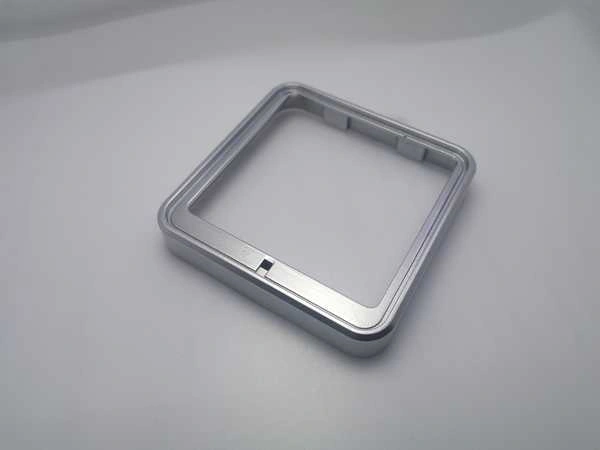
Nella produzione industriale ad alto volume, i componenti pressofusi in zinco sono costantemente sottoposti a rigorose pressioni produttive. Anche un solo difetto di porosità microscopica all'interno di un getto è sufficiente a gettare l'intero processo produttivo in uno stato di forte tensione. Per gli acquirenti, i problemi di porosità nei getti pressofusi in zinco innescano una serie di reazioni a catena: un netto aumento degli scarti di produzione, difetti come la pelatura dello strato di galvanica e continui ritardi nella consegna degli ordini.
“La stabilità è uguale al profitto”, afferma un ingegnere di processo di Supro MFG, un sentimento riecheggiato dal Nord America del 2025 fusione dei metalli dati—che dimostrano che la riduzione dei tassi di diftosità aumenta direttamente i margini di profitto. Pertanto, la chiave per controllare la porosità nello zinco fusioni a pressione sta nel gestire la fusione e nel domare i gas; una volta che questi sono controllati, il caos si placa.
Questo articolo analizza le cause principali della porosità nello zinco fusioni a pressione, coprendo fattori chiave come la composizione della lega, la temperatura di fusione e i processi di raffreddamento, e introduce metodi di prove non distruttive multistrato. Ottimizzando la matrice processo di fusione, implementando il controllo SPC e utilizzando opportuni rivestimenti per stampi, i tassi di porosità possono essere significativamente ridotti. Con il suo sistema professionale di produzione di fusione a pressione dello zinco, Supro MFG migliora efficacemente la densità e la consistenza dei lotti dei pezzi pressofusi, soddisfacendo le esigenze della produzione di precisione ad alto volume.
Perché la porosità affligge i componenti pressofusi in zinco
Piccoli pori nascosti all'interno della struttura densa dei componenti pressofusi in zinco non solo compromettono la resistenza, ma influiscono anche sulla finitura superficiale. Dalla regolazione della composizione della lega al controllo del processo di raffreddamento, ogni fase influenza la qualità finale del prodotto. Un controllo preciso sulla composizione della lega per eliminare il rischio di micropori causati da impurità, combinato con una meticolosa regolazione durante l'intero processo, è essenziale per garantire che i componenti pressofusi in zinco ad alto volume offrano sia qualità costante che affidabilità.
Come la composizione della lega influenza la formazione dei pori
Problemi di porosità nello zinco fusioni a pressione derivano spesso dalla composizione chimica. L'equilibrio chimico all'interno della lega di zinco determina direttamente il comportamento dei gas e le caratteristiche di ritiro del metallo. Allo stesso tempo, impurità non controllate e oligoelementi possono aumentare significativamente la solubilità dei gas nel metallo fuso e ridurre l'allungamento dello zinco prodotti in fusione a pressione. Se il fuso non è pulito, i gas possono rimanere intrappolati durante l'iniezione, esacerbando i difetti di porosità.
Più la zona di solidificazione è stretta, più il ritiro del metallo è regolare. Se l'intervallo è troppo ampio, si possono facilmente formare zone liquide isolate, portando direttamente a porosità da ritiro. Come professionista produttore di压fusione -> produttore di fusioni a pressione Con 25 anni di esperienza e le doppie certificazioni ISO 9001 e IATF 16949, Supro MFG applica rigorosi controlli di convalida delle leghe e di composizione per garantire la qualità dei pezzi pressofusi in zinco fin dalla fase iniziale ed eliminare il rischio di porosità associato a una produzione basata esclusivamente sull’esperienza.
Gli elementi chiave in pezzi pressofusi in lega di zinco servono a migliorare le prestazioni, ma un我就 loro squilibrio nelle proporzioni può anche comportare rischi per la qualità, come descritto in dettaglio di seguito:
Elemento / Parametro specifico | Effetti positivi sui pezzi pressofusi in zinco | Difetti di porosità e rischi per la qualità causati da quantità eccessive o da un controllo inadeguato |
Alluminio | Migliora la resistenza e la fluidità dei getti di zinco in conchiglia | Quantità eccessive ampliano l'intervallo di solidificazione e aumentano il rischio di ritiro da solidificazione |
Magnesio | Enhances resistenza alla corrosione | Livelli eccessivi accelerano l'ossidazione, causando la formazione di porosità |
Rame | Aumenta la durezza di fusioni di zinco | Livelli eccessivi restringono la finestra di solidificazione, ma possono aggravare le tensioni interne |
Il ruolo della temperatura di fusione e della velocità di raffreddamento
Nella produzione di massa di fusioni di zinco a pressione, la temperatura di fusione e la velocità di raffreddamento sono i parametri chiave del processo che determinano la densità interna dei pezzi fusi e prevengono i difetti di porosità alla fonte; la precisione con cui tali parametri vengono controllati influisce direttamente sulla qualità dei pezzi fusi in lega di zinco prodotti in serie.
Il controllo preciso della temperatura di fusione è un aspetto critico del processo di fusione a pressione. Se la temperatura di fusione supera l'intervallo standard, la capacità di adsorzione del gas dello zinco fuso aumenta in modo significativo, causando la intrappolamento di grandi quantità di gas nel metallo fuso e portando infine a un forte aumento della porosità del pressofusione di zinco fusioni; Al contrario, mantenere la temperatura entro l'intervallo di processo ottimale garantisce un flusso regolare dello zinco fuso e un riempimento uniforme della cavità dello stampo, riducendo così difetti come porosità e colate fredde alla fonte.
La velocità di raffreddamento e l'uniformità della temperatura dello stampo sono fattori ugualmente critici. Una velocità di raffreddamento eccessivamente lenta prolunga significativamente il ciclo di solidificazione del metallo e aggrava la formazione di porosità da ritiro. Ciò non solo aumenta il volume dei pori ma ne causa anche l'interconnessione, compromettendo gravemente il resistenza strutturale dei getti di zinco in conchiglia. An uneven distribution of mold temperature, on the other hand, can lead to abnormal grain size and a loose, brittle microstructure, further increasing the risk of porosity defects. Conversely, rapid and uniform cooling can effectively refine the grain structure of zinc alloys, significantly improve the density of die parti del cast, and block the formation pathways of shrinkage porosity.
In the actual production and quality control of zinc die cast products, it is necessary to maintain the melt temperature within a precise process range, ensure uniform temperature throughout the die using a temperature control system, optimize the layout of the die’s cooling channels to reduce solidification time, and continuously monitor the consistency of production cycles across batches.
As a professional zinc die casting manufacturer, Supro MFG relies on a standardized process control system to conduct real-time, end-to-end monitoring of melt temperature and cooling rates. This ensures that high-volume zinc die castings exhibit high density and dimensional accuracy, minimizes hidden porosity defects, and meets the stringent requirements of high-end manufacturing applications.
Inspection methods for detecting internal voids
Even with precise control throughout the zinc die processo di fusione, hidden internal porosity may still occur. X-ray radiography can clearly capture shrinkage voids and gas pores inside die parti del cast, and is typically the primary method used for batch sampling and production inspection of large-volume zinc die castings. CT scanning provides three-dimensional imaging of the internal cavities of castings, precisely locating microscopic porosity in complex structures and areas of thickness transition, thereby offering comprehensive defect detection for precision zinc die castings; ultrasonic testing, on the other hand, focuses on critical load-bearing structural areas, efficiently identifying internal discontinuities and ensuring the structural integrity of the castings.
Surface and microstructural analysis are equally indispensable. Penetrant testing can quickly detect voids in zinc die castings that are connected to the surface, thereby preventing quality issues during subsequent electroplating and assembly processes; Metallographic analysis, through cross-sectional examination, precisely analyzes microstructure and pore morphology, providing technical evidence for tracing the root causes of defects. Density measurement of zinc die cast products quantifies casting density by comparing theoretical mass with actual formed mass. All inspection procedures must adhere to standardized non-destructive testing protocols to issue professional certification.
As a professional zinc die casting manufacturer, Supro MFG has established a multi-tiered inspection system that integrates non-destructive testing, microscopic analysis, and density verification to ensure that every batch of zinc die castings meets the required mechanical properties and dimensional accuracy. Comprehensive inspection data and a traceability system significantly reduce assembly risks, resulting in more stable and reliable quality for high-volume zinc die castings.
Cerchi una fonderia di metalli affidabile in Cina?
- Possiamo aiutarti a ottimizzare il design del prodotto e a ridurre i costi.
- Possiamo aiutarvi con alta qualità e grandi volumi parti del cast.
- Possiamo consegnare in tempo e ottenere maggiori opportunità di mercato per le vendite.
- Beneficerai di Supro MFG servizio di fusione dei metalli.
3 Steps to Control Porosity Defects in Zinc Die Castings
Pores can rapidly compromise the surface quality and strength of die castings. If air infiltrates the molten zinc, the resulting zinc die casting products will be compromised. Optimizing melt temperature and filling time, fine-tuning injection pressure and venting, and implementing SPC-based cavity filling are essential for ensuring that castings are dense, clean, and meet production requirements.
Step 1: Optimize melt temperature and filling time
In the mass production of zinc die castings, controlling melt temperature and filling time is essential for producing consistent castings. When controlling the temperature of zinc alloys, the melt temperature should be maintained within a narrow range. Excessively high temperatures significantly increase gas solubility, exacerbating oxidation and gas entrapment issues; conversely, excessively low temperatures can lead to defects such as insufficient filling and poor bonding in thin-walled parts. Maintaining a stable furnace temperature setting is key to ensuring consistency in the production cycle of zinc die cast products.
Properly controlling the filling time of zinc die castings can effectively reduce air entrapment. Matching gate dimensions to cavity spessore della parete and optimizing runner layout allows molten metal to fill the cavity smoothly, minimizing turbulence and bubble formation. As a professional zinc die casting manufacturer with 25 years of experience and dual certifications, Supro MFG engineers simultaneously fine-tune temperature profiles and gate designs to ensure more uniform filling and fewer defects, laying the foundation for stable high-volume production.
Step 2: Fine-tune injection pressure and venting
Stable injection pressure and intelligent venting design are key to improving the density of pressofusione di zinco castings. The low-pressure phase allows the molten metal to advance smoothly, reducing entrapped air; the high-pressure phase fully fills the mold cavity, enhancing the density of thick-walled die castings. By incorporating micro-vent holes at the end of the filling process, designing overflow channels for complex molds, and coordinating with the ejection timing, air is efficiently expelled from the mold cavity.
If there is no escape route for the air, air pockets will appear on zinc die cast products in the form of bubbles or pits. Proper venting and intelligent venting help keep the mold cavity clean. Supro MFG matches pressure control curves with custom mold designs to help customers upgrade standard pressofusione di zinco castings into high-reliability products suitable for the electronics and hardware industries.
Step 3: Implement SPC for consistent cavity filling
When SPC is combined with real-time process control, the porosity of zinc die castings decreases rapidly. Key die casting parameters to monitor include injection pressure, mold temperature, filling time, and metal weight per shot. These signals are fed into statistical process control charts, allowing for the early detection of even minor deviations in cavity filling behavior. This is the solution for achieving long-term consistency in the mass production of pressofusione di zinco castings.
In 2025, the North American Die Casting Association noted that process monitoring and data-driven control are among the top drivers reducing scrap rates in zinc die casting operations, especially for high-volume precision components.This observation aligns with the actual conditions on the shop floor. Rigorous SPC not only reduces the defect classification rate but also ensures dimensional accuracy, guaranteeing that every batch of zinc castings meets specification requirements.
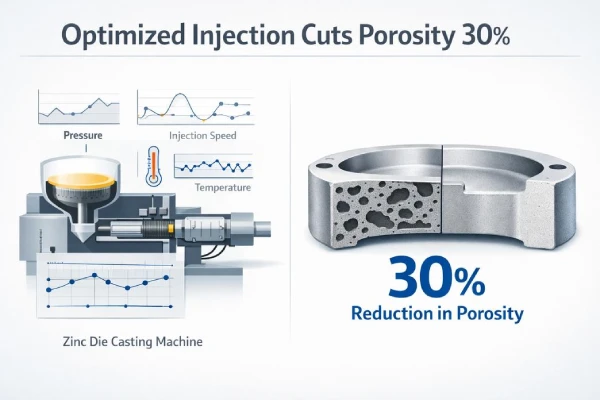
Optimizing the injection process to reduce porosity in zinc die castings by 30%
In high-volume zinc alloy die casting production, even minor optimizations to injection parameters can yield significant results. When the molten zinc, die, and die casting process are properly coordinated, porosity rates drop rapidly. For manufacturers seeking to produce zinc die castings of higher quality, the data clearly shows that controlling the process leads to improved quality.
Statistical process control of injection parameters
The key to ensuring process stability in professional zinc die casting services lies in implementing standardized statistical process control over critical injection parameters. The monitoring system includes:
Process monitoring, such as tracking melt temperature and ensuring injection speed consistency;
Plotting cavity pressure X-bar control charts and cooling fluctuation R control charts;
Identifying abnormal process fluctuations, conducting root-cause data analysis, and implementing parameter optimization.
Through this refined process control solution, zinc die castings have achieved a tangible improvement in quality. It effectively reduces gas entrapment during melt flow and significantly enhances casting density, resulting in a marked improvement in both the structural strength and batch consistency of the finished products. As a seasoned zinc die casting manufacturer, Supro MFG relies on rigorous SPC (Statistical Process Control) throughout the entire production process, moving away from traditional, experience-based production methods to achieve precise and controllable quality in zinc alloy die cast parti.
Correlating fill time reductions with fewer voids
Shorter filling times can directly reduce the porosity of zinc die castings. By controlling the gate velocity to suppress turbulence, optimizing metal flow through uniform wall thickness, and stabilizing cavity pressure, the formation of porosity is minimized at the source of filling.
Engineers at Supro MFG have confirmed through porosity analysis that faster, smoother filling reduces die difetti di fusione. The key lies in the coordinated adjustment of process parameters—adjusting the injection speed while preventing spatter and entrapped air. When zinc alloy die cast parts fill smoothly, their internal structure becomes denser, resulting in superior machinability.
Verifying improvement via non-destructive testing
Drawing on extensive practical experience and validated through standardized non-destructive testing and a traceable quality assurance system, Supro MFG has reduced the porosity of its zinc die castings by 30%. Testing methods include X-ray inspection to detect internal shrinkage and porosity, as well as ultrasonic testing to assess density variations and bond integrity. Subsequently, defect detection data is recorded, baseline data is compared with optimized batches, and improvements in porosity metrics are verified. Ongoing validation demonstrates that the quality of zinc alloy die cast parts improves with each batch, translating data into tangible production benefits.
Can mold coatings reduce porosity in zinc die castings?
Air pockets can insidiously compromise the strength and surface quality of zinc die castings. Even when the die casting process is well-established, the presence of gas entrapment or shrinkage defects can still disrupt production. An appropriate mold coating can help regulate temperature and improve release properties, thereby ensuring consistent quality in zinc die casting without complicating the production process.
Selecting Coating Thickness for Optimal Release
The selection of coating thickness directly determines the demolding performance and quality consistency of pressofusione di zinco castings. A thin coating effectively improves lubricity, ensuring smooth demolding of castings; conversely, an excessively thick coating reduces heat transfer efficiency and can easily lead to dimensional deviations. Balanced heat transfer is key to maintaining consistent casting quality. Prior to mass production, spray patterns must be thoroughly tested, and coating parameters finely optimized to ensure smooth demolding of die castings without surface scratches, thereby comprehensively improving production yield and product consistency.
Textural Requirements and Die Life Expectancy
Appropriate mold surface textures are not only a matter of appearance but also significantly influence heat transfer and metal filling efficiency, making them a critical factor in ensuring consistent surface quality in zinc die castings. Fine textures help improve paint adhesion, while polished cavities allow for stricter control over surface quality. Excessively rough textures accelerate mold wear, whereas overly smooth surfaces increase the risk of part sticking. Scientific die stampo di colata maintenance and cavity design not only ensure the integrity of the castings but also extend the service life of the mold.
Maintenance schedule to prevent coating breakdown
Ensuring the long-term effectiveness of coatings depends on a standardized maintenance plan for zinc alloy die produzione di casting.
During routine operations, inspect coating integrity according to established production cycles and monitor the condition of hot spots on the molds. At the same time, use appropriate mold cleaning methods to prevent abrasion damage. Strict standards for recoating frequency must be established for the lifecycle of pressofusione di zinco casting products, and the impact of coatings on production efficiency and mold life must be monitored.
Supro MFG provides preventive maintenance solutions for the production of high-quality pressofusione di zinco castings, ensuring the stable operation of zinc alloy die casting production lines and proactively mitigating the risk of porosity expansion.
Contatta Supro-Mfg
In summary, porosity defects in zinc die castings are caused by multiple factors, including alloy composition, melt temperature, and cooling processes. By optimizing temperature and filling time, adjusting injection pressure and the venting system, and combining these measures with SPC-based data management, along with multi-layer non-destructive testing and scientific mold coating maintenance, porosity rates can be effectively reduced.
As a professional zinc die casting manufacturer in China, Supro MFG leverages its dual-certification system and proven processes to significantly enhance the density and stability of die parti del cast, meeting the stringent requirements of high-volume precision manufacturing.
 English
 Français
 Deutsch
 Italiano
 日本語
日本語 한국어
한국어 Polski
 Português de Angola
 Русский
 Español de Argentina