
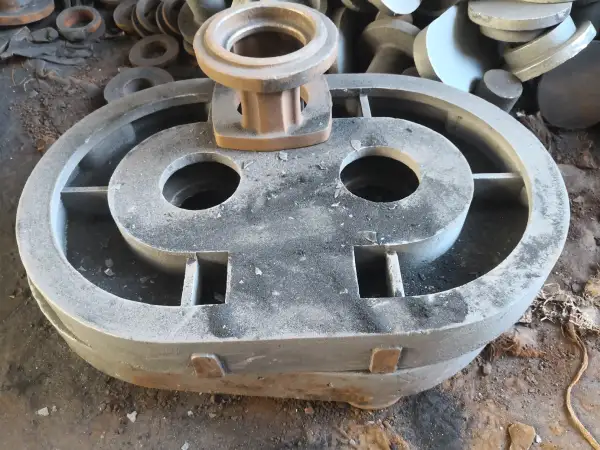
In the production system for automotive aluminum alloy structural components, sand casting remains a key process that balances cost with the ability to produce complex shapes. However, sand casting defects—such as internal porosity, oxide inclusions, and shrinkage voids—directly affect fatigue life and sealing performance, compelling engineering teams to implement systematic interventions as early as the gating system design stage. This article will systematically discuss the optimization of gate proportions in sand casting tools, the integration of ceramic filters, and the design of slag collection troughs in cross-gates. Combining these with critical flow velocity control and mold filling simulation within sand casting process parameters, as well as the calculation of riser module numbers and the placement of heat-generating sleeves and chill blocks in sand casting mold, it will explain how to establish a directional solidification gradient to eliminate shrinkage porosity and the entrapment of oxide films. The following sections will detail how these methods are implemented in actual production.
Fundamental sand casting tools and gating design for fluid control
The design of precision sand casting tools and gating systems is critical for controlling the flow rate during the pouring of molten aluminum. By carefully designing the location of the sprue basin, runner extensions, and filters, laminar flow filling of the mold cavity can be achieved, thereby preventing entrained air bubbles. Controlling fluid dynamics also helps prevent the formation of secondary oxide layers, surface slag, and turbulent spatter in thin-walled automotive components. Integrating ceramic foam filters into the runner system traps non-metallic particles before they reach critical areas of the casting. A well-designed pouring system geometry, combined with an integrated sand casting tool design, reduces the rate of internal defects, ensures uniform mold filling, and produces clean, dense castings that meet stringent automotive quality specifications.
Ceramic foam filtration integration in sand casting tools
Integrating silicon carbide ceramic foam filters directly into specialized sand casting tools allows for the retention of non-metallic slag before molten aluminum enters the mold cavity. Mold engineers install filters with 10 to 20 PPI (pores per inch) into pre-molded filter seats along the gating network. As molten metal flows through the honeycomb-like ceramic matrix, mechanical and depth filtration remove oxide inclusions. Placing the filters near the sprue smooths out turbulence, prevents the formation of secondary slag, and ensures that critical automotive castings achieve a clean, high-density metal structure.
Sprue ratio optimization for aluminum sand casting tools
In the gating system of a sand casting mold, properly designing the cross-sectional dimensions of the gates can prevent air from being drawn in during the initial pouring. By adopting a specific ratio for the non-pressurized pouring zones (for example, a 1:2:4 ratio of the gate, runner, and master gate areas), the metal flow velocity can be kept below the critical threshold of 0.5 m/s. Taper the sprue downward to ensure that the runner remains filled with molten aluminum throughout the filling process, thereby preventing air from being drawn into the metal flow. Controlling the filling rate prevents the formation of an oxide film, resulting in the production of dense, porosity-free aluminum automotive components.
Runner dead-end trap design in precision sand casting tools
Incorporating dead-end runner extensions into precision sand casting molds can intercept the initial wave of contaminated metal before filling begins. Extending the runner beyond the final sprue to form a dead-end collection chamber can capture cold metal, loose sand particles, and surface oxides. After pouring is complete, these dead-end collectors allow subsequent clean, high-temperature molten aluminum to flow smoothly through the sprue into the mold cavity. Intercepting the initial pour wave prevents non-metallic inclusions from entering critical structural walls, thereby ensuring that automotive chassis components possess good mechanical properties.
Fluid dynamics and filling velocity in sand casting process parameters
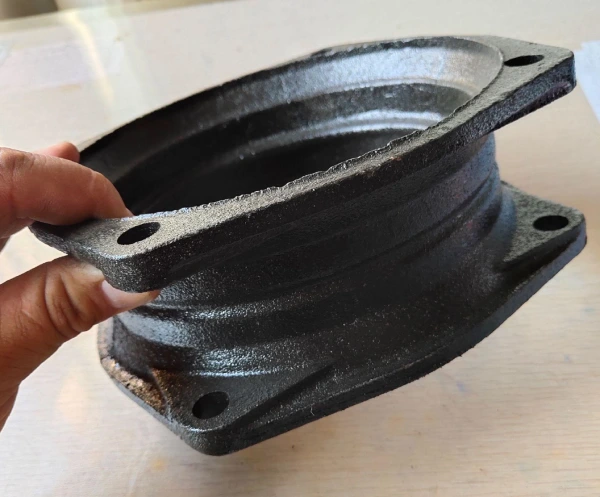
Controlling fluid dynamics within the established parameters of the sand casting process can prevent metal turbulence and oxide entrapment during cavity filling. By analyzing the velocity of molten aluminum, surface gate pressure, and flow front stability, a stable, laminar flow state can be maintained. When the flow velocity of molten aluminum exceeds the critical velocity, surface waves collapse, trapping a dry oxide film inside the sand casting. By applying finite element filling simulations and bottom gate design principles, the runner geometry can be optimized to dissipate the kinetic energy of the molten metal before it enters the mold cavity. Optimizing these hydrodynamic variables stabilizes the filling behavior, eliminates subsurface porosity, and ensures repeatable metallurgical quality in complex automotive castings.
Critical velocity control within sand casting process parameters
Controlling the molten metal flow rate within the established sand casting process parameters can prevent surface spatter and the formation of a secondary oxide layer. By designing the runner cross-section, the filling speed of the molten aluminum can be kept below the critical threshold of 0.5 m/s. When the molten metal flow rate exceeds this limit, surface turbulence can draw oxide scale into the flow, creating ripples that act as points of internal stress concentration. Maintaining a controlled pouring rate ensures a smooth rise of the molten metal level, thereby eliminating oxide inclusions and ensuring a microstructure with high integrity for aluminum components used in automotive structures.
Computer simulation for sand casting process parameters optimization
In conventional sand casting processes, running fluid flow simulations using MAGMA or ProCAST allows for the verification of the gating system layout before cutting the physical mold. By simulating the flow velocity, pressure distribution, and thermal evolution of molten aluminum during the pouring process, it is possible to precisely identify areas of localized turbulence or gas entrapment. Adjusting gate dimensions and runner angles based on the software’s predictions enables a smoother advance of the metal front. The use of computational fluid dynamics (CFD) technology not only reduces the number of test pours but also accelerates prototype development, ensuring that castings produced from production molds are defect-free and comply with stringent automotive quality specifications.
Bottom-gating system rules in sand casting process parameters
Applying bottom-gating design principles in sand casting tools ensures smooth upward flow of the metal and prevents splashing. Placing the gate at the lowest point of the mold cavity allows molten aluminum to rise smoothly against gravity. The use of a widened gate base and a curved runner elbow absorbs the kinetic energy of the descending metal flow and stabilizes the pressure before it enters the mold cavity. Gentle bottom filling prevents erosion of the sand casting tools and minimizes oxide slag, resulting in dense, high-strength aluminum castings that meet the demands of rigorous automotive structural applications.
Risering strategies and thermal exchange in precision sand casting mold systems
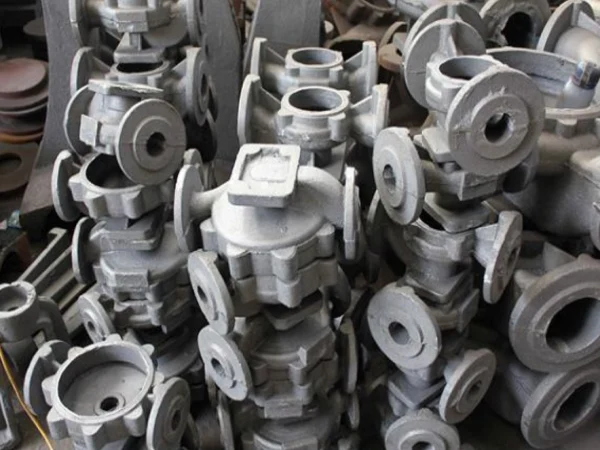
Optimizing the riser strategy in a sand casting mold system is critical for achieving complete volume filling during the solidification of aluminum alloys. By analyzing geometric heat dissipation rates, it is ensured that the riser remains liquid longer than the casting sections it feeds. The use of exothermic sleeves and proper chill placement can alter local heat transfer rates, thereby creating a steep, directed temperature gradient toward the filling pool. Balancing the heat exchange between the molten aluminum and the sand matrix prevents the formation of shrinkage porosity in thick-walled sections. This systematic thermal management ensures structural density, optimizes metal utilization, and produces defect-free automotive castings capable of withstanding severe fatigue loads.
Modulus calculation methods for sand casting mold risering
When designing a sand casting mold, calculating the thermal modulus ensures that molten aluminum effectively fills the mold during solidification. Engineers apply Chvorinov’s rule, defining the thermal modulus as
M = V / A
Where V represents the cross-sectional volume and A represents the surface area for heat dissipation and cooling. To ensure that the sprue solidifies after the casting cross-section, the thermal modulus of the sprue must satisfy the condition M(riser)≥1.2M(casting)。Applying this formula prevents premature solidification of the sprue, thereby maintaining an unobstructed flow path and accommodating volumetric shrinkage in critical automotive components.
Exothermic sleeve applications in structural sand casting mold designs
Inserting insulating or exothermic sleeves into the riser system of a sand casting process can significantly improve the metal filling efficiency of thick-walled components. These reactive sleeves generate localized heat upon contact with molten aluminum, thereby delaying solidification without increasing the overall volume of the riser. The use of exothermic materials can increase the effective thermal modulus of smaller risers by 30% to 50%, thereby reducing the total mass of molten metal poured. Minimizing riser size not only improves overall casting yield but also ensures a continuous supply of molten metal, thereby eliminating internal shrinkage voids in complex automotive housings.
Chill placement to extend sand casting mold feeding range
Incorporating internal or external metal cooling cores into the sand casting process parameters can extend the effective feeding distance of the riser in areas with uniform wall thickness. Casting technicians embed steel, copper, or graphite cooling cores at the junctions of heavy castings to accelerate the removal of localized heat. Rapid cooling creates a steep temperature gradient toward the sprue, thereby preventing the formation of isolated molten pools in the center of the sand casting. By strategically placing cooling cores, localized micro-shrinkage can be eliminated, fine dendrite spacing ensured, and the fatigue strength of critical structural vehicle components improved.
Mitigating internal sand casting defects through gating system optimization
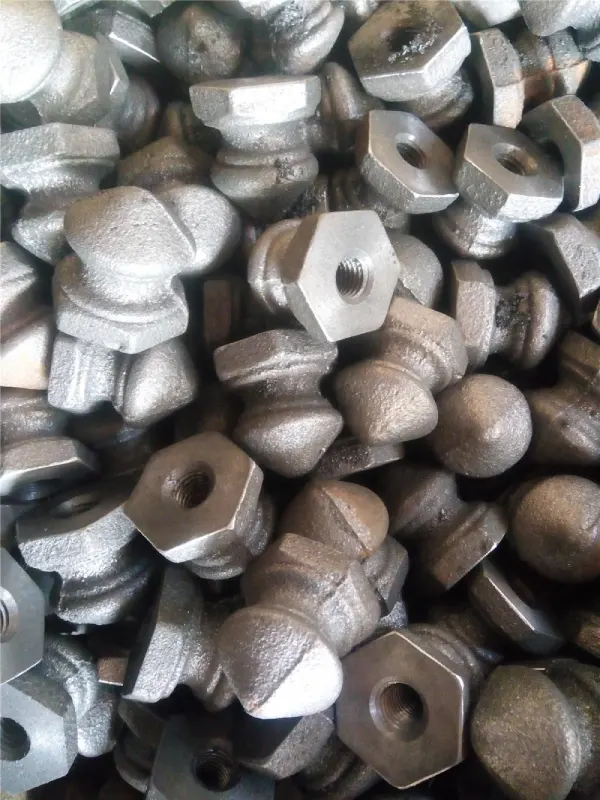
To systematically eliminate internal sand casting defects, it is necessary to design optimized pouring systems and riser structures tailored specifically for automotive aluminum components. By controlling the melt flow pattern, the formation of oxide films, gas entrapment, and the formation of localized shrinkage porosity during filling can be suppressed. The use of smooth runner radii, tapered gates, and ceramic foam filters prevents slag from entering critical structural cavities. At the same time, the strategic placement of risers ensures a continuous supply of molten metal to compensate for volumetric solidification shrinkage. Eliminating these internal defects helps improve mechanical density, meet non-destructive testing standards, and ensure long-term fatigue durability in high-stress powertrain and vehicle structural assemblies.
Preventing oxide inclusions and sand casting defects in aluminum parts
During the pouring of molten aluminum, the key to minimizing oxide inclusions and internal sand casting defects lies in ensuring laminar flow throughout the entire pouring system. Engineers designed a non-pressurized pouring ratio and inserted ceramic foam filters into the runner to trap dross before the metal flows into the mold cavity. Controlling the liquid metal filling speed to below 0.5 m/s prevents turbulence and the folding of the oxide film on the surface of the aluminum alloy. Eliminating entrained oxides ensures a dense microstructure, thereby improving the airtightness and dynamic fatigue strength of critical automotive housings.
Eliminating shrinkage porosity and internal sand casting defects
To eliminate shrinkage porosity and localized sand casting defects, a steep temperature gradient must be established in the direction leading to the active sprue. Casting engineers calculate the thermal modulus values and position exothermic sleeves or metal cooling cores at thick-walled junctions to delay or accelerate localized cooling. Keeping the gating system unobstructed allows molten aluminum to compensate for volume contraction during the phase transition. Preventing individual pockets of molten aluminum can eliminate micro-shrinkage porosity, thereby ensuring the overall structural density of mounting bosses in high-load automotive components.
Geometric stabilization techniques to prevent structural sand casting defects
Applying geometric stabilization methods in specialized sand casting tools can prevent deformation and thermal cracking caused by thermal stress during component cooling. Localized stress concentrations resulting from aluminum shrinkage around sand cores can be mitigated by using larger fillet radii, uniform wall thickness transitions, and temporary tie bars. Controlling cooling uniformity prevents warping of complex automotive housings after demolding. To learn how advanced model layouts and wall thickness transition strategies ensure the geometric stability of complex housings, read our comprehensive engineering analysis on [Sand casting design for dimensional stability in automotive structural housings].
Cerchi una fonderia di metalli affidabile in Cina?
- Possiamo aiutarti a ottimizzare il design del prodotto e a ridurre i costi.
- Possiamo aiutarvi con getti di alta qualità e grandi volumi.
- Possiamo consegnare in tempo e ottenere maggiori opportunità di mercato per le vendite.
- Beneficerai di Supro MFG fusione dei metalli servizio.
Contact Supro MFG
This paper systematically analyzes how defects in the sand casting process can be eliminated through tool design, fluid dynamics control, and thermal management. The core conclusion is that the precise setting of sand casting process parameters—particularly the coordinated control of critical flow velocity and filling behavior—is key to achieving a dense microstructure. This methodology is driving the industry’s shift from experience-based practices to data-driven, predictive design. In the future, it will be deeply integrated with digital inspection technologies to further enhance the responsiveness of sand casting mold systems.
Supro MFG combines advanced sand casting tools with engineered gating solutions. By strictly controlling process parameters and integrating filtration systems, we can systematically eliminate internal sand casting defects. In actual production, we precisely position risers and chill blocks based on mold factor calculations and adjust the gating ratio according to filling simulation results to ensure the mold’s feeding efficiency and dimensional stability. The high-integrity aluminum alloy castings delivered through this process will fully comply with the IATF 16949 standard. Please contact Supro MFG for customized technical solutions.
 English
 Čeština
 Français
 Deutsch
 Italiano
 日本語
日本語 한국어
한국어 فارسی
فارسی Polski
 Português de Angola
 Русский
 Slovenčina
 Español de Argentina
 Українська