
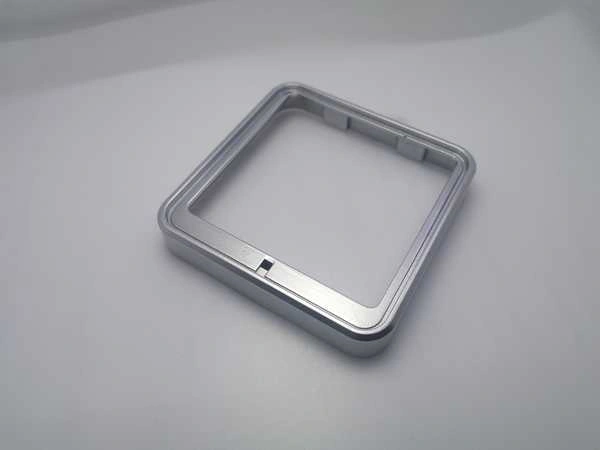
¿Por qué la porosidad afecta a las piezas de fundición a presión de zinc?
Los diminutos poros ocultos dentro de la densa estructura de las piezas fundidas a presión de zinc no solo comprometen la resistencia, sino que también afectan el acabado superficial. Desde ajustar la composición de la aleación hasta controlar el proceso de enfriamiento, cada paso influye en la calidad final del producto. El control preciso de la composición de la aleación para eliminar el riesgo de microporos causados por impurezas, combinado con una regulación minuciosa en todo el proceso, es esencial para garantizar que las piezas fundidas a presión de zinc de alto volumen ofrezcan tanto una calidad constante como confiabilidad.
Cómo influye la composición de la aleación en la formación de poros
| Elemento específico / Parámetro | Efectos positivos en las fundiciones a presión de zinc | Defectos de porosidad y riesgos de calidad causados por cantidades excesivas o control inadecuado |
| Aluminio | Improves the strength and fluidity of zinc die castings | Excessive amounts widen the solidification range and increase the risk of solidification shrinkage |
| Magnesium | Enhances resistencia a la corrosión | Excessive levels accelerate oxidation, leading to porosity formation |
| Copper | Increases the hardness of zinc castings | Excessive levels narrow the solidification window but may exacerbate internal stresses |
The role of melt temperature and cooling rate
Inspection methods for detecting internal voids
Even with precise control throughout the zinc die proceso de fundición, hidden internal porosity may still occur. X-ray radiography can clearly capture shrinkage voids and gas pores inside die piezas de fundición, and is typically the primary method used for batch sampling and production inspection of large-volume zinc die castings. CT scanning provides three-dimensional imaging of the internal cavities of castings, precisely locating microscopic porosity in complex structures and areas of thickness transition, thereby offering comprehensive defect detection for precision zinc die castings; ultrasonic testing, on the other hand, focuses on critical load-bearing structural areas, efficiently identifying internal discontinuities and ensuring the structural integrity of the castings.
Surface and microstructural analysis are equally indispensable. Penetrant testing can quickly detect voids in zinc die castings that are connected to the surface, thereby preventing quality issues during subsequent electroplating and assembly processes; Metallographic analysis, through cross-sectional examination, precisely analyzes microstructure and pore morphology, providing technical evidence for tracing the root causes of defects. Density measurement of zinc die cast products quantifies casting density by comparing theoretical mass with actual formed mass. All inspection procedures must adhere to standardized non-destructive testing protocols to issue professional certification.
As a professional zinc die casting manufacturer, Supro MFG has established a multi-tiered inspection system that integrates non-destructive testing, microscopic analysis, and density verification to ensure that every batch of zinc die castings meets the required mechanical properties and dimensional accuracy. Comprehensive inspection data and a traceability system significantly reduce assembly risks, resulting in more stable and reliable quality for high-volume zinc die castings.
¿Busca una fundición de metales confiable en China?
- Podemos ayudarte a optimizar el diseño de tus productos y a reducir costos.
- Podemos ayudarte con alta calidad y gran volumen piezas de fundición.
- Podemos entregar a tiempo y conseguir más oportunidades en el mercado de ventas.
- Usted se beneficiará de Supro MFG servicio de fundición de metales.
3 Steps to Control Porosity Defects in Zinc Die Castings
Pores can rapidly compromise the surface quality and strength of die castings. If air infiltrates the molten zinc, the resulting zinc die casting products will be compromised. Optimizing melt temperature and filling time, fine-tuning injection pressure and venting, and implementing SPC-based cavity filling are essential for ensuring that castings are dense, clean, and meet production requirements.
Step 1: Optimize melt temperature and filling time
In the mass production of zinc die castings, controlling melt temperature and filling time is essential for producing consistent castings. When controlling the temperature of zinc alloys, the melt temperature should be maintained within a narrow range. Excessively high temperatures significantly increase gas solubility, exacerbating oxidation and gas entrapment issues; conversely, excessively low temperatures can lead to defects such as insufficient filling and poor bonding in thin-walled parts. Maintaining a stable furnace temperature setting is key to ensuring consistency in the production cycle of zinc die cast products.
Properly controlling the filling time of zinc die castings can effectively reduce air entrapment. Matching gate dimensions to cavity espesor de la pared and optimizing runner layout allows molten metal to fill the cavity smoothly, minimizing turbulence and bubble formation. As a professional zinc die casting manufacturer with 25 years of experience and dual certifications, Supro MFG engineers simultaneously fine-tune temperature profiles and gate designs to ensure more uniform filling and fewer defects, laying the foundation for stable high-volume production.
Step 2: Fine-tune injection pressure and venting
Stable injection pressure and intelligent venting design are key to improving the density of zinc die castings. The low-pressure phase allows the molten metal to advance smoothly, reducing entrapped air; the high-pressure phase fully fills the mold cavity, enhancing the density of thick-walled die castings. By incorporating micro-vent holes at the end of the filling process, designing overflow channels for complex molds, and coordinating with the ejection timing, air is efficiently expelled from the mold cavity.
If there is no escape route for the air, air pockets will appear on zinc die cast products in the form of bubbles or pits. Proper venting and intelligent venting help keep the mold cavity clean. Supro MFG matches pressure control curves with custom mold designs to help customers upgrade standard zinc die castings into high-reliability products suitable for the electronics and hardware industries.
Step 3: Implement SPC for consistent cavity filling
When SPC is combined with real-time process control, the porosity of zinc die castings decreases rapidly. Key die casting parameters to monitor include injection pressure, mold temperature, filling time, and metal weight per shot. These signals are fed into statistical process control charts, allowing for the early detection of even minor deviations in cavity filling behavior. This is the solution for achieving long-term consistency in the mass production of zinc die castings.
In 2025, the North American Die Casting Association noted that process monitoring and data-driven control are among the top drivers reducing scrap rates in zinc die casting operations, especially for high-volume precision components.This observation aligns with the actual conditions on the shop floor. Rigorous SPC not only reduces the defect classification rate but also ensures dimensional accuracy, guaranteeing that every batch of zinc castings meets specification requirements.

Optimizing the injection process to reduce porosity in zinc die castings by 30%
In high-volume zinc alloy die casting production, even minor optimizations to injection parameters can yield significant results. When the molten zinc, die, and die casting process are properly coordinated, porosity rates drop rapidly. For manufacturers seeking to produce zinc die castings of higher quality, the data clearly shows that controlling the process leads to improved quality.
Statistical process control of injection parameters
The key to ensuring process stability in professional zinc die casting services lies in implementing standardized statistical process control over critical injection parameters. The monitoring system includes:
Process monitoring, such as tracking melt temperature and ensuring injection speed consistency;
Plotting cavity pressure X-bar control charts and cooling fluctuation R control charts;
Identifying abnormal process fluctuations, conducting root-cause data analysis, and implementing parameter optimization.
Through this refined process control solution, zinc die castings have achieved a tangible improvement in quality. It effectively reduces gas entrapment during melt flow and significantly enhances casting density, resulting in a marked improvement in both the structural strength and batch consistency of the finished products. As a seasoned zinc die casting manufacturer, Supro MFG relies on rigorous SPC (Statistical Process Control) throughout the entire production process, moving away from traditional, experience-based production methods to achieve precise and controllable quality in zinc alloy die cast piezas.
Correlating fill time reductions with fewer voids
Verifying improvement via non-destructive testing
Drawing on extensive practical experience and validated through standardized non-destructive testing and a traceable quality assurance system, Supro MFG has reduced the porosity of its zinc die castings by 30%. Testing methods include X-ray inspection to detect internal shrinkage and porosity, as well as ultrasonic testing to assess density variations and bond integrity. Subsequently, defect detection data is recorded, baseline data is compared with optimized batches, and improvements in porosity metrics are verified. Ongoing validation demonstrates that the quality of zinc alloy die cast parts improves with each batch, translating data into tangible production benefits.
Can mold coatings reduce porosity in zinc die castings?
Air pockets can insidiously compromise the strength and surface quality of zinc die castings. Even when the die casting process is well-established, the presence of gas entrapment or shrinkage defects can still disrupt production. An appropriate mold coating can help regulate temperature and improve release properties, thereby ensuring consistent quality in zinc die casting without complicating the production process.
Selecting Coating Thickness for Optimal Release
Textural Requirements and Die Life Expectancy
Appropriate mold surface textures are not only a matter of appearance but also significantly influence heat transfer and metal filling efficiency, making them a critical factor in ensuring consistent surface quality in zinc die castings. Fine textures help improve paint adhesion, while polished cavities allow for stricter control over surface quality. Excessively rough textures accelerate mold wear, whereas overly smooth surfaces increase the risk of part sticking. Scientific die molde de fundición maintenance and cavity design not only ensure the integrity of the castings but also extend the service life of the mold.
Maintenance schedule to prevent coating breakdown
Comuníquese con Supro-Mfg
En resumen, la porosidad defects in zinc die castings are caused by multiple factors, including alloy composition, melt temperature, and cooling processes. By optimizing temperature and filling time, adjusting injection pressure and the venting system, and combining these measures with SPC-based data management, along with multi-layer non-destructive testing and scientific mold coating maintenance, porosity rates can be effectively reduced.
As a professional zinc die casting manufacturer in China, Supro MFG leverages its dual-certification system and proven processes to significantly enhance the density and stability of die piezas de fundición, meeting the stringent requirements of high-volume precision manufacturing.
 English
 Français
 Deutsch
 Italiano
 日本語
 한국어
 Polski
 Português de Angola
 Русский
 Español de Argentina