
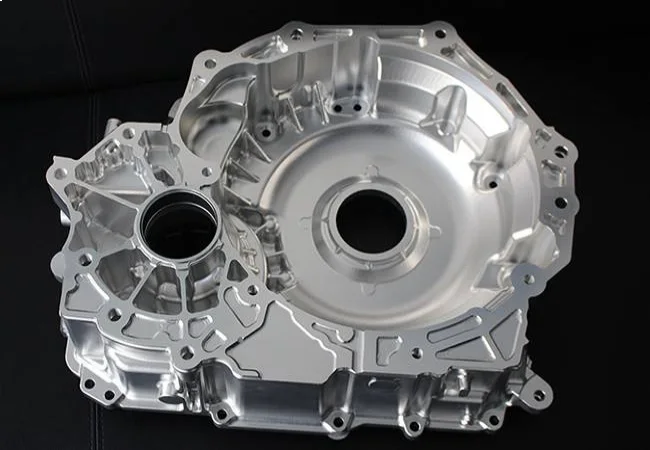
Among aluminium casting defects, cracks are the most prevalent and represent one of the most costly pain points. A minute, concealed crack is sufficient to cause a structural component to fail completely during testing or use, resulting in the scrapping of an entire batch of aluminium castings and significant economic loss.
When confronting crack defects, many practitioners habitually resort to isolated adjustments of process parameters as a remedy, yet this fails to comprehensively resolve aluminium casting defects. The root cause lies in an oversight: aluminium casting production constitutes a complex system integrating multiple stages—design, materials, processes, and post-treatment—requiring systematic prevention and treatment.
This paper presents a clear and systematic framework for preventing and controlling casting cracks, offering a comprehensive solution to this casting defect challenge. It delves into the formation mechanisms and root causes of both hot and cold cracks, unveiling a systematic prevention strategy that spans the entire product lifecycle. Furthermore, it provides valuable, directly applicable insights through practical case studies.
Mechanisms and Causes of Crack in Aluminium Castings Defects
Aluminium casting cracks may be categorised as either hot cracks or cold cracks, with each defect exhibiting distinct underlying mechanisms and requiring different preventive measures. Cracking defects represent a classic challenge frequently encountered by many aluminium foundries, not only compromising product integrity but also directly leading to production interruptions, escalating costs, and delivery delays. Understanding the formation mechanisms of cracks constitutes the first step towards resolving these aluminium casting defects.
Analysis of Hot Cracking in Aluminium Castings Defects
Heat cracks are discontinuous or continuous fissures that form near the solidus temperature of aluminium castings, typically distributed along grain boundaries.
(1)Formation Mechanism of Hot Cracking
Hot cracking is essentially a failure phenomenon occurring during the final stages of solidification in aluminium castings.
As aluminium alloys cool, a dendritic framework network forms between grains. By the last phase of solidification, most of the metal has solidified, yet a very thin liquid film persists between grains. Should the aluminium casting encounter external impediments to cooling contraction at this stage (such as rigid sand cores or mould walls), or develop internal contraction stresses (hot spots) due to uneven cooling rates across different regions, the fragile dendritic framework may be stretched. When the applied tensile stress exceeds the limit determined by the strength of the liquid film at that temperature, separation occurs between the dendrites, resulting in cracks – one of the aluminium casting defects.
(2)Typical Characteristics and Specific Triggers of Hot Cracking
Thermal cracks in aluminium castings typically manifest as tortuous, irregular fissures distributed along grain boundaries. Formed at elevated temperatures, the crack surfaces often exhibit oxidation resulting in a darkened appearance.
Such aluminium casting cracks commonly occur at locations of abrupt cross-sectional changes, within internal hot spots, and near structures impeding shrinkage—such as flange-to-wall junctions, internal corners, or thick sections adjacent to the ingate.
Based on Supro MFG's practical experience, thermal cracking in aluminium castings is primarily triggered by four key factors:
The most fundamental and primary cause of aluminium casting cracks is inadequate structural design. Sharp corners and abrupt wall thickness variations within the design directly induce uneven cooling, creating stress concentration points that significantly heighten thermal cracking risk.
Defective gating and riser system design allows molten aluminium to impact mould walls or cores, causing localised overheating. Concurrently, if risers fail to adequately compensate for thick sections distant from their position, these areas experience insufficient liquid metal replenishment during solidification shrinkage, resulting in shrinkage cavities that induce hot cracks.
Certain aluminium alloys with broad solidification temperature ranges, high thermal expansion coefficients, or inherent brittleness are particularly susceptible to casting defects. This stems from their reduced strength and ductility within the brittle temperature range, making them more prone to tensile failure.
Erroneous process parameters (such as excessively high pouring temperatures) exacerbate overall casting shrinkage and prolong residence time within the brittle temperature range.
Furthermore, insufficient compliance in castings moulds or sand cores imposes excessive mechanical resistance, impeding the casting's free contraction and directly causing cracking.
By systematically analysing the factors contributing to aluminium casting defects, we can implement precise interventions during product design and process development stages, thereby controlling the occurrence of hot cracking defects at their source.
Analysis of Cold Cracking in Aluminium Castings Defects
Cold cracking refers to cracks in aluminium castings that typically propagate through the grain structure. These cracks occur after the casting has fully solidified and cooled to a temperature well below the solidus line (i.e., entering the elastic solid state range), when residual internal stresses exceed the material's tensile strength.
(1) Formation Mechanism of Cold Cracking
Another defect in aluminium castings is cold cracking.
The core cause lies in the cooling process of castings, where differing cooling rates across various sections (such as thick-walled versus thin-walled areas) result in uneven contraction. This contraction is impeded by the casting itself or the mould shell, generating a state of internal stress within the casting where tensile and compressive stresses coexist – known as residual stress. The condition for occurrence arises when residual tensile stresses in localised areas of the castings exceed the material's tensile strength limit at that temperature. This triggers brittle fracture, forming cold cracks among aluminium casting defects.
(2) Typical Characteristics and Specific Triggers of Cold Cracks
These two types of aluminium casting cracks exhibit significant differences. Cold cracks typically appear as straight lines or smooth curves, are relatively narrow in width, and possess a metallic lustre at the fracture surface. Formed at lower temperatures, they remain largely unaffected by severe oxidation.
Cold cracks in castings predominantly occur in stress concentration zones, such as sharp internal radii, abrupt wall thickness variations, and areas within large castings where rigid structures interconnect and impede shrinkage.
Based on Supro MFG's engineering experience, three primary factors induce cold cracks in aluminium castings:
Firstly, complex casting geometries—such as large planar surfaces, continuous uniform wall thicknesses, or rigid structures like ‘U’-shaped or ‘L’-shaped elements—create substantial contraction barriers during cooling, generating extremely high residual stresses.
Subsequent improper handling ranks among the most common defect triggers in aluminium casting production. Excessively aggressive operations such as sand removal, cleaning, shot blasting, or machining (e.g., excessively deep cuts) not only impose external impact forces but also release or redistribute residual stresses within the casting, thereby inducing cracks.
Incorrect heat treatment processes constitute another critical factor inducing defects in castings. Excessively rapid heating or cooling rates generate new thermal stresses within the casting. Furthermore, for complex castings, if quenching cooling rates following solution treatment are too rapid, the resulting quenching stresses can readily exceed material strength, directly causing casting fractures.
Supro MFG employs simulation software to predict residual stress effects within aluminium castings, optimising structural design during the development phase. Concurrently, stringent heat treatment and post-processing protocols are implemented to systematically eliminate cold cracking risks in castings.
Other Causes of Aluminium Casting Cracks
In the practical production of aluminium casting, certain seemingly minor factors can also lead to castings being scrapped. Among these, material inherent issues and post-processing operations are critical junctures.
Poor control of chemical composition during aluminium casting can induce cracks in castings. For instance, most castings require iron content below 0.15–0.20%. Excessive iron promotes the formation of hard, brittle intermetallic compounds rich in iron (such as β-Al₅FeSi). These needle-like brittle phases severely fracture the aluminium alloy matrix, creating micro-cracks within the material. This significantly reduces the casting's ductility and fatigue resistance, making it highly susceptible to cracking under stress.
Poor melting quality leads to hydrogen-induced porosity and oxide inclusions in aluminium castings. These defects serve as crack initiation sites, reducing the effective load-bearing area and fatigue life of the casting. Furthermore, failure to use grain refiners during casting or employing excessively high pouring temperatures results in coarse columnar or equiaxed crystalline structures after solidification, diminishing resistance to crack propagation.
Another cause of aluminium casting cracks is inappropriate post-processing operations that render blanks unusable at the final stage. For instance, excessive mechanical impact, improper straightening and shaping, or heat treatment errors readily induce cracks in the most vulnerable areas of castings, resulting in component scrap.
Supro MFG implements a rigorous material control system throughout the aluminium casting process, incorporating techniques such as spectral analysis, vacuum hydrogen measurement, and microstructural metallographic examination. Combined with Standard Operating Procedures (SOPs) governing all post-processing operations, this ensures comprehensive quality control from raw material to finished product, fundamentally eliminating the risk of aluminium casting cracks.
Preventing Aluminium Casting Cracks: A Systematic Solution
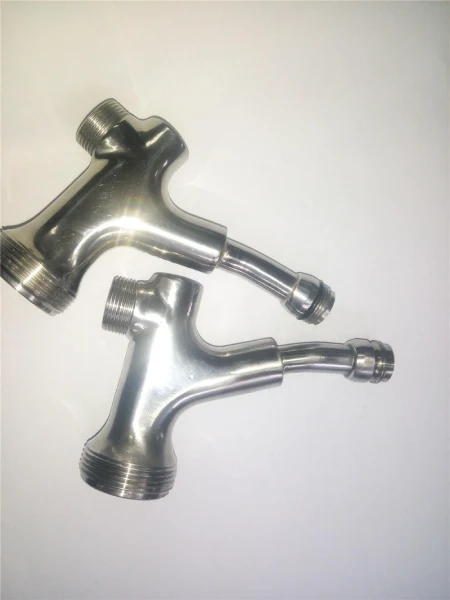
To systematically address aluminium casting cracks, comprehensive control must be implemented throughout the entire process, encompassing design, materials, manufacturing techniques, and post-treatment. Preventing cracks at the design stage is paramount. The intrinsic quality of materials forms the fundamental guarantee for flawless castings. Precise process control is central to achieving stable production. Standardised heat treatment and post-processing operations constitute the final step in ensuring the integrity of aluminium castings. This interconnected, systematic solution guarantees the production of high-reliability aluminium castings free from crack defects.
Optimising Aluminium Casting Design to Prevent Cracks
Maintaining uniform wall thickness distribution is paramount in aluminium casting design. Structures where thick sections are encircled by thin-walled areas should be avoided wherever possible, as such irregular cross-sections are a primary cause of hot and cold cracks. Where thickness variations are unavoidable, Supro MFG recommends connecting them via smooth, gradual transitions (such as taper ratios not exceeding 1:3).
Employing rounded corners at sectional transitions within aluminium castings represents the most effective and cost-efficient stress-relief measure. Supro's casting experience demonstrates that incorporating sufficiently large radii (minimum internal radius of 0.6-1 times the adjacent wall thickness) minimises stress concentration effects, significantly enhancing the casting's fatigue strength and crack resistance. Additionally, avoid sharp corners and complex stress-concentrating structural designs, such as rigid enclosed configurations like ‘L’-shaped or ‘U’-shaped aluminium castings. For large planar sections, consider incorporating stiffeners to prevent deformation and distribute stresses.
Integrating computer-aided engineering (CAE) simulations enables virtual visualisation of potential aluminium casting defects. Pre-production solidification modelling clearly reveals the sequential solidification patterns across different casting regions. This empowers Supro engineers to strategically adjust the gating system or employ chill blocks during mould fabrication, thereby eliminating potential crack initiation points.
CAE further identifies and guides the elimination of shrinkage porosity and shrinkage cavities in castings. It analyses thermal stresses and deformation to pinpoint potential crack risks, locating hazardous zones where stress values may exceed the material's tensile strength. These stresses are then released either through structural modifications during the design phase or by implementing targeted heat treatment processes in subsequent stages. By deeply integrating Design for Manufacturing (DFM) principles with advanced CAE simulation technology, we ensure the delivery of aluminium castings that combine high performance with exceptional reliability.
Enhancing the intrinsic quality of aluminium castings through material and melting control
The reliability of aluminium casting begins at the melting furnace. Any minor compromise at the material level will be amplified in subsequent processes, ultimately manifesting as defects such as cracks. Therefore, stringent chemical composition control and advanced melt treatment technology form Supro's dual-control strategy for high-quality aluminium casting.
Precise chemical composition forms the foundation for ensuring aluminium alloys possess ideal solidification characteristics and mechanical properties. Not only must the content of primary elements (such as silicon and magnesium) fall within the mid-range of standard specifications, but factors contributing to aluminium casting cracks must also be rigorously monitored. Concurrently, advanced melt treatment technology provides an intrinsic safeguard against cracking in castings. A fine, uniform grain structure (typically targeting ASTM Grade 5 or higher) not only enhances material strength and ductility but also effectively inhibits crack propagation, thereby comprehensively improving the casting's resistance to both hot and cold cracking.
Supro MFG regards materials science as the bedrock of manufacturing processes. Through this systematic materials and melting control system, we are committed to delivering exceptional quality and reliability for your aluminium castings, from the inside out.
Achieving Stable Aluminium Casting Production via Precise Process Control
Precise control of key parameters in aluminium casting serves as the final line of defence against crack formation. Optimising the design of the pouring and riser system effectively eliminates shrinkage porosity, preventing it from becoming a source of hot cracks. For instance, strategically placing holding risers at thick, large hot spots that solidify last ensures adequate liquid metal feeding. Employing bottom-pour or tangential pouring systems guarantees smooth, continuous filling of the mould cavity, minimising turbulence and entrapped air. This approach eliminates risks of casting cracks caused by internal defects such as slag inclusions and porosity.
Concurrently, critical process parameters must be monitored: control pouring temperature (e.g., ensuring it does not exceed 750°C), regulate mould temperature (maintaining stability between 150-350°C), and only open the mould after the molten aluminium has cooled to an appropriate temperature (typically at least 300°C below its solidus line). These meticulous measures collectively safeguard the casting against cracking.
Adherence to Standardised Procedures for Heat Treatment and Post-Processing of Aluminium Castings
The subsequent processing of aluminium castings equally determines the final integrity and performance of the product. On the one hand, selecting an appropriate heat treatment process based on the casting structure is crucial. For instance, for complex-shaped castings with high residual stress risks, the T5 process (artificial ageing only) is recommended. Conversely, for components demanding extremely high strength, the T6 process (solution treatment + full artificial ageing) is employed.
On the other hand, standardising post-processing operations for aluminium casting involves implementing automated cleaning and handling to minimise mechanical damage, alongside establishing standard operating procedures to ensure operational consistency. This fundamentally eliminates the risk of casting damage introduced by operational variations.
At Supro MFG, we regard the control and standardisation of aluminium casting processes as the essence of manufacturing. Through systematic management of details, we ensure every delivered casting delivers reliable performance and flawless integrity.
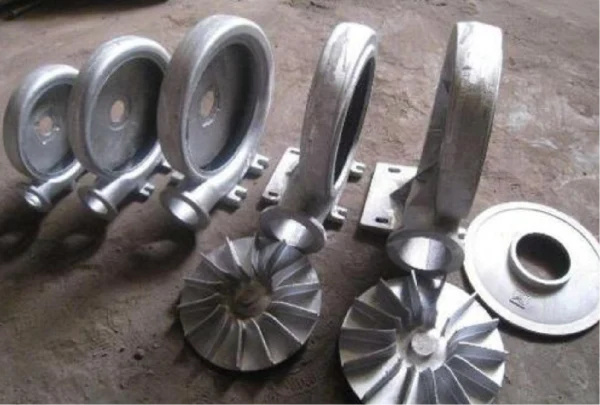
Case Study of Aluminium Casting Defects: Supro's Systematic Approach to Resolving Cracking in Aluminium Brackets
This is a classic case study of Supro resolving aluminium casting defects. The client faced an extremely high scrap rate due to cracking in heavy-duty aluminium brackets, resulting in significant delay costs and project uncertainty. Through Supro’s systematic crack defect analysis, the root cause was precisely identified as thermal tearing within the aluminium casting. By implementing a three-step bespoke solution, the client successfully resolved this challenge, reducing the aluminium casting crack scrap rate from 30% to below 0.5%.
Case Background
Supro MFG previously resolved a critical issue of aluminium casting cracks for a client producing aluminium brackets.
This critical aluminium bracket for heavy-duty equipment suffered a near 30% crack failure rate during trial production. This not only incurred substantial scrap costs for the aluminium casting but, more significantly, directly caused project delays for the new product, placing immense pressure on the entire supply chain.
Supro's initial analysis revealed that the cracks were scattered across the casting with no clear root cause, rendering conventional trial-and-error corrective measures ineffective.
Investigation and Diagnostic Process
Supro's specialist team promptly initiated a systematic root cause analysis of the aluminium casting defects. The cracked surfaces at the ports exhibited typical intergranular characteristics accompanied by oxidation discolouration, initially suggesting hot tearing defects.
Subsequently, through process review and simulation validation of the aluminium casting process, the solidification sequence of the casting was reproduced using foundry simulation software. Results clearly demonstrated severe isolated hot spots at several web-to-main-wall junctions within the bracket. These regions solidified last and received inadequate shrinkage compensation, consequently causing aluminium casting cracks.
The root causes of the aluminium casting defects were ultimately determined to be:
- Sharp internal angles within the casting's structural design;
- An ingot/gating system incapable of achieving effective sequential solidification;
- Premature removal from the mould during the process parameters, leading to cracking issues.
Solution Implementation
Having identified the causes of aluminium casting cracks, Supro implemented a series of measures to optimise the aluminium casting process:
Firstly, working closely with the client, the geometry of the aluminium bracket was redesigned and optimised. The internal fillet radii at all critical junctions were increased, and wall thickness transitions were modified to feature smooth tapered changes.
Secondly, the aluminium casting's pouring system was redesigned, with strategically placed chill blocks at hot spots where structural modifications proved insufficient, thereby guiding the correct solidification sequence.
Finally, the aluminium casting process parameters were refined with greater precision. A strictly defined, narrower pouring temperature window was implemented, and the cooling time for castings within the mould was significantly extended. This ensured the castings were sufficiently cooled and possessed adequate strength before demoulding.
Case Outcomes
This systematic solution for aluminium casting cracks has delivered sustained, positive outcomes for the client: the scrap rate due to cracks in aluminium brackets has been reduced from 30% to below 0.5%, representing a qualitative leap in product quality. It has saved the client substantial costs associated with aluminium casting rework and scrap, successfully restored the project schedule, and ensured timely delivery.
Supro MFG believes that every aluminium casting defect represents an unsolved puzzle. Through scientific diagnosis and systematic engineering solutions, we can not only resolve your immediate issues but also establish a long-term, reliable manufacturing foundation for your products.
Conclusion
Aluminium casting cracks represent a complex systemic issue, with root causes spanning design, materials, processes, and post-treatment stages. Hot cracks originate from the rupture of intergranular liquid films during late solidification, whilst cold cracks result from residual stresses exceeding material limits after complete cooling.
Successfully preventing aluminium casting defects necessitates a systematic approach spanning the entire product lifecycle: optimised design based on CAE simulation, stringent control of melting and grain refinement, precise pouring and temperature parameter management, alongside standardised heat treatment and post-processing operations.
As demonstrated by Supro’s case studies, this scientifically rigorous engineering methodology effectively prevents aluminium casting cracks, fundamentally safeguarding product quality, cost efficiency, and delivery reliability.
Should your project require high-volume, precision-engineered, thin-walled complex aluminium castings, or necessitate solutions for low-productivity casting challenges, contact Supro’s specialist engineering team at any time. We pledge to deliver bespoke casting services tailored to your requirements, ensuring every component exhibits exceptional dimensional consistency and density.
Contact Supro MFG to discover how our aluminium casting solutions can empower your product development.
For production-grade aluminium and steel components, explore our investment casting services.
 English
 Français
 Deutsch
 Italiano
 日本語
日本語 한국어
한국어 Polski
 Português de Angola
 Русский
 Español de Argentina