
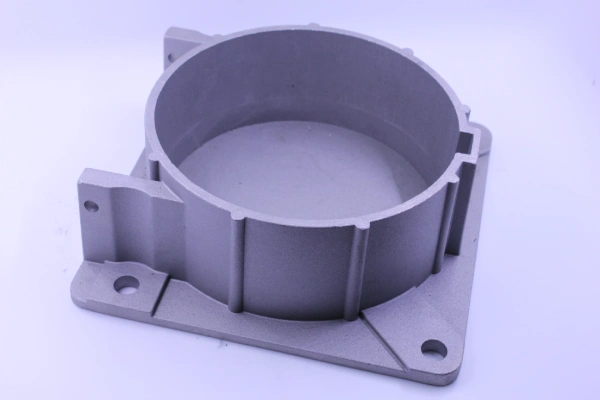
Aluminum investment casting is the authoritative manufacturing standard for producing high-integrity structural components required for modern aerospace, defense, and electric vehicle applications. For these mission-critical components, assessing engineering safety requires not only reference to standard tensile charts but also an in-depth analysis of microcrack propagation mechanics and fracture kinetics.
Components operating under cyclic stress must possess verified fracture toughness to mitigate the risk of unexpected catastrophic in-service failure. This comprehensive guide provides an in-depth analysis of the microstructure of aluminum investment castings, detailing how grain structure and silicon morphology determine failure modes.
By examining the unique characteristics of A356 and AlSi10Mg under extreme mechanical stresses, we provide advanced stress analysis and simulation engineers with precise microstructural insights to help them maximize the structural safety margin of aluminum investment castings and successfully implement weight-reduction strategies.
Aluminum Investment Casting Grain Structures
For high-reliability aerospace and defense components, evaluating material safety requires not only reference to basic tensile test charts but also an analysis of crack propagation mechanics. Aluminum investment casting parts used in critical structural applications must possess verified fracture toughness to prevent sudden failures in the field. This section will discuss the key solidification characteristics that determine the microstructure of aluminum investment castings.
Solidification Microstructure of Eutectic Aluminum Alloys
The solidification path within the ceramic shell mold determines the basic grain structure of investment-cast aluminum parts. In the investment casting process, molten metal flows into a preheated ceramic shell mold, and its cooling rate directly determines the secondary dendrite arm spacing (SDAS). A356 solidifies at a relatively slow rate, forming a typical hypereutectic microstructure in which well-defined primary aluminum dendrites are surrounded by a silicon matrix. In contrast, the grain structure of AlSi10Mg, due to its near-eutectic composition, solidifies faster than A356 and inhibits dendrite growth.
At Supro MFG, we regulate these thermal gradients by precisely controlling the preheating temperature of the shell. In summary, by managing the cooling parameters within the ceramic mold, aluminum investment casting companies can precisely control the initial dendrite refinement process from an engineering perspective before any post-casting heat treatment begins.
Grain Size Effects on Component Fatigue Life
A finer grain size directly improves the long-term fatigue strength of investment-cast aluminum components under cyclic loading. In complex, thin-walled aluminum castings, a smaller local grain size results in a higher grain boundary density; these grain boundaries act as physical barriers that impede dislocation movement. Because AlSi10Mg cools rapidly in thin-walled areas, it forms a highly refined grain structure, which effectively delays the initiation of microcracks under cyclic stress. This structural optimization improves the fatigue threshold of aluminum investment castings,making fine-grained alloys an ideal choice for vibration-prone applications.
To verify these microstructural parameters, Supro MFG conducts regular metallographic grain size evaluations on in-furnace test specimens to ensure compliance with aerospace standards. Ultimately, the selection of highly refined precision aluminum investment casting material ensures that thin-walled structures exhibit optimal fatigue resistance throughout their extended service life.
Aluminum Investment Casting Silicon Morphology
The internal distribution and geometric morphology of the silicon phase determine how local mechanical stresses are transmitted within the alloy matrix. Stress analysts evaluate these microstructures to ensure that components can withstand severe dynamic loads without premature structural failure. This section analyzes how modifying the microstructure of aluminum investment castings can prevent microcrack propagation.
Acicular vs Modified Fibrous Eutectic Silicon Phase
The geometric morphology of the eutectic silicon phase fundamentally determines the microstructural safety limit of aluminum investment castings. In its natural, unmodified state, silicon crystallizes into coarse, needle-like plate-shaped crystals with sharp, irregular edges. Under external loads, these sharp needle-like structures act as internal stress concentration points, leading to premature delamination of the matrix and thereby reducing impact resistance. Leading investment casting suppliers overcome this brittle behavior by modifying the eutectic silicon phase in the A356 microstructure using chemical grain modifiers such as strontium (Sr).
This chemical modification forces the sharp silicon plates to reorganize into a fine, spherical, or fibrous network structure. At Supro MFG, our metallurgical experts use thermal analysis systems during the melting process to confirm that the modification is fully complete before pouring the molten metal into the shell mold. In summary, transforming sharp needle-like particles into a modified fibrous structure eliminates internal stress concentration points, thereby significantly improving the mechanical safety margin of high-performance aluminum investment castings.
How Matrix Geometries Block Microcrack Propagation
The volume fraction of the soft primary α-aluminum matrix determines the direction and path of microcrack propagation in aluminum investment castings. A356 has a lower silicon content (7%) than AlSi10Mg (10%), and therefore has a higher volume fraction of primary α-aluminum dendrites, which exhibit good ductility. When a microcrack initiates, it travels through the brittle silicon particles until it reaches this soft, continuous aluminum matrix. The ductile matrix dissipates the kinetic energy at the crack tip through local slip, thereby effectively inhibiting crack propagation and improving the overall fracture toughness of the aluminum castings.
In contrast, AlSi10Mg contains dense and interconnected silicon channels that allow microcracks to propagate with virtually no plastic resistance. Supro MFG has verified the specific ductile properties of this cast aluminum material through standard metal fracture analysis. Ultimately, the use of a precision aluminum investment casting material characterized by a ductile matrix structure ensures that the finished product can withstand sudden failure during demanding field operations.
Aluminum Investment Casting Failure Modes
Advanced structural simulation requires a precise understanding of the failure thresholds of aluminum investment casting materials to prevent sudden failures during operation. Microstructural fracture analysis enables component designers to trace internal stress paths and characterize the behavior of alloys near their critical fracture points. This section analyzes the microstructural mechanical failure modes of these high-quality casting materials under severe mechanical stress.
Fractography Analysis of Ductile and Brittle Failures
Analysis of the failure structures on the surface revealed the microstructural fracture mechanics of high-strength investment-cast aluminum components. Scanning electron microscopy (SEM) imaging clearly confirmed the existence of distinctly different failure mechanisms between the two materials. The fracture surface of the modified A356 material exhibited a dense network of microvoids formed by deep plastic deformation; these microvoids, referred to as ductile pits, indicate that a significant amount of energy was absorbed prior to fracture separation. In contrast, a comparative analysis of the unmodified AlSi10Mg versus A356 castings showed that the fracture surface along the brittle silicon intermetallic compound interface exhibited a flat, reflective cleavage plane, indicating rapid macroscopic-scale cracking accompanied by minimal plastic deformation.
At Supro MFG, our quality control metallurgy laboratory uses high-resolution scanning electron microscopy (SEM) to evaluate fracture specimens and diagnose potential stress boundaries. In summary, while A356 exhibits reliable and easily predictable ductile deformation characteristics, AlSi10Mg exhibits localized brittle fracture characteristics, which requires careful stress design during the initial aluminum investment casting process.
Impact Toughness Under Dynamic Shock Loading
The Charpy V-notch impact test provides standardized energy values needed to predict the service life of a structure under sudden, heavy impact loads. Under high-speed impact conditions, aluminum investment castings absorb kinetic energy differently depending on their internal silicon network. Certified tests show that A356-T6 has an impact energy absorption threshold of 4.0 to 6.0 joules, resulting in predictable, progressive structural deformation. In contrast, AlSi10Mg-T6 has a lower threshold of only 1.5 to 2.5 joules, making it prone to sudden brittle fracture when subjected to high-speed dynamic overloads.
To ensure the safety of components in aerospace applications, Supro MFG conducts low-temperature Charpy impact tests in addition to traditional fracture toughness benchmark testing of aluminum castings. Ultimately, verifying the dynamic impact limit ensures that the precision aluminum investment casting material you select will maintain a high level of structural integrity even under severe in-service stress conditions.
To assist stress and simulation engineers in evaluating these critical dynamic limits within their finite element analysis (FEA) framework, standardized fracture mechanics and impact metrics are summarized below:
Fracture Mechanics Metric | A356-T6 Condition | AlSi10Mg-T6 Condition | FEA Simulation & Engineering Insights |
Fracture Toughness (KIC) | 24 - 28MPa · m1/2 | 16 - 19MPa · m1/2 | A356 resists unstable crack growth by ~40% better. It is a mandatory choice for damage-tolerance designs in aerospace structural parts. |
Charpy Impact Energy | 4.0 - 6.0 J | 1.5 - 2.5 J | A356-T6 absorbs significantly more kinetic energy through plastic deformation during sudden, high-velocity shocks (e.g., vehicle crash impacts). |
SEM Fractography Features | Dense, Deep Dimples | Cleavage Facets & Microcracks | Microscope analysis confirms A356 undergoes classic ductile tearing, whereas AlSi10Mg exhibits brittle cleavage with localized secondary microcracking. |
Ultimate Failure Mode | Progressive Yielding | Sudden Brittle Fracture | A356 provides distinct macroscopic deformation warnings before final rupture; AlSi10Mg fails instantaneously without visible warning signs. |
Metallurgical Compliance Note
As outlined in our foundational [alloy grade selection guide], AlSi10Mg exhibits a higher initial yield strength. However, its complex matrix response to post-cast thermal processing behaves entirely differently from A356.
To achieve the theoretical limits of fracture toughness and optimize grain refinement for these aluminum investment castings, executing a highly specialized [T6 heat treatment specification] is an absolute necessity
Aluminum Investment Casting Quality Control
A rigorous quality control system for aluminum investment casting transforms ordinary metal raw materials into component systems ready for flight. High-integrity military, aviation, and aerospace projects require stringent inspection processes to eliminate potential internal defects in the materials. This section will review the rigorous validation methods used to ensure perfect and repeatable structural integrity.
Microstructural Validation for Aerospace and Defense Standards
To meet military and aerospace specifications, precise microstructural verification of the solidifying metal matrix is essential. In the aluminum investment casting process, leading manufacturers rely on high-magnification optical metallographic analysis to evaluate grain size and the degree of silicon modification. Technicians analyze test specimens cast alongside the main production parts to track the aluminum investment casting microstructure and confirm that the structure has been properly refined. If silicon particles indicate improper chemical modification, structural integrity will fall below standard safety benchmarks.
To ensure product quality, Supro MFG conducts rigorous metallographic verification on every production furnace batch, using automated image analysis software to grade the degree of grain refinement. In summary, by verifying internal matrix parameters, professional aluminum investment casting companies can ensure that finished batches comply with global aerospace and defense standards.
Controlling Non-Metallic Inclusions and Porosity Defects
Internal non-metallic inclusions and hydrogen microporosity can significantly reduce the mechanical properties of finished structural components. When oxides and microscopic gas bubbles become trapped inside aluminum investment castings, they act as initiation points for internal cracks, thereby reducing the fracture toughness of the castings. Hydrogen has an extremely high solubility in molten aluminum; if it is not removed, it will lead to extensive microporosity in the thin-walled sections of aluminum castings. To prevent these defects, foundries inject inert gas through a rotary degassing system and filter the alloy through fine ceramic foam filters prior to pouring.
Supro MFG minimizes these risks by conducting regular reduced-pressure tests (RPT) and density index tests on the shop floor to confirm that the melt is free of bubbles. Ultimately, strict purity controls ensure that the selected aluminum investment casting material provides reliable strength and excellent fatigue resistance in demanding applications.
Contact Supro-Mfg
The microstructure of aluminum investment castings affects fracture toughness and failure modes. A356 exhibits higher ductility and impact toughness due to its fine grain structure and modified fibrous silicon phase, whereas AlSi10Mg is prone to brittle fracture. By precisely controlling grain size and silicon morphology, structural safety margins can be effectively enhanced to meet the high-reliability requirements of applications such as aerospace.
With 25 years of casting experience and ISO/TS 16949 certification, Supro MFG provides you with a one-stop solution for aluminum investment casting. Please feel free to send us your drawings or requirements to receive personalized technical support and a prompt quote.
 English
 Français
 Deutsch
 Italiano
 日本語
日本語 한국어
한국어 Polski
 Português de Angola
 Русский
 Español de Argentina