
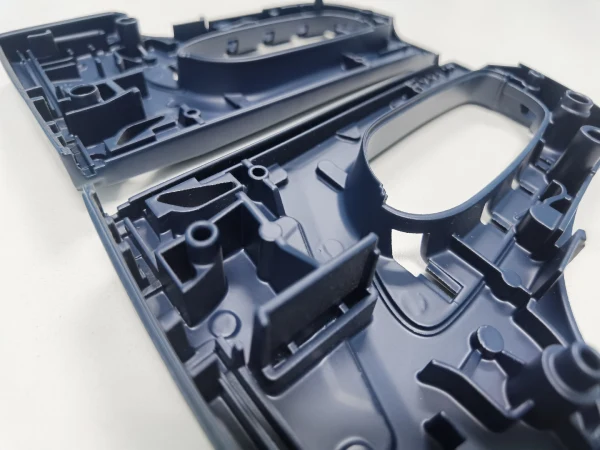
The quality of an aluminum die casting mold determines whether high-volume production of aluminum castings can maintain stable output or whether it will be plagued by high scrap rates and frequent unplanned downtime. Die casting manufacturers often face challenges such as excessively long cooling cycles, scrap caused by porosity defects, premature thermal fatigue of molds, and ejection failures that disrupt automated production lines. These inefficiencies not only erode corporate profits but also delay project delivery schedules.
Precision-oriented aluminum die casting mold design addresses these pain points at the engineering source. Optimized thermal management can shorten cooling times, scientifically designed gating systems eliminate the need for secondary post-processing, and high-end mold materials reduce the need for emergency repairs. If mold design fully considers solidification mechanisms and long-term maintenance planning, it can significantly improve equipment utilization rates and steadily reduce unit production costs.
This article distinguishes between high-efficiency die-casting production and passive, inefficient operation and maintenance models by examining five core dimensions: mold material selection, cooling structures, ejection system design, and predictive maintenance. Whether you are developing a custom aluminum die-casting mold or seeking to enhance the performance of existing molds, this article provides professional guidance for mold selection and performance optimization based on real-world mass-production data.
Aluminum Die Casting Mold Design: The Foundation of Production Efficiency
In the mass production of aluminum castings, the precision of aluminum die casting mold design can directly shorten production cycles, reduce scrap rates, and maintain a company’s sustained competitiveness in the market. The following section will analyze the impact of mold design strategies on production and operational performance from two key perspectives.
The Critical Link Between Tooling Precision and Cycle Time
The die-casting production process consists of three stages: injection, cooling, and ejection. The cooling stage is the core phase and also the most time-consuming. Its efficiency determines both production capacity and mold life, and it is a key challenge in the mass production of aluminum die-cast parts. Precisely designed aluminum die-casting molds feature cooling channels arranged in a conformal layout rather than a simple grid pattern, which can significantly improve heat dissipation efficiency while preventing premature solidification of the molten metal.
Actual production data from Supro MFG shows that an optimized cooling system can shorten the production cycle by approximately 30%, while extending the service life of aluminum die-casting molds to over 150,000 cycles. A precisely zoned cooling layout allows different parts of the casting to solidify at optimal rates, eliminating unnecessary waiting time.
Therefore, aluminum die casting mold design engineers must plan the cooling system according to the rigorous standards applied to cavity structure design. Thermal management efficiency can be enhanced through optimization strategies such as conformal layout and precise zoning. In high-volume mass production scenarios, the economic benefits of such design optimizations translate into exponential increases in production capacity and cost savings with each daily die-casting cycle, making it a key measure for companies to enhance their competitiveness.
Optimizing Custom Aluminum Die Casting Mold Geometry for Faster Filling
The runner design determines whether molten aluminum can rapidly fill the farthest reaches of the mold cavity before premature solidification occurs. In custom aluminum die casting molds, a streamlined runner system with a balanced cross-section and minimal bends enables laminar filling, reducing the formation of entrapped gas and oxide inclusions. Conversely, improperly sized runners or paths with excessive bends create flow resistance and induce excessive turbulence. Turbulent flow entrains gas, forming porosity defects that ultimately result in scrap castings.
The appropriate selection of aluminum die casting mold materials (such as H13 mold steel, which offers good thermal conductivity) can also help maintain a stable mold surface temperature throughout the injection process, thereby improving the smoothness of molten metal flow. Combined with simulation-based runner optimization, manufacturers can complete fluid dynamics simulations and optimizations before machining the aluminum die casting mold steel, reducing the costs associated with repeated trial mold runs and scrap rates while improving production efficiency.。
Selecting Premium Aluminum Die Casting Mold Material to Minimize Downtime
The selection of mold materials determines how many die-cast products an aluminum die-casting mold can produce before production is interrupted by unscheduled downtime for maintenance. For die-casting plants that mass-produce automotive and industrial components, properly matching mold materials can bring the actual production cycle closer to the theoretical design target.
Why H13 and Dievar Steels are Essential for High-Volume Molding
For all aluminum die casting molds operating under continuous high-pressure cycling conditions, material performance determines the equipment’s uptime. H13 and Dievar mold steels offer thermal conductivity far superior to that of ordinary mold steels; their higher thermal conductivity accelerates heat transfer from molten aluminum, effectively improving heat dissipation efficiency. According to on-site measurement data from Supro MFG, aluminum die casting molds made from these high-quality steels can reduce cooling and rest times by approximately 15%–20%, significantly optimizing production cycle times.
More importantly, high-quality steels such as H13 and Dievar mold steel possess excellent resistance to thermal cracking and macroscopic cracking, thereby reducing unplanned maintenance downtime. Selecting high-end aluminum die casting mold materials does not represent an additional cost but rather the most direct means of ensuring a stable operating rate.
The Impact of Thermal Management on Aluminum Die Casting Molds
Effective thermal management determines the uniformity and rate of heat dissipation in aluminum die casting molds. Uneven temperature distribution in the mold can easily lead to localized hot spots, which not only accelerate the aging of the mold material and exacerbate thermal fatigue damage, but also prolong the cooling and holding times as well as the solidification time of the castings, thereby slowing down the production cycle. Traditional straight-drilled cooling channels result in uneven heat dissipation and struggle to meet mass production requirements, whereas precision-integrated cooling channels offer an effective solution to this problem.
For custom aluminum die casting molds, conformal cooling channels—whether machined or produced via additive manufacturing—can be arranged to closely follow the cavity contours at a distance of 8–12 mm from the cavity surface. Compared to traditional straight-drilled water channels, this approach can reduce peak mold temperatures by 40–60°C. For high-volume aluminum die casting production, precision thermal management is not an optional upgrade but a fundamental guarantee of stable production capacity.
When selecting production options, pairing high-end aluminum die-casting mold materials with intelligent cooling structure designs can achieve high mold uptime and stable, controllable production capacity.
Enhancing Aluminum Die Casting Molding Through Advanced Gating Systems
In addition to mold material selection and thermal management, the gating system and ejection system of aluminum die casting molds also affect the first-pass yield and the stability of production cycles. Scientific design of the gating system and precise ejection pin layout are key technical factors for achieving “low scrap rates, high output, and stable operation” in mass production.
Reducing Porosity and Flash with Scientific Gate Design
The gating system is the core component of an aluminum die casting mold that controls metal filling and gas venting; its design rationality directly impacts casting quality and production efficiency. Properly positioning specialized overflow channels and vacuum-assisted venting channels in the terminal filling zone can capture the cold-front molten aluminum—which is prone to containing oxide inclusions—and provide a low-resistance venting path for entrapped gas in the cavity. If such structures are missing from the aluminum die casting mold design, the porosity rate of castings will increase significantly, and flash is likely to form along the parting line, thereby increasing the workload for subsequent trimming and machining processes.
Production data provided by a Supro customer in the automotive bracket manufacturing sector corroborates these findings. By retrofitting precision-machined overflow channels into existing die-cast aluminum molds, the scrap rate due to porosity was reduced from 8.3% to 1.7%; flash generation was reduced by 54%, and 62% of castings no longer required secondary deburring.
For high-volume aluminum die-casting production, a scientifically designed gate with sufficient overflow capacity can directly reduce per-unit post-processing costs and improve first-pass yield. By properly planning venting structures during the aluminum die-casting mold design phase, the investment can be recouped within the first week of production.
Simplifying Ejection Mechanisms for Consistent Cycle Stability
Ejection stability is a key factor determining the uptime and mass production stability of automated aluminum die-casting production lines. In aluminum die-casting molds with complex structures, improper arrangement of ejector pins can easily generate additional bending moments during demolding, which is highly likely to cause deformation in thin-walled rib areas and deep cavities. This not only requires manual intervention for rework but can even result in scrap parts, severely impacting production cycle times and efficiency.
For aluminum die-casting molds, the core solution to this problem is to optimize the ejector pin layout based on the local solidification stiffness of the casting. By increasing the density of ejector pins in areas where cooling contraction grips the core, uniform force distribution during demolding can be achieved. Practical experience from Supro customers in the electronic enclosure manufacturing sector shows that, after optimizing the ejector pin layout, the scrap rate due to part deformation dropped from 6.8% to 1.2%, and cycle-to-cycle fluctuations in ejector force were reduced by 63%, significantly reducing unplanned downtime caused by castings sticking.
A simplified and well-balanced ejection system ensures that die-cast aluminum molds maintain stable cycle performance during high-volume production. Investing in a precise ejector pin layout during the aluminum die-casting mold design phase can eliminate rework in subsequent processes and ensure the smooth operation of automated production lines.
Custom Aluminum Die Casting Mold Maintenance and Longevity
Even for custom aluminum die-casting molds designed and manufactured to the highest standards, daily maintenance is essential to sustain production efficiency throughout their entire lifecycle. Without it, issues such as unexpected downtime, project delays, and premature mold failure may arise. Two key strategies—predictive maintenance and high-end surface treatment—can ensure stable production cycles while directly and effectively extending the service life of aluminum die-casting molds.
Predictive Maintenance Strategies for Die Cast Aluminum Molds
Establishing a standardized predictive maintenance program for die-cast aluminum molds can help proactively prevent various types of premature failures and avoid project delays caused by such failures. Specific measures include weekly infrared thermal imaging inspections, cycle counter monitoring, and regular replacement of ejector pins.
According to actual test data from Supro’s customers, after implementing these maintenance standards, 12 sets of aluminum die-casting molds completed 150,000 production cycles with a 68% reduction in unplanned downtime. Additionally, this prevented two incidents of full-line production shutdowns—each lasting three days—that would have resulted from undetected thermal cracks. Early intervention to address cracks helps preserve the structural integrity of the molds and ensures that production schedules remain on track.
In the field of custom aluminum die-casting molds, a robust maintenance system is by no means an optional extra; rather, it is the fundamental guarantee for maintaining controllable production capacity and preventing significant delays.
Surface Treatments: Improving Release Efficiency and Surface Finish
Surface treatment is a critical step in improving production capacity and the quality of aluminum castings. Untreated aluminum die-casting molds are prone to problems such as high demolding pressure and frequent lubrication, which limit production efficiency and affect the consistency of casting appearance.
The solution lies in adopting appropriate surface treatment processes: Physical vapor deposition (PVD) coatings form an anti-adhesion layer between the mold cavity and the molten aluminum, while nitriding can increase surface hardness to 1100–1300 HV. According to customer data, die-cast aluminum molds treated with physical vapor deposition (PVD) coatings experienced a 35% reduction in demolding force over 120,000 molding cycles, while completely eliminating mold sticking and welding. After nitriding treatment, core ejector pins showed a 52% reduction in abrasive wear, and their service life was extended from 80,000 cycles to over 150,000 cycles.
Regardless of the aluminum die-casting mold material used, selecting the appropriate surface treatment process can reduce the time required for each demolding operation, resulting in smoother castings with more consistent quality, thereby improving both production capacity and product quality at the source.
Why Supro MFG Excels in High-Efficiency Aluminum Die Casting Mold Solutions
For every custom aluminum die-casting mold, Supro MFG incorporates rigorous engineering design, simulation-driven validation, and an efficient, flexible project management system. Leveraging our one-stop service and mold flow simulation, we proactively prevent molding defects, shorten trial mold iteration cycles, and reduce lead times. We also offer customized mold solutions tailored to your needs, providing rapid professional evaluations and accurate quotes.
One-Stop Engineering: From Prototype Metal Casting to Mass Production
Supro MFG offers a one-stop service system. By incorporating MFA into aluminum die casting mold design, we provide end-to-end support from prototype evaluation to mass production delivery.
By using MFA to simulate molten aluminum flow, entrapped air, and temperature gradients prior to mold machining, we can proactively prevent defects such as porosity, cold shuts, and insufficient filling, achieving a defect elimination rate of up to 90%. Based on a review of 24 mass production projects, mold flow analysis optimized aluminum die casting mold design, resulting in a 78% reduction in the number of trial mold iterations and a 22-day reduction in average lead time. This approach not only prevents unexpected issues during mass production but also helps customers shorten their time-to-market and achieve profitability faster.
Request a Professional Quote for Your Next Custom Tooling Project
All high-efficiency aluminum die-casting production begins with a professionally designed mold. Supro MFG tailors aluminum die-casting mold solutions based on the customer’s product design, annual production volume, and alloy material requirements, including recommendations for mold materials, cooling layout planning, and production cycle estimates.
Simply submit your CAD drawings or part drawings to receive a professional technical evaluation within 48 hours. Please contact us to receive an accurate and compliant quote.
Contact Supro-Mfg
The precision design, high-quality materials, scientifically engineered gating system, simplified ejection mechanism, and predictive maintenance of aluminum die casting molds collectively form a complete technical closed-loop for efficient die casting production. Choosing Supro MFG’s one-stop engineering services ensures stable production capacity and long-term cost advantages right from the mold design stage.
 English
 Français
 Deutsch
 Italiano
 日本語
日本語 한국어
한국어 Polski
 Português de Angola
 Русский
 Español de Argentina