
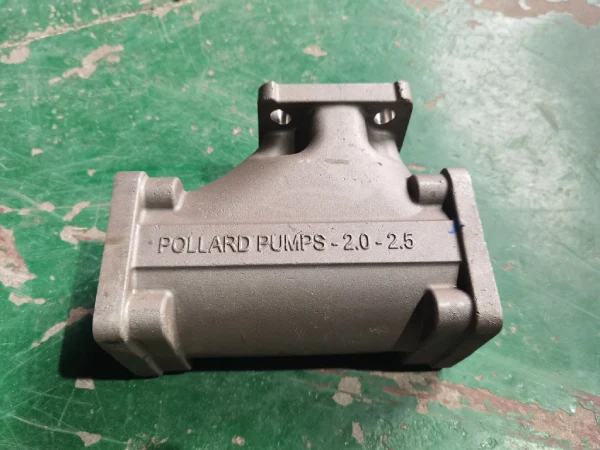
Proper maintenance of aluminum casting molds is key to preventing die-casting defects, controlling production costs, and enhancing long-term return on investment. However, many foundries rely on a reactive repair approach, neglecting routine preventive maintenance. This leads to high costs associated with rework and scrap, frequent losses due to unplanned downtime, and accelerates premature mold aging, thereby reducing overall life-cycle efficiency.
In high-volume aluminum die-casting production, aluminum casting molds are subjected to prolonged high-temperature thermal cycling and erosion from molten metal, making them highly susceptible to wear, thermal cracking, aluminum adhesion, and cavity degradation. These issues can lead to casting defects such as porosity, flash, and dimensional deviations. Establishing a systematic proactive maintenance mechanism is essential to reduce casting defects at the source and extend mold service life.
This article explores the principles of operation and maintenance for aluminum die casting molds and systematically analyzes the impact of mold wear on corporate profits. It outlines five actionable proactive maintenance measures and provides detailed explanations of typical issues—such as porosity, shrinkage cavities, and excessive surface roughness—caused by improper maintenance. The article offers a comprehensive maintenance methodology for companies that use or supply aluminum die casting molds, helping them reduce costs and waste, stabilize quality, and optimize long-term return on investment.
Aluminum Casting Mold Maintenance and ROI
For foundries that rely on aluminum casting molds to produce parts in large volumes, the ripple effects of mold wear can impact multiple cost areas. From direct production costs and losses due to unplanned downtime to hidden declines in operational efficiency and rising total cost of ownership over the mold’s lifecycle, every instance of wear erodes the company’s profits. The following provides a quantitative analysis from four perspectives.
How Tooling Wear Impacts the Bottom Line
Aluminum die-casting tooling is subject to repeated thermal cycling and erosion from molten metal, making it prone to aging and wear. This erodes corporate profitability across multiple dimensions, including production costs, downtime losses, operational efficiency, and lifecycle costs:
Cavity wear and gate erosion in the mold lead to surface defects in aluminum castings, such as porosity, flash, and dimensional deviations. Improper maintenance accounts for 47% of the causes of premature mold failure. These surface defects in castings can lead to rework, secondary machining, or even the direct scrapping of parts, thereby increasing direct production costs.
Sudden mold failures can result in 8–72 hours of unplanned downtime, with annual losses from various emergency repairs amounting to as much as $740,000. Replacing the mold with a brand-new one also requires additional capital investment.
Temperature fluctuations in the mold cavity ranging from 500–700°C can easily lead to microcracks and increase demolding force by 30%–40%. Prolonged erosion and melt damage to the mold also reduce the mechanical properties of the castings, indirectly lowering production efficiency.
Without regular maintenance, the service life of a single aluminum casting mold is directly halved, and the product scrap rate throughout the entire production cycle rises significantly, thereby increasing the total cost of ownership over the mold’s lifecycle.
Implementing preventive maintenance measures can extend the service life of aluminum casting molds by 2 to 5 times compared to reactive repairs. This transforms the mold from a continuous cost center into a valuable asset that enhances the company’s competitiveness.
5 Proactive Steps for Aluminum Casting Mold Maintenance
Mold wear and defects are not inevitable. Through systematic cleaning, optimized thermal management, precision lubrication, dimensional calibration, and data-driven maintenance logs, foundries can shift from reactive repairs to proactive prevention. The following five steps control defects at their source, significantly extend the service life of aluminum die-casting tooling, and improve overall return on investment.
Step 1: Systematic Cleaning and Surface Inspection
At the end of each production cycle, residual aluminum alloy, release agent, and carbon deposits adhere to the surface of the aluminum casting mold. Routine cleaning of the mold’s parting line can effectively prevent surface defects in aluminum castings.
Carbon deposits form a thermal barrier that causes localized hot spots, accelerating the initiation and propagation of thermal fatigue cracks. Adhered aluminum increases demolding resistance and can scratch the casting surface during ejection. The first step in die casting mold maintenance is to remove these hidden contaminants. Loose deposits can be removed first with a non-abrasive brush, followed by cleaning with a specialized solvent, ensuring the mold cavity remains intact during the process.
Step 2: Optimizing the Mold Cooling and Thermal Management System
Although H13 steel can withstand repeated thermal cycles, uneven cooling accelerates the formation of thermal cracks. Fine surface cracks can further propagate, leading to surface defects in aluminum castings such as cold shuts and aluminum adhesion. By optimizing the thermal management system, heat dissipation from die-casting molds can be made more uniform.
When the temperature difference between adjacent cavities in a die exceeds 45°C, the crack propagation rate increases by 300%. Therefore, die maintenance must include regular descaling of cooling channels and flow rate verification to proactively ensure the structural integrity of aluminum die-casting tooling, rather than merely addressing issues reactively after overheating occurs. Stable thermal management directly extends the service life of casting dies and reduces the number of castings scrapped due to thermal deformation.
Step 3: Precision Lubrication of Moving Components
Insufficient lubrication of moving parts can cause sliders to jam, ejector pins to seize, and scraping or dragging against the cavity walls, which in turn leads to surface defects in aluminum castings such as scratches and pitting. However, excessive lubrication allows excess grease to seep into the mold cavity, where it burns and forms deposits on the surface of the die-cast aluminum mold, causing porosity defects in the castings.
For all aluminum casting mold manufacturers, proper lubrication of sliders and guide components effectively maintains the mold’s assembly coaxiality and positioning accuracy. Applying a measured amount of high-temperature lubricant compatible with H13 steel, and adhering to production cycle specifications, can significantly extend the mold’s effective service life.
Step 4: Dimensional Calibration and Tolerance Verification
For automotive parts suppliers, every set of aluminum casting molds must strictly comply with tolerance requirements in order to produce consistent, high-precision products. Without regular dimensional calibration, mold wear can cause dimensional deviations in critical structures—such as bosses and ribs—that exceed the tolerance ranges specified by the IATF 16949 standard. In particular, after a cavity has produced more than 150,000 cycles, the core and ejector pins must be reground and calibrated to restore the ±0.02 mm tolerance.
To address this, reputable and reliable aluminum casting mold suppliers like Supro MFG incorporate laser scanning and coordinate measuring machine (CMM) inspections into their mold maintenance processes. They regularly verify the heights of slides and ejector pins and proactively perform dimensional calibration. This approach thoroughly eliminates casting surface defects caused by mold misalignment, ensures consistent quality for safety-critical components, and meets the automotive industry’s stringent quality control requirements.
Step 5: Implementing a Data-Driven Maintenance Logs
Die casting mold maintenance can achieve refined and precise control through data-driven maintenance logs. By recording production cycles, temperature curves, and surface defects on castings, it is possible to assess the mold’s condition in advance, predict potential failures before they occur, and perform timely and meticulous maintenance. For example, when a mold approaches the inspection threshold of 80,000 cycles, promptly performing polishing and maintenance can effectively prevent thermal cracking, significantly reducing the original scrap rate of 12%.
By shifting from reactive emergency repairs to proactive preventive maintenance and establishing data logs for the entire process—including inspections, cleaning, and lubrication—we can not only standardize maintenance procedures but also consolidate operational data into a valuable corporate asset. This approach continuously extends mold service life, reduces production costs, and comprehensively improves the overall return on investment for aluminum mold casting operations.
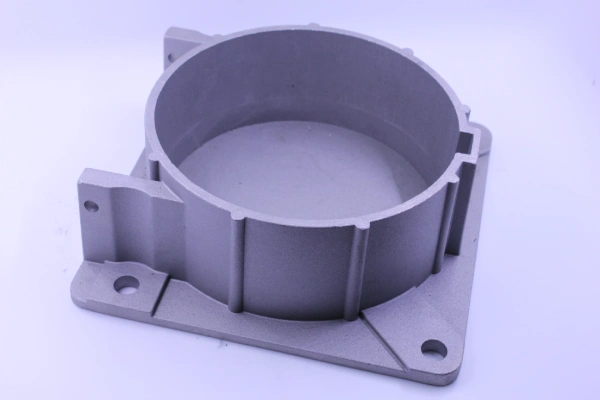
Common Defects Caused by Poor Aluminum Casting Mold Maintenance
Neglecting mold maintenance can lead to a range of defects. Porosity and shrinkage cavities are direct indicators of compromised integrity in aluminum casting molds, while excessive surface roughness drives up refurbishment costs and scrap rates. The former jeopardizes the reliability of the finished product, while the latter erodes production profits. In the following sections, we will explore two typical types of defects, analyzing their causes, impacts, and mitigation strategies.
How Porosity and Shrinkage Relate to Tooling Integrity
Pores and shrinkage cavities are not merely process anomalies, but direct indicators of compromised integrity in aluminum casting molds. When the mold’s venting channels, parting lines, or cooling system deteriorate, the incidence of these two types of defects rises sharply, directly impacting production efficiency.
In aluminum casting molds, on the one hand, poorly maintained vent channels and worn parting lines cause entrapped air during metal filling, resulting in circular gas pores with smooth inner walls; on the other hand, deteriorated cooling channels lead to thermal imbalance, where excessive mold temperature delays solidification, producing irregular shrinkage cavities with rough inner walls.
The global die-casting industry has an average defect rate of 5% to 10%, with porosity accounting for approximately 30% and shrinkage cavities for about 25%. Data from the Foundry Institute indicates that nearly 35% of scrap in foundries stems from mold defects. If parts with porosity enter final assembly, they can lead to end-product failure, warranty claims, and safety liability risks.
Maintaining a stable overall temperature difference in die-cast aluminum molds, precisely controlling the solidification gradient, optimizing the design of the gating system and venting channels, and regularly maintaining the cooling channels ensure mold surface quality and cooling performance. For any aluminum casting mold supplier, prioritizing mold integrity as the core of quality control can effectively reduce scrap rates caused by porosity and shrinkage cavities, ensure the reliability of finished products, and enhance the return on investment over the entire lifecycle.
Surface Roughness: When to Refurbish Your Mold Cavity
The surface roughness of aluminum casting molds not only affects product quality tolerances but also directly impacts production and operating costs. When the surface roughness of a mold cavity deteriorates to Ra 3.2–6.3 μm or higher, the underlying cause is often irreversible mold wear: erosion, galling, or thermal cracking that has extended through the original hardened layer.
For critical areas such as visible surfaces and sealing surfaces, the surface roughness of aluminum casting molds must strictly meet the requirement of Ra ≤ 0.8 μm. Once the mold cavity has deteriorated, conventional polishing alone cannot fully restore it; a complete refurbishment or recoating is required. The cost of mold refurbishment (re-machining to a surface finish of Ra 0.8 μm) typically amounts to 30%–50% of the cost of a new mold. When the surface roughness of an H13 steel cavity exceeds Ra 6.3 μm, and noticeable chatter marks and subsurface thermal cracking appear, immediate refurbishment is required to prevent sudden and complete failure.
For die-casting foundries using aluminum casting molds, establishing surface roughness monitoring standards is not merely a form of preventive maintenance but a necessary measure for production and operations. Proactive maintenance of die-casting molds ensures that the mold surface consistently remains within the acceptable roughness range, controls scrap rates, and safeguards the return on investment for every die-cast aluminum mold in use.
Contact Supro-Mfg
Systematic proactive maintenance of aluminum casting molds is a key strategy for controlling defects, reducing scrap, and extending mold life. Through five key measures—cleaning, thermal management, lubrication, calibration, and data logging—it is possible to effectively prevent porosity, shrinkage defects, and excessive surface roughness, transforming molds from a cost burden into a competitive asset for the company and significantly improving the return on investment over their entire lifecycle.