
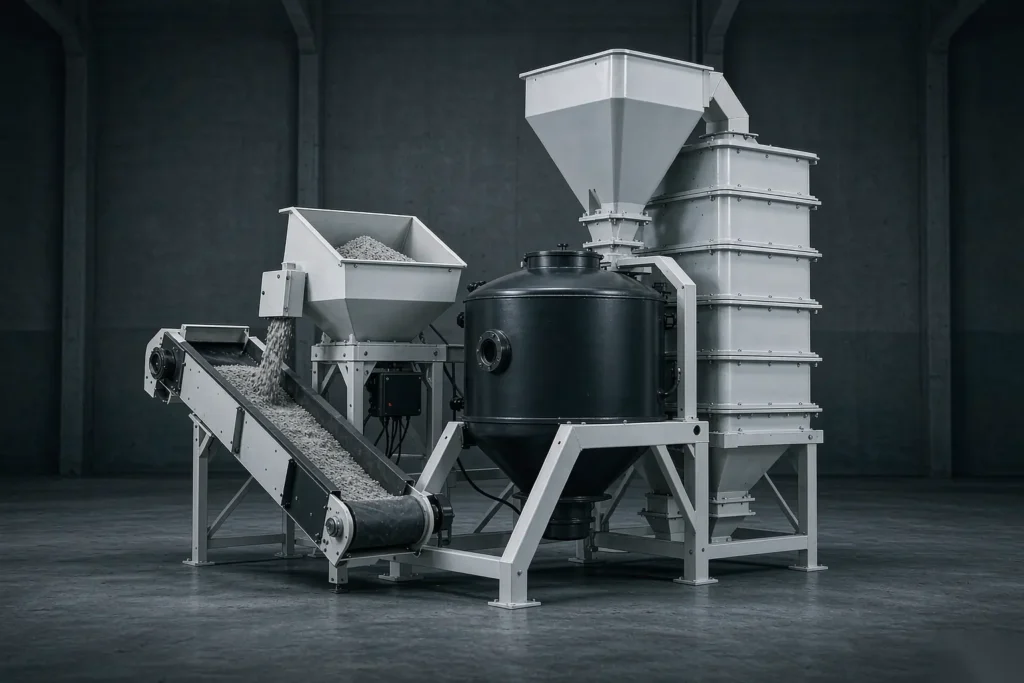
Foundry sand reclamation is the quiet line item that decides whether a casting quote holds. Buyers audit metal price, machining hours and tooling amortisation, then accept “we reuse our sand” as a yes/no checkbox. It is not a checkbox. It is a mass-balance loop with a measurable residue, a disposal bill and a scrap rate attached to it.
This guide turns foundry sand reclamation into arithmetic you can check on a shop floor: a steady-state loss-on-ignition (LOI) balance, three process routes priced per tonne, a worked cost model with break-even, and the eight fields a request for quote should ask for. The numbers below come from a reproducible model, not from a brochure. Where a claim depends on measurement discipline, we point to NIST metrology guidance and to the waste hierarchy set out by the European Commission and the US EPA sustainable materials management programme. If you are new to the process itself, start with our metal casting guide.
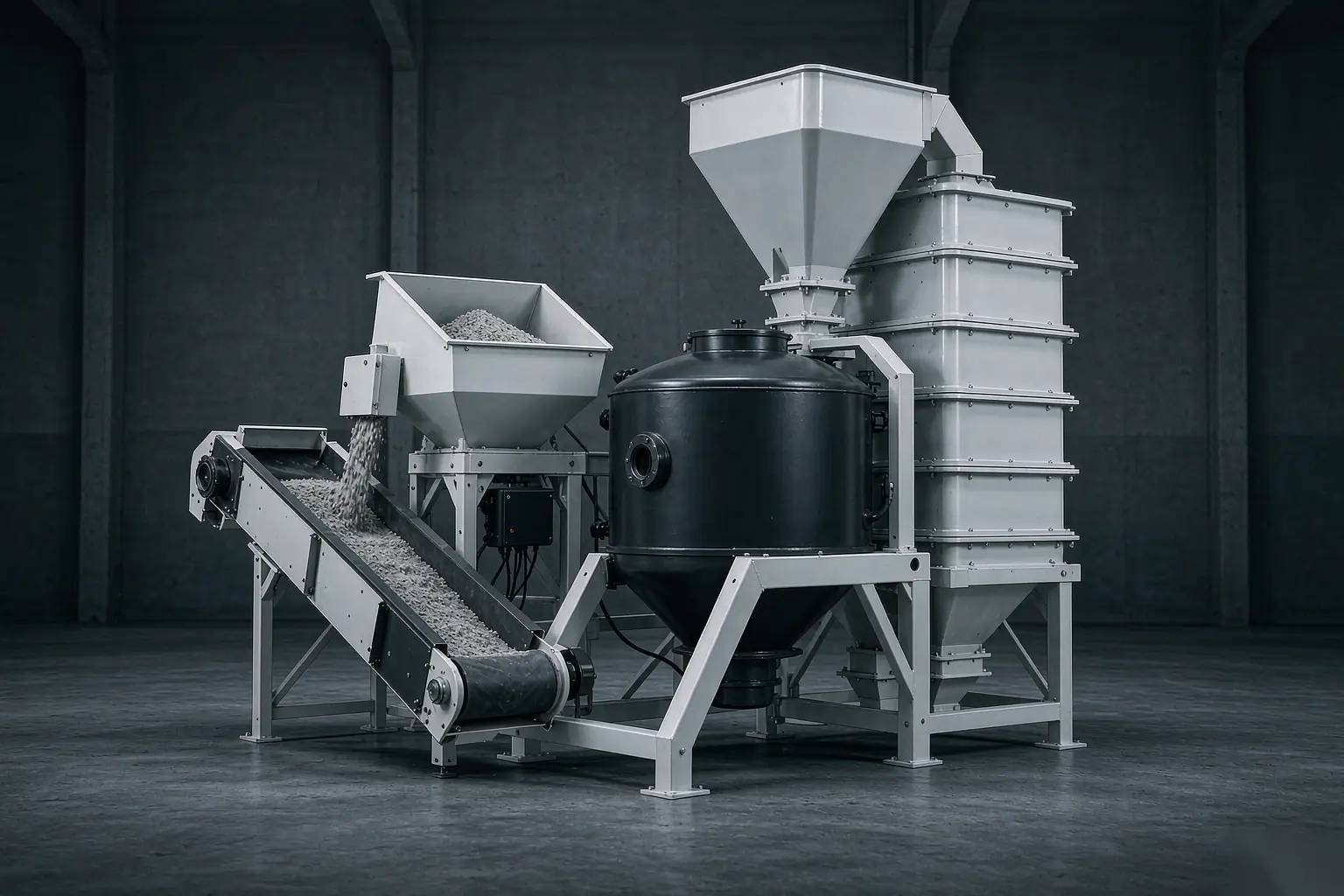
What Foundry Sand Reclamation Actually Controls
Shakeout sand is not “used sand”. It is a four-part mixture: reusable silica grains, dead clay and inert binder film, combustible residue (the LOI fraction), and fines small enough to choke permeability. Foundry sand reclamation is the set of operations that moves the second, third and fourth fractions out of the loop so the first fraction can go back into the mould. It does not make the sand new; it makes the sand predictable.
Three variables describe the whole loop. The first is a, the new-sand addition per cycle as a fraction of circulating sand; because system mass is constant, a is also the waste-sand fraction leaving the plant. The second is b, the fresh combustible additive per cycle (seacoal, bentonite volatiles, wash carryover, core binder), expressed as a percentage of sand mass. The third is eta, the removal efficiency of the reclamation equipment on the inert film and residual binder. Reuse rate, the number suppliers like to quote, is simply 1 minus a. It is an output, not a control lever.
That distinction matters commercially. A supplier advertising “95 percent reuse” is telling you a = 0.05 without telling you eta, LOI or the fines distribution. Two foundries can both run at 95 percent reuse and deliver completely different gas-defect rates, because one has a working attrition line and the other is diluting its problems with virgin sand. Our green sand casting guide covers the five routine sand tests; this article covers the loop those tests are sampling.
The three numbers on a sand test sheet
Ask for LOI, AFS grain fineness number (GFN) and active clay. LOI is what a foundry sand reclamation loop exists to control: it is the mass lost when a dried sample is fired, and it stands in for the organics that will gas off during pouring. GFN tracks grain-size drift as attrition rounds off grains and dust extraction removes fines. Active clay (methylene blue titration on green sand) tells you how much bentonite survived the thermal cycle and must be replaced. Bond strength, permeability and compactability are downstream of these three.
- LOI. The leading indicator for gas holes, pinholes and veining; the only number that closes the loop.
- GFN and fines. Over-attrition rounds grains and shifts the distribution; under-extraction raises fines and kills permeability.
- Active clay / LOI on no-bake. On chemically bonded sand, residual binder and LOI govern bench life and reclaim addition rate; see our resin sand casting guide.
- Traceability. A daily value is worth more than a certificate; the trend is the evidence.
If your supplier cannot produce a 30-day LOI trend, the foundry sand reclamation claim is unverifiable. That is the same discipline we recommend in the foundry audit checklist and the incoming inspection plan.
The LOI Mass Balance Behind Foundry Sand Reclamation
Here is the model. Let L be the steady-state LOI of the system sand. Each cycle adds fresh combustible material b, loses a fraction beta to burn-off during pouring, loses a fraction eta to reclamation, and exchanges a fraction a of the system mass for virgin sand at LOI L_new (about 0.10 percent for clean silica sand). Writing the recursion and setting L_next = L gives:
L = [ (1 – a) * b * (1 – beta) * (1 – eta) + a * L_new ] / [ 1 – (1 – a) * (1 – beta) * (1 – eta) ]
For a green sand line we use b = 2.50 percent and beta = 0.35. Those are screening values, not universal constants; a foundry running heavy seacoal, mold coatings on every mould, or a high core load will carry a larger b. Substitute your own measured b and the structure still holds. The table below is the whole foundry sand reclamation decision in one grid.
| New sand a | Reuse rate | eta = 0 | eta = 0.35 | eta = 0.60 | eta = 0.95 |
|---|---|---|---|---|---|
| 3% | 97% | 4.27% | 1.74% | 0.85% | 0.08% |
| 5% | 95% | 4.05% | 1.68% | 0.83% | 0.08% |
| 8% | 92% | 3.74% | 1.60% | 0.80% | 0.09% |
| 12% | 88% | 3.37% | 1.50% | 0.76% | 0.09% |
| 17% | 83% | 2.97% | 1.38% | 0.71% | 0.09% |
| 20% | 80% | 2.75% | 1.31% | 0.68% | 0.09% |
Read the first numeric column carefully. With no reclamation at all, even 97 percent reuse leaves steady-state LOI at 4.27 percent, well into the gas-defect band. To hold LOI at or below 3.0 percent by dilution alone, a foundry must buy new sand at a = 16.55 percent, capping reuse at 83.45 percent. Now switch on even modest reclamation: at eta = 0.35 or better, LOI stays under 3.0 percent at every addition rate in the table, including a = 0. In other words, dilution is a losing game. Buying virgin sand to dilute organics is the most expensive way to control LOI, and it also creates the waste stream you then pay to dispose of.
This is the counter-intuitive core of foundry sand reclamation: the lever is eta, not a. A supplier quoting a high reuse rate with no measured removal efficiency is either burning through new sand or running a high-LOI system. Ask which.
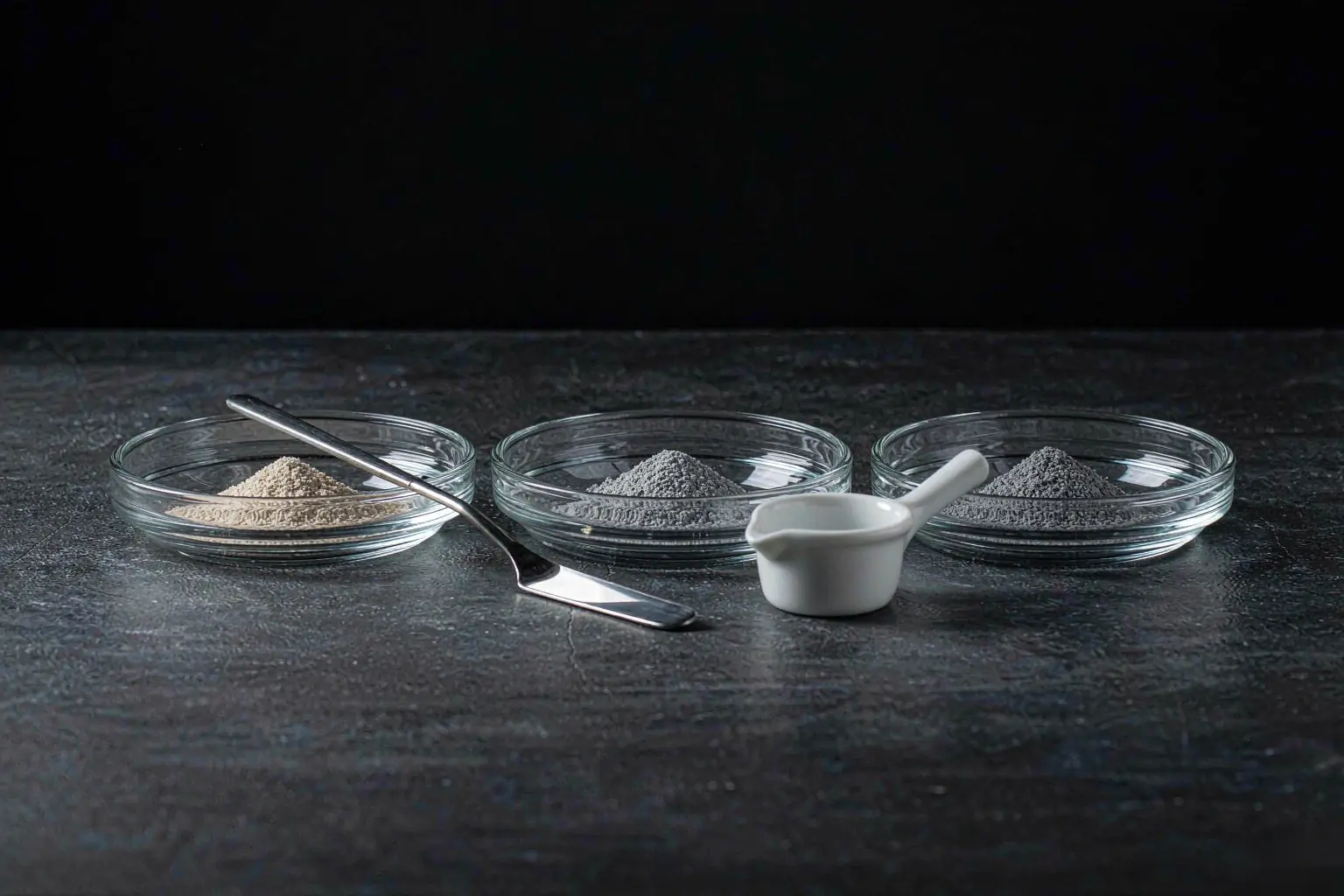
Three Foundry Sand Reclamation Routes, Compared
Mechanical, thermal and wet routes remove different fractions of the residue. They are not interchangeable, and the expensive one is not automatically the right one.
| Route | Removes | Typical eta on LOI | Operating cost | Capital | Best fit |
|---|---|---|---|---|---|
| Mechanical attrition + screening + dust | Lumps, dead clay, part of the binder film, fines | 0.35 – 0.60 | USD 4.20 / t processed | USD 185,000 | Green sand; first-stage no-bake |
| Thermal calcination (fluid bed / rotary) | Almost all organic residue by burn-off | 0.90 – 0.95 | USD 18.00 / t processed | USD 640,000 | No-bake, shell, high-residue systems |
| Wet scrubbing + drying | Soluble salts, clay, fine film | 0.70 – 0.90 | High water and drying load | Hoch | Special cases; rare in jobbing foundries |
Mechanical foundry sand reclamation is a physical circuit: a vibratory shakeout reduces lumps, an attrition cell rubs grain against grain, screens and air classifiers pull out fines, and the sand is cooled before it returns to the muller. Its limitation is that rubbing does not burn carbon. It reduces the inert coating and the fines, but the LOI removal efficiency tops out around 0.60 in practice, which is exactly why the table above shows 0.83 percent residual LOI rather than zero.
Thermal foundry sand reclamation sends sand through a controlled burn that strips virtually all organics, returning a grain close to virgin condition. That is essential for chemically bonded systems where residual binder would shorten bench life and raise gas. It is also energy intensive: gas, refractory, dust handling and cooling. The DOE Industrial Efficiency and Decarbonization Office and the IEA industry programme both treat thermal sand processing as a heat-management problem, and our foundry energy efficiency analysis puts the kWh/t arithmetic behind that. Wet scrubbing works, but water treatment and drying usually make it the least attractive of the three for a jobbing foundry.
Why cleaning sand too well can hurt
Green sand is supposed to contain carbonaceous material and active clay; that is what gives the mould its green strength and its collapsibility. A thermal loop driving LOI to 0.09 percent on a green sand line is buying a level of cleanliness the process does not need, then paying to re-add seacoal and bentonite. Over-cleaning also rounds grains and shifts GFN, which changes permeability and can promote penetration. Foundry sand reclamation should be specified to a target LOI band, not to “as low as possible”. That target belongs in the quality agreement.
What Foundry Sand Reclamation Costs per Year
Take a mid-size iron foundry pouring 6,000 tonnes of castings a year at a 5:1 sand-to-metal ratio: 30,000 tonnes of sand circulate annually. New silica sand delivered is USD 62 per tonne; landfill disposal including haulage and levy is USD 38 per tonne. A mechanical reclamation line costs USD 4.20 per tonne processed; a thermal line costs USD 18.00. Capex is USD 185,000 and USD 640,000 respectively. Four configurations:
| Configuration | New sand | Disposal | Reclamation opex | Total / yr |
|---|---|---|---|---|
| A: no reclamation, a = 17% (LOI-compliant) | USD 316,200 | USD 193,800 | USD 0 | USD 510,000 |
| B: no reclamation, a = 12% (LOI 3.37%) | USD 223,200 | USD 136,800 | USD 0 | USD 360,000 |
| C: mechanical, eta = 0.60, a = 5% | USD 93,000 | USD 57,000 | USD 119,700 | USD 269,700 |
| D: thermal, eta = 0.95, a = 3% | USD 55,800 | USD 34,200 | USD 523,800 | USD 613,800 |
Configuration A is the honest baseline: it is the cheapest way to keep LOI under 3 percent without a reclamation line. Configuration B is what many plants actually run, quietly accepting a 3.37 percent LOI and the gas scrap that comes with it. C is the mechanical answer. Against A, C saves USD 240,300 a year and repays the USD 185,000 capex in 9.2 months. Against B, the same investment saves only USD 90,300 a year and takes 24.6 months. That spread is the first thing a total cost of ownership review should catch: the payback depends entirely on which baseline the supplier is comparing to.
The thermal trap on green sand
Configuration D is the surprise. Thermal foundry sand reclamation on this green sand line costs USD 613,800 a year, more than doing nothing. It buys only 900 tonnes of new sand and dumps only 900 tonnes, but it processes 29,100 tonnes at USD 18 each: USD 523,800 of opex swallows every dollar saved on sand and disposal. The technology is excellent and the application is wrong. On a green sand line, the extra cleanliness has no process value, so there is nothing to pay for it.
A second counter-intuitive result: the higher the disposal levy, the faster mechanical reclamation pays back. Holding everything else constant:
| Disposal price | No-reclaim baseline (a = 17%) | Mechanical (a = 5%) | Annual saving | Payback |
|---|---|---|---|---|
| USD 25 / t | USD 443,700 | USD 250,200 | USD 193,500 | 11.5 months |
| USD 38 / t | USD 510,000 | USD 269,700 | USD 240,300 | 9.2 months |
| USD 55 / t | USD 596,700 | USD 295,200 | USD 301,500 | 7.4 months |
| USD 80 / t | USD 724,200 | USD 332,700 | USD 391,500 | 5.7 months |
Environmental compliance is usually framed as a cost. For foundry sand reclamation it is a project trigger: a rising landfill levy converts a marginal capex case into a six-month one. Buyers sourcing into jurisdictions with a carbon or waste levy should model the levy path, not today’s invoice. The GHG Protocol Scope 3 guidance and our casting carbon footprint analysis explain where the disposal and virgin-sand emissions actually land in an inventory.
The Quality Dividend: Foundry Sand Reclamation and Gas Defects
The cost model above is deliberately incomplete, and that is the point. It counts sand and disposal only. The largest benefit of foundry sand reclamation shows up in the scrap account, under a different manager’s budget.
At 6,000 tonnes of castings a year with USD 1,680 per tonne of variable cost in a scrapped casting, one percentage point of scrap is USD 100,800 a year. Grouping shop-floor LOI records into three bands gives the following relationship between LOI, gas-defect scrap and annual cost:
| System LOI | Gas-defect scrap | Tonnes lost | Annual cost |
|---|---|---|---|
| Up to 3.0% | 0.8% | 48 t | USD 80,640 |
| 3.0 – 4.5% | 1.9% | 114 t | USD 191,520 |
| Above 4.5% | 3.6% | 216 t | USD 362,880 |
Moving from configuration B (3.37 percent LOI, 1.9 percent gas scrap) to C (0.83 percent LOI, 0.8 percent gas scrap) is worth USD 110,880 a year in avoided scrap. Add that to the USD 240,300 of sand savings against the compliant baseline and the combined benefit is USD 351,180 a year, which repays the mechanical line in 6.3 months instead of 9.2 — a 32 percent shorter payback. A capital request that only counts sand dollars will reject projects that the plant actually needs.
The mechanism is straightforward: organics on the grain surface decompose during pouring, the gas has to escape through a permeability the fines are already reducing, and the pressure shows up as pinholes and gas holes. Our guides on Häufige Gussfehler, porosity and shrinkage und casting scrap rate trace the same chain from a different direction. For evidence, specify inspection methods that section the defect and record its location rather than a visual pass/fail.
No-Bake Sand Uses a Different Foundry Sand Reclamation Equation
Now change the process and watch the conclusion flip. A no-bake or resin-bonded line circulates 12,000 tonnes a year, pays USD 95 per tonne for a higher-grade washed silica sand and USD 65 per tonne for disposal of resin-bearing spent sand. Fresh combustible addition b falls to 1.40 percent and pour burn-off beta to 0.25, but the LOI target is stricter because residual binder shortens bench life. LOI on this line is 2.50 percent at a = 15 percent with no reclamation, 1.02 percent at mechanical eta = 0.35, and 0.06 percent at thermal eta = 0.95.
| Configuration | New sand | Disposal | Reclamation opex | Total / yr | Payback |
|---|---|---|---|---|---|
| E: no reclamation, a = 25% | USD 285,000 | USD 195,000 | USD 0 | USD 480,000 | – |
| F: mechanical, eta = 0.35, a = 15% | USD 171,000 | USD 117,000 | USD 42,840 | USD 330,840 | 14.9 months |
| G: thermal, eta = 0.95, a = 4% | USD 45,600 | USD 31,200 | USD 207,360 | USD 284,160 | 39.2 months |
On resin sand, thermal foundry sand reclamation becomes the cheapest annual option: USD 284,160 versus USD 330,840 for mechanical, because the virgin sand and the disposal stream are both expensive enough to justify the burn. But its USD 640,000 capex takes 39.2 months to repay, while the mechanical line takes 14.9 months. So the decision is a horizon question: a jobbing foundry with uncertain volume takes the mechanical route; a captive plant with a long-run contract and a strict LOI specification takes thermal.
This is why a single “do you reclaim sand?” question in an RFQ is useless. The right answer depends on binder chemistry, sand price, disposal levy and programme length — the same variables that drive the process choice between Sandguss, shell mould casting und Feinguss. If your part is a large resin-bonded iron casting, ask your supplier to walk this table with their own numbers; the iron casting solutions page outlines where that route fits.
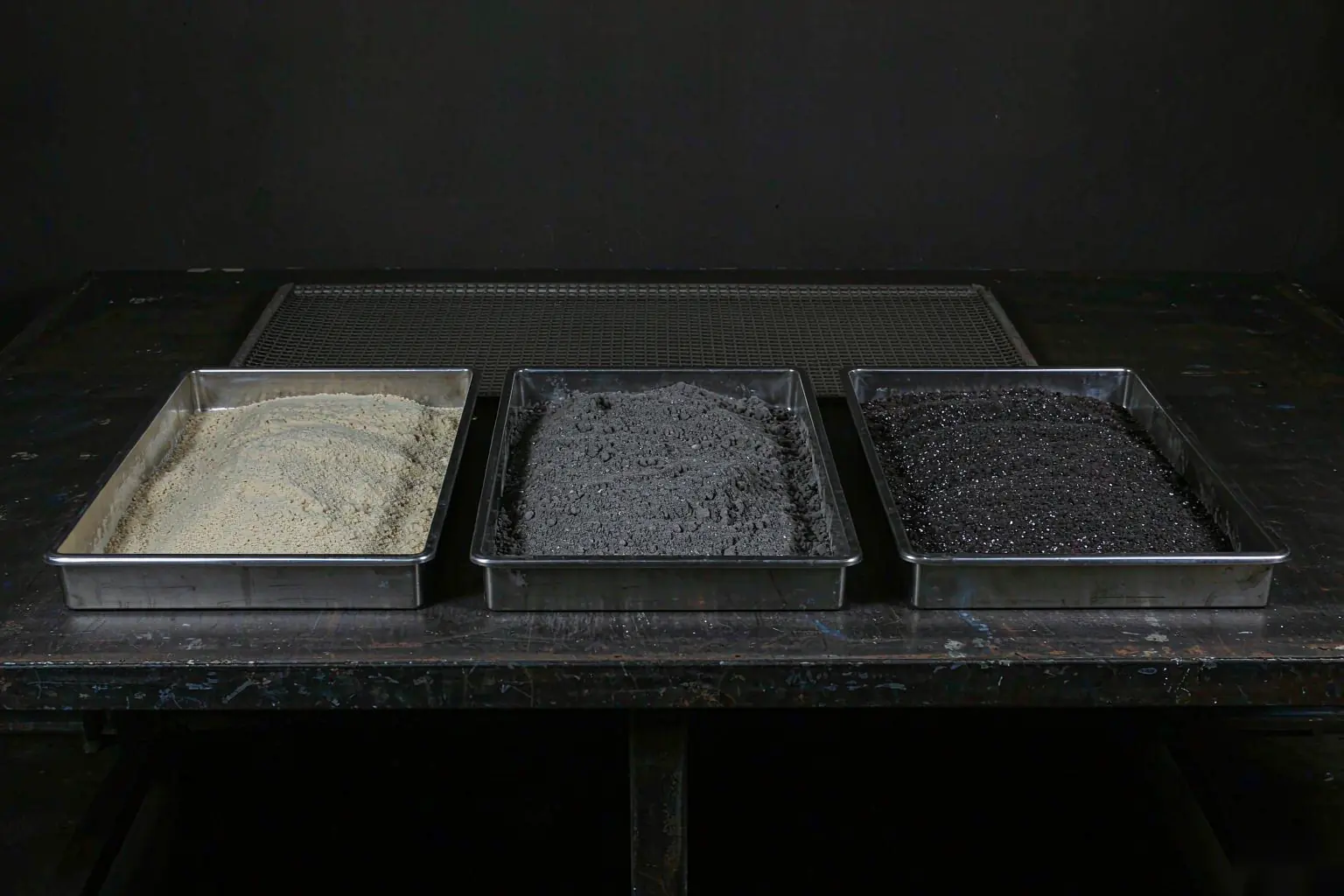
Waste Sand, Compliance and What Foundry Sand Reclamation Does Not Solve
Diverting sand from landfill is a real, countable outcome. Moving from a = 17 percent to a = 5 percent on the 30,000-tonne line cuts waste from 5,100 to 1,500 tonnes a year: 3,600 tonnes, or 70.6 percent, diverted. Even against the looser a = 12 percent practice it is 2,100 tonnes, 58.3 percent. Those are the numbers that belong in a sustainability report, and they are auditable against disposal manifests.
But foundry sand reclamation does not make spent sand disappear, and it does not automatically make the remaining waste benign. Fines from dust collection still carry binder residues, metals and, on some systems, phenols or amines; they need classification and a leach test before any beneficial-use claim. The EU waste framework puts prevention and reuse above recovery and disposal, and the EPA sustainable materials management programme takes the same lifecycle view. A supplier saying “we send it to a cement kiln” should still be able to produce the waste transfer note and the acceptance criteria.
There is also a boundary the loop cannot fix. Reclamation controls sand-side residue; it does not control melt quality, Wärmebehandlung or Oberflächenbearbeitung. If a batch of gas defects survives a well-run LOI loop, look at hydrogen, coating dryness and pouring temperature before blaming the sand plant. Cross-checking against ASTM E446 reference radiographs for steel castings and a documented nonconformance procedure keeps that investigation honest.
What to Put in the RFQ: Eight Foundry Sand Reclamation Fields
Write these into the RFQ and the quality agreement, not into an email. Each field is measurable, and each one closes a specific failure mode. For the surrounding commercial structure see our casting RFQ guide und supplier audit guide.
| # | Field to require | What it catches |
|---|---|---|
| 1 | Circulating sand tonnes per year and system sand inventory | Whether the reuse rate is a rate or a slogan |
| 2 | New-sand addition a, measured monthly from purchases | Whether a matches the claimed reuse rate |
| 3 | LOI target band, test method, sampling point and frequency | Whether the loop is actually under control |
| 4 | Reclamation route and measured removal efficiency eta | Whether the plant has a loop at all |
| 5 | AFS GFN, fines fraction and dust-collection disposal route | Grain drift and the hidden waste stream |
| 6 | Reclaim addition rate by binder family and alloy | Cross-contamination between resin and green sand |
| 7 | Disposal contractor, waste classification, leach-test reports, manifests | Compliance and the true disposal cost |
| 8 | LOI excursion rule: hold, notification, disposition and CAPA | What happens when the trend breaks |
Field 8 is the one most often missing and the one that protects you. Agree a rule such as: two consecutive daily LOI readings above the upper band trigger a hold on the affected moulds, a written notification within one working day, and a documented disposition before shipment. Tie it to the first article inspection and to the nonconformance clause so the consequence is contractual, not conversational. If you are qualifying a new part, prototype casting is the cheapest place to prove the sand loop before committing to production tooling.
A 30-Day Verification Plan for Foundry Sand Reclamation Claims
You do not need to buy equipment to check the claim. Four weeks of evidence is enough.
- Week 1 — documents. Request 30 days of LOI, GFN and active-clay records, new-sand purchase invoices, disposal manifests and the reclaim-line maintenance log. Compare purchased tonnes against a times circulating tonnes.
- Week 2 — independent samples. Take split samples at shakeout, after reclamation and at the muller. Have LOI fired by your own lab or a third party; compare to the supplier sheet. Metrology practice is covered by NIST.
- Week 3 — close the balance. Put measured a, b, beta and LOI into the steady-state equation and solve for eta. If the implied eta is far below the claimed route, the loop is not doing the work; the new sand is.
- Week 4 — write it down. Move the target band, test cadence and excursion rule into the quality agreement and the inspection plan. Add a change-notification clause covering any change of reclaim route or sand supplier.
A supplier who can close that balance in a meeting is usually the supplier whose foundry sand reclamation works. A supplier who answers with a reuse-rate percentage is telling you the output without the control. The distinction shows up later in cost breakdowns, in price per kg and, more painfully, in a gas-defect claim.
If you want a second pair of eyes on an RFQ or a sand test sheet, our team works through these numbers with buyers: Sandguss, casting mould making, CNC-Bearbeitung und Druckgussdienstleistungen are the usual starting points, or see all services. For a worked dimensional example of the same evidence discipline, read the mold design patterns guide.
Häufig gestellte Fragen
Is a 95 percent reuse rate automatically good?
No. Reuse rate is 1 minus new-sand addition, an output. Without measured LOI and removal efficiency, 95 percent reuse can mean either a well-run mechanical loop or a high-LOI system heading for gas defects. Ask for the LOI trend and eta.
What LOI should I specify for green sand versus no-bake?
As a screening band, green sand is usually controlled around 3 to 6 percent total LOI with gas defects rising above about 3 percent; chemically bonded systems target far lower because residual binder affects bench life. Use the supplier’s qualified band and require the test method, not a generic number.
Why would thermal reclamation lose money on a green sand line?
Because the opex is charged on every tonne processed. At 30,000 circulating tonnes and USD 18 per tonne, thermal processing costs USD 523,800 a year and only saves about USD 260,000 in sand and disposal. Green sand does not need LOI near zero.
Can I verify a reclamation claim without visiting the foundry?
Partly. Documents and independent samples close most of the balance. A site walk adds the dust-collection route, the screening losses and whether the reclaim line is actually running; use the foundry audit checklist for that.
Does reclaimed sand change machining allowances or tolerances?
Indirectly, through permeability and surface finish. Grain-size drift and fines change penetration and burn-on, which changes cleaning time and stock. Keep GFN in the RFQ fields; see our tolerance and machining allowance guides.
What is the single most useful document to request first?
A 30-day LOI trend with the sampling point and method attached. It is cheap to produce, hard to fake convincingly, and it makes every other foundry sand reclamation claim testable against the mass balance above.
*Figures are worked examples from a reproducible steady-state mass balance and cost model (30,000 t/yr circulating sand for green sand, 12,000 t/yr for no-bake). LOI behaviour, disposal levies and binder chemistry vary by plant; treat the tables as a screening framework and validate with your supplier’s own data. References: NIST metrology, EU waste framework, US EPA sustainable materials management, DOE IEDO, IEA, GHG Protocol, ASTM E446 and Supro MFG shop-floor records.
 English
 Français
 Deutsch
 Italiano
 日本語
 한국어
 Polski
 Português de Angola
 Русский
 Español de Argentina