
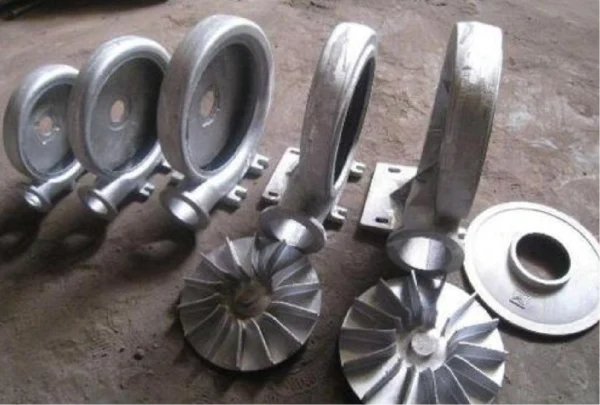
Aluminum casting processes have become a core technology underpinning manufacturing upgrades across multiple industries. This is due to the lightweight, corrosion-resistant, and easily machinable advantages of aluminium alloys. From precision structural components in aerospace and lightweight parts in the automotive industry, to large industrial load-bearing shells and miniature heat dissipation assemblies in electronic devices,
But did you know that not all методы литья are created equal? Choosing the wrong one can lead to soaring costs, delayed schedules, and subpar performance. This article delves into the three most common алюминиевое литье processes, helping you understand their principles, pros and cons, and make the optimal choice for your project.
What Are Aluminum Casting Processes?
Aluminum casting processes constitute a литье металлов technique deeply rooted in the principles of materials science, fluid mechanics, and thermodynamics. This manufacturing method involves injecting molten алюминиевый сплав into a pre-fabricated mold cavity, where it cools and solidifies to produce aluminum components or blanks of specific shapes and dimensions.
Casting can achieve virtually any level of geometric complexity, including intricate internal cavities and fine external features. This enables structures that would otherwise require multiple assembled components to be produced as a single unit through алюминиевое литье. This approach not only preserves the inherent properties of aluminum but also significantly reduces assembly processes and minimizes potential failure points.
With a long history, modern алюминиевое литье processes have evolved into multiple specialized techniques, each optimized for distinct application requirements, production volume demands, and cost structures.
How to Cast Aluminum: 3 Common Aluminum Casting Processes
Aluminum casting processes can be categorized into three types based on mold materials and filling methods:
* Die casting
* Investment casting
* Sand casting
The following provides a detailed introduction to these three casting processes:
Aluminum Die Casting
Die casting is a process that involves injecting molten aluminum alloy material into precision-machined steel molds under high pressure. It can be categorized into high-pressure die casting and low-pressure die casting, with different pressure levels corresponding to distinct technical characteristics and application scenarios.
Aluminum die casting stands as one of the most efficient aluminum casting processes in modern mass production, particularly suited for manufacturing high-volume, thin-walled, and complex-shaped components.
*Advantages of Aluminum Литье под давлением
Exceptional part strength with extremely high производственная эффективность.
Aluminum castings exhibit outstanding dimensional accuracy.
Высокий отделка поверхности facilitates subsequent electroplating and spray coating processes.
Capable of flawlessly casting lightweight parts with wall thicknesses as low as approximately 0.5 millimeters.
*Disadvantages of Aluminum Die Casting
Mold costs are relatively high.
Mold material selection is limited.
Condensate may be entrained into castings due to high-speed pumping of molten aluminum, complicating welding and термическая обработка.
Molds are prone to accelerated wear due to the high pressure of alloy flow.
*Typical Applications
Automotive engine blocks, transmission housings, electronic device enclosures, home appliance components, etc.
Aluminum Investment Casting
The core of the investment casting process involves using a meltable wax pattern to create the mold cavity. After coating the mold surface with refractory material and allowing it to dry and harden, a robust shell is formed.
Heating then melts the internal wax pattern, which flows out, leaving behind a hollow ceramic shell that precisely replicates the wax pattern's shape. Molten aluminum is subsequently poured into this shell to form the aluminum casting.
*Advantages of Aluminum Литье по выплавным моделям
Unparalleled precision and surface finish.
Capable of литые детали with extremely complex geometries, even those unattainable by other processes.
Can cast virtually all types of aluminum alloys, including high-temperature alloys that are difficult to machine.
No parting lines.
*Disadvantages of Aluminum Investment Casting
The production cycle is lengthy and complex.
Due to material costs and labor involvement, the unit cost is relatively high.
It is only suitable for small алюминиевые отливки.
*Typical Applications
Aerospace engine blades, aircraft structural components, medical surgical instruments, high-value-added military products, and art casting.
Aluminum Sand Casting
The principle of sand casting involves using sand as the molding material. A sand mold cavity matching the part's shape is created, into which molten aluminum alloy is poured. After the alloy cools and solidifies, the sand mold is broken to remove the casting. Subsequent processing yields the required aluminum component.
This is the oldest and most widely used aluminum casting process, characterized by unparalleled flexibility and the ability to handle large castings.
*Advantages of Aluminum Литье в песчаные формы
Extremely low mold costs.
No size limitations.
Ideal for single-piece, small-batch production, and new product prototyping.
Capable of casting virtually any metal.
*Disadvantages of Aluminum Sand Casting
Этот surface roughness of castings requires extensive subsequent machining to meet usage requirements.
Lower production efficiency.
The structure may lack sufficient density, making it prone to defects such as shrinkage cavities and sand holes.
Этот treatment and recycling of used sand require attention.
*Typical Applications
Automotive engine blocks, cylinder heads, frames and housings for large machinery, prototype алюминиевые отливки, и т. д.
Ищете надежный завод по литью алюминия?
- Мы поможем вам оптимизировать конструкцию изделия и сократить расходы.
- Мы можем помочь вам с высоким качеством и большими объемами литые детали.
- Мы можем осуществить поставку вовремя и получить больше возможностей на рынке сбыта.
- Вы получите выгоду от Supro MFG услуги по литью металлов.
Which Aluminum Casting Process Should You Choose?
Selecting the appropriate aluminum casting processes is a multi-objective decision-making process. The choice of aluminum casting process depends on your specific requirements. Beyond cost considerations, careful evaluation is required for production cycle, design accuracy, mechanical properties/process stresses, surface finish, projected production volume, prototyping, and material compatibility.
Casting Process | Литье под давлением | Литье по выплавным моделям | Литье в песчаные формы |
Production cycle | Single piece: Shortest Batch: Extremely high | Single piece: Longest Batch: Medium | Single piece: Medium Batch: Low |
Design accuracy | Extremely tight tolerances: ±0.05–0.1 mm (CT4–6 grade) | Higher tolerance: ±0.1–0.3 mm (CT6–8 grade) | Lower tolerance: ±0.5–1 mm (CT10–12 grade) |
Mechanical Properties / Process stresses | High tensile strength: 320–380 MPa Process pressure: 50–150 MPa | Medium tensile strength: 280–350 MPa Process pressure: Low | Lower tensile strength: 180–220 MPa Process pressure: Gravity-fed only |
отделка поверхности | Ultra-smooth (Ra 1.6–3.2 μm) 80% No post-processing required | Smoother (Ra 3.2–6.3 μm) 30% requires polishing | Rougher (Ra 12.5–25 μm) 50% requires secondary processing |
projected production volume | Mass production | Small-to-medium batch production | Small-batch/Single-piece production |
prototyping | High mold costs | Enables prototyping of complex structures | Low cost, fast verification speed |
material compatibility | Low-melting-point alloys (such as aluminum, magnesium, and zinc alloys) | High-melting-point alloys (steels, high-temperature alloys) | Wide range (steel, cast iron, non-ferrous metals) |
В то время как selecting the appropriate casting process may seem challenging, partnering with an experienced manufacturer like Supro provides access to expert technical guidance, ensuring optimal results for your final product. Should you have any related needs, please feel free to contact us at any time to discuss the details of your project.
Contact Supro Metal Foundry
Die casting, литье по выплавляемым моделям, and sand casting each play irreplaceable roles in aluminum casting processes. Aluminum die casting reigns supreme for high-volume production; aluminum investment casting excels as the “artist” for intricate precision components; while aluminum sand casting remains the cornerstone for flexibility and large-scale applications.
No single process is a “one-size-fits-all” solution. Success hinges on thoroughly understanding your project requirements—from production volume, complexity, and dimensions to budget constraints—and precisely matching them with the inherent characteristics of each casting method.
Supro Metal Foundry, as a leading manufacturer of алюминиевые отливки, delivers high-quality products to diverse industries.
We uphold our commitment to quality through ISO 9001 certification and state-of-the-art production facilities, ensuring every casting achieves exceptional precision and consistency.
Our expertise spans automotive OEM and aftermarket components, complemented by specialized consulting services. We assist clients in selecting optimal aluminum casting processes and alloy materials tailored to specific requirements, ensuring peak product performance and durability.
Contact us immediately for your ideal aluminum casting solutions.
 English
 Français
 Deutsch
 Italiano
 日本語
 한국어
 Polski
 Português de Angola
 Русский
 Español de Argentina