
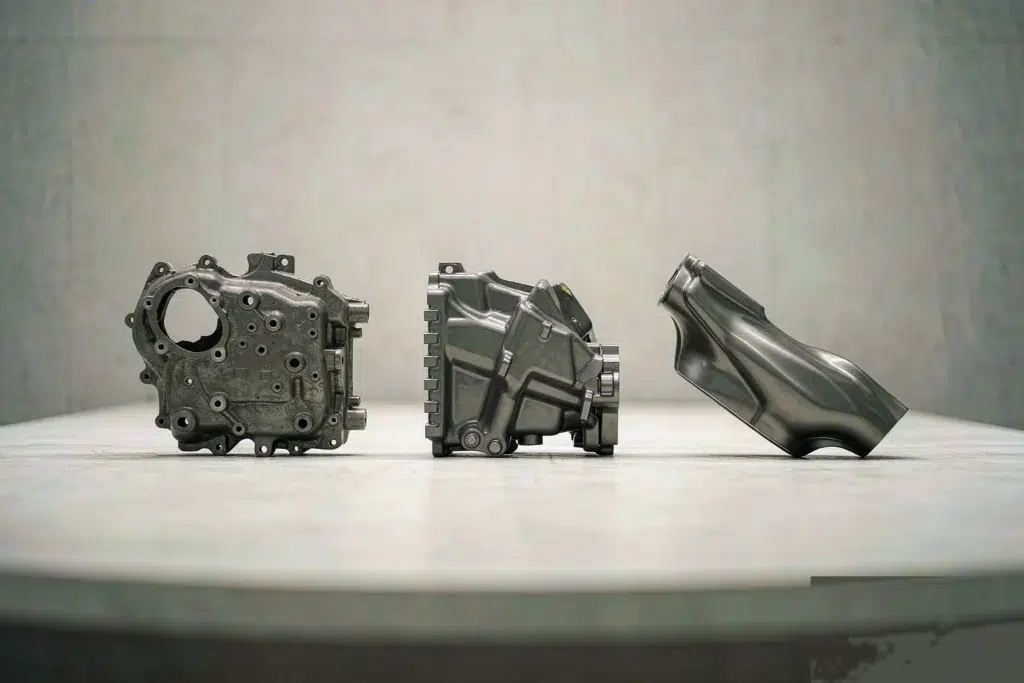
Two foundries quote the same bracket. One says $18, the other says $31. The drawing did not change, the alloy did not change. What changed is how each shop pays for metal, tooling, labour and scrap. This is where casting cost is really made.
Most buyers see one number on a quote. That number is the sum of nine drivers, and most of them sit under the surface. This guide opens them up with real shop-floor ranges, not theory. You will see where the money goes, which levers you actually control, and what to send a foundry so the quote comes back honest. We follow the cost structure used across our own floor and the published guidance from bodies like the Американское общество литейщиков (AFS).

The Nine Drivers Behind Every Casting Cost
Before the detail, here is the whole picture. Almost every quote you receive can be split into these nine buckets.
- Metal. Ingot or scrap price, plus the melting loss you pay for and never ship.
- Урожайность. How much of the poured metal ends up as a shippable part.
- Tooling. Pattern, die or wax tool, spread across the number of parts you order.
- Cycle time. Moulding, pouring, cooling and shakeout, measured in paid labour minutes.
- Energy. Melting and holding metal is one of the largest utility lines in a foundry.
- Secondary work. Machining, heat treatment, blasting, coating, impregnation.
- Quality and scrap. Inspection time plus every part that fails it.
- Volume and batching. Setup cost shared over a run of 50 or 50,000.
- Logistics. Packaging, rust protection, freight and duty.
Metal: The Line Item You Cannot Negotiate Away
In most aluminium and iron work, raw metal is the single largest share of piece price. Aluminium ingot is traded, so the foundry passes the market through to you. Over the last few years the LME cash price has swung roughly between $2,000 and $3,000 per tonne. That swing moves your part price even when nothing else changes. Ask whether your quote carries a metal surcharge clause or a fixed price, and for how long.
Alloy choice matters just as much as the exchange price. A356 with a T6 treatment costs more per kilogram than ADC12, and it earns that money in strength and ductility. Specifying an aerospace-grade alloy on a bracket that only needs to hold a cover is one of the fastest ways to inflate casting cost for no benefit. Our guide on how to choose a casting alloy walks through the strength, corrosion and cost trade-off.
Melting loss is invisible money
Metal oxidises in the furnace and in the ladle. Aluminium melting loss typically runs 1.5% to 5% depending on furnace type, charge quality and how long metal is held. You pay for every kilogram charged, not every kilogram shipped. A shop running tight melt control recovers that margin; a sloppy one builds it into your price.
Yield: The Multiplier Buyers Never See
Yield is poured weight divided by shipped weight. It is the quietest driver of casting cost, and the one with the widest spread between a good shop and a bad one.
| Process | Typical casting yield | Where the metal goes |
|---|---|---|
| Green sand casting | 50–70% | Risers and gates; risers often exceed part weight |
| Литье по выплавляемым моделям | 60–80% | Wax assembly sprues; shell and gating scrap |
| High-pressure die casting | 85–95% | Runners and biscuit, usually remelted in house |
Design moves yield more than purchasing does
A riser exists because a section cannot feed itself. Uniform wall thickness, generous fillets and sensible section transitions shrink the riser, and the riser is metal you buy, melt, pour, cut off and remelt. Uniform walls also cut scrap. Our article on sand casting wall thickness guidelines gives the practical numbers.

Tooling: A Fixed Cost Divided by Volume
Tooling does not care about your part price. It cares about how many parts you buy. Spread $30,000 over 5,000 pieces and it adds $6 each. Spread it over 100,000 and it adds $0.30.
| Tool type | Typical cost | Typical life |
|---|---|---|
| Sand pattern or matchplate | $500 – $8,000 | Thousands of moulds with upkeep |
| Investment wax die | $5,000 – $30,000 | 10,000+ wax injections |
| HPDC die (H13, aluminium) | $25,000 – $200,000 | 80,000 – 150,000 shots |
| HPDC die (zinc) | $20,000 – $100,000 | 500,000 – 1,000,000 shots |
Zinc tooling costs about the same as aluminium tooling but lasts several times longer, which is why hot-chamber zinc wins on lifetime cost for small parts even when the alloy price is higher. Die life figures quoted here follow the ranges published by the North American Die Casting Association (NADCA). The full picture, including repair cycles, is in our piece on die cast tooling cost and lifecycle.
Secondary Work: Where the Quote Doubles
A raw casting is rarely a finished part. Machining, heat treatment and coating frequently add more to the piece price than casting does.
Machining allowance is cost you specify on purpose
Every millimetre of stock you ask for is metal you buy and time you pay a machinist to remove. Sand castings commonly carry 1–3 mm, die castings 0.5–1 mm, investment castings 0.3–0.8 mm. Cutting that allowance in half can remove more from the total casting cost than any price negotiation. The sequence question is covered in Обработка на станках с ЧПУ и литье.
Heat treatment and finishing
T6 solution treatment, quenching and ageing add furnace hours, energy and straightening risk. Specifying T6 when T5 or as-cast meets the load case is pure cost. The same logic applies to coating: powder coat, anodising and e-coat each add a handling step and a reject mode. Details and typical process windows are in our guides to термообработка отливок и отделка поверхности отливков.
Tolerances: Paying for Precision You Do Not Need
Tighter tolerance means slower cycle, more machining, more inspection and more scrap. Under ISO 8062-3, sand casting typically lands in DCTG 9 to 13, while high-pressure die casting reaches DCTG 4 to 6. Moving one grade tighter on a feature that mates with a rubber gasket buys nothing and can raise the piece price by 10–25%.
The practical rule: mark the three or four features that actually control assembly, hold those, and let the rest default to the process capability. Full background in our руководство по литью металлов.
Volume, Batch Size and the Break-Even Point
Every process has a volume band where it is cheapest. Below roughly 200 pieces, sand casting usually wins because tooling is cheap. Between 200 and 5,000, gravity die or low-pressure die often takes over. Above 5,000 to 10,000, high-pressure die casting spreads its tooling so thin that piece price drops sharply. The crossover moves with part size and complexity, so ask for quotes at two or three volumes before you commit. Our comparison of литье под давлением и литье в песчаные формы shows the break-even logic, and the investment casting ROI article does the same for low volumes.
Batch size matters too. A foundry runs a job once and charges the setup once. Ordering 500 pieces in five batches of 100 can cost 20–30% more than one run of 500, because pattern setup, melt start-up and first-piece inspection get paid five times.
How to Get an Apples-to-Apples Quote
Most quote confusion comes from buyers comparing numbers that were built on different assumptions. Send this with your RFQ and the spread between suppliers usually narrows fast.
- Annual volume and order pattern. One number per year plus typical release size.
- Alloy and condition. For example A356-T6, not just “aluminium”.
- Machining allowance and machined features. A marked drawing beats a note.
- Critical dimensions only. Named CTQ features with the rest at standard tolerance.
- Inspection level. Dimensional report, X-ray, pressure test, or none.
- Finishing spec. Blast profile, coating type and thickness.
- Metal price basis. Fixed or index-linked, and the validity window.
Часто задаваемые вопросы
Why is casting cost per kilogram so different from one supplier to another?
Because you are buying different things. One price may include tooling amortisation, machining, heat treatment and X-ray. Another may be a raw casting FOB the foundry door. Always ask what is inside the number before you compare.
Can I reduce casting cost without changing supplier?
Usually yes. The biggest quick wins are relaxing non-critical tolerances, cutting machining allowance, combining small batches, and moving off an over-specified alloy or heat treatment condition. Design changes move more money than price negotiation.
How much does scrap really add to the price?
Every rejected part carries full material, labour and energy cost plus the inspection time that caught it. A shop at 8% scrap is spending roughly twice the failure cost of one at 4%. Ask for the actual scrap rate on similar parts and for the corrective action record.
Is the cheapest tooling a good idea?
Rarely for volumes above a few thousand parts. A cheaper die steel or a thinner section wears, heat-checks and needs repair, and every hour of downtime costs more than the tooling saving. Judge tooling on cost per good shot over its life, not on the invoice.
*Data referenced from AFS / NADCA industry publications and Supro MFG shop-floor records.
 English
 Français
 Deutsch
 Italiano
 日本語
日本語 한국어
한국어 Polski
 Português de Angola
 Русский
 Español de Argentina