
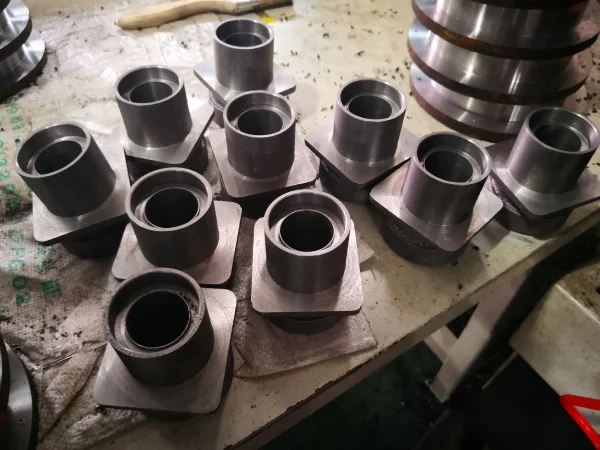
In zinc die castings, internal air bubbles are forced to the surface under pressure, causing pits and coating peeling—a phenomenon known as porosity. This defect is primarily caused by an improper match between the pressure curve, alloy composition, venting design, and solidification process during the zinc die casting process.
Grand View Research reports the global zinc die casting market was valued at USD 2.58 billion in 2022, with steady growth projected through 2030. As one analyst notes, “Surface integrity remains critical for end-use performance.” No gloss can hide what’s trapped inside.
By reading this article, you will gain a comprehensive understanding of the entire process for identifying, diagnosing, and preventing defects in zinc die castings, as well as applying protective coatings. You will learn how to avoid common production pitfalls and master the techniques for achieving flawless powder coating on zinc 다이캐스팅, ensuring long-lasting and effective protection for your workpieces. This will significantly improve the yield rate and market competitiveness of your zinc die casting products.
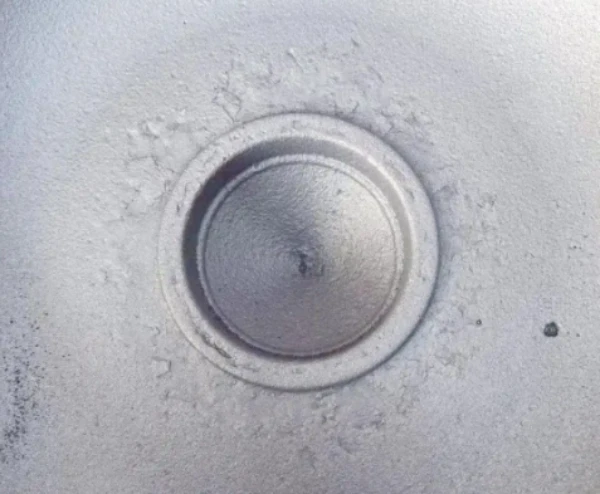
The Effect of Porosity Defects on Zinc Die Castings
Pores can subtly affect the performance of zinc die castings. Whether in automotive brackets or telecommunications equipment housings, even the smallest internal voids can weaken the structural strength of die castings or compromise their smooth surfaces. Understanding the interactions between molten zinc, the mold, and the casting during solidification helps effectively control porosity defects in zinc die castings.
Shrinkage Voids and Their Impact on Mechanical Strength
During the cooling process of zinc 다이캐스팅, the contraction of molten zinc forms shrinkage voids. Thicker-walled sections cool more slowly, creating internal cavities that reduce mechanical strength and long-term reliability. The effects on the final zinc die casting products include:
- Decreased tensile strength
- Reduced ductility
- Impaired load-bearing capacity
- Heat accumulation in thick-walled areas
- Formation of a solidified crust on the exterior
- Internal metal contraction and separation
- Trapped pores
Effects on the Structural Properties of Zinc Die Castings
In terms of structural integrity, porosity defects can compromise the performance of zinc die castings: under static loads, clusters of micro-pores can easily become crack initiation sites, directly weakening the part’s load-bearing capacity; under dynamic loads, these hidden voids can serve as pathways for fatigue crack propagation, severely affecting the long-term service life and reliability of zinc die casting products.
Porosity also compromises dimensional accuracy, causing issues such as warping and dimensional deviations, which increase the difficulty of subsequent machining of zinc die castings and may even lead to assembly failures, resulting in additional cost overruns for zinc die casting services and production processes.
Die casting suppliers focused on precision manufacturing (such as Supro MFG) mitigate the risk of shrinkage cavities in zinc alloy components by optimizing the cooling rate of zinc die castings.
The following data illustrates how an increase in the wall thickness of zinc die castings is accompanied by a corresponding rise in porosity and a loss of strength:
Wall thickness (mm) | Average pore size (μm) | Loss of tensile strength (%) |
2.0 | 45 | 3 |
4.0 | 120 | 8 |
6.0 | 260 | 15 |
The Effect of Porosity on the Corrosion Resistance of Zinc Die Castings
In zinc 다이캐스팅s, porosity manifests as tiny circular holes formed by air trapped within the die casting cavity. These holes can connect to form channels, allowing moisture to penetrate and thereby accelerating the rate of oxidation. When exposed to corrosive environments, this causes the protective coating on zinc die casting products to fail.
A Four-Step Method for Diagnosing Porosity Defects in Zinc Die Castings
Porosity issues can silently damage zinc die castings; even tiny pores can lead to leaks, scrap, or warranty claims, severely impacting the quality of the final product. As a professional zinc die casting manufacturer, we have compiled the following simple and practical four-step method for detecting porosity defects, which allows for more accurate and convenient identification of such defects.
Step 1: Visual inspection of part geometry and ejector pin marks
Inspecting zinc die castings for porosity defects can begin with obvious areas, but a more detailed examination is required. This is also a core component of high-quality zinc die casting services. This includes:
Inspecting the overall geometric structure of the part
Examining thin-walled sections and areas with sharp-angled transitions
Verifying that the draft angle facilitates smooth demolding
Carefully observing ejector pin marks; uneven pressure often indicates gas entrapment, while surface scratches suggest the presence of internal shrinkage cavities.
During the inspection process, special attention should be paid to surface defects in zinc die castings, the balance and positioning of the gates, and whether the structure matches the original design. If bubbling occurs near ribs or bosses in zinc die castings, it is typically related to poor melt flow or inadequate venting.
Step 2: Dimensional Inspection Combining X-ray Inspection and Statistical Process Control
내부 porosity in zinc die castings is extremely difficult to detect. Professional zinc die cast manufacturer perform X-ray inspections on castings, which is where non-destructive testing proves its value.
The core aspects of inspection include: verifying critical dimensions of zinc die castings, scanning for internal porosity, and tracking process fluctuations through statistical process control.
Standardized and reliable dimensional inspection helps prevent sudden non-conformities in zinc die-cast products. Key points for analysis include:
If dimensional tolerance deviations occur, promptly verify the injection speed parameters.
If regular porosity defects are found, focus on inspecting the mold venting system.
If irregular porosity occurs, conduct a targeted investigation of the melt processing stage.
Step 3: Pressure Test for Sealing and Dimensional Stability
For sealed-enclosure zinc die 배역, the inspection process must involve applying controlled air pressure to the castings; rigorously testing for watertightness and thoroughly documenting the leak detection rate are essential steps. Building on this, further evaluations should be conducted to assess the integrity of the zinc die castings after coating, the risk of defects arising after coating, and the product’s long-term dimensional stability. If bubbles appear rapidly during testing, this indicates that the porosity is located near the surface of the die cast part.
Step 4: Analysis of Zinc Alloy Materials and Purity Testing of Cast Ingots
Porosity issues in zinc die castings can sometimes originate in the melting furnace process. Accurately verifying the chemical composition of zinc alloys ensures compliance with specifications. Strictly monitoring trace element limits prevents impurities from exceeding acceptable levels. Carefully examining the balance of alloying elements optimizes the properties of zinc die casting materials.
At 수프로 MFG, melt control is closely integrated with testing procedures to ensure consistent quality in zinc die castings from ingot to finished product. It is precisely this rigorous standardization that keeps the defect rate of die casting products low, establishing us as a reliable zinc die casting manufacturer in the industry.
신뢰할 수 있는 중국 금속 주조 공장을 찾고 계십니까?
Techniques for Preventing Porosity in Zinc Die Castings
When porosity occurs in zinc die castings, it reduces their strength and compromises surface finish. From mold optimization to alloy control, the right process selection ensures that the molten zinc, the mold, and the casting work together seamlessly. Through more scientific planning, die-cast parts can achieve a dense microstructure and a smooth surface, meeting the requirements for mass production of zinc die-cast products.
Optimize mold design and gate placement to ensure uniform filling
To control gas entrapment and metal flow in zinc die castings, one must start with the interior of the die 주조 금형:
제어 and manage the design of zinc die casting molds, including:
Optimizing part geometry to avoid abrupt changes in 벽 두께
Balancing runner layout in mold design to stabilize metal flow velocity
Utilizing flow simulation technology to predict cold shuts and gas entrapment zones
그 following optimization strategies can be implemented at the gate location of zinc die casting molds:
Positioning the gate near thick-walled areas to achieve stable, uniform filling
Adjusting the gate width of the 다이캐스팅 금형 to reduce turbulence in the molten zinc
Aligning the gate orientation with the direction of the vent
Develop a scientific venting plan for zinc die castings:
Place main vent channels in the terminal filling areas
Install micro-vent grooves along thin-walled ribs
Configure overflow channels to collect impurities
Supro MFG’s high-quality zinc die-cast parts rely precisely on this layered design approach to ensure dense microstructure and smooth surfaces in the castings.
As a custom die and casting services supplier in China, we support zinc, copper and aluminium alloys.
Optimization of Zinc Alloy (Zamak Series) Composition and Melting Point Control
A stable chemical composition of the zinc alloy ensures consistent and predictable performance of zinc die castings. By conducting regular elemental analysis and strictly controlling the purity range of the alloy, slag formation is minimized. Additionally, maintaining the melting temperature within the optimal die casting range and adjusting furnace settings based on the target melting point ensures consistent and predictable performance of zinc die castings.
Even minor fluctuations in the chemical composition of zinc alloys can significantly impact the quality of zinc die castings. Supro MFG tracks every batch of alloy to ensure that the final zinc die casting products are of consistent quality and performance.
Typical control parameters for zinc alloys are as follows:
매개변수 | Standard Range | Effect on Zinc Die Castings |
Aluminum Content | 3.5–4.3% | Improves fluidity, reduces shrinkage cavities |
Magnesium Content | 0.02–0.06% | Enhances casting strength |
Melting Temperature | 380–420°C | Controls the risk of porosity formation |
Implementation of an ISO-certified quality control and defect prevention system
Comprehensive quality control ensures that high-quality zinc die castings become reliable mass-produced parts. Zinc die cast manufacturer must implement an effective ISO-certified system and adopt standardized, documented inspection methods.
They must monitor the entire production process in real time, implement data-driven statistical process control (SPC), and enforce process control regulations. Continuous improvement of the zinc die casting closed-loop system involves conducting root cause analysis of defects, implementing standardized corrective actions, and regularly reviewing the effectiveness of these measures.
This systematic control approach ensures comprehensive oversight of molten zinc, molds, and castings from melting through to shipment. Supro MFG performs these inspections daily to ensure that zinc die castings leave the factory with dense structures and clean surfaces, ready for immediate practical application.
5 Best Practices for Powder Coating Zinc Alloy Die Castings
The quality of powder coating directly determines the quality of die-cast parts. If the surface finish does not meet standards, even structurally robust zinc alloy die castings will appear cheap and rough. Whether it’s small zinc alloy parts in electronic devices or heavy-duty zinc alloy castings in the automotive industry, surface quality control is critical. Below are practical methods used by our experienced team to ensure that zinc alloy die castings have a clean surface, robust performance, and consistent quality.
Pre-treatment and cleaning to improve surface coating results
Surface pretreatment is essential for zinc die castings, and the entire process must strictly follow these steps:
Degreasing: Removing machining oil and grease from the 아연 주물
Alkaline cleaning: Dissolving residual impurities that have penetrated the surface
Thorough rinsing: Preventing chemical residue
To address oxidation layers and impurities on zinc die castings, mild acid washing can remove the oxidation layer while preventing excessive etching. This thoroughly removes impurities and reduces the occurrence of pinholes during coating.
Proper surface pretreatment enhances the adhesion of the coating to the surface of zinc die castings. This adhesion-enhancing treatment ensures that the powder adheres evenly to the surface of the zinc die castings. Omitting any step in the process will quickly result in surface coating defects.
Controlling Coating Thickness to Enhance Impact Resistance
Coating thickness directly determines the durability, assembly accuracy, and impact resistance of zinc die castings. By precisely adjusting the electrostatic spraying voltage and maintaining a stable powder flow rate and spray gun distance, the uniformity of the coating on die castings can be significantly improved; simultaneously, monitoring the coating thickness at edges and on flat surfaces ensures that the thickness remains within the specified tolerance range.
An optimal coating thickness enhances impact strength; coatings that are too thin are prone to peeling, while those that are too thick reduce thread durability and compromise dimensional accuracy. As an ISO-certified professional zinc die casting manufacturer, Supro MFG employs standardized thickness control to ensure that the coatings on zinc die castings are stable, dense, and reliable, effectively preventing post-spraying issues such as porosity and bubbling.
Curing Temperature Profile and Thermal Conductivity Control
Improper temperature control is the primary cause of defects such as bubbling and warping in powder-coated 아연 다이캐스팅 castings. Zinc alloys have excellent thermal conductivity and heat transfers rapidly; uneven heating rates can directly cause warping in thin-walled 아연 다이캐스팅 castings, while excessive heating rates can also generate internal stresses in the coating, leading to bubbling after spraying.
We rigorously calibrate each temperature zone in the curing oven, implement standardized temperature control for every batch of zinc die-cast products, strictly adhere to the specified curing cycle to complete the coating cross-linking reaction, and comprehensively inspect the integrity of the final coating. By precisely controlling the temperature curve and heating rate, a standardized curing process effectively prevents coating defects in zinc die castings, ensuring both the structural integrity of the castings and the quality of the surface coating.
Testing of Dimensional Stability After Coating
Dimension verification after coating curing is a critical quality control step for ensuring the assembly accuracy of 아연 다이캐스팅 castings. We use calibrated professional measuring tools to precisely verify the dimensional accuracy of key areas on the castings, comparing measured data against standard tolerances one by one, with a particular focus on monitoring dimensional shrinkage in areas with thick coatings.
We also inspect the flat surfaces of 아연 다이캐스팅 for warping or deformation and conduct rigorous quality audits to confirm the overall integrity of the castings. This inspection effectively prevents dimensional deviations, ensuring precise compatibility between the castings and plastic or steel components, and guaranteeing smooth assembly of zinc die casting products. By establishing standardized inspection procedures, we reinforce product quality and meet the assembly requirements of high-end manufacturing.
Ensuring Consistent Quality Through PPAP Documentation
The long-term reliability of zinc die castings depends on proper documentation control. We adhere to Production Part Approval Process (PPAP) requirements and maintain detailed documentation for each production batch. During the coating process, we implement comprehensive process control and record inspection data.
By implementing end-to-end traceability for batch production, we ensure that production processes comply with automotive manufacturing standards and our internal quality control system. We use standardized documentation to regulate and standardize processes, thereby maintaining consistent and stable coating quality for zinc die castings and preventing coating defects at the system level.
Supro MFG integrates these quality control measures directly into the 표면 처리 process, helping customers avoid the high costs associated with rework on zinc alloy die-cast parts. For brands that rely on precision zinc die castings, this consistency ensures smooth production and enhances customer satisfaction.
Supro-Mfg에 문의하기
Porosity defects in zinc die castings are the primary cause of bubbling and peeling in powder coating. We have developed a comprehensive solution that spans the entire process—from defect diagnosis and mold/process optimization to full-process control of the coating operation. As a professional zinc die casting manufacturer, we strictly control alloy composition, curing processes, and dimensional inspection to eliminate porosity issues at the source. This ensures the structural integrity of castings and the quality of the coating, effectively reducing rework costs while enhancing the reliability and market competitiveness of zinc die casting products.
 English
 Français
 Deutsch
 Italiano
 日本語
日本語 한국어
한국어 Polski
 Português de Angola
 Русский
 Español de Argentina