
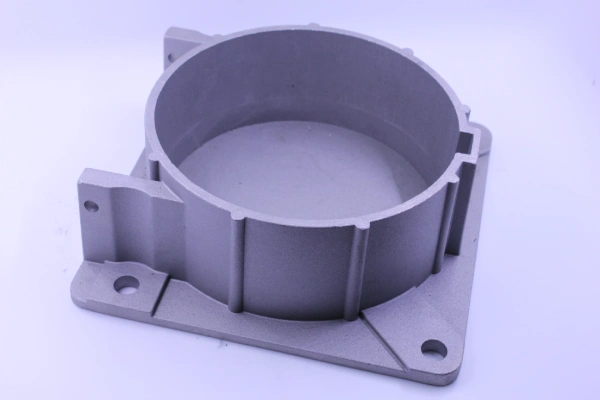
For Western quality managers, who cannot compromise on structural safety under any circumstances, compliance with aluminum precision casting standards is a non-negotiable benchmark.
For OEM procurement teams, there is no more costly supply chain nightmare than when an overseas supplier verbally promises to provide A356-T6 aged material, only for that batch to be catastrophically rejected during third-party tensile or radiographic testing at a domestic laboratory. When components fail to meet specified engineering limits, it not only brings an entire assembly line to a standstill but also damages brand reputation.
To eliminate these critical quality risks, this guide provides a clear analysis of the North American regulatory framework—specifically the ASTM B618 and AMS standards. We will detail how 수프로 MFG ensures 100% compliance with international standards for every production batch through rigorous spectrochemical monitoring, automated heat treatment records, and concurrent physical testing of castings.
Decoding Standards for Aluminum Investment Casting
For global quality and compliance managers, technical standards serve as a structural benchmark for protecting overseas supply chains from catastrophic on-site failures. Navigating international regulatory frameworks is far from mere paperwork; it determines the specific test protocols, chemical composition limits, and validation parameters required to approve custom components for use in heavy industrial applications. Partnering with aluminum investment casting companies that prioritize absolute cross-border compliance ensures that your technical blueprint is flawlessly translated into robust, durable, and internationally certified components.
Navigating ASTM B618 and AMS Compliance
To ensure highly reliable manufacturing, aluminum investment casting must strictly adhere to standardized material specifications rather than unverified verbal agreements. The primary benchmark for procurement in North America is the ASTM B618 specification for aluminum castings, which specifies chemical composition tolerances, grain structure, and basic mechanical properties for high-performance components. For defense and aerospace components requiring advanced engineering margins, the stringent Aerospace Materials Specifications (AMS) set even stricter limits on permissible structural deviations.
At Supro MFG, we incorporate these precise ASTM and AMS provisions directly into the initial project quality plan (QP) before manufacturing tool steel molds. In summary, deep alignment with international standards ensures that every production batch of aluminum investment castings has a traceable mechanical properties framework, thereby facilitating successful audits by overseas laboratories.
The Risk of Phantom T6 Mechanical Properties
Low-cost aluminum investment casting processes often expose global supply chains to hidden structural vulnerabilities due to poor heat treatment control. A common issue in uncertified workshops is the production of “fake” T6 aged conditions, where parts undergo only surface baking without developing the true metal microstructure.
To achieve full structural performance in aluminum investment casting, highly uniform thermal saturation must be achieved, followed by rapid transfer to a quenching tank to permanently lock in key strengthening elements. When low-end suppliers use equipment with insufficient precision and apply loose temperature tolerance controls for A356-T6 heat treatment, the required nanoscale precipitates cannot form uniformly within the aluminum matrix.
Ultimately, these unvalidated heat treatment processes result in frames that become extremely brittle, which not only cause immediate failure in third-party tensile testing but also jeopardize the safety of the entire end assembly.
Certifying Quality in Aluminum Investment Casting
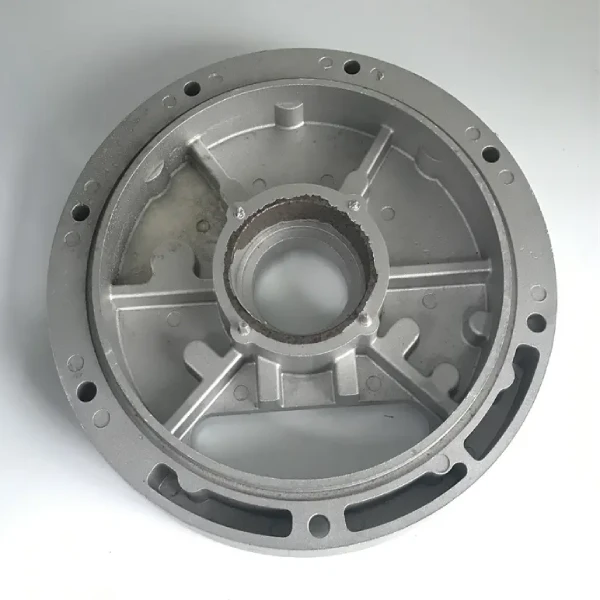
To translate fundamental physical standards into verifiable production practices, 알루미늄 정밀 주조 companies must establish a highly rigorous quality management system. Passive post-production inspections cannot eliminate internal metallurgical risks; quality control must be proactively integrated into the melting and 열처리 processes. By deploying digital tracking systems and precision instruments, an IATF 16949-certified aluminum investment casting company can ensure that every structural component fully meets the performance specifications required by your engineering team.
Spectroscopic Chemical Analysis and Melt Traceability
Ensuring reliable chemical purity prior to pouring is a fundamental step in the production of high-performance precision aluminum castings. At Supro MFG, our casting team performs real-time spectral chemical analysis of each batch of molten metal using advanced optical emission spectrometers (OES) before pouring into ceramic molds. This step ensures that the concentrations of key elements fall within specified ranges, while strictly controlling iron (Fe) contamination below the ASTM limit of 0.20%, thereby preventing the formation of brittle needle-like phases that compromise material ductility.
In addition, each unique melt is assigned a permanent and traceable furnace number, which remains consistent throughout the entire process—from the smelting of raw ingots to final packaging. In summary, implementing these rigorous chemical verification measures eliminates material nonconformities at the source, giving global buyers confidence in the purity of the raw materials used in their cast aluminum parts.
The following are the core chemical composition limits in compliance with the ASTM B618 / AMS standard:
Chemical Element | ASTM B618 / A356 Standard Range | Supro MFG Internal Control | Purpose of Element / Impact of Impurity |
Silicon (Si) | 6.50 % - 7.50 % | 6.80 % - 7.20 % | Provides molten fluidity; fills complex thin walls. |
Magnesium (Mg) | 0.25 % - 0.45 % | 0.32 % - 0.40 % | Key switch for T6 precipitation hardening (Mg2Si). |
Iron (Fe) | ≤ 0.20 % (Max) | ≤ 0.12 % (Strict Limit) | Excess Fe forms brittle needle-like phases, lowering elongation. |
Titanium (Ti) | ≤ 0.20 % (Max) | 0.10 % - 0.16 % | Acts as a grain refiner to improve fatigue resistance. |
Aluminum (Al) | Balance | Balance | Base matrix. |
Tight Thermal Profiles with Solutionization Records
To ensure consistent mechanical properties across thousands of custom parts, precise control at the microscopic level is essential for multi-zone industrial furnaces. To strictly comply with the temperature tolerance requirements for A356-T6 heat treatment, Supro MFG uses automated solution heat treatment furnaces to control local temperature fluctuations within a strict range of ±5°C. This absolute thermal uniformity ensures that structural elements such as magnesium and silicon are uniformly dissolved into the aluminum matrix, while preventing localized overheating or incomplete phase transformations.
A digital temperature-time profile is automatically generated for every heat treatment run and permanently archived in our quality data system for customers to access at any time. Ultimately, by maintaining these precise and tamper-proof heat treatment records, our aluminum investment casting process successfully eliminates guesswork regarding heat treatment compliance, enabling the final components to undergo comprehensive audits by third-party inspectors.
A356-T6 Quality Certification and Full-Process Traceability of Testing
By implementing workflows compliant with the IATF 16949 standard, Supro MFG has transformed quality control from passive inspection to proactive process prevention. As shown in the table above, each furnace batch is accompanied by digital heat treatment records and test results for co-cast test bars, ensuring that 100% of parts meet standards before leaving the foundry.
The following is a detailed list of quality control points (MIL-STD / ASTM test specifications) that compliance managers must review during on-site audits, using a highly transparent inspection process to alleviate buyers’ concerns.
Quality Control Phase | Specific Testing Target | Referenced ASTM Standard | Acceptance Criteria | Deliverable Quality Document |
1. Liquid Melt | Melt Purity & Chemistry | ASTM E1251 | No element out of standard; H2 gas < 0.12 ml/100g | Cast aluminum spectroscopic chemical analysis report |
2. Heat Treatment | T6 Temper Solution & Aging | AMS 2770 | ±5℃ temperature tolerances across all zones | Digital Time-Temperature Chart with furnace log |
3. Batch Destructive | Mechanical Property Verification | ASTM E8 / E8M | UTS ≥ 290 MPa, Yield ≥ 225 MPa Elongation ≥ 3.5% | Investment casting test bars acceptance criteria data |
4. Non-Destructive | Internal Defects (Porosity/Shrinkage) | ASTM E155 / E94 | Grade 1 or Grade 2 (Application dependent) | Investment casting nondestructive testing NDT (X-Ray) report |
5. Surface Integrity | Micro-cracks & Surface Defects | ASTM E1417 | Zero linear indications or surface fractures | Fluorescent Penetrant Testing (FPT) certificate |
Destructive Testing for Aluminum Investment Casting
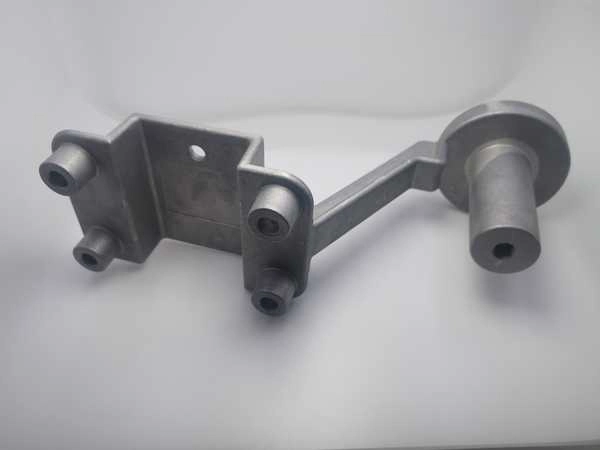
To verify the physical limits of a production batch, reliable physical validation must be conducted under actual operational stress conditions. Relying solely on virtual simulations or unverified certifications creates serious quality blind spots for critical structural components. By applying standardized destructive and non-destructive testing methods to actual production batches, 알루미늄 정밀 주조 companies can provide an impeccable benchmark of physical evidence.
Test Bars Co-Cast with Production Batches
To verify true mechanical limits, it is essential to test physical samples that perfectly replicate the grain structure of the finished product. To avoid data distortion, Supro MFG completely avoids using separately cast, idealized test specimens to validate actual orders. Instead, during the aluminum investment casting process, our technicians place standard tensile test specimens directly onto the same wax tree assembly as your custom parts.
This ensures that the test specimens undergo the same pouring rates, rapid water quenching, and artificial aging cycles as the actual production parts. When overseas testing laboratories test these specimens using tensile testing machines, the resulting data will accurately reflect the physical properties of the delivered batch. In summary, adhering to these rigorous lost-wax casting specimen acceptance criteria provides fully authentic material validation, ensuring easy passage of any stringent engineering audit.
Radiographic and Fluorescent Penetrant Testing Protocols
To detect hidden subsurface defects and microcracks, rigorous non-destructive testing methods must be applied to critical load-bearing components. To locate internal porosity, shrinkage cavities, or slag inclusions, Supro MFG strictly adheres to ASTM standards for aluminum investment casting and performs advanced industrial X-ray inspections.
In addition, we use highly sensitive fluorescent penetrant testing (FPT) to inspect complex external surfaces for microscopic cold cracks that are invisible to the naked eye. By comprehensively analyzing these scan results, our quality team is able to grade each component against standard reference radiographs before finalizing the release documentation.
Ultimately, implementing this multi-layered non-destructive testing (NDT) protocol for precision aluminum investment casting ensures that every component is completely free of any hidden physical defects when it leaves our foundry.
Supro-Mfg에 문의하기
Strict compliance with international ASTM B618 and AMS standards, supplemented by a well-functioning IATF 16949 quality management system, is the only reliable solution to eliminating cross-border trust issues in manufacturing. Relying solely on unverified verbal promises from low-end workshops will inevitably lead to costly batch rejections and production line shutdowns during overseas laboratory audits.
By achieving comprehensive transparency at every stage of the 알루미늄 정밀 주조 process—from real-time melt spectroscopic analysis to auditable furnace heat tracking records, to physical test samples taken during the casting process—Supro MFG eliminates hidden risks in your global supply chain, ensuring that every quality director can approve production batches with absolute confidence.
Strict compliance with ASTM standards effectively eliminates quality risks, but this level of precision and destructive testing naturally factors into the initial processing cost. For procurement teams balancing annual budgets, how does the long-term Return on Investment (ROI) of a fully certified A356-T6 component hold up against cheaper, uncertified alternatives? Explore the complete Total Cost of Ownership breakdown in our next analysis: [Aluminum Investment Casting ROI: Is A356-T6 Worth the Premium Cost?].”
 English
 Français
 Deutsch
 Italiano
 日本語
日本語 한국어
한국어 Polski
 Português de Angola
 Русский
 Español de Argentina