
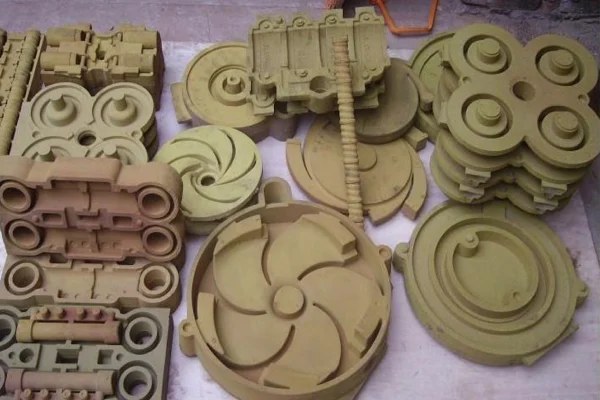
Sand casting is the preferred forming method for aluminum alloy load-bearing parts, thanks to its flexibility and cost benefits. However, inherent microdefects in as-cast microstructures, such as porosity, coarse dendrites and rough surface textures, will severely limit the service life and safety of components under cyclic loading if left uncontrolled. This paper systematically demonstrates how sand casting heat treatment (T6 and hot isostatic pressing) refines microstructures. Combined with the wall thickness uniformity requirements and alloy selection principles of sand casting design, this method reduces thermal stress and deformation risks at the structural design source. Meanwhile, it analyzes the optimization effect of surface treatment on stress concentration formed on rough surfaces, as well as the strategy to coordinate surface quality and heat treatment processes. These practices jointly build a full-chain improvement route for fatigue performance covering materials, design and post-processing. Supported by integrated full-process manufacturing capabilities, Supro MFG delivers mass-producible one-stop casting solutions for your development of high-fatigue automotive aluminum castings. The following paragraphs break down the critical control points of each process stage in detail.
The Role of Sand Casting Heat Treatment in Automotive Aluminum Fatigue Performance
For automotive structural components operating under high-fatigue service conditions, the sand casting heat treatment process — centered primarily on T6 solution aging treatment and hot isostatic pressing — can directly eliminate microstructural defects inherent to casting. Reliance on casting alone fails to deliver the mechanical properties required for long-term service under cyclic loading. This section analyzes how the aforementioned heat treatment processes optimize sand casting microstructure and boost fatigue performance to meet the stringent operational standards of modern vehicle architectures.
T6 Heat Treatment and Its Effect on Sand Casting Tensile Strength
The T6 process flow is outlined as follows: solution treatment is performed at a holding temperature of 515–535 °C for 4 to 12 hours, followed by rapid water quenching, then artificial aging at 150–160 °C for 4 to 16 hours. During solution treatment, magnesium and silicon atoms dissolve into the aluminum matrix. Fine Mg₂Si intermetallic compound particles precipitate out in the subsequent aging stage; these particles measure approximately 0.5 micrometers in length and less than 50 nanometers in width. After the complete T6 heat treatment process, A356 aluminum alloy sand castings maintain a tensile strength consistently above 220 MPa. This process drastically improves both yield strength and tensile strength, and has become the industry standard for automotive structural components.
Hot Isostatic Pressing as a Supplementary Sand Casting Heat Treatment
Hot Isostatic Pressing (HIP) is a complementary auxiliary heat treatment process. Relevant research conducted by Supro MFG on A356 and A204 sand-cast aluminum alloys proves that this process can substantially eliminate various solidification defects such as porosity and shrinkage cavities generated during sand casting. It barely causes adverse impacts on microstructural parameters including grain size and SDAS, while markedly boosting the density and fatigue resistance of castings. The specific operating procedure is as follows: high-pressure argon gas (standard pressure range: 100–200 MPa) is applied at a high temperature of 480–520 °C. The creep effect generated by the combined action of temperature and pressure closes internal porosity and shrinkage cavity defects inside castings.
Combining HIP with T6 heat treatment during sand casting delivers the optimal comprehensive material performance. However, the processing cost of this combined full process is 30% to 50% higher than standalone T6 treatment. Accordingly, this combined process package is only economically viable for components subject to strict fatigue resistance performance requirements.
Comparing Sand Casting Heat Treatment Routes for Cyclic-Loaded Components
After B319 alloy undergoes T5, T6 and T7 heat treatments, it exhibits completely distinct crack growth behaviors and fracture characteristics. Among these processes, the T6 treatment delivers optimal strength and fatigue limit for components under high-cycle fatigue operating conditions, while sand cast components feature superior damage tolerance and slower crack propagation under low-cycle fatigue service scenarios. Reasonable selection of sand casting heat treatment fundamentally determines the service performance of aluminum cast components under cyclic loading. Heat treatment solutions should be matched to the fatigue operating conditions of each part. The combined HIP+T6 process delivers exceptional fatigue resistance yet comes with higher costs, making it suitable exclusively for critical safety components.
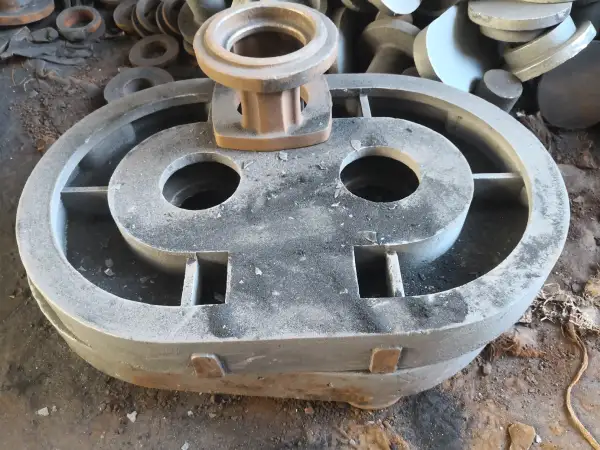
Sand Casting Microstructure and Heat Treatment Synergy
There exists a critical correlation between the two factors. Specifically, secondary dendrite arm spacing, pore distribution and eutectic silicon morphology jointly govern both the strengthening effect of sand casting heat treatment and the mechanical properties of finished components. This section analyzes how solidification conditions shape as-cast microstructures, how cooling rates impact heat treatment outcomes, and how heat treatment drives microstructural evolution to bring materials up to targeted performance specifications.
Dendrite Arm Spacing and Porosity in Sand Cast Aluminum
Sand casting aluminum alloys form dendritic structures. The secondary dendrite arm spacing (SDAS) within sand casting microstructure serves as a critical indicator for characterizing solidification status and predicting mechanical performance. For A356 castings, SDAS ranges from 50 to 96 μm. A higher cooling rate yields finer SDAS, which translates to superior ductility and fatigue resistance of the material. Nevertheless, void defects such as porosity and shrinkage cavities drastically degrade fatigue life; the fatigue life of defective castings is one order of magnitude lower than that of defect-free counterparts. SDAS and void defects mutually restrict one another, meaning manufacturers cannot optimize only one parameter independently during production. To consistently achieve high fatigue resistance, sand casting process optimization must simultaneously control dendrite refinement and void defects, striking a balance between the two to secure comprehensive mechanical performance of cast components.
How Sand Casting Solidification Rates Influence Heat Treatment Response
Solidification cooling rates affect the strengthening performance of subsequent sand casting heat treatment for components. Conventional resin sand molds deliver a cooling rate of approximately 0.5°C per second, while improved processes such as chilled sand molds can boost the cooling rate up to 1°C per second. This difference results in notable performance variations: accelerated cooling refines grain size from 115 micrometers down to 60 micrometers and reduces the secondary phase size from 9.1 micrometers to 2.7 micrometers. Sections with faster cooling rates feature much finer microstructures, which deliver superior impact resistance even with shortened heat treatment cycles.
During actual production, uneven wall thickness across different sections of a single sand casting creates inconsistent cooling rates, leading to non-uniform SDAS values throughout the part. This ultimately causes localized disparities in the effectiveness of sand casting heat treatment. Proper placement of chills inside the sand mold speeds up solidification in thick-walled sections and achieves directional solidification, yielding more uniform and consistent overall performance for castings.
Heat Treatment Effects on Sand Casting Microstructure Evolution
Sand casting heat treatment drives profound microstructural evolution within aluminum alloys, transforming as-cast microstructures into precipitation-strengthened states to optimize the material’s mechanical properties. When A356 sand-cast aluminum alloy undergoes T6 heat treatment, equilibrium Mg₂Si particles and eutectic silicon phases dissolve into the aluminum matrix during the solution treatment stage. The subsequent aging process precipitates fine needle-shaped Mg₂Si particles (approximately 0.5 micrometers in length and less than 50 nanometers in width), alongside polygonal silicon precipitates smaller than 1 micrometer. These precipitates impede dislocation motion and serve as the primary strengthening mechanism of the material.
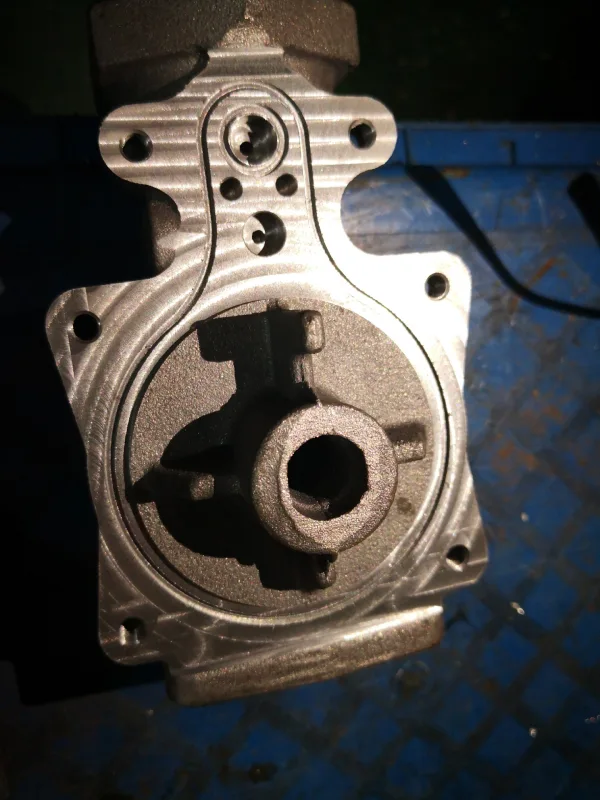
Aluminum Sand Casting Design for Heat-Treated High-Fatigue Structures
Conforming to standardized design principles when shaping aluminum alloy sand casting components determines whether the castings will develop deformation or cracking defects after heat treatment. The sand casting structural design finalized prior to pouring impacts all subsequent processes, including solidification, shakeout, solution treatment, and quenching. This section elaborates on three core design priorities: wall thickness design for thermal stress control, alloy selection matched to fatigue operating conditions, and structural geometry optimized to maximize the strengthening benefits of heat treatment. Strict adherence to this aluminum sand casting design guide standard allows automotive structural parts subject to high cyclic loading to fully unlock the mechanical performance potential of the material following heat treatment.
Wall Thickness Uniformity and Thermal Stress Management in Sand Casting Design
Uniform wall thickness is the top priority in sand casting structural design, as this parameter governs the overall solidification behavior and thermal stress generation of castings. The minimum recommended wall thickness for standard aluminum alloy sand castings ranges from 3 to 4 millimeters. Wall thickness below 3 millimeters greatly increases the risk of misruns and cold shuts. Abrupt wall thickness transitions create hot spots; thick sections cool far more slowly than adjacent thin walls, and differential shrinkage produces tensile stress that triggers hot tearing.
When wall thickness variations cannot be avoided, designers can add smooth transition radii to mitigate stress concentration and improve molten metal flow during pouring. For mass production, casting simulation software predicts temperature gradients to identify high-risk zones before mold manufacturing.
Castings with consistent wall thickness develop a more uniform sand casting microstructure, deliver steadier performance during subsequent heat treatment, and exhibit smaller variations in quenching speed across all sections. If you aim to achieve defect-free pouring and fully unlock the material’s maximum mechanical limits, explore our complete process methodology tailored to [自動車用パワートレインの勝利に向けた砂型鋳造プロトタイプの加速].
Alloy Selection for Sand Casting High-Fatigue Automotive Applications
Alloy selection directly impacts the fatigue resistance of components. Choosing between A356 and B319 represents a core design decision when developing automotive structural castings. The A356 Al-Si-Mg alloy features high purity and delivers outstanding mechanical properties along with corrosion resistance after T6 sand casting heat treatment. Post heat treatment, this alloy boasts exceptional tensile strength and fatigue resistance, making it the primary material of choice for suspension parts, control arms, and structural castings subject to high-cycle fatigue loads. Due to distinct surface porosity characteristics, the B319 Al-Si-Cu alloy offers superior fatigue strength under specific service conditions and is widely applied to cylinder heads and engine blocks that endure thermomechanical cyclic loading.
For automotive structural components operating under high-fatigue conditions, the aluminum sand casting design guide provides the following recommendations: Specify A356-T6 for components requiring high specific strength, while B319 is recommended for applications demanding superior high-temperature performance. Both alloys have a critical wall thickness threshold (typically three times the minimum wall thickness); casting strength will degrade once wall thickness exceeds this limit.
Design Features That Maximize Sand Casting Heat Treatment Effectiveness
The geometric profile of a casting determines the strengthening effect obtained after sand casting heat treatment, and its structural features directly govern the component’s final performance. Isolated thick sections cool slowly during quenching and fail to achieve full age hardening. Therefore, designers should incorporate core holes to remove excess material from bulky zones and add ribs (rib thickness set to 60%–70% of the nominal wall thickness) to replace solid thick blocks, ensuring uniform cooling rates across the part.
Strategic placement of chills inside the sand mold accelerates solidification within thick-walled sections and enables directional solidification, which yields consistent sand casting microstructure throughout the entire casting. All internal corners shall be designed with generous transition radii (radius ≥ 0.5 times the wall thickness). This design improves molten metal flow during mold filling, eliminates hot spots, and enhances the casting’s fatigue resistance. Draft angles are specified at 1.5° to 3° to facilitate smooth shakeout and prevent surface damage that would compromise sand casting surface finish.
Sand castings engineered in compliance with the above specifications exhibit minimal distortion during solution treatment and quenching. They also avoid residual stress and dimensional deviation, eliminating the need for costly post-process straightening operations.
Sand Casting Surface Finish and Its Interaction with Heat Treatment
sand casting surface finish is far more than a cosmetic concern; it also impacts the durability of automotive components under cyclic service loads. Castings replicate the rough texture of sand molds on their surfaces, creating notches that readily trigger stress concentration under fatigue operating conditions. This section analyzes three interrelated dimensions: how surface roughness reduces fatigue strength, which post-casting treatment processes can restore compromised mechanical properties, and why surface quality must be integrated into the overall 砂型鋳造 heat treatment process plan at the design stage for unified planning.
How Sand Casting Surface Roughness Affects Fatigue Strength
Surface roughness from sand casting creates stress concentration points, which drastically reduce the fatigue strength of aluminum components. Fatigue cracks in sand-cast aluminum alloys fall into three typical categories: subsurface microvoids, micro-notches generated by surface casting textures, or a combined effect of both. Local fatigue strength at the casting surface layer is heavily affected by both subsurface porosity and textural surface notches. During actual casting production, sand casting surface finish can be controlled by selecting different mold sand materials (finer-grained mold sand delivers smoother casting surfaces), which directly improves the fatigue resistance of parts.
Post-Casting Surface Treatments for Sand Casting Fatigue Enhancement
Post-casting surface treatments can mitigate performance deficiencies caused by as-cast rough surfaces. Shot peening is a precision surface finishing process that redistributes residual stress within workpieces by converting surface tensile stress into compressive stress, which greatly extends the fatigue life of metal components. Compared with untreated sand-cast aluminum alloy parts, shot peening or Hot Isostatic Pressing (HIP) improves fatigue strength by approximately 15%–17% and doubles fatigue life directly. Process selection must align with sand casting application: critical safety components can absorb the extra costs associated with HIP and shot peening, while standard parts with less demanding operating conditions only require conventional T6 heat treatment to achieve a sand casting surface finish suitable for their service lifespan. Aluminum castings processed with HIP can deliver further gains in fatigue strength when paired with subsequent shot peening reinforcement.
Integrating Surface Quality into Sand Casting Heat Treatment Strategy
Heat treatment and surface quality require integrated planning rather than being treated as separate independent manufacturing steps. Hot Isostatic Pressing (HIP) eliminates internal microvoids and boosts overall fatigue performance, yet it deteriorates the surface layer and reduces fatigue strength. Therefore, HIP must be paired with precision machining to optimize sand casting surface finish. Existing statistical evaluation tools in the industry are compatible with the three categories of fatigue failure modes found in aluminum alloys. If components retain their as-cast surfaces, the heat treatment plan must simultaneously account for the combined impacts of surface roughness and internal porosity. During real-world manufacturing, surface tolerance standards should be finalized at the design stage. Manufacturers can optimize molding sand and casting parameters to minimize surface defects, then customize heat treatment workflows based on the final surface condition of castings. By utilizing extreme value statistical probability models alongside parameters such as valley depth and notch radius, engineers can accurately calculate the long-term fatigue strength of components with rough as-cast surfaces.
Looking for a reliable China metal foundry?
- We can help you optimize product design and save costs.
- We can help you with high quality high volume cast parts.
- We can deliver on time and get more sales market opportunities.
- You will benefit from Supro MFG 金属鋳造 service.
Contact Supro MFG
This paper systematically analyzes the synergistic effects of heat treatment processes, microstructure control, design criteria, and surface treatments throughout the full sand casting workflow on high-fatigue automotive aluminum castings. Proper matching of heat treatments (including T6 and HIP) with uniform casting wall thickness and alloy selection constitutes the core approach to boosting the tensile strength and fatigue life of castings. Incorporating the wall thickness transition and fillet radius rules outlined in the aluminum sand casting design guide into early-stage development effectively mitigates thermal stress and deformation risks. Meanwhile, post-casting surface treatments such as shot peening further alleviate stress concentration induced by surface roughness.
As lightweighting and electrification impose increasingly stringent requirements on structural integrity, 砂型鋳造 leverages its inherent advantages in low-cycle fatigue damage tolerance. Combined with process simulation and in-line inspection technologies, sand casting will emerge as a critical manufacturing route for high-reliability chassis and powertrain components. By integrating full-chain sand casting process parameters and multi-platform heat treatment solutions, Supro MFG is committed to delivering industrialized solutions that balance consistent performance and mass-production cost efficiency for the industry.
 English
 Čeština
 Français
 Deutsch
 Italiano
 日本語
日本語 한국어
한국어 فارسی
فارسی Polski
 Português de Angola
 Русский
 Slovenčina
 Español de Argentina
 Українська