
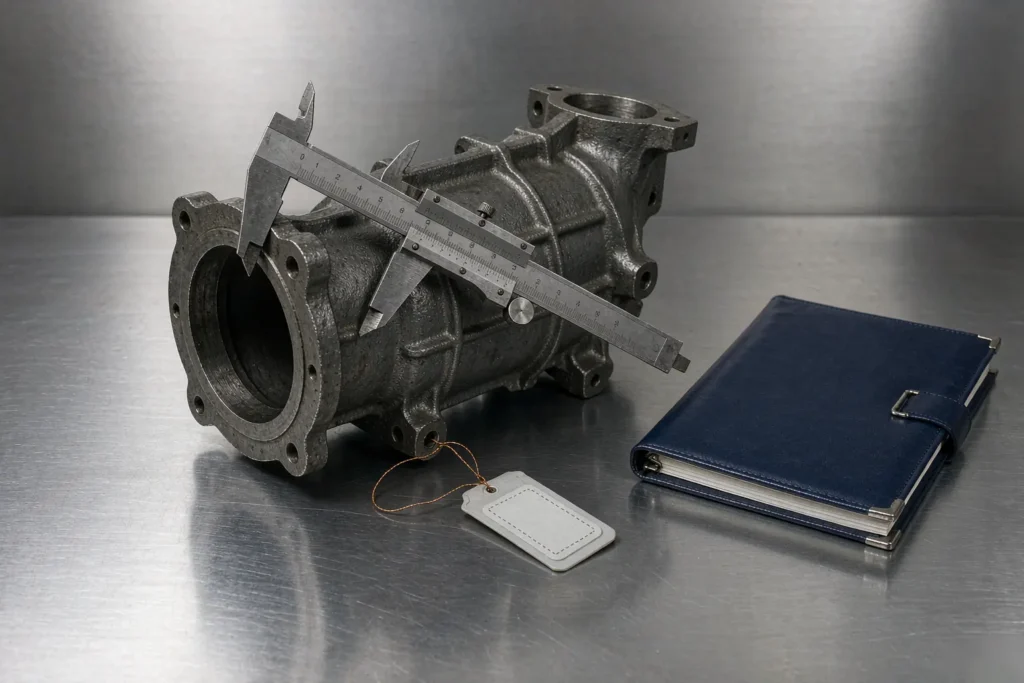
A casting supplier audit is the only reliable way to tell whether a low quote is a real capability or one lucky sample. A certificate describes a quality system; a casting supplier audit shows whether that system ever touched your part.
This guide is written for buyers qualifying a new foundry or re-qualifying one that has drifted. It sets out the ten documents to request before you travel, twelve floor checkpoints, how to read process-capability evidence instead of certificates, and the arithmetic that decides whether you need a second source. Practice notes follow published guidance from the American Foundry Society (AFS) et le North American Die Casting Association (NADCA). Every number below is worked from a single running example so you can substitute your own.
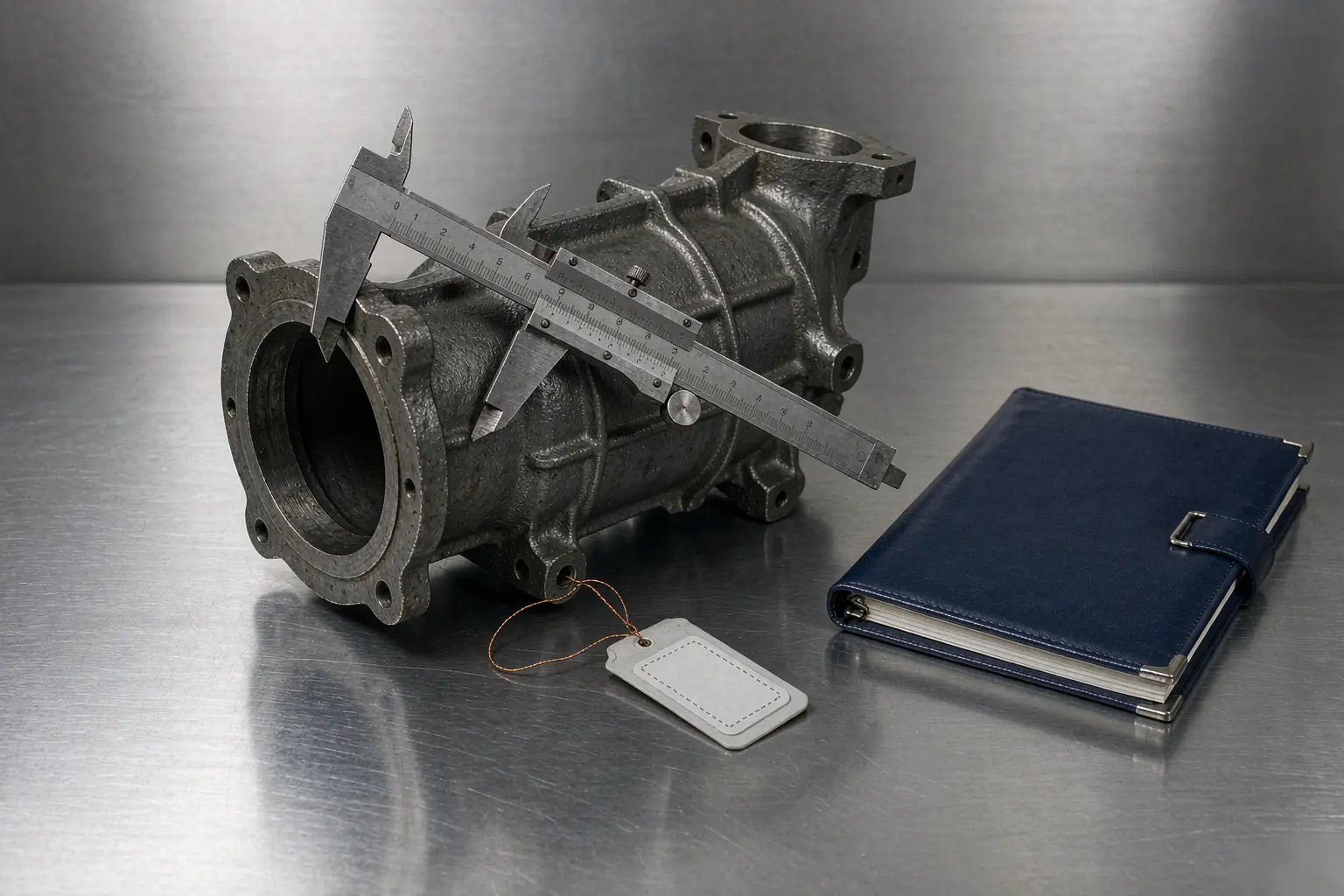
What a Casting Supplier Audit Should Answer
Most visits fail because they measure the wrong thing. A tidy shop tour, a framed ISO certificate and a good lunch do not predict whether next quarter’s shipment will machine. A casting supplier audit should end with four answered questions:
- Can it be made repeatedly? Not once — on the line that will actually run it, with the shift that will actually run it.
- Is the capacity mine? Promised capacity and allocated capacity are different numbers.
- Does the system produce evidence for my part? Records that exist for auditors are not the same as records that drive decisions.
- How long until I am running again if this fails? That is a number, and it decides whether you dual-source.
If a casting supplier audit does not produce four numbers, it was a tour. The first three are foundry-specific. The fourth is arithmetic, and it is the one most buyers skip — then discover during a shortage that a casting lead time of eleven weeks applies to a supplier they can no longer use. If you are still building the shortlist, settle the process fundamentals in our Guide sur la fonderie des métaux before you book any travel.
Capability and capacity are not the same thing
A foundry that poured a beautiful sample in week one can still miss your schedule in month six. Capability asks whether the process window exists. Capacity asks whether your program gets a share of it. Here is the check, using one real program:
The part is a 32 kg ductile iron bracket — routine work for an iron casting line, but only if that line is the one you get. Poured weight including runner and riser is 41 kg, so process yield is 78%. At 6,000 pieces a year the program needs 6,000 × 41 kg = 246 tonnes poured per year.
The foundry runs one 1.5 t coreless induction furnace at three heats per shift, two shifts, 250 working days. That furnace moves 3 × 2 × 250 × 1.5 t = 2,250 t a year. Your 246 t is 10.9% of that furnace — a healthy share. But the shop’s total output is 9,000 t a year, which makes your program 2.7% of the shop.
That second number is the one that matters when a larger customer calls. Before you accept it, ask which route they intend to run: moulage au sable, fonderie à cire perdue or moulage sous pression carry very different fixed batch costs, and the route they pick is usually the one that is free that week rather than the one that suits your part. As a working rule, ask what share you are of the cell that will make your part and aim for 8–25%. Below roughly 3% of total shop output, your order is the one that moves. Ask the question directly during the casting supplier audit and write the answer down; “we have capacity” is not an answer.
The Document Pack to Request Before You Travel
Two-thirds of a casting supplier audit can be done from a desk. Send the list below with the casting RFQ and give ten working days. What you are testing is not the documents themselves but the speed and completeness of the response — that turnaround is a fair proxy for how the foundry will behave when you have a problem.
| Document | What good looks like | Red flag |
|---|---|---|
| Quality certificate with scope | Scope names casting, and machining if you need it | Scope reads “manufacture of metal parts” |
| Last surveillance audit report | Within 12 months; findings closed with evidence | Only the certificate, never the report |
| Material test reports, two recent heats | Heat number ties to charge record and spectrometer result | Template printout with no heat traceability |
| Mechanical test records | Tensile, hardness and — for iron — microstructure per heat or lot | One sheet of “typical values” |
| Process control records, last 3 months | Sand tests, melt temperature and chemistry on control charts with reaction notes | Blank forms kept for the auditor |
| Gauge calibration status | Caliper, CMM and microscope listed and in date | No gauge list; mixed due dates |
| Nonconformance and 8D log, 12 months | Trended by root cause; recurrence falling | Log exists with zero entries |
| Tooling record | Owner named, shot or mold count tracked, refurbish trigger defined | “Tooling included” with no count |
| Capacity plan for your program | Named molding line, shift pattern, weekly piece target | “We have capacity” |
| Subcontractor list | Heat treatment, machining, coating and NDT each named with their own certificates | Off-the-record subcontracting |
Tooling is worth a second pass. Ownership, shot counts and refurbishment responsibility are where most disputes start, and they are cheap to settle on paper before you pay. The amortization math is set out in our répartition des coûts de moulage, and you should ask whether the pattern is built in-house — a foundry running its own pattern and mold shop can usually show you the build record for a comparable part, which is worth more than a certificate.
Certificates Versus Evidence: Read the Capability, Not the Frame
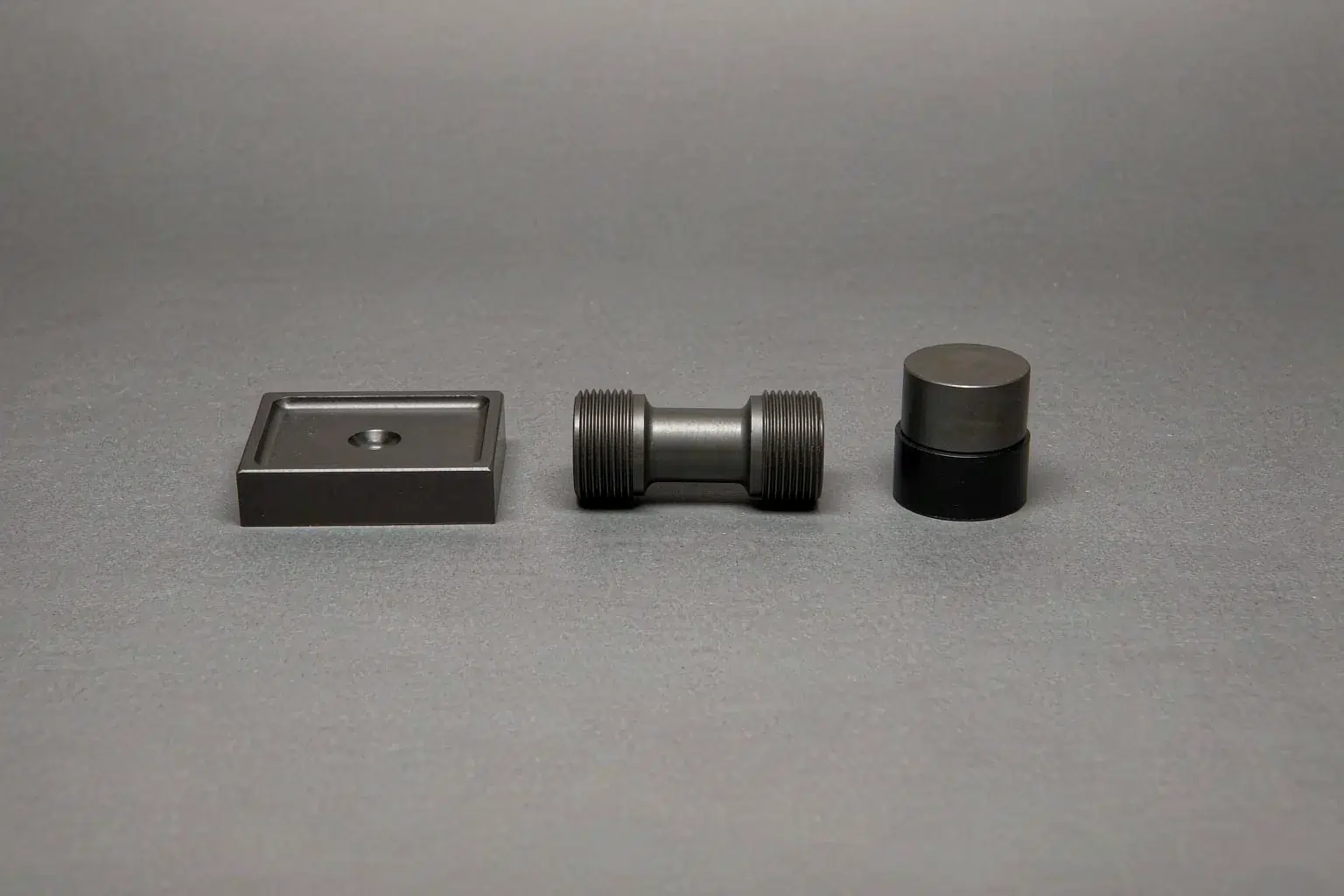
Every shortlisted foundry will have a certificate, and a casting supplier audit that stops at the frame has learned almost nothing. None of the common ones tell you whether your part will hold size. This is where a casting supplier audit earns its cost — by replacing a wall of certificates with one number you can act on.
| Certificate | What it actually covers | What it does not tell you |
|---|---|---|
| ISO 9001 | A documented quality management system, externally audited | Whether the controls were applied to your part on your last order |
| IATF 16949 | Automotive system discipline: APQP, PPAP, change control | The capability of one bore on one part |
| ISO 14001 | Environmental aspects are identified and managed | Nothing at all about casting quality |
| PED / AD 2000 | Pressure-equipment material and personnel qualification | Whether your wall is sound in the riser zone |
| NADCA membership | Access to die casting standards, training and benchmarking | Anything about this supplier’s actual output |
One bore, two suppliers
Here is the cut that a casting supplier audit should make early, because it is cheap and it decides the award. Take a Ø62.000 +0.030/−0.000 mm bore — a 30 µm band — measured on a 32-piece first-article sample from each of two foundries. Both hold ISO 9001.
- Supplier A: mean 62.012 mm, standard deviation 0.0045 mm. Cpk = min(62.030 − 62.012, 62.012 − 62.000) ÷ (3 × 0.0045) = 0.012 ÷ 0.0135 = 0.89.
- Supplier B: mean 62.015 mm, standard deviation 0.0032 mm. Cpk = 0.015 ÷ (3 × 0.0032) = 0.015 ÷ 0.0096 = 1.56.
Now convert to expected fallout. For A, the lower tail sits at z = 0.012 ÷ 0.0045 = 2.67 (about 0.38%) and the upper tail at z = 4.00 (about 0.003%), so roughly 3,800 ppm outside the band. For B, both tails sit at z = 4.69, roughly 3 ppm. On 6,000 pieces a year that is about 23 rejects against 0.02 rejects.
Both quotes reference the same drawing, so make sure the tolerance class you specified is the one being quoted — the relationship between band width and quoted price is set out in our casting tolerances guide. Supplier A is not a bad foundry; it is the wrong foundry for a 30 µm band. A casting supplier audit that stops at the certificate would not have caught it. The sample gate would — which is why the visit and the casting first article inspection belong in the same decision, not in sequence months apart.
Put a number on the gap. If A’s real running process puts 2.8% of parts outside machinable limits, then on 6,000 pieces a year: 168 pieces × (piece price $46.50 + $38.00 of machining already performed) = $14,196, plus four sorting campaigns at 60 hours × $55 = $13,200. Total $27,396 a year.
A casting supplier audit that finds this before award costs about 20 engineer hours × $95 = $1,900, plus regional travel of $1,850 — $3,750. Against $27,396 a year, payback is about 1.6 months. Note that the $38.00 of machining is not recoverable, which is why the casting machining allowance on the drawing belongs in the same review as the audit — and why a supplier that also runs CNC machining can usually tell you where the allowance is too tight before you cut metal.
The Floor Walk: Twelve Checkpoints
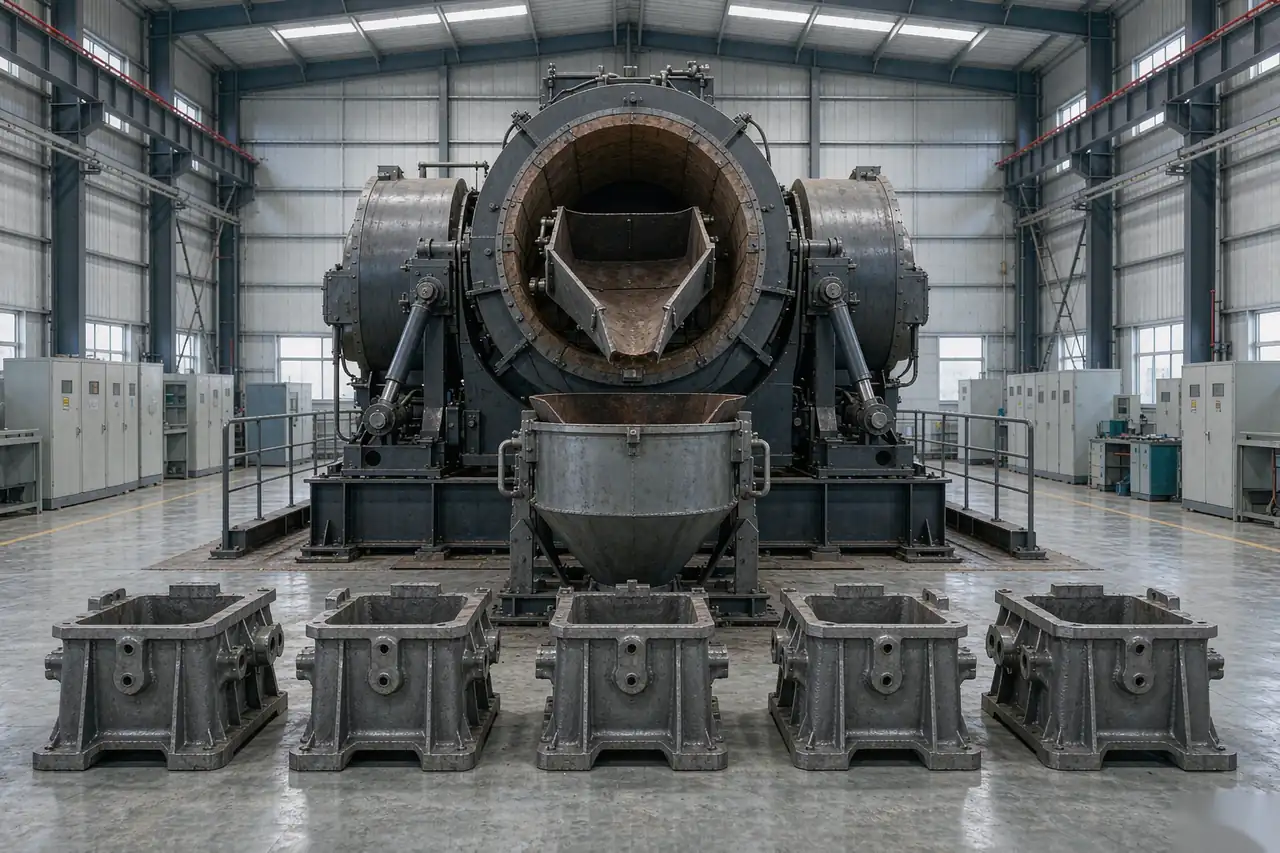
Walk the route your casting takes, in order, and check one thing at each station. Do not accept a conference-room slide deck in place of the route. The point of the floor walk is not to find dirt — foundries are dirty by nature — it is to see whether the controls you were shown on paper exist where the metal is. A casting supplier audit that stays in the meeting room has not started. Know which route you are standing in, because a resin sand line, a shell mold cell and a lost foam line fail in different places.
| # | Station | Look for | Fail signal |
|---|---|---|---|
| 1 | Charge material | Scrap and returns sorted and labeled by grade | One mixed pile, no charge make-up record |
| 2 | Melting | Melt log per heat with temperature and chemistry | Log completed at end of shift from memory |
| 3 | Molding line | Sand test results posted at the line and in date | Tester present, log blank |
| 4 | Core room | Core boxes labeled, cores dated, bake record kept | Undated cores stacked on the floor |
| 5 | Pattern storage | Patterns racked, identified, repair history tagged | Cracked plates stored on the floor |
| 6 | Pouring | Temperature taken at the ladle; slag skimmed | No pyrometer at the spout |
| 7 | Shakeout | Defined minimum cooling time before shakeout | Castings knocked out while still glowing |
| 8 | Cleaning | Blast media and cycle time specified per part | Over-blasting to hide surface defects |
| 9 | Weld repair | Written procedure, qualified welder, re-inspection | Welds ground smooth with no record |
| 10 | Heat treatment | Furnace chart per load; thermocouples in calibration | Chart recorder installed, no charts |
| 11 | Final inspection | Last FAI file retrievable by part number in under five minutes | Nobody can find the last FAI |
| 12 | Shipping | Heat or lot number on the part and on the packing list | Mixed lots in one crate |
Checkpoint 11 is the fastest discriminator in the whole visit. A foundry that can pull your last inspection file in five minutes keeps records to run the shop. One that cannot keeps records to pass audits. Ask the same question of the tooling: the conception de moules et de modèles file, the repair history and the current shot or mold count should be retrievable in the same five minutes.
Scoring the Visit: A Worked Example
Score on the day, while you are standing there, and weight the criteria before you see the results — otherwise a casting supplier audit weighted afterwards simply confirms the answer you already wanted. Here is the casting supplier audit scorecard applied to our two shortlisted foundries.
| Criterion | Weight | Supplier A | Supplier B |
|---|---|---|---|
| Capability fit: process, size range, alloy | 25 | 22 | 18 |
| Quality system depth | 25 | 24 | 21 |
| Process-control evidence for my part | 20 | 11 | 18 |
| Capacity allocated to my program | 15 | 13 | 11 |
| Commercial stability | 15 | 12 | 14 |
| Total | 100 | 82 | 82 |
A tie. A wins capability and paperwork; B wins the only line that predicted the bore data — process-control evidence, 18 against 11. When a casting supplier audit ties, award on the evidence line. Capability tells you the part can be made once; the evidence line tells you how often.
The same logic applies to inspection depth. A foundry that can show you casting inspection methods matched to your failure modes — not a generic menu — is telling you which defects it expects to find. Cross-check the list against the modes that actually bite on your geometry — our breakdowns of défauts courants de moulage et porosity and shrinkage are a fair starting point.
The Second-Source Decision Is Arithmetic
The alloy matters here too: a single-specification program in a common grade such as those covered in our cast iron versus cast steel comparison is easier to move between foundries than a tight-chemistry aluminum casting alloy with a narrow window. Buyers often treat dual sourcing as insurance and never price it. It is a purchase, and the casting supplier audit tells you what you are buying. Using the same program — 6,000 pieces a year at $46.50, so $279,000 annual spend — assume an 8% annual probability of a supplier disruption.
| Line item | 4-week delay | 12-week outage |
|---|---|---|
| Production lost | 462 pieces | 1,385 pieces |
| Expedite premium at $9.50/piece | $4,389 | $13,158 |
| Line stoppage / contractual penalty | $132,000 (6 h × $22,000) | $180,000 |
| Total event cost | $136,389 | $193,158 |
| Expected annual loss at 8% | $10,911 | $15,453 |
Now price a qualified second source — the same casting supplier audit run a second time, plus the tooling and the lost volume tier:
- Duplicate pattern or die: $14,800 amortized over three years = $4,933 a year.
- One additional casting supplier audit plus travel: $3,750 over three years = $1,250 a year.
- Volume split penalty: splitting 6,000 into two runs of 3,000 loses the volume tier at +$3.10 a piece on 3,000 pieces = $9,300 a year.
- Total: $15,483 a year.
Read the two columns against that number. Under the 4-week scenario, expected loss is $10,911 — less than the $15,483 cost of carrying a second source, so single-sourcing with a written contingency plan is the better buy. Under the 12-week scenario, expected loss is $15,453, which is a dead heat with $15,483. Dual sourcing breaks even at an annual disruption probability of 15,483 ÷ 193,158 = 8.0%.
That is the real finding: the decision does not turn on the audit score, it turns on how long you stop for and what your contract says when you do. If your part is single-point and your customer agreement carries penalties, you are almost certainly above 8%. If you hold eight weeks of buffer stock, you are not — and the money is better spent on the buffer.
What Should End the Visit Early
Some findings are not weighting factors. They are reasons to end the casting supplier audit early and leave:
- Refusal to walk the route. If the melting or cleaning area is off-limits, there is a reason.
- Weld repair without records. Unrecorded repair is unquantified risk; it will surface as field failures, not as scrap.
- Heat records that cannot be tied to shipped parts. Traceability that stops at the crate is not traceability.
- Undisclosed subcontracting of heat treatment, machining or coating. You are qualifying a chain, not a building — see how casting surface finishing et casting heat treatment change properties once they sit outside your supplier’s system, and ask whether the work is done under the same roof or brokered out to a third-party traitement thermique or surface treatment shop.
- A quotation that will not name the route. If they cannot say which line and which alloy spec the price assumes, the price is a placeholder.
- No working gauge on the feature you care about. If they cannot measure it, they cannot control it.
FAQ
How long does a casting supplier audit take?
Budget 20 engineer hours: four for the document review, twelve on site (a day and a half), four for the report. Add travel. For a low-risk, low-value part, a remote document review plus a sample gate is often enough — and if the volume is genuinely small, a metal prototype casting or 3D printed prototype route removes the qualification question altogether — the full casting supplier audit is for programs where a failure would stop a line.
Can I audit a foundry remotely?
Partly. Document review, certificate verification and a live camera walk of the floor cover perhaps 60% of the checkpoints. What you lose is the unplanned observation — the blank sand-test log, the unlabeled core stack. For a first award on a safety or pressure part, go in person.
Is ISO 9001 enough to qualify a casting supplier?
No. It confirms a management system exists and is audited. It says nothing about the capability of a specific dimension on your part, which is why the Cpk data from the sample run carries more weight than the certificate on the wall.
What Cpk should I require?
1.33 is the common minimum for a critical characteristic on a 30-piece sample; 1.67 where the feature is safety-related or the sample is small. Treat 1.33 as a gate, not a target — a supplier sitting at 1.34 has no margin for a tooling change or a new sand batch.
How often should I re-audit an approved foundry?
Every two years for a stable program, or immediately after a trigger: a change of ownership, a move of the molding line, a new subcontractor, or two consecutive nonconformances on the same root cause. Re-qualify on the part, not on the certificate.
Who pays for the audit?
Usually the buyer, and it should be budgeted as cost of quality rather than negotiated away. At $3,750 against a five-figure annual escape cost, the visit pays for itself on the first miss it prevents.
What should the audit report contain?
Weighted score, every checkpoint with its evidence reference, named findings with owners and due dates, and a clear award / conditional-award / reject recommendation. A report without a recommendation has not finished the job. If you want a second reading on a scorecard or a document pack, send it through the contact page.
*Data referenced from AFS / NADCA industry publications and Supro MFG shop-floor records.
 English
 Français
 Deutsch
 Italiano
 日本語
 한국어
 Polski
 Português de Angola
 Русский
 Español de Argentina