
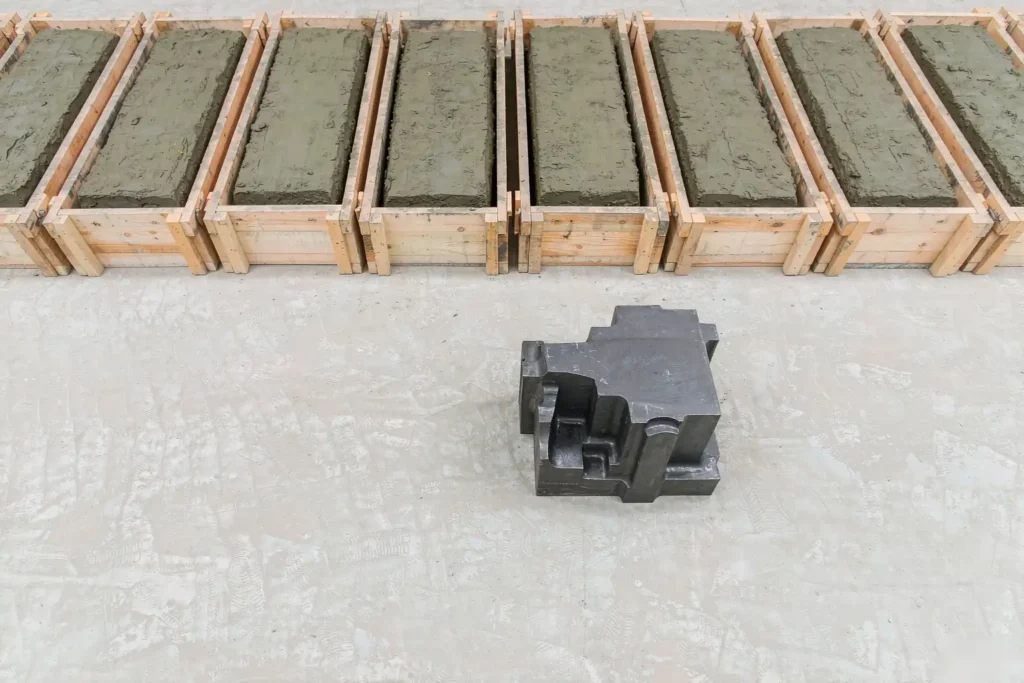
Casting lead time is the number that kills more launch schedules than price ever does. A buyer gets a quote of $41 per part, approves it in a day, and then discovers the first usable casting arrives nineteen weeks later — because nobody counted the four weeks of tooling, the re-sample loop, or the month on the water.
This guide breaks casting lead time into the seven phases that actually consume the calendar, gives realistic week counts for eight processes, and shows where a programme can lose six weeks without anyone noticing. The figures come from production records and published industry practice from bodies such as the Sociedad Estadounidense de Fundición y NADCA, not from sales brochures. If you are new to process selection, start with our Guía de fundición de metales and come back to this page when you are building a launch plan.
What Casting Lead Time Actually Includes
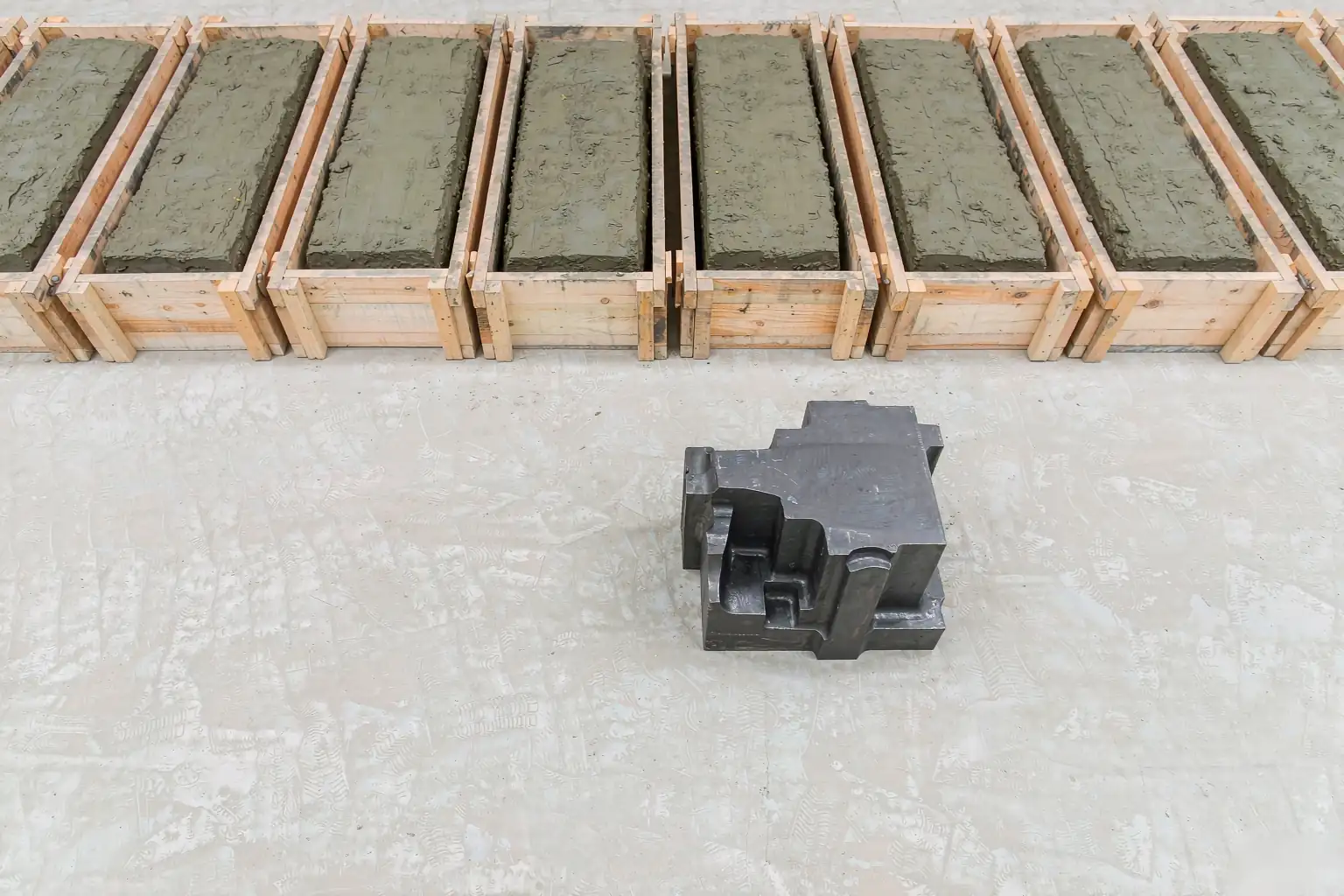
Most buyers quote a single number — “six to eight weeks” — when what they mean is the production run only. Tooling, sampling, approval and freight sit outside that number and usually add more calendar time than the casting itself. The table below splits the schedule into the phases we track on every programme.
| Phase | Typical duration | Controlled by | Where it slips |
|---|---|---|---|
| Drawing review and quotation | 3–10 working days | Both sides | Missing grade, tolerance class or test requirement |
| Tooling: pattern, core boxes, die | 2–14 weeks | Foundry / tool room | Design changes issued after steel or aluminium is cut |
| First article sample | 2–6 weeks | Foundry | No agreed CTQ list, so the sample gets re-made |
| Customer approval of sample | 3–14 days | Buyer | No named approver; report format disputed |
| Production run | 2–6 weeks | Foundry | Furnace capacity not booked in advance |
| Secondary operations | 1–3 weeks | Both sides | Heat treatment, machining or coating booked only after casting |
| Packing, documentation, freight | 5–40 days | Forwarder | Freight mode decided at shipment instead of at RFQ |
Add the realistic mid-points and casting lead time from drawing release to delivered parts lands between 11 and 24 weeks for a first production order. Repeat orders drop to the production-plus-freight column only, typically 4 to 8 weeks, because tooling exists and the approval loop is a formality.
Casting Lead Time by Process
Process choice sets the floor on your casting lead time before any negotiation starts. Tooling complexity dominates: a wooden pattern plate is days of work, a multi-slide die casting tool is months. The ranges below assume a medium-complexity part (two to four cores or slides), a normal queue, and no design changes after tool release.
| Proceso | Tooling | First article | 500–2,000 pc run | Total to ex-works |
|---|---|---|---|---|
| Green sand casting | 2–4 weeks | 2–3 weeks | 3–5 weeks | 7–12 weeks |
| Resin sand / no-bake | 2–4 weeks | 2–3 weeks | 3–5 weeks | 7–12 weeks |
| Shell mould casting | 4–6 weeks | 3–4 weeks | 3–4 weeks | 10–14 weeks |
| Lost foam casting | 5–8 weeks | 3–5 weeks | 4–6 weeks | 12–18 weeks |
| Permanent mould (gravity / low pressure) | 6–10 weeks | 3–4 weeks | 3–5 weeks | 12–18 weeks |
| High pressure die casting | 8–14 weeks | 3–5 weeks | 2–4 weeks | 14–22 weeks |
| Investment casting (lost wax) | 3–5 weeks | 4–6 weeks | 4–6 weeks | 11–17 weeks |
| Centrifugal casting | 3–6 weeks | 2–4 weeks | 3–5 weeks | 8–14 weeks |
Read the last two columns together. Die casting has the longest casting lead time to first part but the shortest production run once the die is qualified, which is exactly why it wins at volume and loses at 200 pieces. The reverse is true for resin sand casting and green sand: the tooling is cheap and fast, so the first part arrives early even though each piece takes longer to make. Our fundición a presión vs. fundición en arena comparison covers the volume crossover in detail, and the permanent mould y shell mould pages sit between the two.
Why tooling dominates the calendar
A sand pattern plate and a set of core boxes are machined from aluminium or hardwood and can be revised with a few hours of CNC time. A high pressure die casting die is a hardened tool-steel assembly with cooling lines, slides and ejector geometry, and every revision means heat treatment and re-fitting. That difference is the single largest lever on casting lead time, and it is decided at the process-selection meeting rather than in the tool room. Our casting mould and pattern making y fundición a presión teams quote tooling duration separately from piece price for exactly this reason.
The Sample Loop: Where Schedules Quietly Die
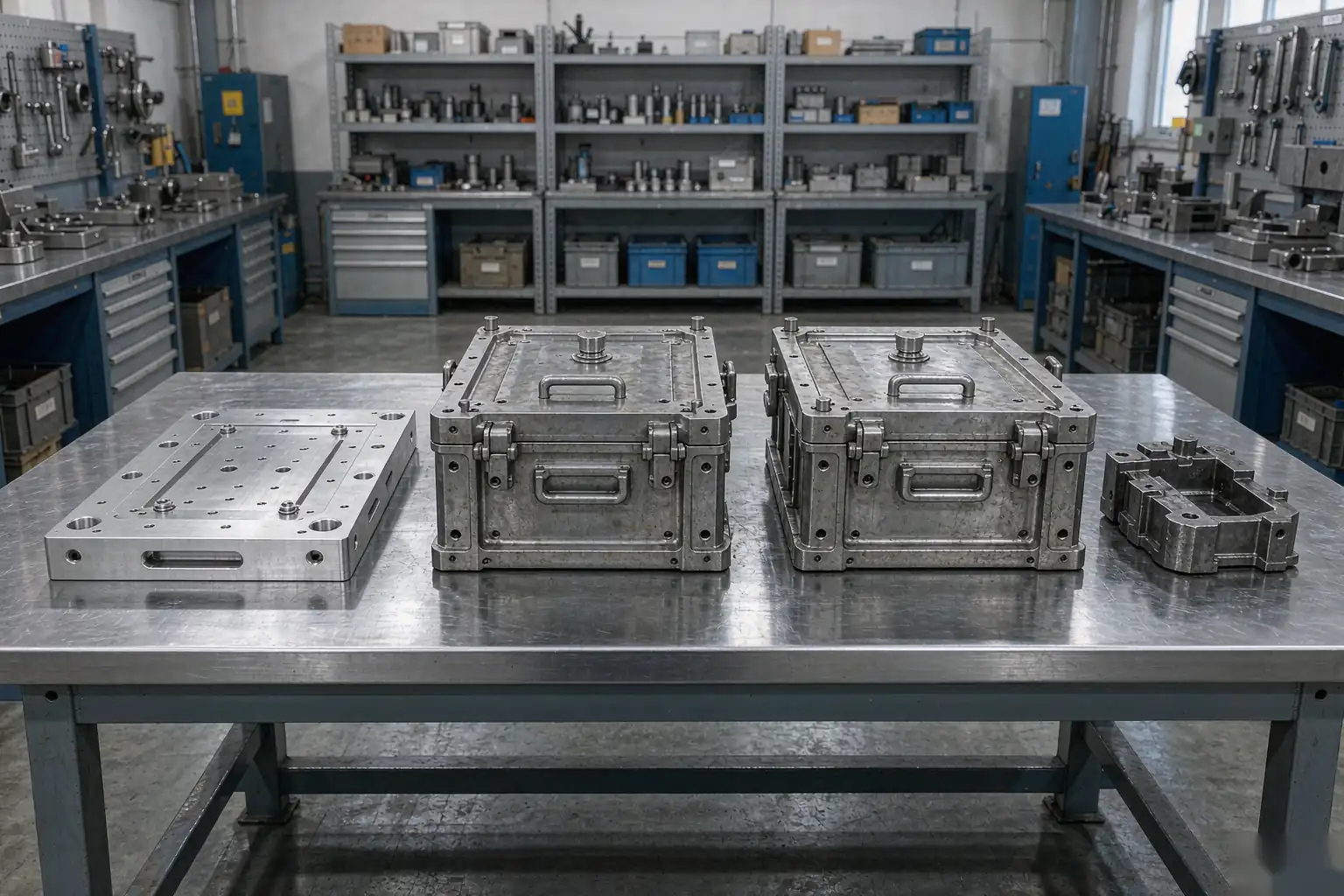
The most common way to lose a month is a first article that gets made twice. The foundry produces a sample, the buyer measures everything on the drawing instead of the characteristics that matter, finds two dimensions outside an unspecified tolerance, and asks for a re-sample. That loop adds two to three weeks of furnace queue plus a week of approval — on a programme that was already tight.
- Agree the CTQ list before tooling. Five to ten dimensions, plus material and test requirements. Everything else is reference only.
- Fix the tolerance class on the drawing. A drawing without a tolerance class forces the foundry to guess, and the guess is usually wrong. See our Guía de tolerancias de fundición.
- Name the approver and the report format. A dimensional report, material certificate and inspection record agreed up front removes the “we need it in our template” delay.
- Order three samples, not one. One sample cannot support both destructive sectioning and a customer retain; three cost marginally more and remove a repeat loop.
Simulation is the cheapest insurance here. Running solidification analysis before the tool is cut typically removes one sample iteration, which is worth two to three weeks of casting lead time for a study that costs a fraction of the tooling. The economics are worked through on our casting simulation page, and the defect it most often prevents is described under defectos comunes en la fundición.
Secondary Operations: Machining, Heat Treatment, Coating
A casting is rarely a finished part, and every downstream step adds queue time that buyers forget to book. None of these steps is long in isolation, but stacked they routinely add three weeks to casting lead time. Typical additions: stress relieving or annealing 1–2 days plus furnace queue, full T6 solution treatment and ageing 3–5 days including the 8–12 hour solution soak, CNC machining 1–3 weeks depending on whether fixtures exist, and surface finishing from 5 days for blasting and priming to 7–10 days for plating or anodising.
The scheduling trick is overlap. On a 2,000-piece order, machining can start on the first 400 pieces while the foundry is still pouring, which converts two sequential weeks into roughly one week of tail. That only works if machining capacity is booked at the same time as the casting order — which is why our Mecanizado CNC, tratamiento térmico y surface treatment lines are planned against one schedule rather than three. If machining is the long pole, read Mecanizado CNC vs fundición before you decide how much stock to leave.
Freight: The Month Nobody Puts on the Plan
For an Asia-to-Europe or Asia-to-North-America programme, freight is often 25–35% of total casting lead time, and it is the phase with the widest spread between cheap and fast.
- Sea freight, China to Rotterdam: 30–38 days port to port, plus 3–5 days for inland delivery and customs.
- Sea freight, China to US West Coast: 18–25 days port to port.
- Rail, China to Europe: 18–22 days, roughly half the sea transit at a higher rate.
- Air freight: 5–8 days door to door at roughly five to seven times the sea rate per kilogram.
A split shipment usually beats both extremes. Take 2,000 aluminium housings at 4.2 kg each, about 9,000 kg packed. Flying the first 300 pieces (roughly 1,350 kg gross) at $5.50/kg costs about $7,400 against roughly $200 to ship the same cartons by sea, so the premium is about $7,200 to pull 24 days forward. If the assembly line is booked and a four-week slip costs more than $7,200 in idle labour, expedited downstream freight or penalties, the air leg is the cheapest week you will ever buy. Flying all 9,000 kg would cost roughly $49,500 and almost never makes sense.
A Real Schedule, Week by Week
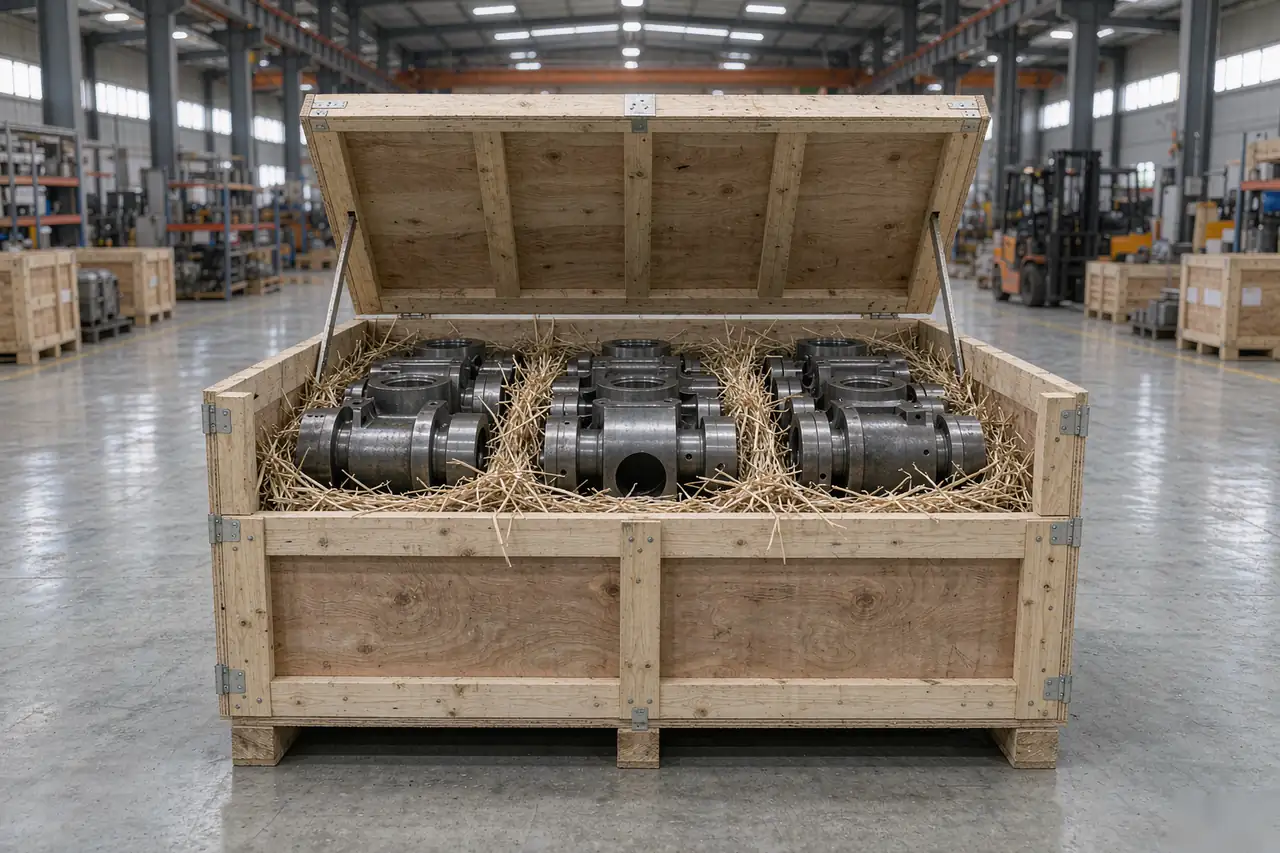
Here is a first-order programme for 2,000 ductile iron pump housings, sand cast and partially machined, delivered to a European warehouse. Nothing in it is unusual, and it still adds up to roughly five months of casting lead time.
| Step | Weeks | Cumulative | Note |
|---|---|---|---|
| DFM review and quotation | 1.0 | 1.0 | Grade, tolerance class and test scope agreed |
| Pattern plate and core boxes | 3.0 | 4.0 | CNC-machined aluminium, sand-tested before release |
| First article casting and layout | 3.0 | 7.0 | Three samples, one sectioned |
| Customer approval | 1.0 | 8.0 | Assumes one named approver |
| Production, 500 pieces per week | 4.0 | 12.0 | Furnace slot booked at order placement |
| Machining, overlapping from week 11 | 2.0 | 14.0 | Two-week tail after the last pour |
| Packing and export documents | 0.5 | 14.5 | Pallets, certificates, packing list |
| Sea freight and inland delivery | 5.0 | 19.5 | 35 days transit plus handling |
Nineteen and a half weeks of casting lead time, and only four of them are spent pouring metal. The three compression options, priced: expedited tooling with parallel machining and overtime, about +$2,400 to save 1.5 weeks; simulation before tool release, roughly $2,000 to remove a 2–3 week re-sample; air freight on the first 300 pieces, about $7,200 to save 3.5 weeks. The first two are worth taking almost every time. The third depends entirely on what a week of delay costs you, which is the only honest way to evaluate a compressed casting lead time.
Five Levers That Shorten Casting Lead Time
- Freeze the design before tool release. An engineering change issued after steel or aluminium is cut costs one to three weeks and often doubles as a defect source. If a change is unavoidable, ask whether it can wait for the second tool.
- Pick the process for the schedule, not only the piece price. At 200 pieces, fundición en arena beats die casting on both cost and calendar. At 20,000, the die pays for itself. Our casting cost breakdown shows where the crossover sits.
- Use the prototype route for the first parts. Printed sand moulds or a soft tool can deliver sample castings in days while production tooling is being machined. See 3D printed prototypes y metal prototype casting, and the trade-offs in 3D printing vs casting.
- Specify tolerances you actually need. Over-tight dimensions push the part into a slower process or add a machining pass. Start from ISO 8062 tolerance classes and open up everything that is not a sealing or bearing face.
- Book capacity and materials at order placement. Furnace slots, heat treatment batches and alloy purchases are queues. A supplier who reserves them when the order is placed, rather than when the tooling finishes, saves one to two weeks on every programme.
Material choice interacts with all five. Exotic alloys and tight chemistry windows add melt scheduling and sometimes a dedicated heat; the selección de aleaciones para fundición guide and the grade-level pages for aluminium casting alloys y grados de acero inoxidable para fundición de precisión show which grades are stocked and which trigger a special melt.
What to Ask at RFQ Stage
Casting lead time becomes predictable when it is asked for in pieces rather than as one number. Request, in writing:
- Tooling duration, and the date the tool will be released for sampling.
- Sample quantity, and exactly what the first article report will contain.
- Production rate per week, and whether the furnace slot is booked on order placement.
- Whether machining, heat treatment and coating are in-house or subcontracted, and their durations.
- Incoterm, packing standard, and the assumed freight mode and transit days.
- Planned shutdowns that overlap the schedule — Chinese New Year typically stops production for two to three weeks, and Golden Week adds a further week.
Suppliers who answer all six with dates rather than ranges are the ones whose casting lead time you can plan against. Ask the same questions whether you are buying iron castings, aluminium castings, steel castings o piezas fundidas por colada de cera perdida; the phase structure is identical even though the week counts differ.
Preguntas frecuentes
How long is casting lead time for a first order?
Typically 11 to 24 weeks from drawing release to delivered parts, depending on process. Sand and resin sand programmes sit at the fast end (7–12 weeks ex-works), high pressure die casting at the slow end (14–22 weeks ex-works) because of tool build time. Add 5 weeks for sea freight to Europe or 3 weeks to the US West Coast.
Which casting process has the shortest lead time?
Green sand and resin sand casting, because pattern tooling can be machined in two to four weeks and revised quickly. For a first sample without any tooling, printed sand moulds or a soft tool can produce parts in days, which is often the fastest route to a validated design while production tooling is being machined. That is why casting lead time for a prototype run and for a production run are two different questions.
Why does die casting tooling take so long?
A die is a hardened tool-steel assembly with cooling channels, slides and ejectors. It has to be machined, heat treated, fitted and sampled, and any revision repeats part of that cycle. Eight to fourteen weeks is normal for a medium-complexity die, longer with multiple slides.
Can I shorten casting lead time by paying more?
Partly. Expedited tooling, simulation before tool release and air freight on a partial shipment are the three that reliably buy weeks, at roughly $2,000–$7,500 each. What money cannot buy is furnace capacity in a plant that is already fully booked, which is why booking at order placement matters more than rush fees.
Does heat treatment add much to the schedule?
Less than people fear, but it is not free: annealing or stress relieving adds one to two days plus queue, and a full T6 cycle on aluminium adds three to five days including the eight to twelve hour solution soak. The delay usually comes from batch scheduling, not the cycle itself.
How much buffer should I add to a quoted casting lead time?
Fifteen percent is a reasonable planning buffer for a first order with a new supplier, and about one week for repeat orders. If the programme spans Chinese New Year, add the full shutdown period on top rather than assuming it can be worked around.
*Lead-time ranges reflect published industry practice from AFS and NADCA, standard freight transits, and Supro MFG production records. Actual schedules depend on part complexity, alloy and order quantity.
 English
 Français
 Deutsch
 Italiano
 日本語
日本語 한국어
한국어 Polski
 Português de Angola
 Русский
 Español de Argentina