
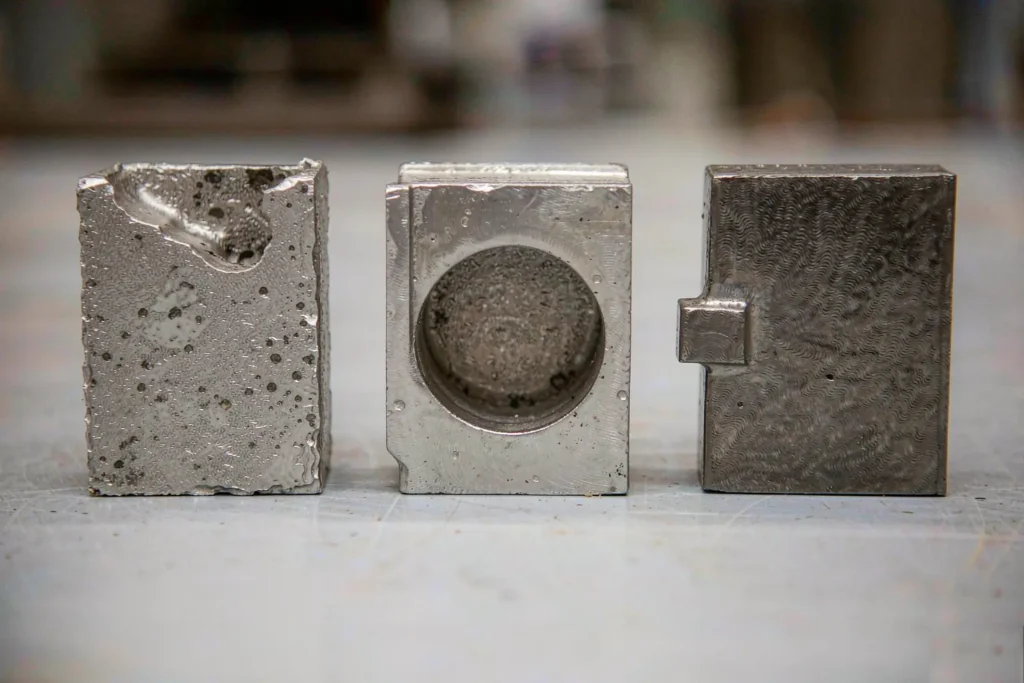
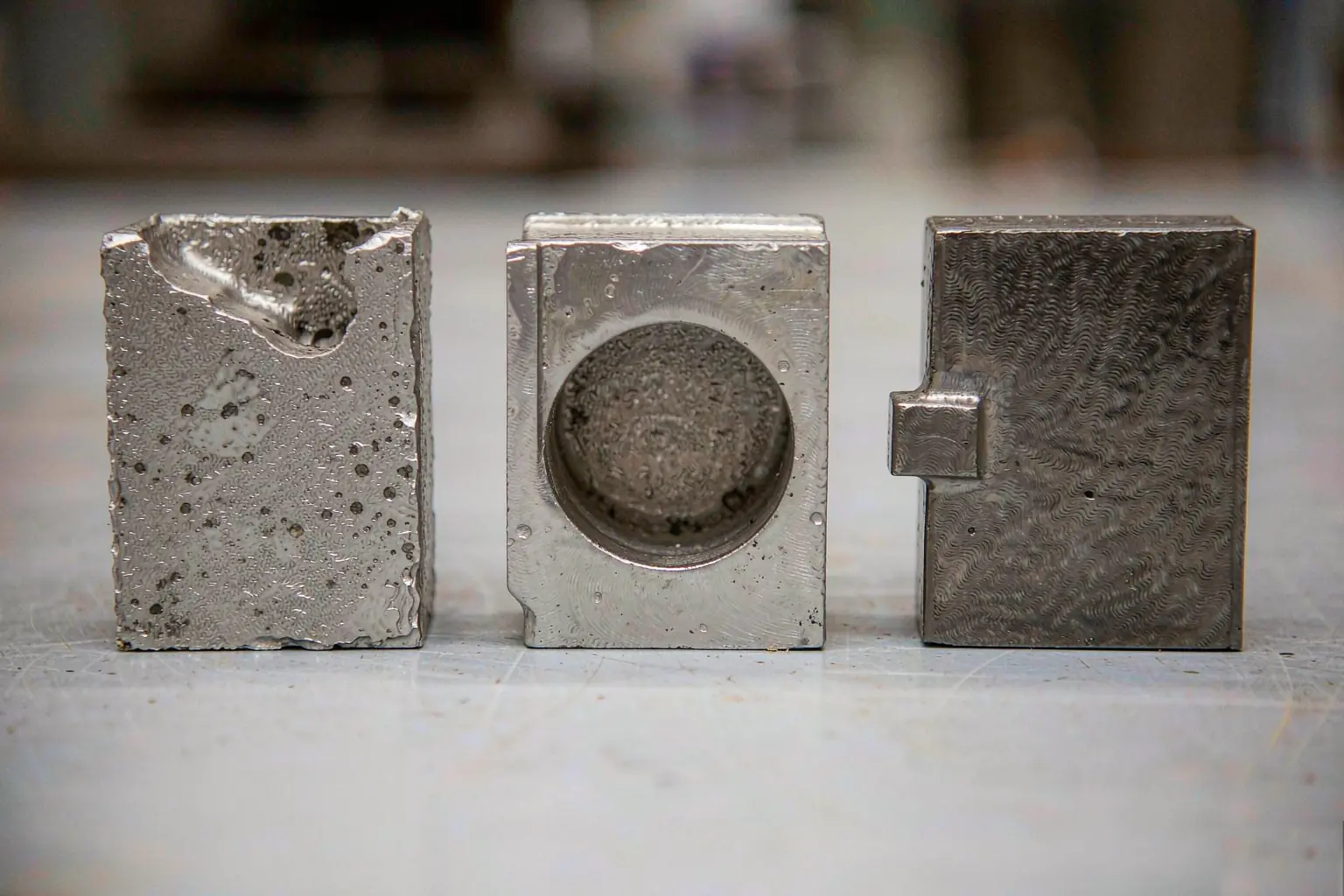
Most RFQs we receive specify “aluminum” and stop there. That single word covers alloys whose tensile strength differs by 80 MPa, whose thermal conductivity differs by 60%, and where one can be welded on site while another cracks under the torch. Choosing between aluminum casting alloys is not a paperwork step — it decides tooling life, leak-test yield, and whether the part survives five years outdoors.
Among the hundreds of registered aluminum casting alloys, three grades cover the majority of industrial cast aluminum parts — A356.0, A380.0 and ADC12 — using composition limits, mechanical property ranges, and the process each alloy is actually designed for. Where numbers matter, we show the calculation rather than a rule of thumb. Composition limits follow the Aluminum Association designation system; process practice references AFS y The Aluminum Association publications.
How Aluminum Casting Alloys Are Named (and Why It Matters)
Every buyer should be able to read a grade and predict its behaviour. The designation is not marketing; it encodes chemistry.
The Aluminum Association system
Cast grades use three digits plus a decimal: xxx.0, where the “.0” marks a casting alloy (wrought grades use four digits with no decimal). The first digit names the main alloying family: 2xx.x = copper, 3xx.x = silicon plus copper and/or magnesium, 4xx.x = silicon only, 5xx.x = magnesium, 7xx.x = zinc. Nearly all commercial aluminum casting alloys you will actually be quoted are 3xx.x, because silicon is what makes molten aluminum flow.
A leading “A” means a premium-purity variant with tightened impurity limits. The clearest example: 356.0 allows iron up to 0.6%, while A356.0 caps iron at 0.20%. That single difference is why A356.0 responds to T6 heat treatment with real ductility and 356.0 does not reach the same elongation.
JIS, EN and the ADC grades
Asian supply chains quote ADC12 (JIS H 5302) instead of an AA number; European drawings use EN 1706 grades such as EN AC-43000 or EN AC-46000. These are parallel naming systems for overlapping chemistries, not exotic materials — buyers sourcing aluminum casting alloys across regions routinely meet the same melt under three different labels. ADC12 sits close to AA 383.0, and EN AC-43000 is the European twin of A356.0’s lower-silicon cousin. When a supplier quotes ADC12 and your drawing says A380.0, you are usually looking at two acceptable answers to the same requirement — not a substitution to reject automatically.
Composition: The Five Elements That Decide Everything
The table below lists the composition windows for the aluminum casting alloys buyers get quoted most. Everything downstream — fluidity, heat treatment response, machinability, corrosion — follows from these columns.
| Aleación | Si % | Cu % | Mg % | Fe max % | Zn max % |
|---|---|---|---|---|---|
| A356.0 | 6.5 – 7.5 | 0.20 max | 0.25 – 0.45 | 0.20 | 0.10 |
| A380.0 | 7.5 – 9.5 | 3.0 – 4.0 | 0.10 max | 1.3 | 3.0 |
| ADC12 | 9.6 – 12.0 | 1.5 – 3.5 | 0.30 max | 1.3 | 1.0 |
| 319.0 | 5.5 – 6.5 | 3.0 – 4.0 | 0.10 max | 1.0 | 1.0 |
| 383.0 | 9.5 – 11.5 | 2.0 – 3.0 | 0.10 max | 1.3 | 3.0 |
Silicon Runs the Casting: A Lever-Rule Calculation
Silicon is the element that makes aluminum casting alloys castable at all: pure aluminum has a wide freezing range and hot-tears in the mould. Aluminum and silicon form a eutectic at 12.6% Si and 577 °C. Everything below that composition freezes as primary aluminum dendrites first, then eutectic. The proportion is not a mystery — you can estimate it with the lever rule, taking silicon solubility in the solid phase at the eutectic temperature as about 1.65%:
Eutectic fraction ≈ (12.6 − Sialloy) ÷ (12.6 − 1.65) subtracted from one. For A356.0 at 7.0% Si:
- Primary α fraction = (12.6 − 7.0) ÷ 10.95 = 0.51, so roughly 51% primary aluminum and 49% eutectic.
- ADC12 at 11.0% Si = (12.6 − 11.0) ÷ 10.95 = 0.15, so about 15% primary and 85% eutectic.
That is the whole reason ADC12 fills a 1.5 mm wall and A356.0 does not. More eutectic means a shorter freezing range, lower effective viscosity, and better feeding of thin sections. The trade is ductility: a structure that is 85% eutectic is stiff and strong but does not stretch. This is also why wall thickness guidelines differ by alloy, not just by process.
Above 12.6% Si you enter hypereutectic territory — grades like 390.0 with 16–18% Si grow primary silicon crystals that are extremely wear resistant but hard on cutting tools. They are the standard choice for compressor and brake components among hypereutectic aluminum casting alloys, and a poor choice for anything you plan to drill thousands of holes in.
Magnesium and Heat Treatment: Where Aluminum Casting Alloys Gain Strength
Among aluminum casting alloys, silicon gives castability and magnesium gives heat-treatment response. In A356.0, magnesium and silicon precipitate as Mg2Si during artificial ageing, and that precipitate is what lifts yield strength. The stoichiometry is fixed: Mg2Si contains 48.6 parts magnesium to 28.1 parts silicon by atomic weight, a mass ratio of 1.73 : 1, so every 1% of Mg binds 0.58% Si and produces 1.58% Mg2Si.
Take A356.0 at the middle of its magnesium window, 0.35% Mg:
- Mg2Si formed = 0.35 × 1.578 = 0.55% by mass.
- Silicon consumed = 0.35 × 0.578 = 0.20%, leaving about 6.8% free silicon for the eutectic.
- If magnesium drifts to the 0.25% floor, available Mg2Si drops to 0.39% — a measurable loss of T6 strength, which is why foundries keep magnesium near the top of the range for structural parts.
What a real T6 cycle looks like
A standard T6 for A356.0 is solution treatment near 540 °C for 4–12 hours (thicker sections sit at the long end), a fast quench in water held at 60–80 °C to limit distortion, then artificial ageing at 155 °C for 3–5 hours. Typical result on separately cast test bars: yield strength rising from roughly 110–130 MPa as-cast to 165–205 MPa, with elongation in the 3–6% band. Our heat treatment guide covers the T5/T6/T7 trade-off in more depth, including why T7 is preferred when dimensional stability matters more than peak strength.
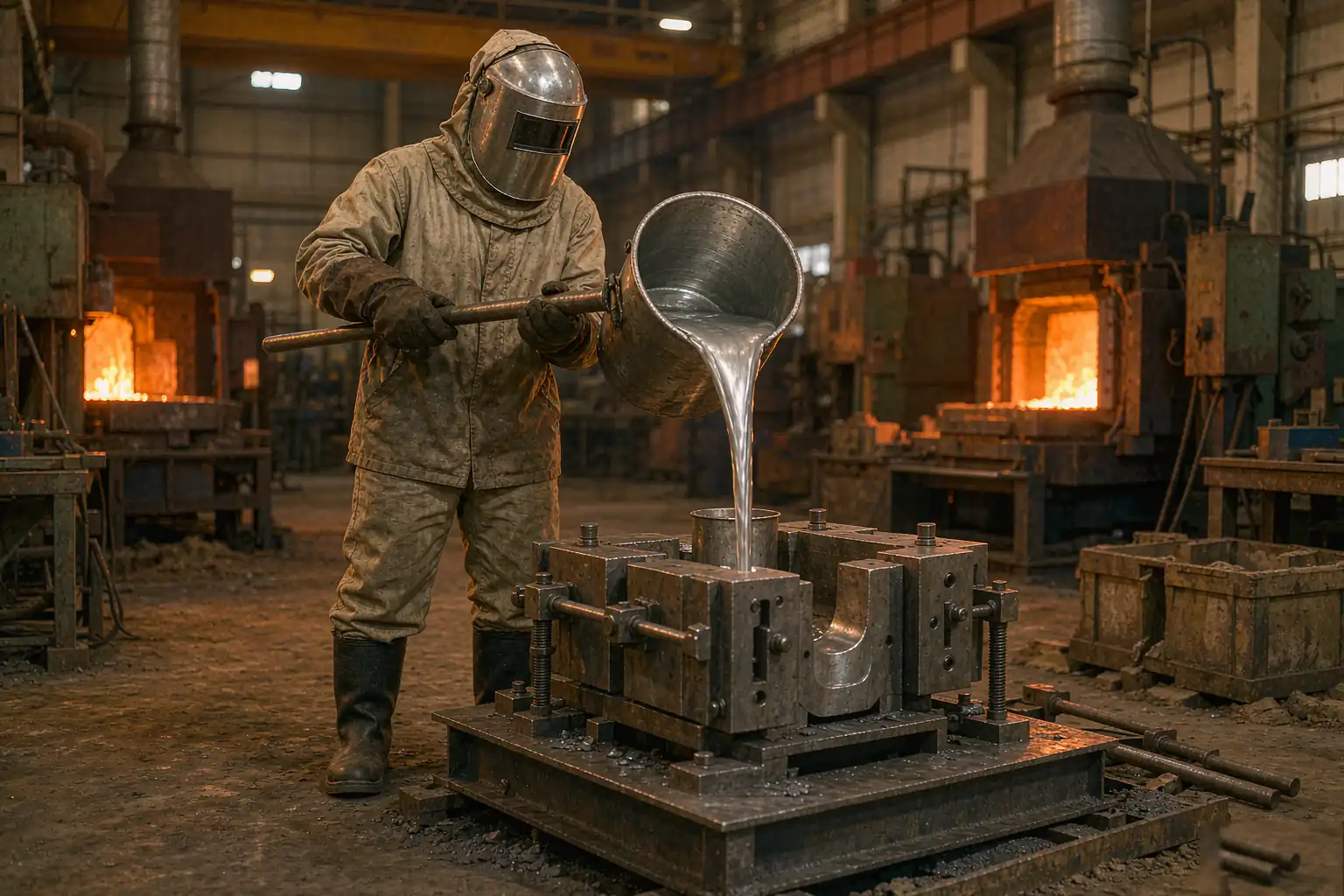
Now the constraint buyers hit constantly: high-pressure die castings are generally not solution treated. Entrained gas from the shot sleeve expands at 540 °C and blisters the surface. A380.0 and ADC12 contain almost no magnesium by design — there is nothing to precipitate, and no heat treatment to run. If your design needs T6 properties, the alloy choice and the process choice are the same decision — and it rules out most die-cast aluminum casting alloys: A356.0 in fundición en arena, low-pressure or gravity permanent mould, or fundición a la cera perdida — not standard HPDC.
Copper and Iron: The Two Elements Buyers Underestimate
A380.0 carries 3–4% copper. Copper is the second big divider among aluminum casting alloys after silicon. Copper raises strength and keeps properties stable at elevated temperature, which is why it dominates housings, brackets and gearbox covers running at 120–180 °C. The cost is corrosion resistance and weldability. In a salt-spray environment, a 3.5% Cu alloy pits noticeably faster than A356.0, and the copper content also produces the dark, mottled finish that makes decorative anodizing on die castings look poor.
Iron is more subtle. In gravity and sand casting, iron is an enemy: it forms β-Al5FeSi platelets that cut ductility and blunt cutting tools, which is exactly why A356.0 caps it at 0.20%. In high-pressure die casting, the opposite applies — molten aluminum solders to the steel die unless some iron is present, so ADC12 and A380.0 deliberately allow up to 1.3%, and foundries typically run 0.8–1.1% to protect tool life.
Property Comparison: A356.0 vs A380.0 vs ADC12
These three aluminum casting alloys are quoted more often than all other cast grades combined. Values below are typical ranges from separately cast test bars. A real casting will test lower in thick sections and higher in thin ones — solidification rate governs grain size, and grain size governs properties. That is the same reason tolerancias de fundición are specified by size band rather than as a single number.
| Property | A356.0-T6 | A380.0 as-cast | ADC12 as-cast |
|---|---|---|---|
| Tensile strength | 230 – 280 MPa | 310 – 330 MPa | 280 – 330 MPa |
| Límite de elasticidad | 165 – 205 MPa | 150 – 170 MPa | 140 – 170 MPa |
| Elongation | 3 – 6% | 2 – 3.5% | 1 – 3% |
| Dureza | 70 – 90 HB | ~80 HB | 75 – 85 HB |
| Thermal conductivity | ~151 W/m·K | ~96 W/m·K | ~96 W/m·K |
| Density | 2.68 g/cm³ | 2.74 g/cm³ | 2.74 g/cm³ |
| Typical process | Sand, gravity, LPDC, investment | HPDC | HPDC |
| Heat treatable to T6 | Yes | No (blistering risk) | No |
| Weldability | Good (4043 filler) | Poor | Poor |
| Pressure tightness | Good after impregnation | Needs vacuum process or impregnation | Needs vacuum process or impregnation |
A worked thermal example
Thermal conductivity is the column most often ignored. For a 6 mm wall carrying 20 kW/m² of heat flux, the temperature drop through the wall is ΔT = q × t ÷ k:
- A356.0: 20,000 × 0.006 ÷ 151 = 0.79 K
- A380.0: 20,000 × 0.006 ÷ 96 = 1.25 K
On a heat sink or inverter housing, that 0.46 K difference per wall is free performance. It is why thermal parts are specified in A356.0 even when a die casting would be cheaper to produce.
Feeding and Shrinkage: What the Alloy Does to Your Tooling
Every buyer of aluminum casting alloys inherits the same feeding problem: aluminum contracts about 6.6% by volume on solidification — roughly twice cast iron. That metal has to come from somewhere, and the riser is where it comes from. For a flat plate 200 × 100 × 20 mm in A356.0:
- Casting volume = 400 cm³, mass ≈ 1.07 kg at 2.68 g/cm³.
- Feed metal required = 400 × 0.066 = 26.4 cm³.
- Risers rarely feed at better than ~25% efficiency, so riser volume ≈ 26.4 ÷ 0.25 = 106 cm³ — about 26% of the casting mass, all of it remelted.
Now apply Chvorinov’s rule, t ∝ (V/A)², and you see the design lever: halve the section modulus and the freezing time drops fourfold. A 20 mm section fed by a 10 mm rib will always starve. This is the mechanism behind porosidad por contracción, and it is why mould and pattern design should be reviewed before the tooling is cut.
Gas porosity is the other half of the story. Hydrogen solubility in molten aluminum at 700 °C is roughly 0.65–0.70 mL per 100 g; in the solid at the melting point it is about 0.035 mL per 100 g — a twenty-fold drop that has to go somewhere. Foundries degas aluminum casting alloys to below about 0.15 mL/100 g for pressure-tight work. If your part must pass a leak test, ask for the degassing method and vacuum level, not just the alloy. Our inspection methods guide lists what each NDT method can and cannot find.
Selection Map: Part Type to Alloy
Use this as a first pass, then confirm against your load case and environment. The right answer for aluminum casting alloys is rarely the highest-strength grade. A broader decision framework is in our casting alloy selection guide, and the full process picture sits in the Guía de fundición de metales.
| Requirement | Pick | Why |
|---|---|---|
| Structural, welded, impact loaded | A356.0-T6 | 3–6% elongation, weldable with 4043 filler, low iron keeps ductility |
| Thin-wall housing, 1.5–3 mm, high volume | ADC12 / A380.0 | 85% eutectic fills thin sections; cycle times measured in seconds |
| Heat sink, inverter or LED housing | A356.0 | 151 vs 96 W/m·K; low copper avoids galvanic hot spots |
| Elevated temperature, 150–200 °C | A380.0 / 319.0 | 3–4% Cu retains strength where Mg-bearing alloys soften |
| Pressure-tight valve or pump body | A356.0 + impregnation | Fine grain plus vacuum impregnation seals pores in the 0.1–0.5 mm band |
| Marine or road-salt exposure | Al-Mg 5xx.x grades | Copper-free chemistry resists pitting; A356.0 is the fallback |
| Sliding wear, compressor or brake parts | 390.0 hypereutectic | 16–18% Si gives hard primary silicon particles |
| Prototype before tooling | A356.0 in sand or 3D printed moulds | Same alloy as production, so test data transfers to series parts |
Cost Reality: Ingot Price Is the Smallest Number
Ingot price is where most aluminum casting alloys get compared, and it is the least useful number. ADC12 is priced off the secondary aluminum market and trades as a regional benchmark in Japan and South-East Asia; A356.0 is tied to primary aluminum plus a premium for its tight iron limit. The gap moves month to month with scrap availability, so treat any quoted ingot delta as a snapshot, not a rule.
What actually dominates unit cost:
- Yield. If the runner and riser system is 60% of the poured weight, you are melting and recycling 1.5 kg of metal for every 1 kg you ship.
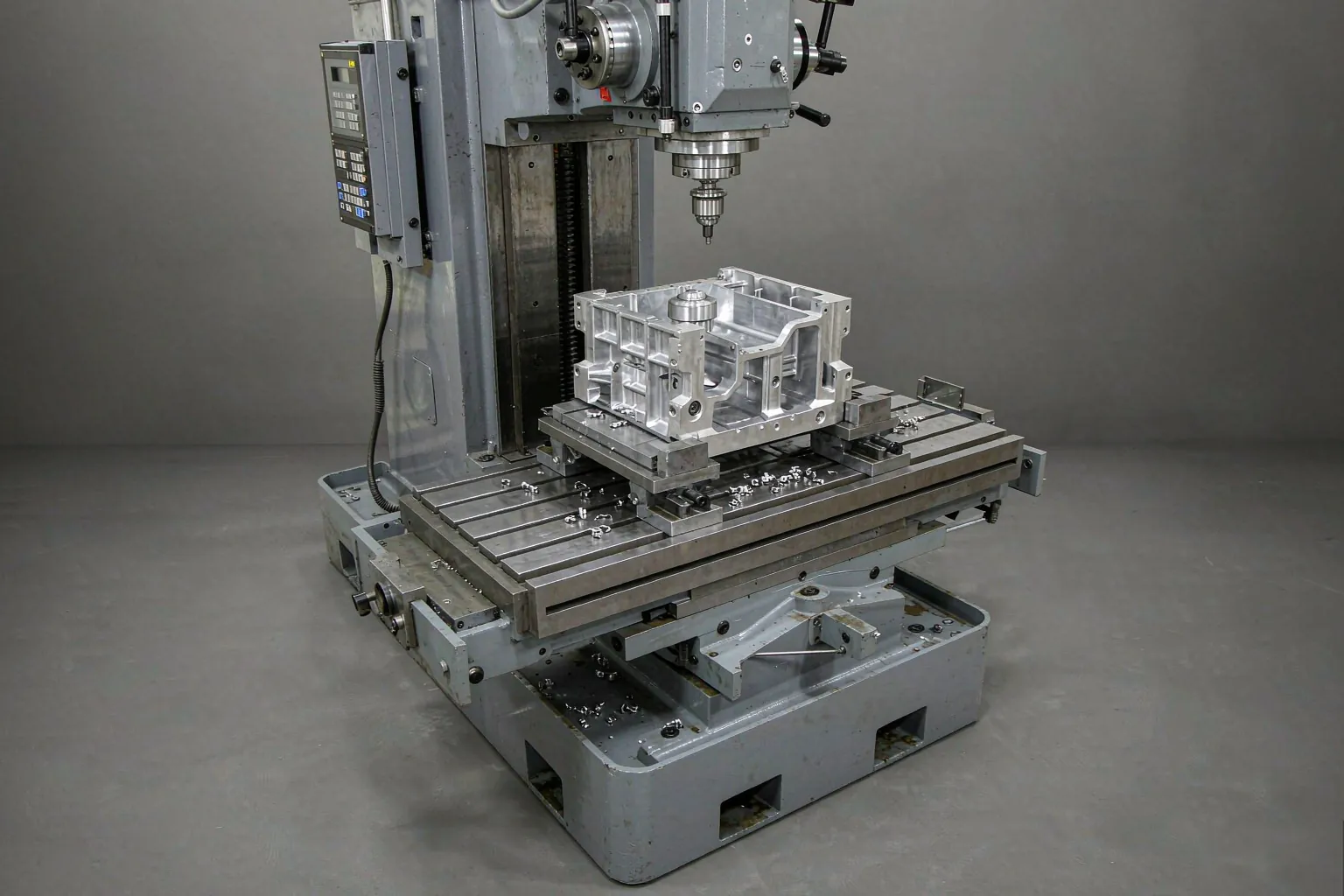
- Machining. Silicon above 7% is abrasive, and for aluminum casting alloys in the 7–12% Si band tool wear usually decides the process cost. Carbide works for low volumes; above roughly 50,000 parts a year in 7–12% Si alloys, PCD tooling usually pays for itself in cycle time and tool changes.
- Secondary operations. T6 heat treatment, impregnation and surface finishing each add handling steps where parts can be scrapped.
- Scrap rate. A380.0 is cheaper per shot than A356.0, but if 8% of your die castings fail leak test and 1% of your gravity castings do, the arithmetic flips.
The usual weight argument still holds: converting a 1.2 kg steel bracket to aluminum at 2.68 g/cm³ versus 7.85 g/cm³ gives about 0.41 kg, a 66% reduction before you redesign anything. That is the reason automotive and automotive casting programs pushed aluminum so hard, and the same logic applies to marine hardware where every kilogram above the waterline matters. If you are comparing processes rather than alloys, see fundición a presión vs. fundición en arena y sand vs investment casting; for the full cost drivers, our casting cost breakdown goes line by line.
Preguntas frecuentes
Which of these aluminum casting alloys is strongest?
As-cast, A380.0 and ADC12 post higher tensile strength (310–330 MPa on test bars) than A356.0-T6 (230–280 MPa). But A356.0-T6 wins on yield strength at 165–205 MPa versus 140–170 MPa, and on elongation at 3–6% versus 1–3.5%. If “strongest” means “resists permanent deformation and absorbs impact,” A356.0-T6 is the answer.
Can A380 or ADC12 be heat treated to T6?
Not in practice. They contain almost no magnesium, so there is no Mg₂Si to precipitate, and solution treatment near 540 °C blisters high-pressure die castings because of entrained gas. Stress-relief and stabilisation anneals are available; T6 is not. Specify A356.0 in a gravity or low-pressure process if you need T6 properties.
Is ADC12 the same as A383?
Very close, and interchangeable for most commercial purposes. ADC12 allows 9.6–12.0% Si and 1.5–3.5% Cu; AA 383.0 allows 9.5–11.5% Si and 2.0–3.0% Cu. Differences in iron, zinc and lead limits matter only in tightly regulated applications. Confirm the impurity limits on the mill certificate rather than assuming equivalence.
Which alloy machines best?
Lower silicon machines more easily, but A380.0 and ADC12 machine well because their microstructure is fine and uniform — that is why they dominate die casting. The problem is tool wear, not chip control. Above 7% Si, budget for PCD or diamond-coated tooling on volumes over a few tens of thousands of parts.
Can die-cast aluminum be welded or anodized?
Welding A380.0 and ADC12 is unreliable — entrained gas expands and copper promotes hot cracking. Cosmetic anodizing is equally poor: high silicon produces a grey, uneven film. A356.0 welds well with 4043 filler and takes a more uniform anodized or conversion coating. Powder coating is the practical finish for die castings.
How do I make an aluminum casting pressure-tight?
Three levers, best used together: choose a fine-grain alloy such as A356.0, degas to below 0.15 mL/100 g hydrogen and feed the section properly, then vacuum impregnate the finished part. Impregnation reliably seals pores in the 0.1–0.5 mm range, which covers most gas porosity. It will not save a design with a shrinkage cavity — that has to be solved in tooling and gating.
What should I put on the drawing?
Alloy designation and temper (for example A356.0-T6), the governing standard (ASTM B26 for sand castings, B108 for permanent mould, or the applicable JIS/EN grade), the sampling location for test bars, and acceptance criteria for porosity — typically referencing defect classes by radiographic reference. Writing “aluminum” alone leaves the foundry to choose, and aluminum casting alloys vary far more than buyers expect, and the foundry will choose what runs fastest on its equipment.
*Composition limits and property ranges referenced from Aluminum Association designation records, AFS and NADCA publications, and Supro MFG production and test records.
 English
 Français
 Deutsch
 Italiano
 日本語
日本語 한국어
한국어 Polski
 Português de Angola
 Русский
 Español de Argentina