

Riser sleeves are one of the cheapest changes a foundry can make to a feeding system, and one of the most frequently specified without any arithmetic. Buyers approve them because a supplier says “better yield”; engineers reject them because a previous batch did not ignite. This guide separates the two cases. It shows what insulating and exothermic riser sleeves actually do to heat flow, how to size the feeding volume without redoing the whole riser design exercise, and the exact cost model that decides whether the premium pays back.
We use shop-floor-modelled examples, not vendor marketing claims. Dimensions and mass are calculated from the same geometry on both sides of the comparison; metal cost, sleeve price and scrap cost are stated as inputs so you can replace them with your own numbers. For measurement discipline, traceable calipers and balances matter more than a spec sheet — see the NIST metrology guidance. If you are new to the process, start with the metal casting guide before using the equations below.

What Riser Sleeves Actually Do
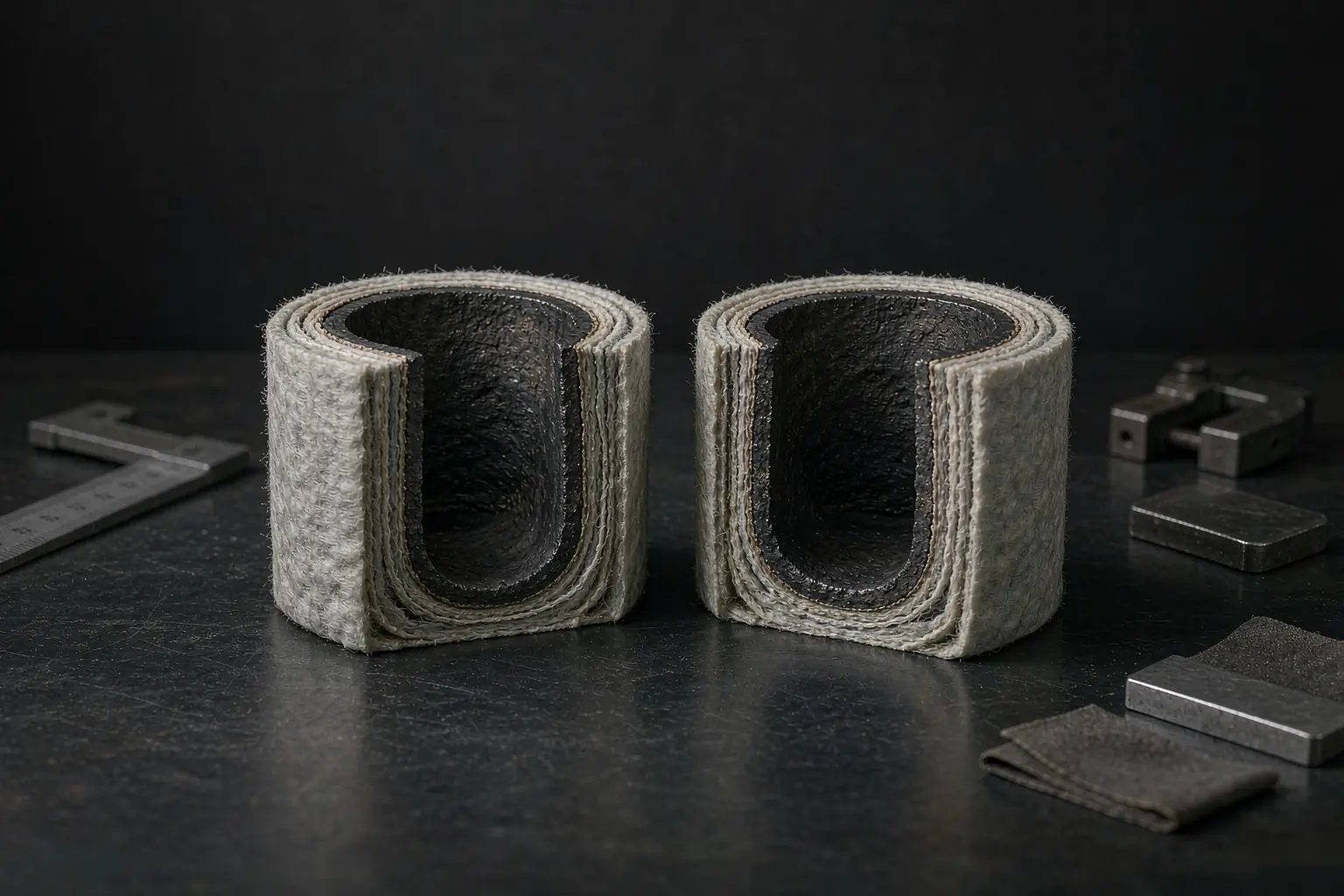
A riser is a reservoir of liquid metal that feeds shrinkage as the casting solidifies. Its job is to stay liquid longer than the section it feeds. Riser sleeves are consumable liners placed around that reservoir: an insulating grade slows heat removal, an exothermic grade slows heat removal and adds chemical heat, and a hybrid does both in layers. The liner changes the cooling boundary condition. It does not create extra metal, repair a bad gating system, or extend the alloy’s feeding distance.
Chvorinov’s rule gives the useful mental model: solidification time is proportional to the square of the modulus M = V/A, where V is volume and A is the cooling surface area. Keep the same riser volume but replace a sand wall with a low-conductivity liner, and the effective A drops; the riser stays liquid longer at a smaller diameter. That is the entire mechanism. Everything else — yield, cost, defect risk — follows from it.
Heat flow, not magic
Take a 20 mm wall, a 1,400 K temperature difference and conductivities of roughly 0.90 W/m·K for silica sand and 0.12 W/m·K for a fibre insulation. Steady-state heat flux is k·ΔT/L, so the comparison is 63.0 kW/m² versus 8.4 kW/m² — a 7.5× reduction in heat extraction through the riser wall. Real foundries see less because radiation, the exposed top and the neck still remove heat, but the direction and order of magnitude are right. Details of mould-material conductivity belong in mold material selection.
Exothermic liners add a second term: a controlled reaction triggered by the pour. Supplier calorimetry is typically quoted in the low MJ/kg range, but the number is only useful if your superheat, section mass and ignition conditions actually reach reaction onset. Treat it as a conditional bonus, not a guaranteed temperature rise. The same caution applies to all melting decisions in melt treatment.
What the liner cannot fix: a choke that freezes early, a neck that is too small, or a hot spot beyond the feeding distance. For those, use chills or change the geometry. This distinction is why solidification simulation should come before the sleeve purchase order. The rest of this guide treats riser sleeves as a specification problem with a measurable payback, not as a generic productivity tip.
Insulating vs Exothermic Riser Sleeves
The three families are not interchangeable. Choose by alloy, superheat, section modulus and the cost of a feeding failure — not by price per piece. Compare riser sleeves on what they change in the thermal system, then price that change.
| Type | Heat mechanism | Typical use | Strength | Failure mode |
|---|---|---|---|---|
| Insulating board / fibre | Low conductivity only; no reaction | Steel and iron with ample superheat, large risers | Lowest price, predictable, no ignition risk | May leave a pipe if the riser was undersized |
| Exothermic | Reaction releases heat after ignition | Low-superheat iron, aluminium, long feeding paths | Keeps small risers open longer | Non-ignition, gas, ash inclusions |
| Hybrid (insulating shell + exothermic face) | Both mechanisms | High-value steel castings, critical feeding | Best thermal performance | Highest price; needs disciplined storage |
| Open sand riser (no liner) | Sand wall only | Low-value, non-critical castings | Zero consumable cost | Largest riser volume and lowest yield |
The ignition trap
An exothermic sleeve must be heated to its reaction onset by the metal that enters it. A small riser, a cold pour, or a long ladle hold can leave the liner unreacted — and the result looks exactly like an undersized riser: a pipe or shrink cavity in the casting. If your pouring temperature window is narrow, require the supplier to state the ignition condition and run a section test on the first lot. For aluminium, also confirm the formulation is approved for lower pour temperatures; the Aluminum Association is a useful starting point for alloy and melting practice.
Fire and fume controls are part of the specification, not an afterthought. Store exothermic stock dry and segregated, and align handling with your site fire-prevention programme; see NFPA. Cutting or grinding spent risers creates heat and dust — the controls in casting degating apply.
How to Size Riser Sleeves Without Repeating the Riser Mistake
This is where most sleeve programs go wrong. Engineers keep the old sand-riser diameter, slide a liner into the pocket, and wonder why yield did not move. The liner changes the cooling boundary, so the riser must be resized to capture the benefit.
- Start at the hot spot. Measure the casting modulus at the heaviest section — here 12.0 mm. Apply a safety factor; 1.2× gives a required riser modulus of 14.4 mm.
- Use the right modulus formula. For a cylindrical riser of equal diameter and height with an insulated top, M ≈ D/4. For the same open sand riser with a cooling top, M = DH/(4H+D) → D/5 when H = D.
- Size the neck separately. A round neck needs at least about half the hot-spot modulus; here that is 6.0 mm → Ø24 mm. A perfect reservoir with a starved neck still fails.
- Check feeding distance. The liner does not extend the alloy’s feeding reach. Keep the existing distance rules, and add chills if the hot spot sits beyond them.
| Item | Open sand riser | Sleeved riser | Change |
|---|---|---|---|
| Required modulus | 14.4 mm | 14.4 mm | Same target |
| Internal diameter × height | Ø72 × 72 mm | Ø57.6 × 57.6 mm | −20% diameter |
| Feeding volume | 0.293 L | 0.150 L | −49% volume |
| Steel mass in riser | 2.30 kg | 1.18 kg | 1.12 kg saved |
| Neck diameter | Ø24 mm | Ø24 mm | Unchanged — not a cost lever |
The counter-intuitive part: the wall thickness of the sleeve is not the riser diameter. Order by internal diameter and height, because that is the metal volume doing the feeding. Outer diameter only matters for the mould pocket and backing sand. A 2 mm radial air gap around the liner lets metal penetrate and burn on; pack the annulus or match the pocket to the liner OD. The same fit-up discipline used for core making applies here.
Record the as-poured riser mass, not the pattern dimensions. Shrinkage, liner crush and backing-sand movement all shift the real volume. A shakeout weighing station gives the feedback loop that makes the next iteration accurate.
What Riser Sleeves Cost and When They Pay Back
Yield improvement is real, but it has to be converted into currency. Use metal cost per kilogram at the pouring ladle, not raw scrap price: melting, alloying, energy and handling all ride with every unnecessary kilogram. Our energy-efficiency review shows why that multiplier matters. Riser sleeves only pay back when the saved metal and scrap exceed the liner, handling and inspection costs.
| Input | Value | Note |
|---|---|---|
| Casting mass | 12 kg | Steel pump housing, illustrative |
| Annual volume | 12,000 parts | Single-cavity tooling |
| Ladle metal cost | 1.40 USD/kg | Replace with your own |
| Riser mass, open / sleeved | 2.30 / 1.18 kg | 1.12 kg saved per part |
| Yield, open / sleeved | 83.9% / 91.1% | +7.2 points |
| Sleeve price | 0.95 USD/piece | Insulating grade |
| Annual metal saving | 18,866 USD | 1.12 × 1.40 × 12,000 |
| Annual sleeve spend | 11,400 USD | 0.95 × 12,000 |
| Net annual gain | 7,466 USD | No capital expenditure |
The break-even sleeve price is 1.57 USD/piece — above that, the yield gain no longer pays for the liner. Notice what is absent: no retraining, no new tooling, no cycle-time penalty. That is why insulating sleeves on a stable, high-superheat job are usually the first change to trial.
When the expensive sleeve is the wrong buy
Now reverse the case. An exothermic grade costs 0.65 USD more than an insulating one. On a 6.5 kg iron casting with a 22 USD scrapped-part cost, the premium only breaks even if feeding scrap falls by 2.95 percentage points. If a trial shows 1.7 points, the programme loses 2,208 USD/year at 8,000 parts — despite producing fewer scrap castings. Fewer defects is not the same as a positive business case. Be careful with cost accounting in casting cost breakdown und quality agreement negotiations.
The reverse also happens: a cheap insulating sleeve that leaves a 1% internal pipe can cost far more than the exothermic grade in downstream inspection and weld repair. Use AWS welding guidance to price the repair route before you decide the sleeve is “too expensive”.
Storage, Fit-Up and Incoming QC for Riser Sleeves
Sleeves are ceramic-fibre products. They crush, absorb water and vary by lot. Treat them like a controlled raw material, not like packing tape. A formal incoming inspection plan is the right home for these checks.
| Check | Suggested acceptance gate | Warum das wichtig ist |
|---|---|---|
| Inner diameter and height | Caliper check against drawing; ±1 mm or supplier tolerance | Undersize changes feeding volume and neck fit |
| Radial gap to mould pocket | ≤2 mm, or packed with backing sand | Larger gaps allow penetration and burn-on |
| Moisture after storage | Loss on drying ≤0.5% at 105 °C; bake per supplier | Water becomes hydrogen porosity in aluminium |
| Compressive strength | Supplier lot data; handle test on first article | Crushed liners reduce internal volume |
| Exothermic ignition | Section a first-article pour; verify reacted layer | Unreacted liner behaves like an undersized riser |
| Ash and gas evolution | Lot certificate; compare between suppliers | Slag, pinholes and dirty riser surfaces |
Mould chemistry around the liner matters too. High fines or unstable green sand can close the vent path, and a liner that traps gas will show up as porosity in the feeding zone. The porosity checklist in porosity and shrinkage helps separate gas from true shrinkage. Keep sand angularity und foundry sand sieve analysis under control so the backing sand packs consistently around the sleeve.
A supplier change is a process change
Two sleeves with the same catalogue number can differ in fibre density, binder and reaction kinetics. When you switch vendor, re-run the first-article section, the ignition check and the yield measurement. Do not assume equivalence from the part number. This is the same principle used in casting defect investigations und inspection method selection.
Defect Signatures and Root Causes in Riser Sleeves
Feeding defects are diagnostic. Read where the cavity sits before changing the liner grade — the location tells you which variable moved. Most field failures of riser sleeves are fit-up or ignition problems, not bad metallurgy.
| Symptom | Most likely cause | First corrective action |
|---|---|---|
| Pipe extends into casting | Riser modulus too small, or neck froze | Recalculate modulus and neck; do not just add exotherm |
| Shrinkage at feeding distance edge | Hot spot beyond feeding reach | Add chills or change geometry; liner cannot extend reach |
| Gas holes near riser joint | Wet liner or trapped backing-sand gas | Bake stock, check vents and radial gap |
| Burn-on / penetration outside liner | Metal through liner crack or annulus gap | Inspect crush damage, improve pocket fit |
| Dirty fracture, slag at riser base | High-ash exothermic liner | Change grade, add filtration, review pouring practice |
| No reacted layer on exotherm | Pour too cold or riser mass too small | Raise superheat within window or use insulating grade |
A 30-Day Shop Trial for Riser Sleeves
Do not convert a whole programme on a catalogue claim. Run a controlled trial with a control group and one changed variable. The structure below works for sand, investment and low-volume prototype work alike — see Sandguss, Feinguss und prototype casting services. A riser sleeves trial without a control group cannot prove a yield gain.
- Week 1 — Baseline. Weigh as-poured risers on the current job for three shifts. Record yield by heat, scrap codes, pour temperature and liner storage conditions.
- Week 2 — Geometry. Calculate hot-spot modulus, riser diameter, height and neck. Freeze the drawing before choosing a liner grade.
- Week 3 — Controlled pours. Run 20–30 pours with the sleeved riser alongside the control. Section the first three to verify reaction and fill.
- Week 4 — Decision. Compare metal saved, liner cost, scrap by code and any extra handling minutes. Roll out only if net gain survives the arithmetic.
Capture cycle time as well. If sleeve placement adds 40 seconds and the line is capacity constrained, that time has an opportunity cost that a simple metal-saving model misses. The foundry automation review covers how to price constrained time; for high-volume work, Druckgussdienstleistungen has a different feeding physics and should be evaluated separately.
RFQ Checklist for Riser Sleeves
A vague RFQ gets a cheap quote and the wrong liner. Send the same eight fields to every supplier so the comparison is meaningful. Tooling and pattern interfaces belong in the mold making package; machined interfaces belong in CNC machining services. An RFQ for riser sleeves should quote the feeding result, not only the delivered carton.
| RFQ field | What to specify |
|---|---|
| Cavity geometry | Internal diameter, height, taper and neck seat |
| Alloy and pour window | Grade, superheat range, ladle hold time |
| Liner class | Insulating / exothermic / hybrid; wall thickness |
| Thermal data | Conductivity, reaction energy, ignition condition |
| Mechanical data | Crush strength, dimensional tolerance |
| Cleanliness | Moisture limit, ash and gas-evolution data |
| Qualitativ fundierte Erkenntnisse | Lot certificate, first-article section, change notification |
| Commercial | Price breaks, packaging, lead time, minimum order |
If your part is iron, the iron casting solutions page shows how we package feeding decisions with mould and melting controls. For one-off or bridge orders, metal prototype casting services can carry the same sleeve specification into a short run without retooling.
FAQ: Riser Sleeves in Production
Do riser sleeves replace chills?
No. A sleeve keeps the riser liquid longer; a chill accelerates a local hot spot. They solve different parts of the feeding problem and are often used together.
Can I keep the old riser diameter and just add a sleeve?
You can, but you give away most of the yield benefit. Resize the riser to the new cooling boundary and keep the neck at least half the hot-spot modulus.
Why did my exothermic sleeve not react?
Usually insufficient heat at the liner face: cold pour, long hold, small riser mass, or wet stock. Verify the reaction on a sectioned first article before blaming the alloy.
How should I store riser sleeves?
Dry, off the floor, in original packaging, with lot traceability. Bake to the supplier specification if moisture testing fails — especially for aluminium.
Are riser sleeves worth it for low-volume work?
Often yes for critical castings, because there is no capital cost. Run the break-even price calculation with your actual scrap cost; the answer changes quickly at low annual volumes.
*Modulus, heat-flux and cost examples are calculated from stated inputs. Confirm all supplier thermal data and running costs against your own process.
 English
 Français
 Deutsch
 Italiano
 日本語
 한국어
 Polski
 Português de Angola
 Русский
 Español de Argentina