
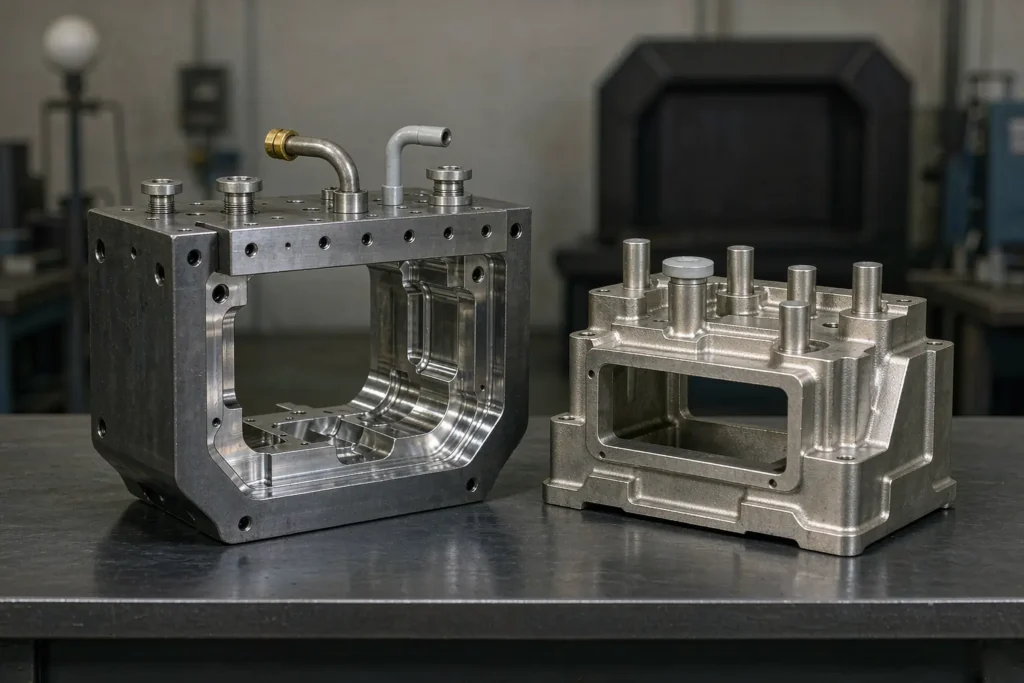
Casting tooling cost is the single line item buyers misread most often. It shows up once, it looks huge next to a $24 part price, and nobody tells you how many shots you are actually buying. A $74,000 die amortized over 120,000 castings is $0.62 per part. The same die written off after 40,000 castings is $1.85 per part — same steel, three times the cost, and the difference is decided by a clause nobody negotiated.
This guide breaks casting tooling cost into its real components, gives working price and service-life ranges for every mainstream process, and shows the arithmetic you need before you sign a purchase order. Numbers come from shop-floor quoting practice and industry references such as the American Foundry Society (AFS) and the North American Die Casting Association (NADCA). If you want the wider picture of how a casting price is built, start with our breakdown of what drives casting cost and the metal casting guide, then come back here for the tooling slice of it.
What Actually Sits Inside a Casting Tooling Cost Quote
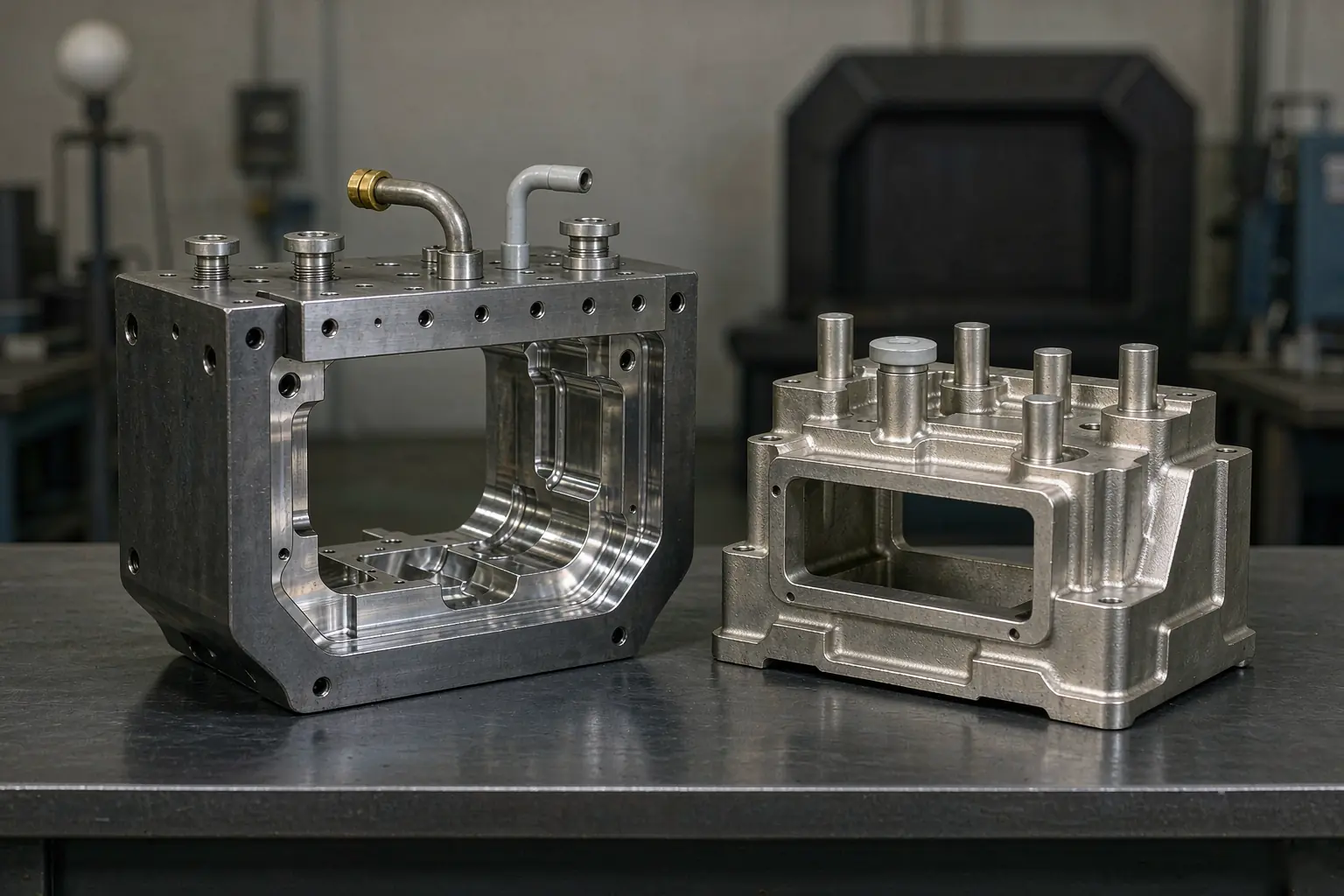
Tooling is rarely one object. A pattern is meaningless without the core boxes that form the internal passages, and a die is useless without the trim fixture that removes the runner. When a foundry quotes casting tooling cost as a single figure, ask for the itemization — because the components that get left out are exactly the ones that surprise you in month four.
| Tooling Component | What It Does | Typical Share of Total Tooling |
|---|---|---|
| Pattern or die (cavity set) | Forms the outside geometry of the casting | 55–70% |
| Core boxes / slides / inserts | Form internal cavities, undercuts and side holes | 15–30% |
| Try-out, sampling and first-piece correction | Prove the tool, tune gating, produce the sample batch | 3–8% |
| Trim / machining fixtures and gauges | De-gate, hold for CNC machining, check critical dimensions fast | 8–15% |
| Coating, plating or surface treatment | Extend die life against erosion, soldering and heat checking | 2–6% |
That last row is the cheapest insurance you can buy. A nitrided or PVD-coated H13 cavity adds 2–6% to the casting tooling cost up front and routinely adds 30–60% to shot life in aluminum work. On a $74,000 die, $3,000 of coating that pushes life from 90,000 to 135,000 shots drops per-part tooling from $0.82 to $0.57.
Casting Tooling Cost by Process: Working Ranges
Ranges below assume a medium-complexity part in the 1–15 kg bracket, single cavity unless stated. Complexity, cavity count and tolerance class move these numbers by a factor of two in either direction — a four-cavity die is not four times one cavity, but it is roughly 2.2–2.6 times, because the shared bolster and runner system do not scale. Before comparing numbers, freeze the geometry: late design changes are the most common source of tooling overrun — see our mold and pattern design guide and the way we build tools on the casting molds and pattern making side. Read these as what you pay once; the number that matters commercially is the per-part figure worked out further down.
| Process | Tooling Cost Range | Build Lead Time | Expected Tool Life |
|---|---|---|---|
| Green sand — wooden pattern | $800 – $3,000 | 1–3 weeks | 500 – 3,000 molds |
| Green sand — aluminum pattern + core boxes | $4,500 – $14,000 | 3–6 weeks | 10,000 – 50,000 molds |
| Resin / no-bake sand — cast iron pattern | $6,000 – $20,000 | 4–8 weeks | 50,000 – 150,000 molds |
| Shell mold — heated cast iron pattern | $8,000 – $30,000 | 5–9 weeks | 50,000 – 150,000 shells |
| Lost foam — aluminum foam tooling | $15,000 – $60,000 | 6–12 weeks | 10,000 – 50,000 clusters |
| Investment casting — aluminum wax die | $3,000 – $25,000 | 3–7 weeks | 2,000 – 10,000 waxes |
| Investment casting — hardened steel wax die | $12,000 – $45,000 | 6–10 weeks | 30,000 – 100,000 waxes |
| Permanent mold — gray iron or H13 mold | $12,000 – $45,000 | 6–10 weeks | 10,000 – 100,000 casts |
| High-pressure die casting — H13 die | $25,000 – $150,000+ | 8–16 weeks | 80,000 – 150,000 shots (Al) |
| Centrifugal casting — steel mold | $10,000 – $50,000 | 6–12 weeks | 5,000 – 40,000 pours |
Why the die casting number is so much higher
A sand pattern pushes sand around at room temperature, which is why resin sand casting tooling stays so much cheaper than anything that touches molten metal at speed. A die casting die takes molten aluminum at 660–700 °C injected at 40–100 MPa and must survive that thermal shock tens of thousands of times. That calls for premium H13 tool steel, vacuum heat treatment to 44–48 HRC, deep EDM or high-speed machining of the cavity, conformal cooling lines, and a bolster stiff enough to resist 800–4,000 tons of clamping force without flashing. You are not paying for shape; you are paying for survival under load. That gap is the single biggest driver of casting tooling cost variation between processes. Our aluminum die casting guide covers the process side of that trade-off, and our die casting services page shows what that tooling runs on.
Shot Life: What Kills Casting Tooling and When
Count life in shots, not parts. A four-cavity die running 25,000 shots delivers 100,000 castings. Buyers who confuse the two under-estimate remaining life by a factor of four and then get angry when the refurbishment invoice lands early. Get the shot-life number in writing at quote stage, because it is the denominator of your casting tooling cost per part.
| Failure Mechanism | What You See on the Part | Primary Cause | Prevention Cost |
|---|---|---|---|
| Heat checking (thermal fatigue) | Fine crack network mirrored on the casting surface | Surface cycling 200–500 °C every shot | Correct preheat + cooling balance; $0 |
| Erosion / washout | Localised wall thinning, rough patches at the gate | Injection velocity too high at the gate (usually caught in casting simulation before steel is cut) | Gate redesign; $1,500 – $6,000 |
| Soldering / sticking | Aluminum film left on the cavity, drag marks | Poor release agent coverage, cold die | Release protocol + coating; $0 – $3,000 |
| Gross cracking | Flash line opens up; part leaks under pressure test | Stress concentration at sharp internal corner | Radius added at design stage; $0 |
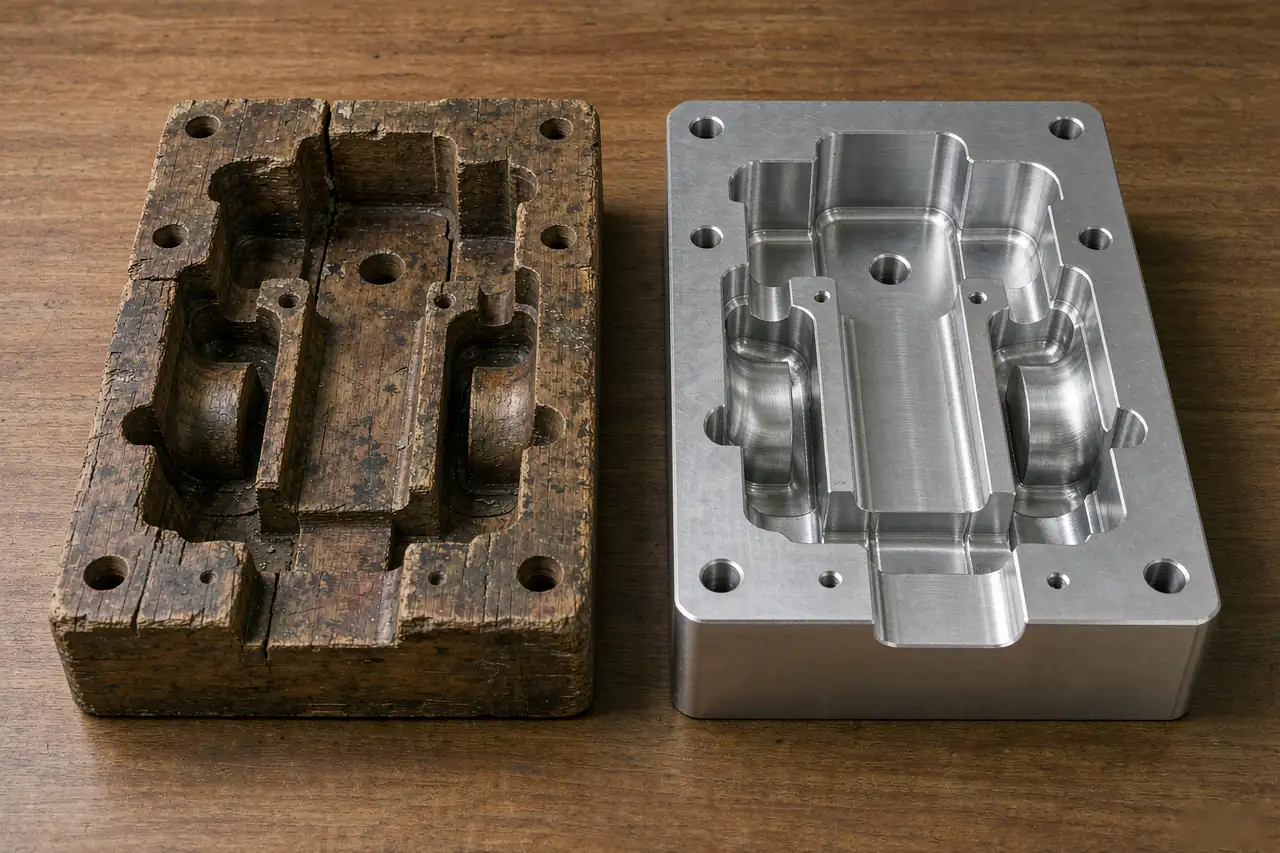
| Pattern wear / dimensional drift | Parts creep out of tolerance over the run | Sand abrasion on a soft pattern material | Harder pattern material; see break-even below |
| Handling and storage damage | Chipped parting line, dented core print | Tool dropped, stacked, or rusted in storage | Rack + rust inhibitor; $200 – $800 |
The die-life benchmark to quote from
NADCA practice puts aluminum high-pressure die life at roughly 80,000–150,000 shots before major refurbishment, magnesium in a similar band, and zinc hot-chamber tooling at 500,000 to over 1,000,000 shots — zinc melts at 420 °C instead of 660 °C, so the thermal fatigue per shot is dramatically lower. If a supplier quotes you 250,000 shots on an aluminum die without a coating and a documented maintenance plan, ask them to put that number in the contract, along with what happens to the casting tooling cost if the die falls short of it.
Who Owns the Tooling — and Why the Clause Matters More Than the Price
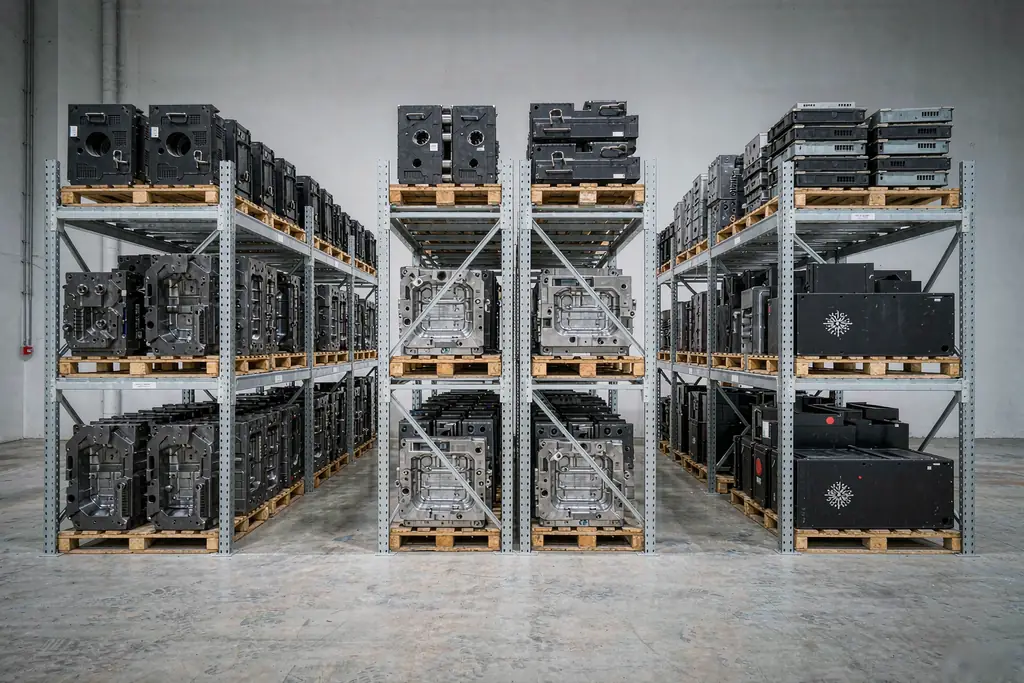
Paying the casting tooling cost does not automatically give you control of the tool. In most foundry relationships the supplier holds the tool physically (bailment) even when you own it on paper. Without written terms, three things go wrong: the tool gets used for another customer’s similar part, it gets scrapped after a quiet period, or you are billed for storage you never agreed to.
- Ownership. “Tooling paid for by Buyer is the property of Buyer” — one sentence, on the PO, not in an email thread.
- Exclusivity. Buyer-owned tooling shall not be used to produce parts for any other party. This matters most for dies, where a copy cavity costs a fraction of the original.
- Idle period. Define the dormancy window in writing — 18–24 months without an order is the common trigger before a foundry may dispose of a tool.
- Refurbishment responsibility. Say who pays for normal wear refurbishment. Conventional practice: the owner pays, but the supplier caps it as a percentage of new tooling cost.
- Return and transfer. Tooling is released within X days of written request, crated at Buyer’s cost, with a dimensional condition report attached.
These belong in the RFQ, not in the post-award negotiation. Our guide to what a foundry needs for an accurate casting RFQ lists the full information pack; add the five clauses above as a standard appendix. They cost nothing to include, and they decide whether your casting tooling cost buys an asset or funds a favour.
Amortizing Casting Tooling Cost: Three Real Calculations
The only honest way to judge a casting tooling cost is per finished part over the quantity you will actually buy — not over the theoretical life of the steel. Here are three cases worked end to end.
Case A — aluminum die casting housing, tool life matters more than tool price
A 2-cavity H13 die quoted at $74,000. Program volume is 30,000 castings per year, so 15,000 shots per year. Expected life before major refurbishment: 120,000 shots.
| Scenario | Shots Achieved | Pieces | Tooling per Part |
|---|---|---|---|
| Full life reached | 120,000 | 240,000 | $0.31 |
| Program cancelled at 3 years | 45,000 | 90,000 | $0.82 |
| Program cancelled at 18 months | 22,500 | 45,000 | $1.64 |
Same die, same supplier, per-part tooling swings 5.3× purely on how long the program runs. This is why a tooling quote should always be paired with a written shot-life commitment and a stated minimum quantity. If your contract guarantees only 45,000 pieces, negotiate the tooling price down or ask the supplier to carry part of it.
Case B — sand casting bracket: cheap pattern vs. durable pattern
Annual volume 900 brackets. On the sand casting side, a wooden pattern costs $2,400 and lasts about 900 molds — roughly one year. An aluminum pattern with two core boxes costs $9,800 and lasts 25,000 molds — about 27 years at this volume.
- Wooden pattern, replaced every year: $2,400 × N
- Aluminium pattern, one purchase: $9,800
- Break-even: $9,800 ÷ $2,400 ≈ 4.1 years.
Any program expected to run more than four years should buy the aluminum tooling — and there is a second reason beyond arithmetic. Wood moves with humidity; a pattern that gains 0.3 mm across a parting face will push castings out of tolerance long before it physically wears out. On a part with ISO 8062-3 DCTG 10 requirements, that drift shows up as machining stock that suddenly is not there. See our casting tolerances reference for how tolerance class and tooling quality interact, and for how much machining stock to leave.
Case C — refurbish or buy new
The $74,000 die at 60,000 shots: heat checking is visible, flash is growing, and the supplier quotes $18,500 for a weld-and-remachine refurbishment that should restore about 50,000 more shots.
- No refurb: 74,000 ÷ 90,000 shots = $0.82 per shot
- One refurb: (74,000 + 18,500) ÷ 140,000 shots = $0.66 per shot (−20%)
- Two refurbs: (74,000 + 18,500 + 22,000) ÷ 175,000 shots = $0.65 per shot (marginal)
The first refurbishment is clearly worth it; the second buys almost nothing because weld-repaired H13 does not recover full fatigue resistance. Practical rule: budget for one refurbishment at 25–35% of the original casting tooling cost, then plan for replacement. Ask your supplier to state the refurbishment cap in the original quote so the number cannot drift upward later.
The Hidden Cost Nobody Quotes: Tooling Downtime
Tooling failure rarely costs you the tooling. It costs you the line — and that outage, not the casting tooling cost itself, is what shows up on your P&L. A planned die change on a 800 t machine takes 4–8 hours of press time; an unplanned crack that stops production mid-week can cost more than the die.
- Planned die swap: 4–8 h press downtime, scheduled into the run.
- Unplanned die failure: 1–3 days to diagnose, repair or expedite, plus air freight on the recovery batch.
- Second-source duplication: a duplicate die costs 75–90% of the original and removes the single-point-of-failure risk entirely.
For safety-critical or high-volume programs, budget the duplicate. A second die at 0.8 × $74,000 = $59,200 sounds expensive until you price one week of line stoppage. Our casting lead time guide shows where tooling build sits in the schedule and why tooling is usually the longest single phase of a first order.
How to Get a Casting Tooling Cost Quote You Can Defend
Send these nine questions with every tooling RFQ. Suppliers who answer all nine are usually the ones whose numbers hold up in production.
- Is the tooling cost itemized by component (cavity, cores, fixtures, try-out)?
- What tool material and hardness are specified — H13 at what HRC, aluminum 6061 or cast iron?
- How many cavities, and what is the expected life in shots?
- Is surface treatment (nitriding, PVD) included or optional?
- Who owns the tooling, and is exclusivity stated?
- What is the refurbishment cost and the cap, in writing?
- What is the idle-period policy before disposal?
- Is try-out and first-article sampling included, and how many sample pieces?
- What is the price and lead time for a duplicate tool?
If a supplier offers “free tooling”, read the unit price before celebrating — the casting tooling cost has not disappeared, it has just moved into your piece price. Free tooling almost always means the tooling is amortized into the piece price, the supplier retains ownership, and you are committed to a minimum quantity to recover it. That can be a good deal at high volume and a trap at low volume — the arithmetic in Case A is exactly how you find out which one you are being offered. Pair this with the first article inspection step, because tooling acceptance and sample approval are the two places where a tooling program either gets locked down or starts leaking money.
FAQ
Who pays for tooling repairs during a production run?
Normal wear refurbishment is normally the tooling owner’s cost, but a supplier should cap it — typically 25–35% of new tooling cost for the first repair. Damage caused by supplier error (wrong setup, dropped tool, incorrect preheat) is the supplier’s. Put both in the PO.
Can I take my tooling to another foundry?
Legally yes if you own it and the contract allows release, which is another reason to get ownership of the casting tooling cost you paid settled in writing on day one. Practically, expect dimensional differences: a die built for one machine’s tie-bar spacing and shot profile rarely drops into another press without rework. Budget 5–15% of tooling cost for adaptation, ask about prototype casting if you need parts during the transfer, and always request the tool drawing set, not just the steel.
How long does tooling take to build, and does it delay my first parts?
Tooling build is usually the longest phase of a first order: 3–8 weeks for sand patterns, 8–16 weeks for a die casting die. Sampling and first article approval add another 2–5 weeks. Starting a 3D printed prototype in parallel is the standard way to compress the calendar — see 3D printing vs casting for where that makes sense.
Is a more expensive die ever cheaper overall?
Often. Premium H13 with proper heat treatment plus a PVD coating can add 20–40% to die price and 30–60% to shot life. At 100,000+ shots the coating pays for itself several times over, and it reduces the mid-run refurbishment that causes the schedule damage in the first place.
What happens to my tooling if orders stop?
Most foundries treat tooling as dormant after 12–24 months without an order and reserve the right to reclaim the space. If the program may go quiet, negotiate the dormancy window and a storage fee up front, and ask for a condition report at the start of the idle period.
Should tooling be amortized into the piece price or billed separately?
Billed separately is cleaner for low and uncertain volume — you keep ownership and can walk away with the tool. Amortized into the piece price suits high, committed volume where you want a low entry cost and do not need to own the steel. Never accept amortization without a stated minimum quantity.
*Data referenced from AFS / NADCA industry publications and Supro MFG shop-floor records.
 English
 Français
 Deutsch
 Italiano
 日本語
日本語 한국어
한국어 Polski
 Português de Angola
 Русский
 Español de Argentina